

 Log In


March 31, 2009
 Offline

We do have 2 rifles, some data and cartridges for the WRACO 50-140 EX. There is absolutely no data or cartridges for a Sharps cartridge. The longest 50 Cal Sharps cartridge was 2 1/2″.
The Winchester 1890 cartridge board has 4 of the rarest cartridges made by Winchester.

April 15, 2005
Offline
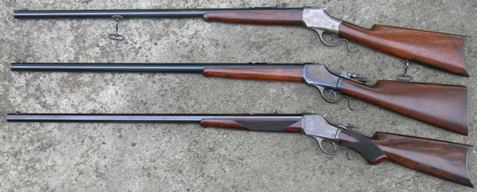
I have assumed that the fellow who ordered both of those Single Shot rifles was intending to shoot “light” bullets in the rifle with the 1:44 twist, and heavier bullets in the rifle with the 1:30 twist. Additionally, he was aware enough to order a heavier #4 barrel for the rifle with the 1:30 twist (for the heavier bullets).
I view both of those rifles as highly “special” order based on the information in the ledger record. Unfortunately, the whereabouts of both rifles is still unknown today. I would certainly be willing to part with some of my prized possessions to acquire one or both of them!
Bert
WACA Historian & Board of Director Member #6571L

May 23, 2009
Offline
TXGunNut said
Something that makes the Sharps and Winchester names for this cartridge interesting is the word “Express”. Winchester was quite fond of the term generally applied to cartridges of generous powder capacity and light-for-caliber bullets. The 3 1/4″case certainly had the case capacity but the bullets listed in the Barnes reference don’t seem light to me. Maybe the person who ordered the Single Shots in Bert’s ledger excerpts wanted to use heavy as well as light bullets. Is it possible the bullet diameters referenced by Barnes were paper patched for the Sharps?
Mike
As far as the Winchester cartridges go. They used Winchester’s Express bullets in them, and that is whey they’re referred to them as such. There is not a Paper Patched version on the 1890 Cartridge board and I’m not aware of any 50-140 Win. Express cartridges with a factory paper patched bullet. Only board dummies and a few loaded examples are known found today without the paper patched bullets.
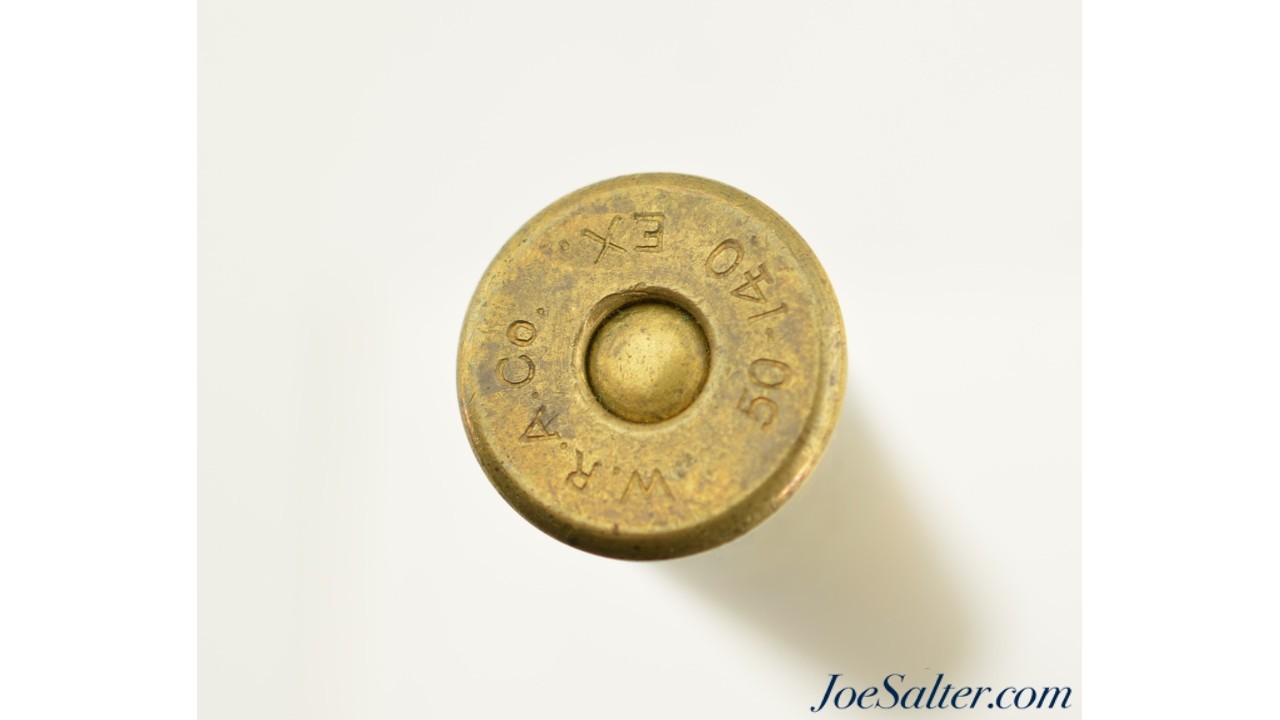
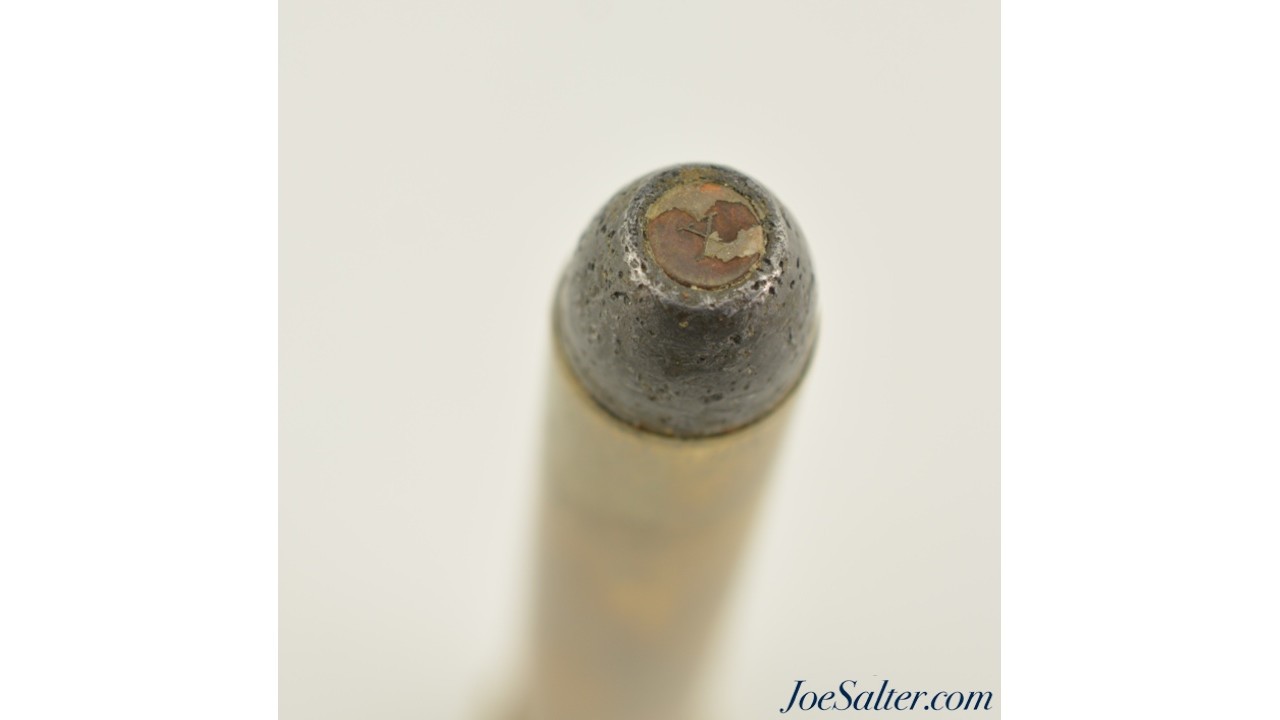
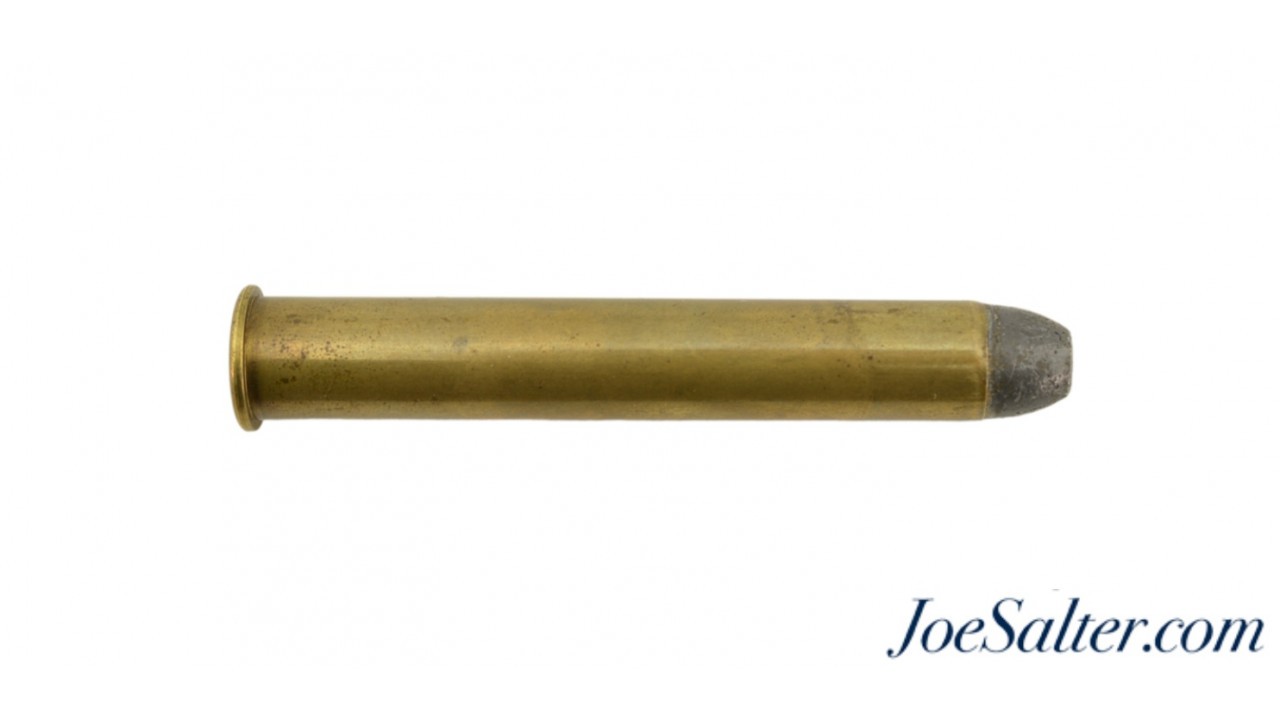
The UMC produced cartridges are however paper patched. The profile of the bullet is also different with a rounded nose instead of the flat point. So Barnes maybe got his information from comparing a UMC cartridge and a WRACo cartridge.

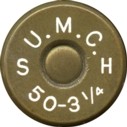
In my minds eye the fact that at least two Single Shot 85s were chambered in the cartridge, then its proof that they made up and sold boxed cartridges to the client. I would imagine at the very least the buyer received if not one to two or three (1,000 round) cases of boxed ammunition with his rifles.
They also likely made up a few hundred or possibly over a 1,000 examples of the 1890 Cartridge Board with each having one dummy. The 1890 Cartridge boards were not numbered. The next board the 1897 Cartridge Board was numbered with serial numbers known over #1,900. So its hard to say how many 1890 dated boards were produced.
Sincerely,
Maverick
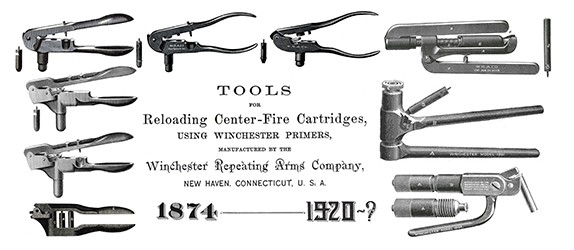
WACA #8783 - Checkout my Reloading Tool Survey!
https://winchestercollector.org/forum/winchester-research-surveys/winchester-reloading-tool-survey/
March 31, 2009
Offline
Maverick, what does the S and H stand for on the UMC cases?
I looked through a book at the gun shop today. The Sharps Rifle by W.O. Smith, 3rd printing in 1965. On page 101 it lists the 50-3 1/4″ 170 gr. of powder and a 700 gr. bullet.
It also has a note that says “Elmer Keith, Big Fifty Sharps” in an article in the American Rifleman June 1940 pg. 15. In the article Keith states the Big Fifty Sharps Buffalo Rifle was sometimes chambered for the extremely large UMC cartridge.
https://www.americanrifleman.org/content/the-big-fifty-sharps-rifle/
April 15, 2005
Offline
Chuck said
Maverick, what does the S and H stand for on the UMC cases?
I looked through a book at the gun shop today. The Sharps Rifle by W.O. Smith, 3rd printing in 1965. On page 101 it lists the 50-3 1/4″ 170 gr. of powder and a 700 gr. bullet.
It also has a note that says “Elmer Keith, Big Fifty Sharps” in an article in the American Rifleman June 1940 pg. 15. In the article Keith states the Big Fifty Sharps Buffalo Rifle was sometimes chambered for the extremely large UMC cartridge.
https://www.americanrifleman.org/content/the-big-fifty-sharps-rifle/
I am of the belief that the “S” “H” stamped on the cartridge head is an abbreviation for “Sharps”.
Bert
WACA Historian & Board of Director Member #6571L
May 23, 2009
Offline
Chuck said
Maverick, what does the S and H stand for on the UMC cases?
I looked through a book at the gun shop today. The Sharps Rifle by W.O. Smith, 3rd printing in 1965. On page 101 it lists the 50-3 1/4″ 170 gr. of powder and a 700 gr. bullet.
It also has a note that says “Elmer Keith, Big Fifty Sharps” in an article in the American Rifleman June 1940 pg. 15. In the article Keith states the Big Fifty Sharps Buffalo Rifle was sometimes chambered for the extremely large UMC cartridge.
https://www.americanrifleman.org/content/the-big-fifty-sharps-rifle/
My understanding is that the “SH” stands for “Solid Head”. Meaning its a solid head cartridge vs a folded head cartridge. Early UMC cartridges were folded head construction vs later were of solid head construction. Its just how they made the case during the drawing process.
So you’re saying in said book it shows a Sharp’s rifle with its barrel markings as such? Or a box of Sharp’s Rifle Company ammunition as such? Or a Sharp’s marked reloading tool(s) or bullet mold marked as such?
Or are you stating merely that said author is merely “listing” said caliber?
Frank Sellers doesn’t mention it in his book.
As far as I know of the last Sharps Company catalog was produced in 1879. It doesn’t list said cartridge or bullet for said cartridge or powder measure for said grains of powder for said cartridge. The catalog on page 18 only lists measures up to 120 grains. Page 28 doesn’t list it under either cartridges or bullets. And the largest grains of bullet is 550 grains and its not listed in .50 calibers.
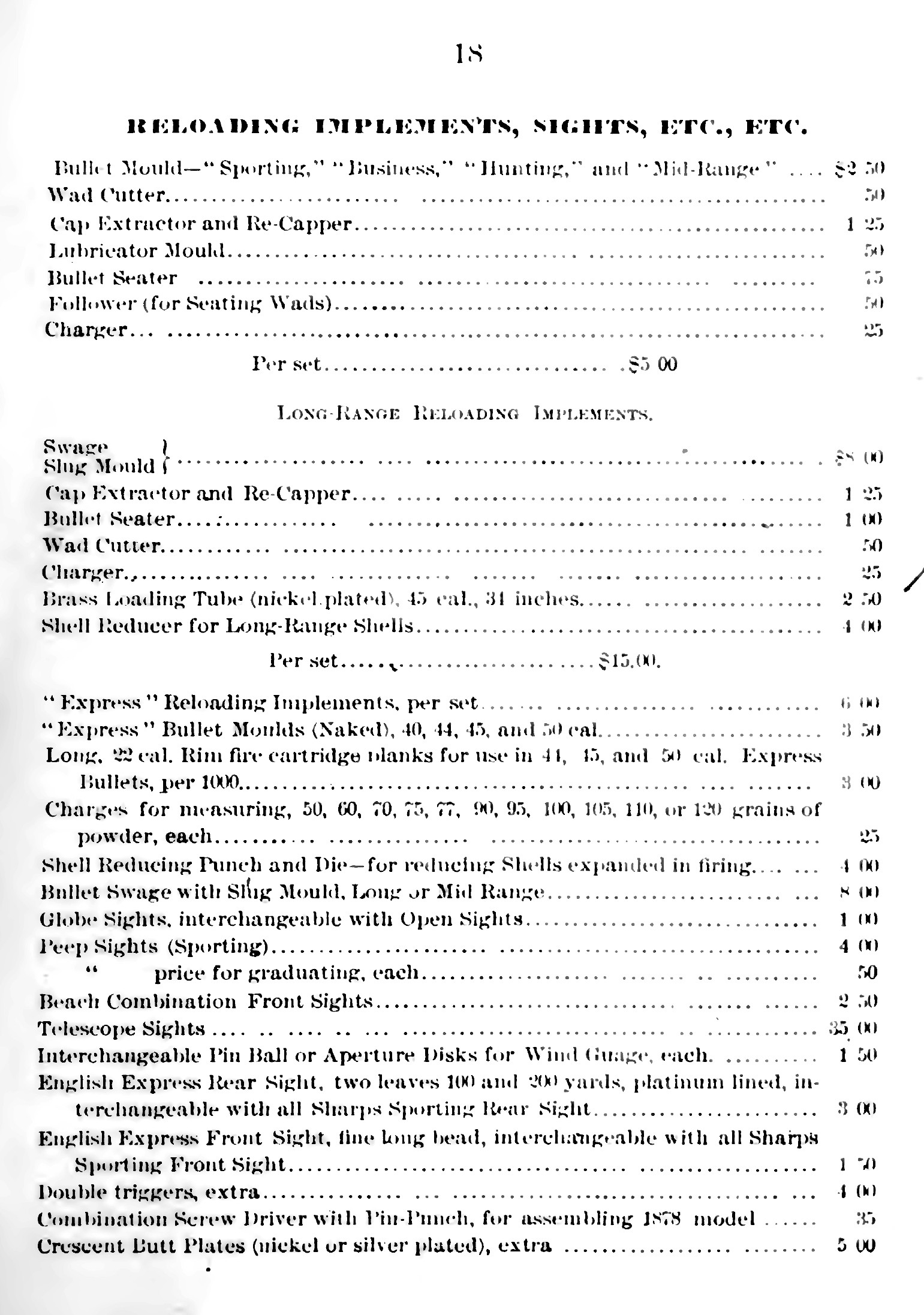
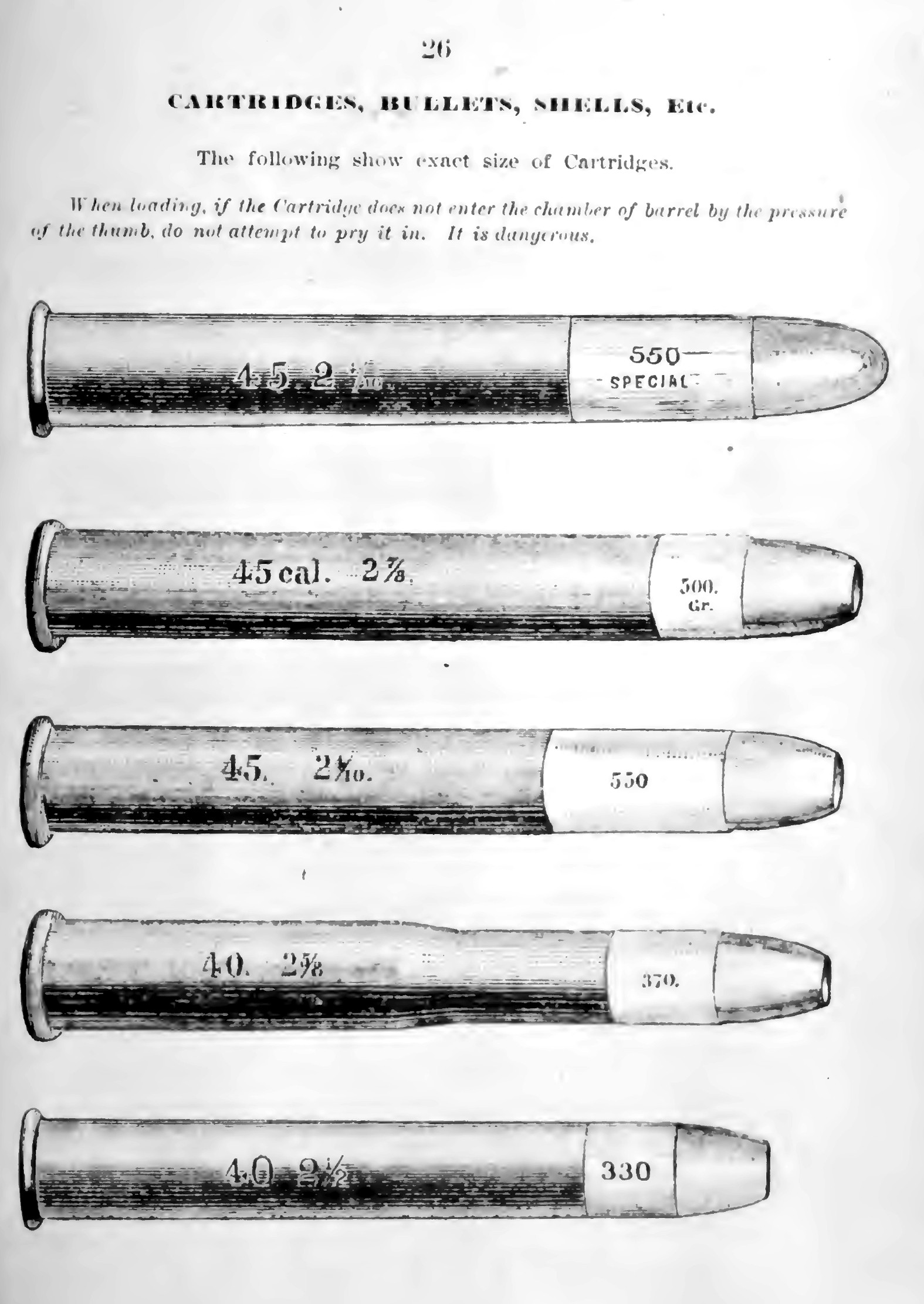
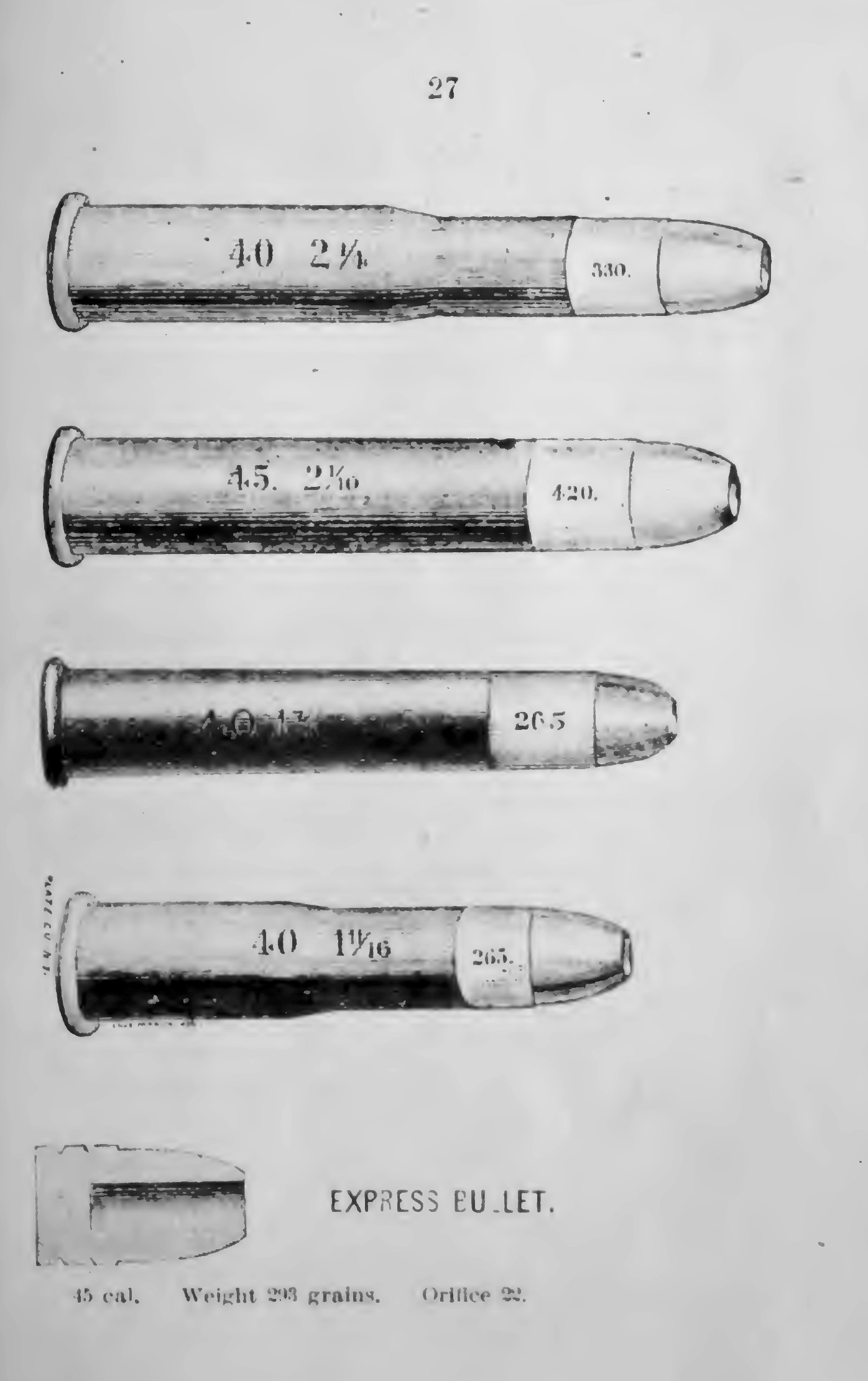
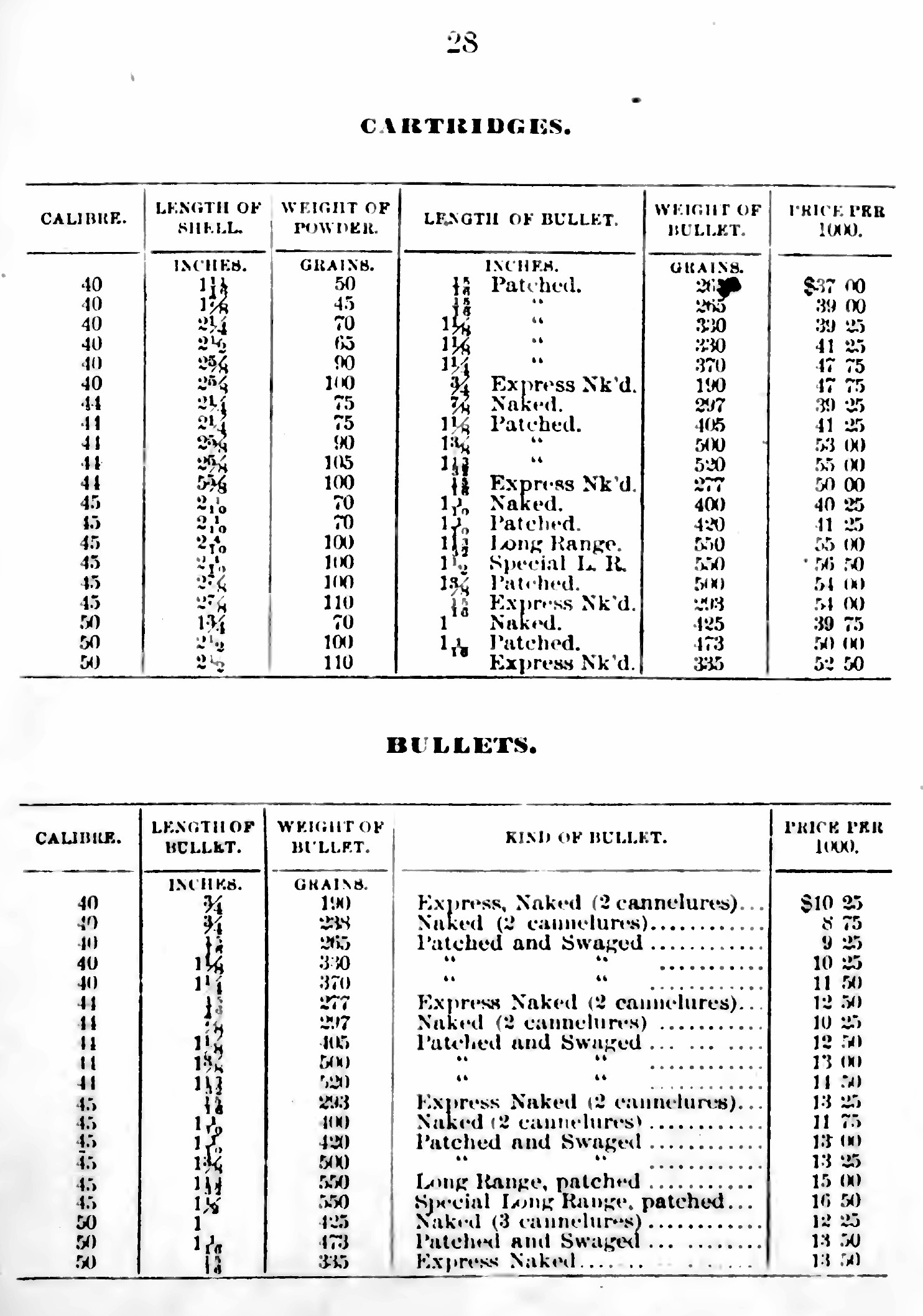
The Elmer Keith article discusses in my opinion some heavily modified 50 Caliber rifles. From what is stated in the 1940 article, its hard in my mind to deduce that the 50 caliber rifles mentions are being stated as factory originally made or chambered for the 50 Sharps 3 1/4″ cartridge. The question being would a 50 3-1/4 cartridge chamber in a 50 2-1/2 bored rifle? Or are have these before mentioned rifles been re-bored as it were? Keith mentions that the barrels have markings of 50 95 and 50 170 700 markings on them and that the 50 170 700 by serial number is the older produced rifle. So what does that mean exactly? Rebored? Re-barreled? Is it a factory barrel? Or aftermarket? Also a 600-700 grains bullet is a long large bullet and double the 300 grains bullet of the Winchester cartridge.
The article is interesting to say the least. To add to even more to the confusion. Sharps made a .52 Caliber Linen Cartridge. So could that be what those said rifles was actually chambered for? Who knows?
I’ve only seen auctioned Sharps with a “Caliber 50” barrel marking.
There is a lot of information all over the place about the 50-140 Winchester Express cartridge, especially on the internet. For instance, sites and sources often state it was introduced in 1884. Others in 1886. The year 1886 certainly makes most sense to me. Winchester was producing the Model 85 / Single Shot by 1886 and not in 1884. So experimenting with it would have been possible, along with the Model 1886 Rifle and other .50 caliber cartridges. But as Bert notes, actual chambered S.S. rifles were in 1894. Cartridges boards with board dummies are known on the 1890 board. Not known on the 1888 board, and not on the 1897 board. So when was the cartridge actually introduced by Winchester? I believe the 1886 year to be correct. Somewhat, as to say experimented with, “introduced” really may be too strong of a word. Was it actually ever properly Introduced? I suppose you could say at the least by 1890 with the 1890 Board?
If you look at Shuey’s Headstamp Book Volume II, page 180 he has some interesting info. Shuey notes the Haven manuscript mentions “this cartridge was in use in 1886, but must have been of very limited sales as it does no appear in any of the Winchester catalogs…” Shuey further notes “(Gardner) Ledger Note of 1/26/92 TO MAKE “…FROM 50-140 EXPRESS SHELLS…” 500 – 50/110 EXPRESS FULL LENGTH SHELLS (LENGTH 2.765 TO 2.775)”, THIS ORDER WAS FOR SHOT CARTRIDGES.” So in the year 1892 the factory made up 500 shot cartridges from 50-140 Express brass to make / fill an order of 50-110 Express Shot cartridges. So they must have kept on hand at least 500 brass shells of 50-140 Express in the year 1892.
If you look at the other rare 50-105 Express cartridge that is also on the 1890 Cartridge Board. It was also experimental and (18) Model 1886 rifles produced chambered in the year 1888 for it as well. The 50-110 cartridge is considered to have been introduced in 1887. The 50-100-450 is introduced in 1895. So I don’t see it much of a stretch to say the company was experimenting with the cartridge and producing it in some quantity or with some limited purpose or had a limited stock of the 50-140 Express from the years at least from 1886 to 1897.
Its most certainly a very rare cartridge today. You can buy a very nice rifle for what a single loaded cartridge goes for.
A factory chambered rifle would certainly be a rare bird.
Sincerely,
Maverick
WACA #8783 - Checkout my Reloading Tool Survey!
https://winchestercollector.org/forum/winchester-research-surveys/winchester-reloading-tool-survey/

December 9, 2002
Offline
Great additional information guy’s.
MAVERICK Said,
Frank Sellers doesn’t mention it in his book.
I’m wondering if there’s anything in the new Sharps book? Anyone have this book yet? Also wondering how detailed the cartridges, that Sharps used might be in this book, and possibly add to this or help explain some more than we’re wondering about.
https://www.blackpowdercartridge.com/product-reviews-35
Tony
March 31, 2009
Offline
Maverick said
My understanding is that the “SH” stands for “Solid Head”. Meaning its a solid head cartridge vs a folded head cartridge. Early UMC cartridges were folded head construction vs later were of solid head construction. Its just how they made the case during the drawing process.
So you’re saying in said book it shows a Sharp’s rifle with its barrel markings as such? Or a box of Sharp’s Rifle Company ammunition as such? Or a Sharp’s marked reloading tool(s) or bullet mold marked as such?
Or are you stating merely that said author is merely “listing” said caliber?
Frank Sellers doesn’t mention it in his book.
As far as I know of the last Sharps Company catalog was produced in 1879. It doesn’t list said cartridge or bullet for said cartridge or powder measure for said grains of powder for said cartridge. The catalog on page 18 only lists measures up to 120 grains. Page 28 doesn’t list it under either cartridges or bullets. And the largest grains of bullet is 550 grains and its not listed in .50 calibers.
There are no pictures of the cartridge or a rifle, just a list of cartridges and the note about Keith’s article.
March 31, 2009
Offline
Anthony said
Great additional information guy’s.
MAVERICK Said,
Frank Sellers doesn’t mention it in his book.
I’m wondering if there’s anything in the new Sharps book? Anyone have this book yet? Also wondering how detailed the cartridges, that Sharps used might be in this book, and possibly add to this or help explain some more than we’re wondering about.
https://www.blackpowdercartridge.com/product-reviews-35
Tony
I have all 5 of the Sharps series of books. The last one, #5, that you are talking about came out many months ago. It was one of the 8 books I have now gone through. None list a 50 cal cartridge longer than the 2 1/2″ except the one by W. O. Smith and it is just on a list. This list has 9 columns of data but the 50-3 1/4″ is blank in 5 of the columns.
To muddy the water even further. There is no data that says Sharps ever made a 45 3 1/4″ case either but Bertram made some 45-120 3 1/4″ brass.
Frank Barnes talks about the Sharps and Winchester 50-140’s and the Donnally conversion book lists the dimensions of each cartridge. The two are very close but not exactly the same.
December 9, 2002
Offline
Chuck said
Anthony said
Great additional information guy’s.
MAVERICK Said,
Frank Sellers doesn’t mention it in his book.
I’m wondering if there’s anything in the new Sharps book? Anyone have this book yet? Also wondering how detailed the cartridges, that Sharps used might be in this book, and possibly add to this or help explain some more than we’re wondering about.
https://www.blackpowdercartridge.com/product-reviews-35
Tony
I have all 5 of the Sharps series of books. The last one, #5, that you are talking about came out many months ago. It was one of the 8 books I have now gone through. None list a 50 cal cartridge longer than the 2 1/2″ except the one by W. O. Smith and it is just on a list. This list has 9 columns of data but the 50-3 1/4″ is blank in 5 of the columns.
To muddy the water even further. There is no data that says Sharps ever made a 45 3 1/4″ case either but Bertram made some 45-120 3 1/4″ brass.
Frank Barnes talks about the Sharps and Winchester 50-140’s and the Donnally conversion book lists the dimensions of each cartridge. The two are very close but not exactly the same.
Thanks for that updated information Chuck!
Tony
April 15, 2005
Offline

Chuck said
Anthony said
Great additional information guy’s.
MAVERICK Said,
Frank Sellers doesn’t mention it in his book.
I’m wondering if there’s anything in the new Sharps book? Anyone have this book yet? Also wondering how detailed the cartridges, that Sharps used might be in this book, and possibly add to this or help explain some more than we’re wondering about.
https://www.blackpowdercartridge.com/product-reviews-35
Tony
I have all 5 of the Sharps series of books. The last one, #5, that you are talking about came out many months ago. It was one of the 8 books I have now gone through. None list a 50 cal cartridge longer than the 2 1/2″ except the one by W. O. Smith and it is just on a list. This list has 9 columns of data but the 50-3 1/4″ is blank in 5 of the columns.
To muddy the water even further. There is no data that says Sharps ever made a 45 3 1/4″ case either but Bertram made some 45-120 3 1/4″ brass.
Frank Barnes talks about the Sharps and Winchester 50-140’s and the Donnally conversion book lists the dimensions of each cartridge. The two are very close but not exactly the same.
Winchester certainly made both rifles and ammo marked 45 Sharps 3¼. Per my survey of the records, at least (30) high-wall rifles were made for the 45 Sharps 3¼ cartridge.
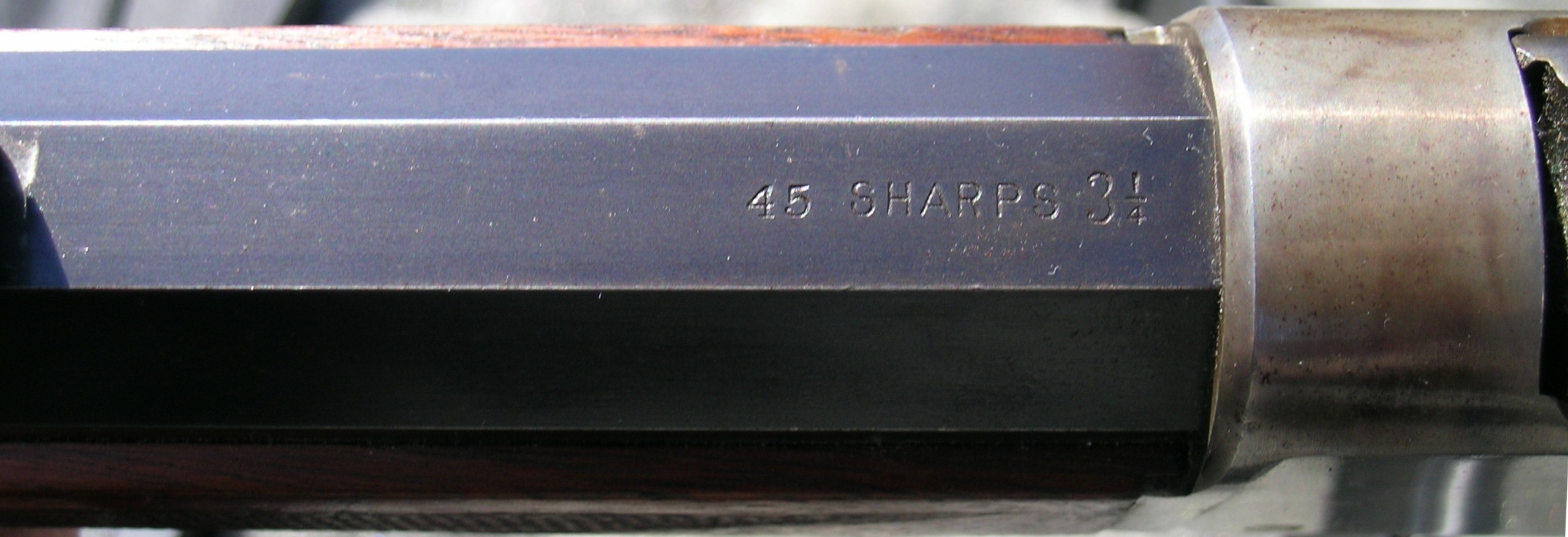
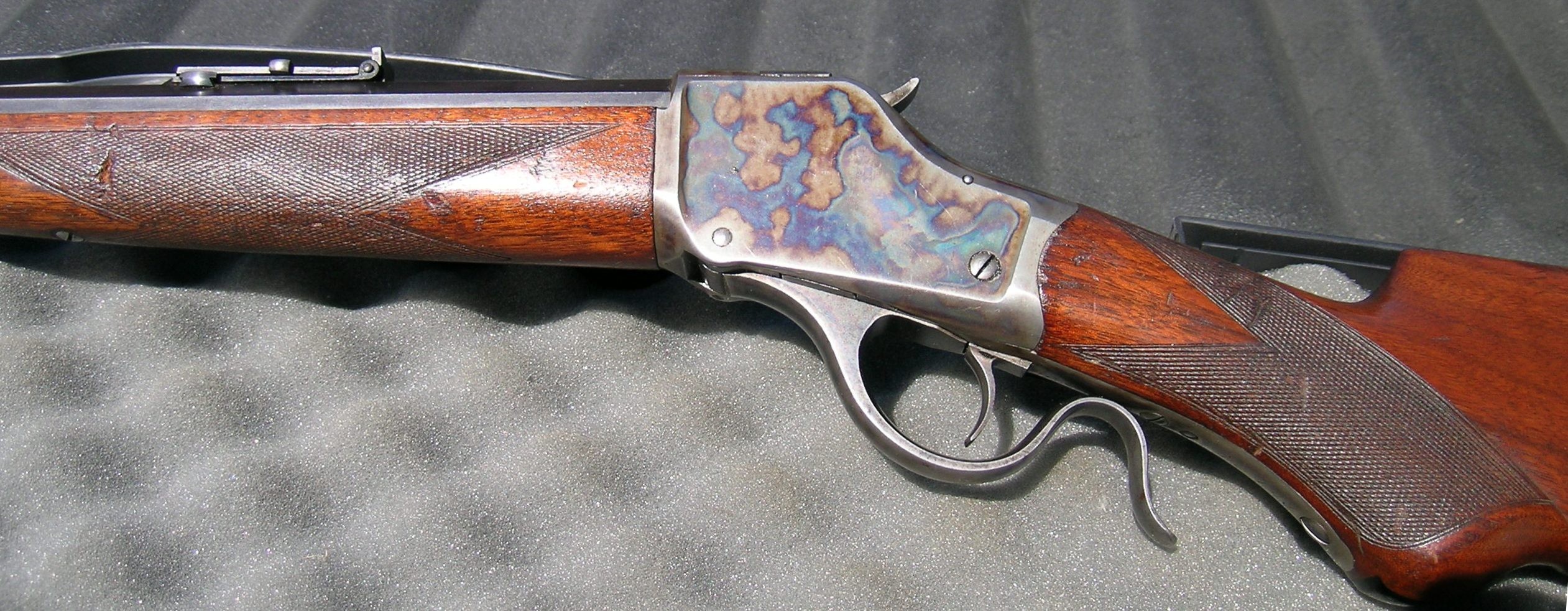
I had my hands on this rifle at the 2008 Cody show and offered the owner $15K for it… he turned down my offer.
Bert
WACA Historian & Board of Director Member #6571L
December 9, 2002
Offline
Bert H. said
Chuck said
Anthony said
Great additional information guy’s.
MAVERICK Said,
Frank Sellers doesn’t mention it in his book.
I’m wondering if there’s anything in the new Sharps book? Anyone have this book yet? Also wondering how detailed the cartridges, that Sharps used might be in this book, and possibly add to this or help explain some more than we’re wondering about.
https://www.blackpowdercartridge.com/product-reviews-35
Tony
I have all 5 of the Sharps series of books. The last one, #5, that you are talking about came out many months ago. It was one of the 8 books I have now gone through. None list a 50 cal cartridge longer than the 2 1/2″ except the one by W. O. Smith and it is just on a list. This list has 9 columns of data but the 50-3 1/4″ is blank in 5 of the columns.
To muddy the water even further. There is no data that says Sharps ever made a 45 3 1/4″ case either but Bertram made some 45-120 3 1/4″ brass.
Frank Barnes talks about the Sharps and Winchester 50-140’s and the Donnally conversion book lists the dimensions of each cartridge. The two are very close but not exactly the same.
Winchester certainly made both rifles and ammo marked 45 Sharps 3¼. Per my survey of the records, at least (30) high-wall rifles were made for the 45 Sharps 3¼ cartridge.
I had my hands on this rifle at the 2008 Cody show and offered the owner $15K for it… he turned down my offer.
Bert
It’s pretty obvious, that there is no printed material showing Sharps nor Winchester advertised this infamous cartridge the .50-140, in their brochures or catalogs. Yet we know that the cartridge was listed on Winchesters 1890 cartridge board, and it existed, as Maverick has stated and proven with pictures, as the “.50-140 Express”.
With the work of the Surveys and verification, as Bert stated, “Winchester certainly made both rifles and ammo marked 45 Sharps 3¼. Per my survey of the records, at least (30) high-wall rifles were made for the 45 Sharps 3¼ cartridge”. We know that this cartridge and rifles chambered in this cartridge existed!
Imagine where we’d be without the work and time dedicated to the surveys, and the ongoing research of the members work. A lot has come out here in this thread and made pretty obvious to many of us, including myself, as I thank the many who have educated me along the way and corrected some of my thoughts and beliefs, as many of us just didn’t know or had believed past rumored information that was passed along, mainly as hearsay.
Bert said,
“I had my hands on this rifle at the 2008 Cody show and offered the owner $15K for it… he turned down my offer”. That’s an extremely fair offer in 2008, for that rifle. IMO!
Some more thoughts on my behalf;
Winchester was very proud of all they accomplished and manufactured, and rightly so. It has always been said and I have always believed that Winchester was not a proponent of promoting other manufacturers, and especially not stamped into or on they’re barrels. Yet the, “45 Sharps 3 1/4”, has been verified, in existence on barrels. The .50-140 cartridge is out there. Yet the two M-1885, according to Bert’s survey hasn’t been found, if they hopefully still exist.
Tony
December 9, 2002
Offline
I can’t help but think about the old M-1885 Single Shot, that was used for a fence post, somewhere down around San Antonio, as the story was revealed and told to me by my Late Brother in Law, who was an Instructor at the Randolph Air Force base, as the Marine Corps CWO-5 Navigator, teaching the Art of Celestial Navigation, before the computers took over.
We we’re hanging out with some at the officers club having a beverage or two, and a card game was on the table, and the conversation was firearms and such, and the story was told that a High Wall was used by an ole’ Rancher as a “Fence Post”. Heck I called Bluff on it as we didn’t even have Cell phones back then.
Nothing would surprise me if a guy couldn’t get ammo or a an owner didn’t have a need anymore for something,(hard to fathom), and ran out of fence post and decided to bury something like this. A Big ole’ heavy barrel S.S. Rifle might fit the bill to an ole’ timer winding down trying to keep his cattle in.
Blasphemy to most of us collectors I’m sure. But sometimes I get to wondering!
Mike, maybe you can do some Texas re con and see if the story holds water! 
Tony
November 7, 2015
Offline
Mike, maybe you can do some Texas re con and see if the story holds water!
Tony
I’ll get right on that, Tony! Have millions of miles of fence to check but will let you know when I find it. 
I feel pretty sure some early surplus single shots were used as fence posts or tomato stakes but I can’t imagine a highwall meeting that fate.
Mike

November 27, 2013
Offline
TXGunNut said
Mike, maybe you can do some Texas re con and see if the story holds water!
Tony
I’ll get right on that, Tony! Have millions of miles of fence to check but will let you know when I find it.
I feel pretty sure some early surplus single shots were used as fence posts or tomato stakes but I can’t imagine a highwall meeting that fate.
Mike
Mike
Some great guns have met a worse fate. I have an 1866 carbine that was discovered having been used as rebar in a concrete water trough when it was decommissioned and demolished in Northern Montana. The trough was near where Chief Joseph and the New Perce were captured by General Miles’ forces on their flight towards Canada. Now if that old carbine could talk, the stories it might tell! Mark
November 7, 2015
Offline
Mark Douglas said
TXGunNut said
Mike, maybe you can do some Texas re con and see if the story holds water!
Tony
I’ll get right on that, Tony! Have millions of miles of fence to check but will let you know when I find it.
I feel pretty sure some early surplus single shots were used as fence posts or tomato stakes but I can’t imagine a highwall meeting that fate.
Mike
Mike
Some great guns have met a worse fate. I have an 1866 carbine that was discovered having been used as rebar in a concrete water trough when it was decommissioned and demolished in Northern Montana. The trough was near where Chief Joseph and the New Perce were captured by General Miles’ forces on their flight towards Canada. Now if that old carbine could talk, the stories it might tell! Mark
Mark-
I wrote an article for the TGCA magazine awhile back about a Model 1841 “Mississippi Rifle” that was very likely buried in a S. Texas field by a member of the Texas 4th Cavalry unit returning from the Glorieta Pass campaign during the Civil War. It was discovered by a farmer about 50 years later and was apparently very well wrapped as it appears to be viable other than a broken lock. I deduced that a member of the unit buried it on the way to their next engagement in Galveston, planning on recovering it on their next trip thru. Most members of the 4th Cavalry were from that area of Texas. It obviously saw some heavy use, I was fortunate to discover part of its story but can only imagine the rest.
Mike
December 9, 2002
Offline
TXGunNut said
Mark Douglas said
TXGunNut said
Mike, maybe you can do some Texas re con and see if the story holds water!
Tony
I’ll get right on that, Tony! Have millions of miles of fence to check but will let you know when I find it.
I feel pretty sure some early surplus single shots were used as fence posts or tomato stakes but I can’t imagine a highwall meeting that fate.
Mike
Mike
Some great guns have met a worse fate. I have an 1866 carbine that was discovered having been used as rebar in a concrete water trough when it was decommissioned and demolished in Northern Montana. The trough was near where Chief Joseph and the New Perce were captured by General Miles’ forces on their flight towards Canada. Now if that old carbine could talk, the stories it might tell! Mark
Mark-
I wrote an article for the TGCA magazine awhile back about a Model 1841 “Mississippi Rifle” that was very likely buried in a S. Texas field by a member of the Texas 4th Cavalry unit returning from the Glorieta Pass campaign during the Civil War. It was discovered by a farmer about 50 years later and was apparently very well wrapped as it appears to be viable other than a broken lock. I deduced that a member of the unit buried it on the way to their next engagement in Galveston, planning on recovering it on their next trip thru. Most members of the 4th Cavalry were from that area of Texas. It obviously saw some heavy use, I was fortunate to discover part of its story but can only imagine the rest.
Mike
Mike,
Good to know that you’re keeping an eye peeled along those fence lines. 
That article you wrote in the TGCA magazine sure sounds interesting, as we can certainly understand that happening, allowing our Cowboy minds to drift a little!
Mark,
I’m glad that you started this thread in all honesty. It has brought out a lot of good information, along with some nice pictures, of a few of Chucks cartridge collection, and Brady’s also. Along with Bert’s never ending knowledge and survey information.
Being a guy that grew up in the concrete/construction field, we sure have seen a lot. Never a firearm buried as reinforcement, bit fencing, posts, and all kinds of what people thought would make good reinforcement in Concrete! In most cases the stuff that’s used actually causes weakness in the concrete that their placing and trying to save money on rebar or the proper reinforcement. It’s no different than any other trade where someone is trying to save a few bucks and surviving along the way.
To find a m-1866, now that would be something! A very historical find being in that area at that time of burial.
Tony
December 9, 2002
Offline
I thought I’d bring this information from the other post, here to this interesting conversation.
In the Frank Sellers, Sharps book, in the back he has a cartridge section ans a paragraph on each cartridge describing and explaining the cartridges that Sharps used in their rifles. He shows several early linen cartridges, and percussion cartridges and also talks about the paper patch cartridges, and all the way up to the famed “Big 50″ cartridge,but no mention of the 50-3 1/4”, or 50-140, cartridge,(in which great discussions are had on another post), in his 1988, (third printing), book which is pretty detailed.
The first .45 caliber cartridge he lists: .45 CALIBRE 2.1-INCH STRAIGHT (.45-70 GOVERNMENT) Listed as the .45 2 1/4 in 1875 and .45 2 1/12 inch in 1876.
2 nd : .45 CALIBRE 2.4-INCH STRAIGHT Commonly called the 45-90 Models 1874, 1877, and 1878 Long Range rifles.
3 rd : .45 CALIBRE 2.6-INCH STRAIGHT The common load for this was the .45/100/550, Paper Patch.
4 th : .45 CALIBRE 2-7/8 INCH STRAIGHT This was the longest factory case loaded by the Sharps Rifle Company.
Tony
May 23, 2009
Offline
Anthony said
4 th : .45 CALIBRE 2-7/8 INCH STRAIGHT This was the longest factory case loaded by the Sharps Rifle Company.
Tony
That tracks with what is listed in the 1879 Catalog. You’ll also notice the highest grains is 110 grains, under the cartridges table and the largest grains of powder measure offered is 120 grains.
Sincerely,
Maverick
WACA #8783 - Checkout my Reloading Tool Survey!
https://winchestercollector.org/forum/winchester-research-surveys/winchester-reloading-tool-survey/


1 Guest(s)
