

 Log In


February 6, 2010
 Offline


Hey guys Anymore are the new Winchester 1873’s any better made than the Uberti 1873 rifles??
Have no idea about values in the future for either.

April 30, 2023
Offline
I have something of both makers, and both are solid. If I had to nitpick, I’d give a slight preference to the Miroku-made Winchesters for just overall fit and finish (by a nose).

January 20, 2023
Offline
I assume the Uberti 1873 is mechanically the same as the original, no tang safety or rebounding hammer. I know the Winchester does not have them, alone among the Miroku Winchester lever action guns. Both brands are very close copies of the original 1873 functionally, and they are both well made of excellent materials.
The aesthetics of firearms is a marshy path to tread and opinions vary, to say the least. I have never found the Italians to get the wood color quite right, likely because the blanks come from different species. Winchester, particularly in the deluxe grades, often sells spectacular Walnut. Make sure the one you are shown is the one you will get. Dealers often use stock photos. Some don’t.
I have been immensely pleased with Miroku guns, whether branded Browning or Winchester, and have bought and used many ofthem for almost a half Century. I couldn’t afford the beautiful Charles Daly over/unders that Miroku was building in the late Sixties and Seventies but they were the full equal of the Belgian Browning Superposed. So much so, that Browning made a secret deal with Miroku to start building the Citori and squeezed Charles Daly out of the picture.
The notion that Japanese Brownings are somehow inferior to Belgian-made Brownings is Bravo Sierra in the first degree. I own and have owned and used enough of both to have a fact-based opinion. In fit, finish, and function — in every respect, in fact — my twenty gauge Superposed pleases me. However, it is not superior to my Miroku-built BSS Sporter twelve gauge side-by-side. Or my 1989 Browning Model 12 or later Model 42. Both Miroku. Nor, dare I say it, is my Winchester.Model 21 Skeet.Gun.
The price differentials are collector-driven. That’s not a small thing, if you want something every collector dreams of owning. When the elephants fight, the grass gets trampled.
But Miroku is top shelf quality among new arms, as of today.
- Bill
WACA # 65205; life member, NRA; member, TGCA; member, TSRA; amateur preservationist
"I have seen wicked men and fools, a great many of both, and I believe they both get paid in the end, but the fools first." -- David Balfour, narrator and protagonist of the novel, Kidnapped, by Robert Louis Stevenson.
February 6, 2010
Offline
A friend of mine bought the Cimarron/Uberti 1873 Deluxe Sporting rifle with 24” barrel. Checkered stock. Pistol grip. It sure is a beautiful rifle. The fit and finish is extreamly pleasing. It is also roughly $700 cheaper. Now that being said I have no idea what it will be worth in the future. As long as it does not loose value and you have fun shooting it I suppose you would be just fine.
January 20, 2023
Offline

Steve, If you are buying it to keep and shoot, buy the individual gun, not the brand. I have no experience re-selling Uberti. I do have some experience buying three Miroku Winchesters, each of which was not currently manufactured when I sold it, two of which I’d bought new in 2004 and 2006, and another I’d bought in like-new condition but without a box off s consignment rack, last year. I lost about fifty bucks, all up, on the used one. I lost little or nothing ( ignoring opportunity cost) on the other two, even after the GB commission.
The buying power of the American Dollar has fallen a lot since 2004 and that probably affects used Uberti rifles as well. I buy guns to collect and shoot, not as investments, and tend to buy impulsively. When I sell a gun, it’s because the magic it had when I bought it somehow leaked out or I want something else enough to let it go.
I think the Cimarron branded Uberti-made rifles are a cut above other Ubert-made rifles. The owner spends time in Italy educating the workmen in Val Trompa on what a Winchester should look like. And it shows. If I were buying a Uberti, I’d buy the Cimarron import.
- Bill
WACA # 65205; life member, NRA; member, TGCA; member, TSRA; amateur preservationist
"I have seen wicked men and fools, a great many of both, and I believe they both get paid in the end, but the fools first." -- David Balfour, narrator and protagonist of the novel, Kidnapped, by Robert Louis Stevenson.
February 6, 2010
Offline
Zebulon said
Steve, If you are buying it to keep and shoot, buy the individual gun, not the brand. I have no experience re-selling Uberti. I do have some experience buying three Miroku Winchesters, each of which was not currently manufactured when I sold it, two of which I’d bought new in 2004 and 2006, and another I’d bought in like-new condition but without a box off s consignment rack, last year. I lost about fifty bucks, all up, on the used one. I lost little or nothing ( ignoring opportunity cost) on the other two, even after the GB commission.
The buying power of the American Dollar has fallen a lot since 2004 and that probably affects used Uberti rifles as well. I buy guns to collect and shoot, not as investments, and tend to buy impulsively. When I sell a gun, it’s because the magic it had when I bought it somehow leaked out or I want something else enough to let it go.
I think the Cimarron branded Uberti-made rifles are a cut above other Ubert-made rifles. The owner spends time in Italy educating the workmen in Val Trompa on what a Winchester should look like. And it shows. If I were buying a Uberti, I’d buy the Cimarron import.
I tend to be the same way. Very impulsive when it is something I do not have and interest me. My thoughts are as long as I do not loose any money I am good.
I have bought several Cimarron 45 colt pistols and they are great shooters. I have heard the same about Cimarron and the owner demanding the best of the best that Uberti makes.

February 11, 2018
Offline
Considering the Winchester is actually an import from Japan, and the Uberti is an import from Italy…..parts are readily available for the Uberti. If I had plenty of money, I’d get both…but I ended up with an Uberti and will never look back.
My Uberti 73, Imported by Cabela’s in 1997…is no safe queen. Been road hard and put up wet. Actions like she was new…and shoot just as well.
Two 100 yard targets, 30 shot group
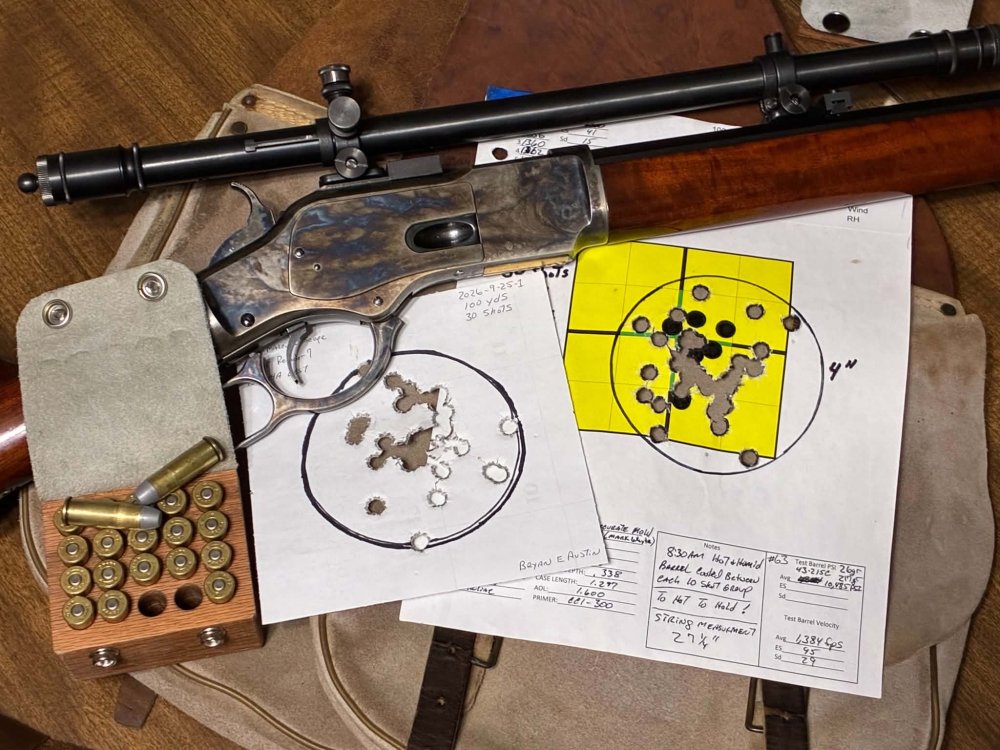
[Image Can Not Be Found]
January 20, 2023
Offline
Very handsome, Bryan and it makes me happy to see you using it for what it was intended.
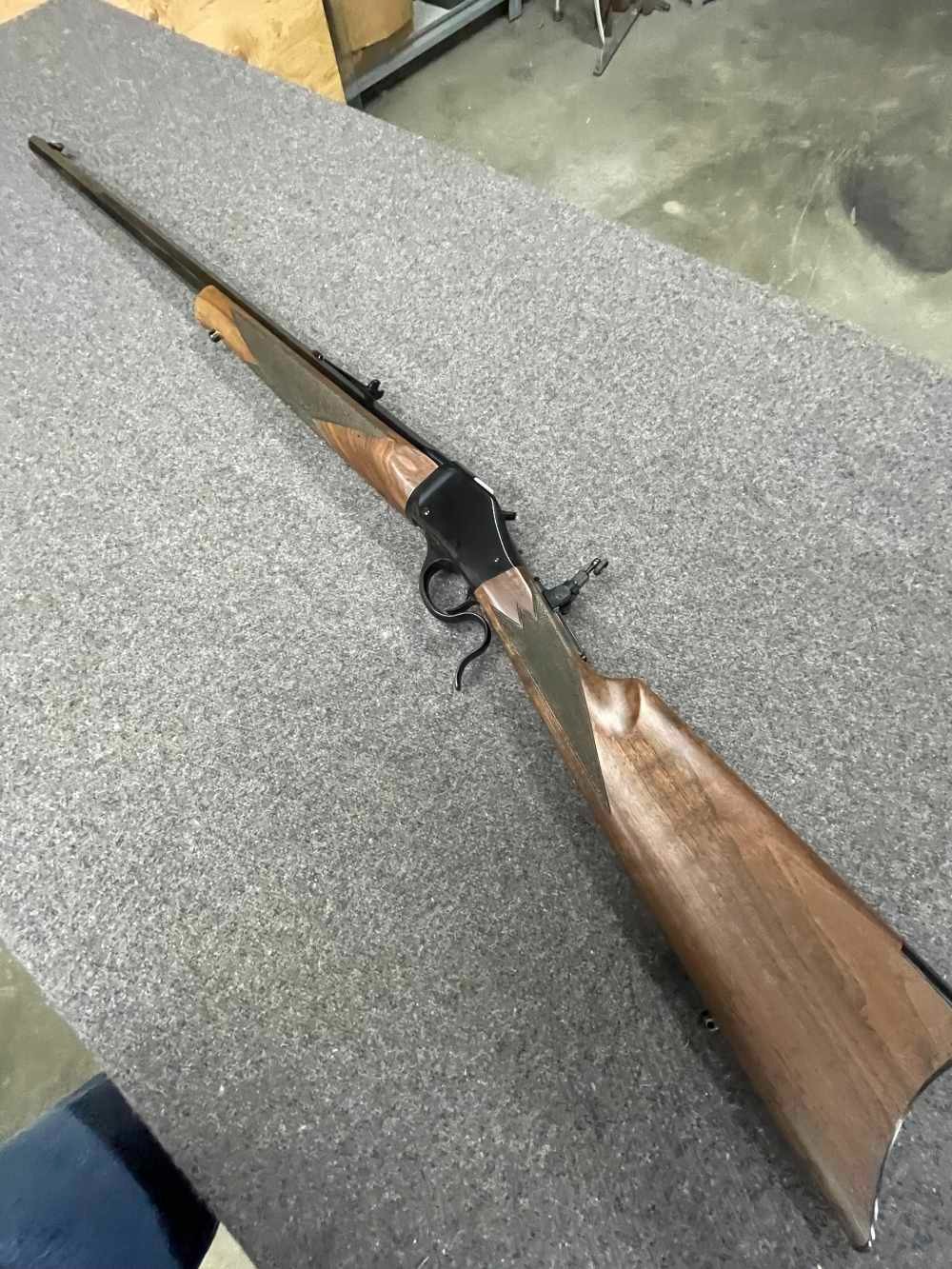
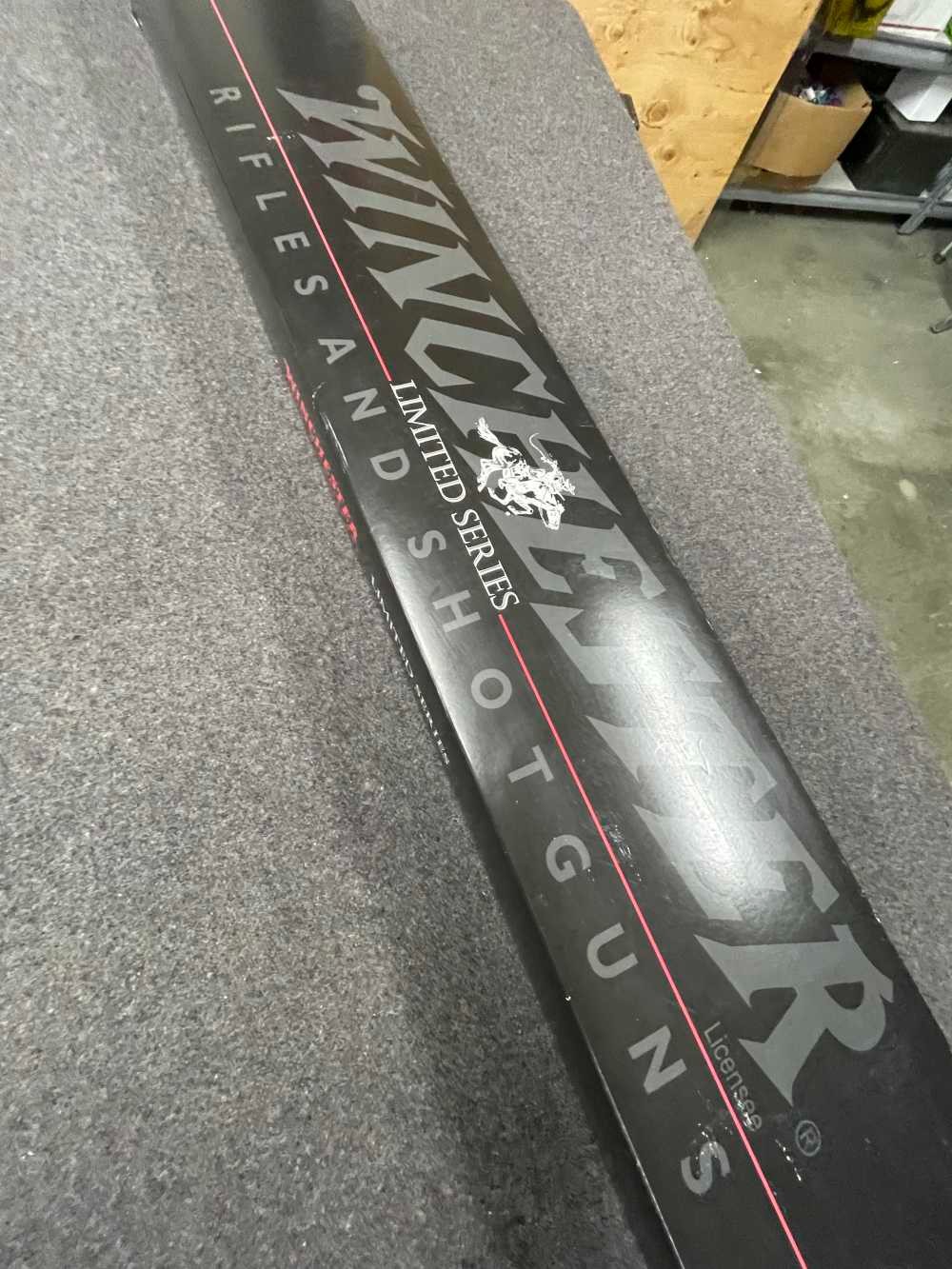
I’m waiting on a Miroku-built Winchester 1885 made up as part of Browning’s Traditional Hunter series. A limited edition, it is NIB although built in 2004, chambered in 38-55. It comes furnished with a tang micrometer sight (looks like the windage adjustable Marble’s) but I’ve started to study the modern reproductions of the Malcolm scopes. Do you have any suggestions or recommendations? 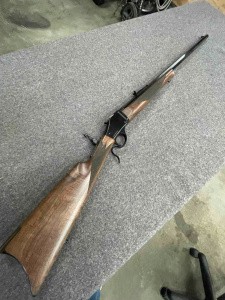
- Bill
WACA # 65205; life member, NRA; member, TGCA; member, TSRA; amateur preservationist
"I have seen wicked men and fools, a great many of both, and I believe they both get paid in the end, but the fools first." -- David Balfour, narrator and protagonist of the novel, Kidnapped, by Robert Louis Stevenson.
February 6, 2010
Offline
I would like to add an additional question here. If ya had a choice what would you choose chambered in 45 colt or the 44/40 for the 1873??Any reasons for either.
April 30, 2023
Offline
slk said
I would like to add an additional question here. If ya had a choice what would you choose chambered in 45 colt or the 44/40 for the 1873??Any reasons for either.
If you’re truly looking for authenticity to the “old ways” then go 44-40….if you’re looking to be able to locate ammo more readily and even reload more easily, go 45 colt. I have a couple rifles in both.
January 20, 2023
Offline
Jeremy P said
slk said
I would like to add an additional question here. If ya had a choice what would you choose chambered in 45 colt or the 44/40 for the 1873??Any reasons for either.
If you’re truly looking for authenticity to the “old ways” then go 44-40….if you’re looking to be able to locate ammo more readily and even reload more easily, go 45 colt. I have a couple rifles in both.
Agree. Factory ammunition of any centerfire pistol caliber is discouragingly expensive but finding 44-40 Winchester at any price makes it poor choice for non-handloaders.
For handloaders, there’s little to no difference in the cost of components because brass cases are priced principally by the amount of the metal in a case. The 44 Winchester requires more expertise to match the groove diameter of the rifle to the sized diameter of the bullet but this is fairly easy to learn and do. The actual reloading processes of case sizing and bullet seating of the 44 Winchester case require a little more finesse and patience because the brass case is thinner and will not tolerate rough or clumsy handling. It is not well suited to a progressive loading machine. Because it has some body taper and a slight neck, it cannot be sized without lubrication in a carbide sizing die.
In some ways, the possible ballistics of the 44 Winchester in full length rifles — flatter shooting and better energy retention at the outer edge of its practical live target distance – make it a superior deer rifle. Arguably. At 50 to 75 yards, there’s little difference in trajectory and both are effective on medium game at those distances. As Urban Assault Rifles, both are show ponies.
- Bill
WACA # 65205; life member, NRA; member, TGCA; member, TSRA; amateur preservationist
"I have seen wicked men and fools, a great many of both, and I believe they both get paid in the end, but the fools first." -- David Balfour, narrator and protagonist of the novel, Kidnapped, by Robert Louis Stevenson.
February 6, 2010
Offline
I can slug my barrel and see. My normal rule of thumb has usually been 2 thousandths over for casting which is what I would be doing and then running them through my lyman sizer and lubing. If there is a better size let me know.
January 20, 2023
Offline
slk said
I can slug my barrel and see. My normal rule of thumb has usually been 2 thousandths over for casting which is what I would be doing and then running them through my lyman sizer and lubing. If there is a better size let me know.
I’m not currently a bullet caster although I aspire to be. I load small quantities of cast rifle bullet ammunition for quite a few calibers and haven’t settled on one I want to buy a mold for, yet. If you’ve had good experience with 2 thousandths over groove diameter with your alloy, I can’t imagine the 44 Winchester would behave differently than the others you load for, unless you were given to starting off with a published maximum load – something I doubt you would do.
As I understand the craft, for the velocities we want to achieve – less than 2000 fs and probably much less than that — we want to seal the bore to prevent gas cutting and blowby, which cause leading. To ensure obturation of the bore, we want an alloy soft enough to bump up and a bullet diameter .001 to .002 over groove diameter to help the sealing. A too-hard alloy can actually cause leading, I’m told. Whether .001 is better than .002, I don’t know but would guess the hardness of the alloy and how deep or shallow the grooves are relative to the lands would affect the answer. Trying both sizes at velocities on the lower end of the scale should provide an answer. I haven’t heard of sizing bullets more than .002 over groove diameter but i’m not the person to ask.
- Bill
WACA # 65205; life member, NRA; member, TGCA; member, TSRA; amateur preservationist
"I have seen wicked men and fools, a great many of both, and I believe they both get paid in the end, but the fools first." -- David Balfour, narrator and protagonist of the novel, Kidnapped, by Robert Louis Stevenson.
November 19, 2006
Offline
I’ve enjoyed the information and discussion in this thread. It is relevant to me as I load for many .44-40’s rifles (i.e Winchester 73’s, 92’s and “M…..n” 94’s.). All of these are vintage/antique rifles. I also load for rifle shooting in the .45 Colt chambering. However, again not a reproduction, but in a Whitney-Kennedy rebored to .45 Colt.
I mainly shoot cast bullets in all of the above. I’ve often been on the cusp of getting set-up casting my own bullets but (to my surprise), restraint and rationality have held me back from adding what would surely turn into many hundreds of pounds of surely what would turn into an endless amount of moulds, sizing dies and on and on.
I discovered years ago you don’t have to cast your own bullets to shoot cast bullets. There’s a multitude of manufacturers who will happily provide them – for prices that are reasonable enough. For the .44-40, I have on hand .427 (both JSP and lead), .428, .429, .430 and .431 lead bullets. This affords much opportunity for experimentation. As was mentioned above, bullet hardness is an important factor. Many of smaller bullet casting companies provide the buyer with varying hardness options. Not to get bogged down here, but when it comes to experimentation the interplay between bullet hardness and type of powder and amount of powder that will lead to the optimal bumping of the bullet. And then of course, say you find the optimal bullet for the bore, will the round fit the chamber? Maybe a change to thinner brass will resolve that, some special dies… There’s much to keep the mind active and experiences to share.
January 20, 2023
Offline
Uhhhh….Steve, I think you’ve just showed me the road I’m about to start down, although I,m not sure how far I’ll get.
- Bill
WACA # 65205; life member, NRA; member, TGCA; member, TSRA; amateur preservationist
"I have seen wicked men and fools, a great many of both, and I believe they both get paid in the end, but the fools first." -- David Balfour, narrator and protagonist of the novel, Kidnapped, by Robert Louis Stevenson.

December 12, 2019
Offline
steve004 said
I’ve enjoyed the information and discussion in this thread. It is relevant to me as I load for many .44-40’s rifles (i.e Winchester 73’s, 92’s and “M…..n” 94’s.). All of these are vintage/antique rifles. I also load for rifle shooting in the .45 Colt chambering. However, again not a reproduction, but in a Whitney-Kennedy rebored to .45 Colt.
I mainly shoot cast bullets in all of the above. I’ve often been on the cusp of getting set-up casting my own bullets but (to my surprise), restraint and rationality have held me back from adding what would surely turn into many hundreds of pounds of surely what would turn into an endless amount of moulds, sizing dies and on and on.
I discovered years ago you don’t have to cast your own bullets to shoot cast bullets. There’s a multitude of manufacturers who will happily provide them – for prices that are reasonable enough. For the .44-40, I have on hand .427 (both JSP and lead), .428, .429, .430 and .431 lead bullets. This affords much opportunity for experimentation. As was mentioned above, bullet hardness is an important factor. Many of smaller bullet casting companies provide the buyer with varying hardness options. Not to get bogged down here, but when it comes to experimentation the interplay between bullet hardness and type of powder and amount of powder that will lead to the optimal bumping of the bullet. And then of course, say you find the optimal bullet for the bore, will the round fit the chamber? Maybe a change to thinner brass will resolve that, some special dies… There’s much to keep the mind active and experiences to share.
Many, many years ago, I sat out to obtain suitable molds for each caliber pistol cartridge I owned, and a few of the rifle. I also bought a ton, (literally 2000 pounds) of wheel weights from a Big O tire store and eventually melted them down, cleaned up all the slag and steel clips, and poured several lifetime supplies of 1 pound ingots into RCBS molds.
Along the way, I picked up a good supply of linotype and some pure tin for practicing my chemistry/metallurgy. But for 98% of my casting, it’s been straight wheel weights. I’ve had good success with all calibers I’ve tried. And casting can be a relaxing and rewarding experience. I usually do it in the winter, when I can open the garage door for ventilation and keep a reasonable temperature. I rotate molds so none overheat, but try to cast no more than 2 or 3 calibers at a time. You can size and lube them at your leisure some time later. I have a storage shed full of 3 pound coffee cans full of cast bullets, one size per can.
But Steve is correct, I also discovered that I can buy, at reasonable prices, cast bullets, already sized and lubed, in just about any diameter and weight I’d ever choose.
So if I were starting out fresh, would I still go down the casting road? Probably, because it gave me a sense of being ‘self sufficient’, and it provided a learning experience (what diameter bullet works best in this caliber, etc.) If you have time, it is a very enjoyable exercise. And standing back and looking a a large pile of perfectly formed bullets, sized and lubed, that you created yourself is very rewarding.
My home-cast bullets are certainly less costly than any you can buy. But if you factor your time into the mix, and put a dollar value on your time, it would be difficult to justify on cost alone.
Paul
Nevada Paul
Life Member NRA
February 6, 2010
Offline
I have been casting for these old calibers for years and it is pure enjoyment.
I too have casted straight wheel weights for the most part and have had great results.
Now when i do mix alloys and have to use tin for some extra hardness I no longer buy tin as it has gotten way over priced. What I do is go to garage and estate sales an buy old pewter cups and such for like a buck. Tin is $30 bucks a lb and a half pound pewter cup is like 50 cents to a dollar. Just melt the pewter into your mix and you are good to go. Pewter is 98% tin.
I agree that you can have a lot of stuff tied up in casting. Ya have the mold, sizing dies,and lubing. Top punches that fit the bullet you cast,etc. But it sure is rewarding.
December 12, 2019
Offline
slk said
I have been casting for these old calibers for years and it is pure enjoyment.
I too have casted straight wheel weights for the most part and have had great results.
Now when i do mix alloys and have to use tin for some extra hardness I no longer buy tin as it has gotten way over priced. What I do is go to garage and estate sales an buy old pewter cups and such for like a buck. Tin is $30 bucks a lb and a half pound pewter cup is like 50 cents to a dollar. Just melt the pewter into your mix and you are good to go. Pewter is 98% tin.
I agree that you can have a lot of stuff tied up in casting. Ya have the mold, sizing dies,and lubing. Top punches that fit the bullet you cast,etc. But it sure is rewarding.
SLK, if you’re having issues with the melt not filling out the mold fully, with crisp, sharp edges, a little tin will lower the surface tension of the melt and help provide fully formed (and bright, shiny) bullets. Antimony is also an effective hardening agent, but wheel weights already contain about 5% antimony, which is close to ideal. I think wheel weights have essentially no tin, unless it’s there as an impurity from some previous source.
I don’t even remember where or how I came across a supply of linotype, but I have about 25 pounds, which serves as my source of tin when needed.
Paul
Nevada Paul
Life Member NRA
November 19, 2006
Offline
I want to add that there is a difference in the safety level between purchasing cast bullets from a manufacturer vs. casting your own. This difference has been a factor in my choice of not pursuing casting my own.
Bullet casting is an activity for the competent only. Although I see myself as generally competent, I am not familiar with all the aspects of bullet casting. That implies a, “learning curve” is needed. I know we can learn from our mistakes but the consequence of making a mistake can vary widely. And of course, even among the competent, accidents can happen.
I appreciate the comments from those who cast their own and report a good level of satisfied derived from the activity. Becoming competent at something is a good path to satisfaction.
November 7, 2015
Offline
Casting isn’t for everyone. I started casting years ago because I couldn’t buy a decent cast bullet for a difficult project. For a minimal investment (compared to the commercial bullets available at the time) I was casting better bullets than I could buy. Dozens of moulds, a few furnaces, sizing equipment and a supply of gas checks later I lost sight of the economy benefit but I was having a great time.
For my current needs with the commercial bullets now available I’m not sure I would go down the “pour your own” road today. Yes there are risks but I take a risk driving, walking or cooking and that doesn’t stop me. I’ve made mistakes and experienced equipment malfunctions but the impact was mitigated by good PPE and safety procedures. One change that is a factor for aspiring bullet casters is that very few passenger vehicles use lead wheel weights today so that “nearly free lead” window of opportunity is closing. There are also several commercial casters today who produce a good product for less than I would sell them for if I thought my time was worth anything.
The 44WCF is a cartridge best loaded by a bullet caster who can tailor bullet diameter and hardness to the varied bore diameters found in vintage and modern rifles. Commercial alloys remove the risk of melting and cleaning scrap lead so when I run out of my current supply of scrap lead I will quit using it, even though WW scrap makes a great handgun bullet. It’s possibly a bit hard for the 44WCF but I’ve found pure lead mixed 50/50 with WW scrap gets close to the 20-1 or 16-1 the old BP cartridges were designed for.
Mike


1 Guest(s)
