

 Log In


September 6, 2023
 Offline


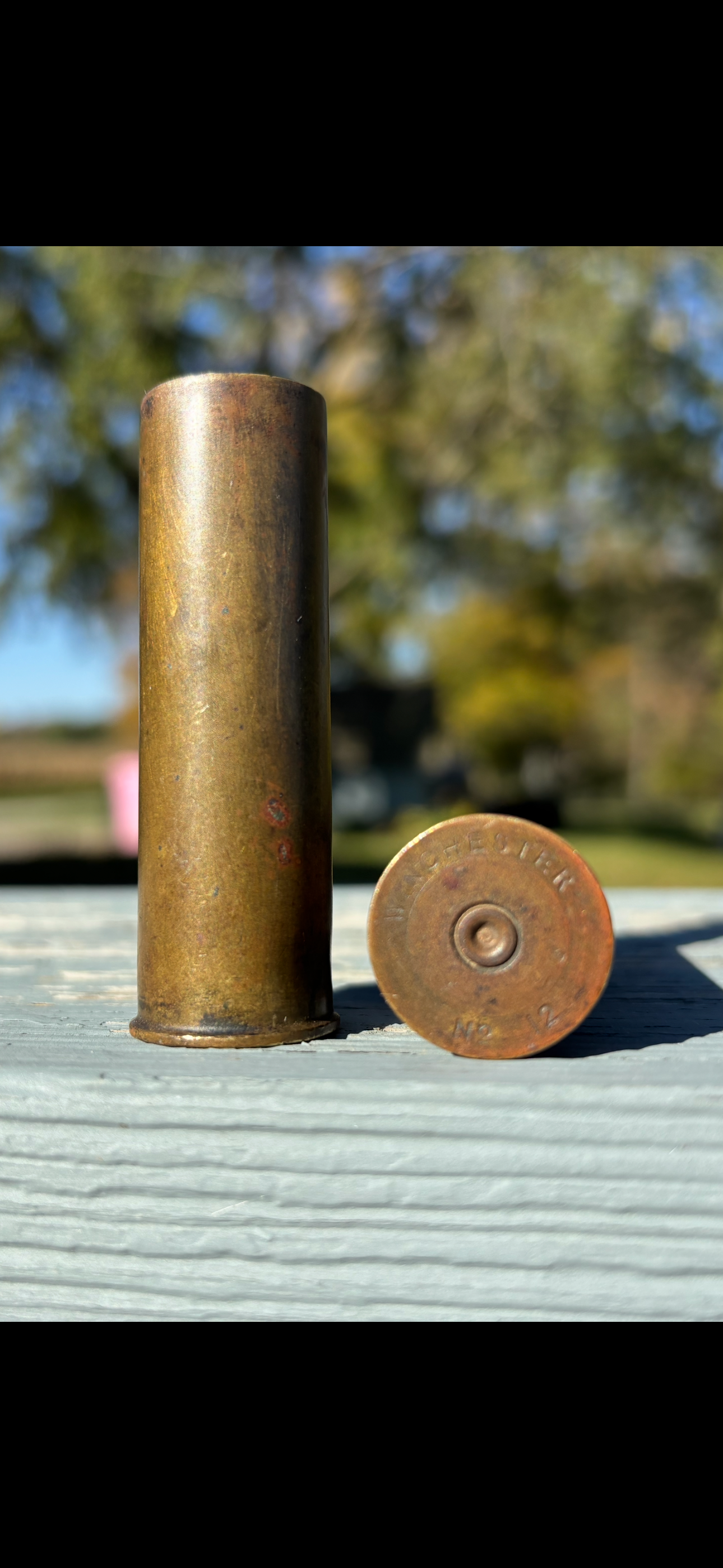
I picked up some vintage brass Winchester shells at a garage sale and was wondering if anyone here knows what kind of primer I need to use? I was able to find shot,powder and fiber wad info but nothing on the primer type. They are 2 5/8th 12 gauge shells. Thanks

April 15, 2005
Offline
Joe,
While I am not 100% sure, I believe that the No. 209 primer is what you want.
Bert
WACA Historian & Board of Director Member #6571L

May 23, 2009
Offline
It all depends on how vintage they are / when they were made. If there very old they used the Winchester #2 Primer.
Pictures would be most helpful?
WACA #8783 - Checkout my Reloading Tool Survey!
https://winchestercollector.org/forum/winchester-research-surveys/winchester-reloading-tool-survey/
April 15, 2005
Offline
Maverick said
It all depends on how vintage they are / when they were made. If there very old they used the Winchester #2 Primer.
Pictures would be most helpful?
True, but I suspect that they are WWII or later vintage, and if that is a good assumption, a 209 primer would be appropriate.
Bert
WACA Historian & Board of Director Member #6571L
September 6, 2023
Offline

April 15, 2005
Offline
Joe,
First comment… I would not try to reload those old shell cases.
I believe that the “No. 2” stamped on the base of the shell indicates the Winchester No. 2 primer.
Bert
WACA Historian & Board of Director Member #6571L
September 6, 2023
Offline
Thanks Bert,I guess they will just collect dust. I will look into getting some new brass shells.

October 19, 2008
Offline
Bert H. said
I believe that the “No. 2” stamped on the base of the shell indicates the Winchester No. 2 primer.
Bert
Take a closer look. The shell is marked “No. 12”, identifying the shell as 12 gauge. This was fairly standard across the major ammunition manufacturers in the late 19th and early 20th century.
FWIW, Winchester’s all-brass shotshells were primed with their No.2 (for black powder) or No.2-1/2 W (for smokeless powder), identical in size to our modern “Large Rifle” primer.
Jim
April 15, 2005
Offline
30gov03 said
Bert H. said
I believe that the “No. 2” stamped on the base of the shell indicates the Winchester No. 2 primer.
Bert
Take a closer look. The shell is marked “No. 12”, identifying the shell as 12 gauge. This was fairly standard across the major ammunition manufacturers in the late 19th and early 20th century.
FWIW, Winchester’s all-brass shotshells were primed with their No.2 (for black powder) or No.2-1/2 W (for smokeless powder), identical in size to our modern “Large Rifle” primer.
Jim
Good catch, and thanks for the added information.
Bert
WACA Historian & Board of Director Member #6571L
November 7, 2015
Offline
30gov03 said
Bert H. said
I believe that the “No. 2” stamped on the base of the shell indicates the Winchester No. 2 primer.
Bert
Take a closer look. The shell is marked “No. 12”, identifying the shell as 12 gauge. This was fairly standard across the major ammunition manufacturers in the late 19th and early 20th century.
FWIW, Winchester’s all-brass shotshells were primed with their No.2 (for black powder) or No.2-1/2 W (for smokeless powder), identical in size to our modern “Large Rifle” primer.
Jim
Cool! I feel these should not be reloaded but they make great eye candy. If they were ever fired with Holy Black or corrosive primers and not properly cleaned their integrity will be compromised. There are modern versions that are safe to load and fire even if they don’t have the historic appeal of the ones in the OP.
Mike
May 23, 2009
Offline
You have a 12ga Winchester First Quality Brass shell likely made sometime after 1879. These early brass/metallic shot shells were primed with the No. 2 Improved which was a brass cup primer. By 1885 the No. 2 Winchester Improved copper primer was the norm. The Smokeless loadings of the 1890s and early 20th Century would use a No. 3W primer.
Winchester used the No.2-1/2 and No.2-1/2 W on occasion for factory loaded metallic shot shells. And that they also used the No.2-1/2 W primer in shot shells when loading a “Top Load” for Proof Loads for firing at the factory and I believe those were Paper Shot Shells not Brass. Also, That may have only been used for a brief period in 1914.
The No. 2 Improved Winchester primer (plain copper) is proper for all Black Powder shells after 1884. The No. 3W Winchester primer (copper with W marking) and the No. 2 1/2 W Winchester primer, bras with a W in a circle is proper for any Factory loaded shell primer to 1920. After this time, the No. 3W Winchester copper primer is listed as the proper load until 1934. In 1934 the catalog listings indicate both the No.3W and the No.17NF (NF = non-fulminate) are proper. The No. 17NF at that timeframe used a plain brass cup. During WW1 and into the early 1920s, some shells will rarely show a brass primer marked with W. This indicates a NF priming formula being used in a No. 2 1/2 W primer.
If you de-prime the shell and separate the anvil from the cup, I likely can tell you would type of primer it was. Is the primer copper or brass? Its most likely a Winchester No. 2 Improved Primer be my initial guess.
Based on its fired condition and the remains of the crimp used on the end of the shell, it was most likely came from Winchester as a NPE (New Primed Empty) shell sold for loading / reloading on your own and intended for loading with Black Powder.
There are a lot of Cowboy Action Shooting guys that reload these old brass shells with Black Powder. For a crimp they simply superglue the top card in place instead of the traditional rolled crimp. But like you said, probably best to purchase a modern brass shell or plastic shell for loading to shoot.
Sincerely,
Maverick
P.S. All that primer information comes from information provided to me by Dan Shuey and is also mentioned in several of his books.
WACA #8783 - Checkout my Reloading Tool Survey!
https://winchestercollector.org/forum/winchester-research-surveys/winchester-reloading-tool-survey/


1 Guest(s)
