

 Log In


February 26, 2021
 Offline


Blue Ridge Parson said
Since these pictures were taken, I have acquired an even better condition pre-war 75 Sporting rifle with some interesting sights. If time allows, I will try to get a few pics of it.
BRP
Yes…. Please do.
Anyone else have 75s to share?

November 7, 2015
Offline

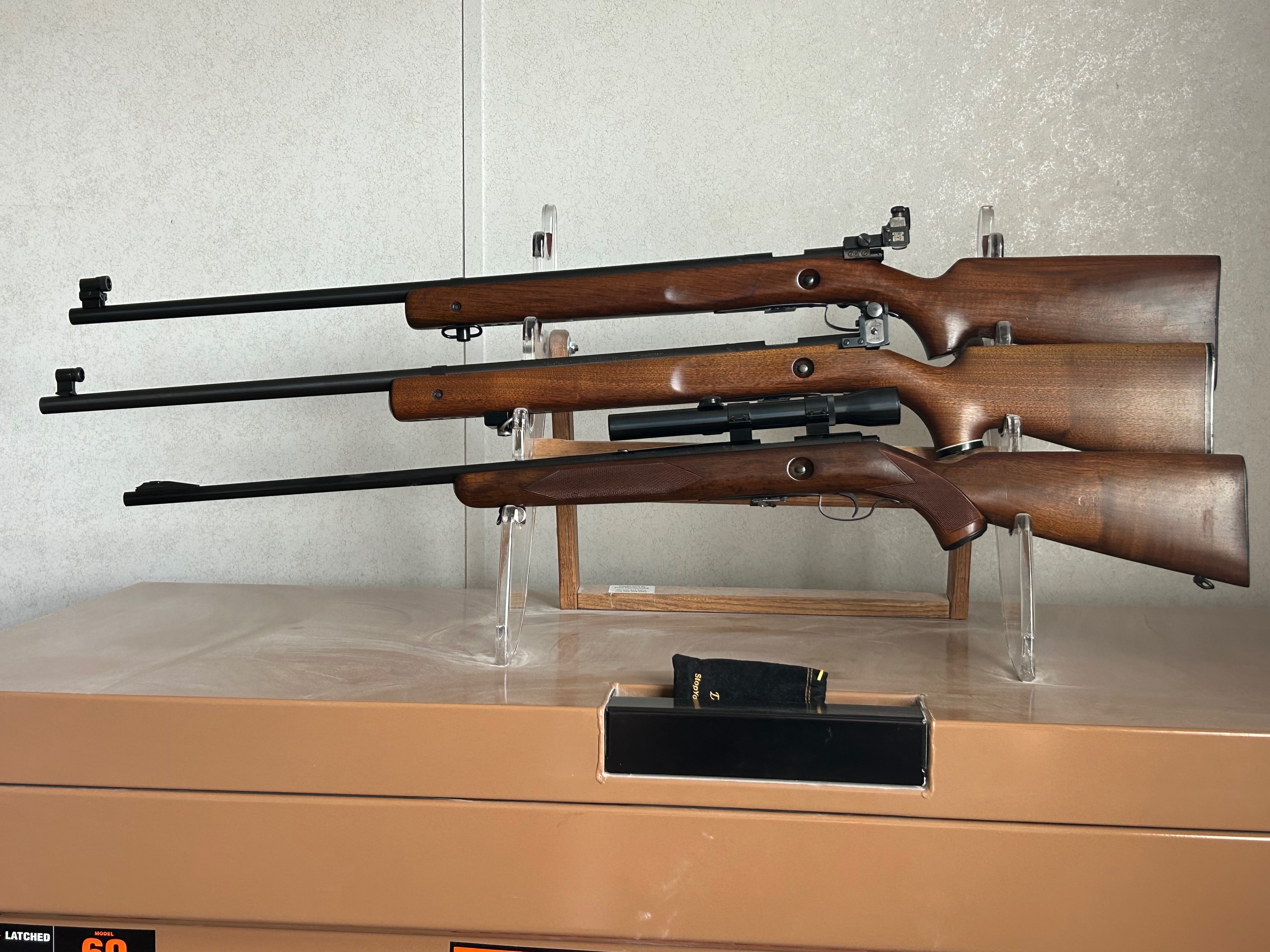
As requested, good day for safe diving. One original, two shooters, all fun! Sight package on middle Target made possible by the great detail of the sight chapter of JWA’s book, his spare parts stash, some online catalog sleuthing, my parts stash, and a bit of gentle woodworking. Sporting has some of the straightest wood I’ve seen on a Sporting, also has a somewhat period Weaver 4X scope. I wish I had the original sights but the scope makes it a better shooter as the original rear sight was not a receiver sight. I guess they were out of pretty wood when they made this one but I like it anyway.
Mike
February 26, 2021
Offline
TXGunNut said
As requested, good day for safe diving. One original, two shooters, all fun! Sight package on middle Target made possible by the great detail of the sight chapter of JWA’s book, his spare parts stash, some online catalog sleuthing, my parts stash, and a bit of gentle woodworking. Sporting has some of the straightest wood I’ve seen, also has a somewhat period Weaver 4X scope. I wish I had the original sights but the scope makes it a better shooter as the original rear sight was not a receiver sight. I guess they were out of pretty wood when they made this one but I like it anyway.
Mike
Mike,
That Weaver scope looks like it was made for that rifle….and your right about the straight grain. Very nice display rack too!
Thanks!
Keep the pics coming guys 😁

June 1, 2023
Offline
After finishing up one of the many outdoor projects that I must complete before cold weather descends on Big Sky Country, I pulled this pre-War Winchester 75 Sporting rifle out of the safe.
The serial number and the barrel date both indicate a 1939 rifle, so it is one of the earliest Sporters made.
The interesting thing about this rifle for me was the upgraded sights with which the original owner chose to equip this rifle. On the Lyman 57 E receiver sight, there is a very early Merit #3 adjustable aperture. You almost never see these tiny little Merit aperture discs today. Last one I recall seeing went for north of $100. The larger Merit discs (with the rubber flange) are quite common, but these little all steel discs are quite rare. And it works as intended, as the pics below show. The shooter dials in his perfect size opening.
The front sight is a King reflector sight, which has a tiny mirror that directs light toward the gold bead, which remains very visible through this indirect application of daylight to the bead.
These sights show that my newest pre-war 75 Sporter was owned by a very discerning sportsman, who had definite opinions about how to improve his chances in the field. I think its pretty cool to own an 87 year old rifle in such nice condition with some rarely encountered sights. Enjoy!
BRP
February 26, 2021
Offline
BRP,
Thanks for posting. The finish on that rifle is really nice. I can see now what Jeff was talking about with the fine cut checkering vs the later sporters. The sight is cool too. Adds a little bit of class to an already beautiful example.
Anyone else…. Keep ‘em coming!
November 7, 2015
Offline
Awesome sight package indeed, BRP! Stock is in spectacular condition. I’ve always wanted one of those adjustable rear apertures but I’ll muddle along with my drill press. Works great but only adjusts in one direction. Fortunately it’s the same direction my eyes seem to be going. Nice pics!
Mike
December 9, 2002
Offline
Mike,
A nice group you have assembled there. As you’re well aware of, these have always been fun to shoot.
Thanks for sharing!
BRP,
You’re extremely nice M-75 is very much appreciated here by us all. You’re descriptions of the sights, and explaining the enhanced functions really helped me to understand their intended purposes, bringing to light this nice set up, the original owner seemed to have ordered. What a nice example.
Thanks for sharing! 
Tony

April 30, 2023
Offline
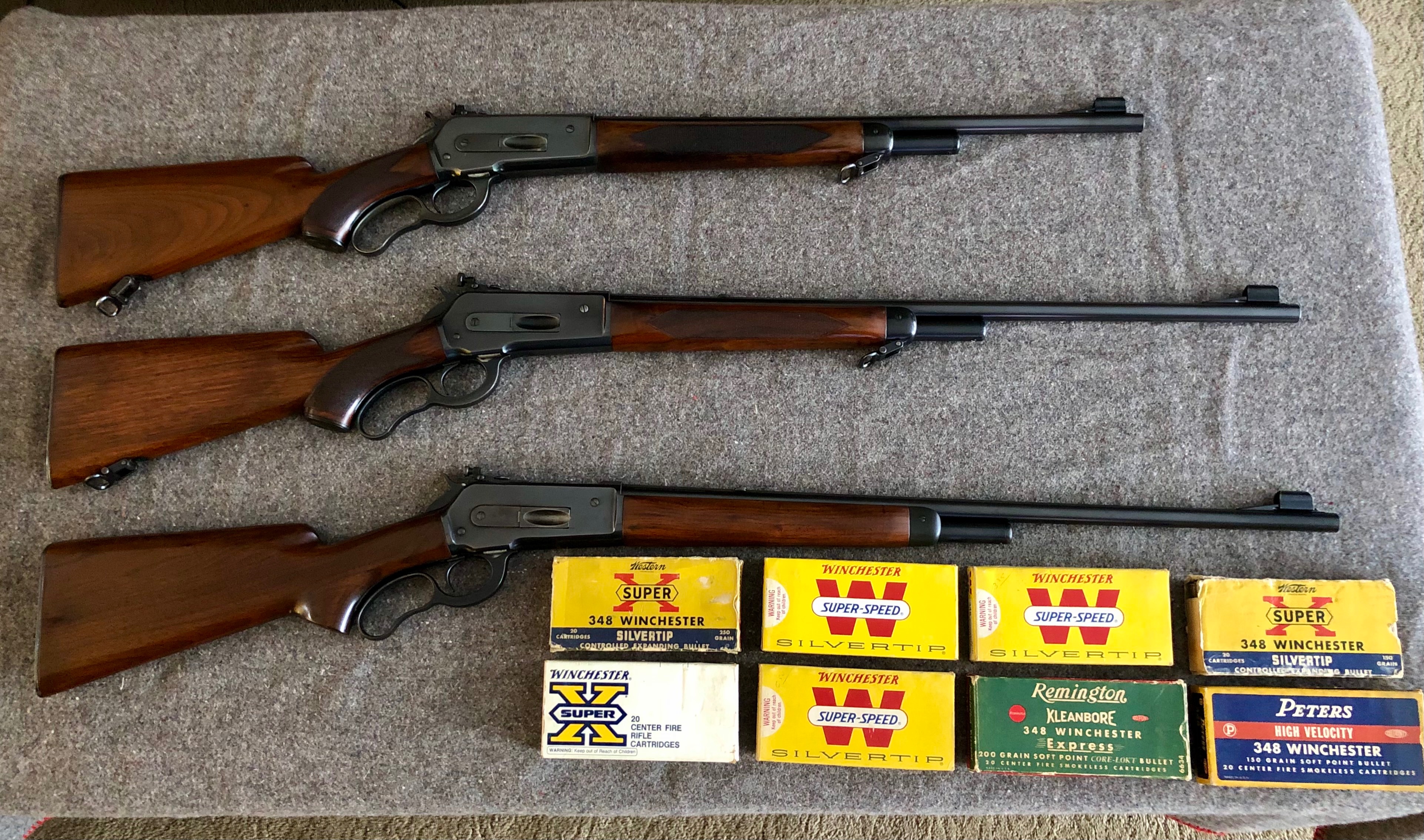
OK fine maybe I’ll dig out the others and take a photo, since they’re at the front of the safe more or less…. 
February 26, 2021
Offline
Jeremy P said
OK fine maybe I’ll dig out the others and take a photo, since they’re at the front of the safe more or less….
Please do…..😁

March 31, 2009
Offline
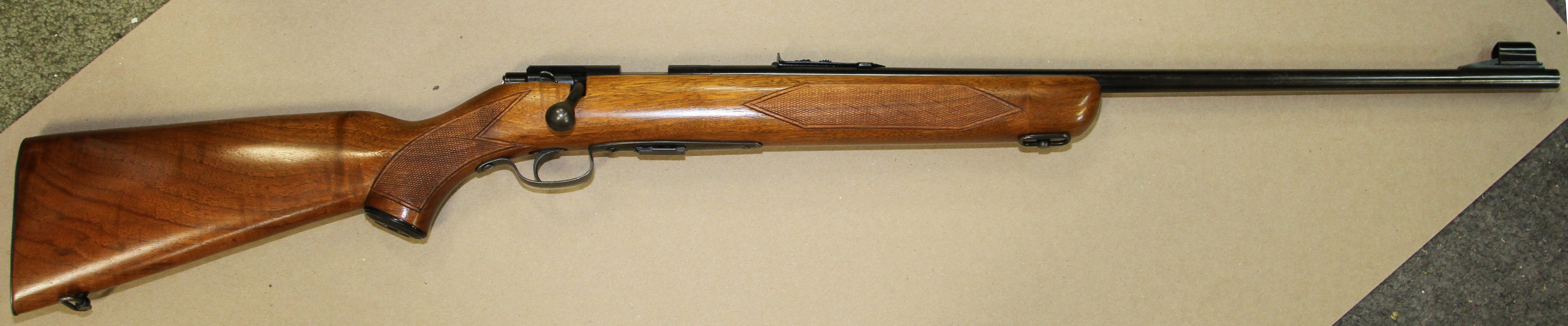
Here is a picture of my Sporter.
February 26, 2021
Offline
Chuck said
Here is a picture of my Sporter.
Again………….beautiful grain! This model seems to have more surviving ‘high condition” specimens as compared to other’s in the Winchester lineup.
Maybe they cost a bit more so they weren’t as quickly handed off to kids to take out in the woods and fields???
Thanks Chuck!
December 9, 2002
Offline
I completely understand the term “Pr-War”, but is there some serial number ranges that help out with the Pr-war designation, as WW ll started, 9/1/1939, and the M-75 began production 1938.
The 22 lines per inch checkering, vs. the 18 lines per inch, is an obvious distinction, but I was wondering if there was a cut off date, or serial number.
Tony

April 15, 2005
Offline
Anthony #5411 said
I completely understand the term “Pr-War”, but is there some serial number ranges that help out with the Pr-war designation, as WW ll started, 9/1/1939, and the M-75 began production 1938.
The 22 lines per inch checkering, vs. the 18 lines per inch, is an obvious distinction, but I was wondering if there was a cut off date, or serial number.
Tony
For the U.S., WW II did not begin until late in the year 1941. Winchester halted production of all the various Sporting firearm models in the May – August 1942 time period. For the Model 94, it was August 23rd, 1942 at serial number 1343183, and that is the cut-off for “pre-war”.
Bert
WACA Historian & Board of Director Member #6571L

July 17, 2012
Offline
Anthony #5411 said
I was wondering if there was a cut off date, or serial number.
Tony
Hi Tony,
According to the polishing room records, the last Model 75 serial number applied before the war ended was 45365, applied on January 31, 1943. Any subsequent Model 75 serial number was assembled after WWII ended and is considered “post-war”.
Best Regards,
WACA Life Member #6284 - Specializing in Pre-64 Winchester .22 Rimfire
December 9, 2002
Offline
Bert H. said
Anthony #5411 said
I completely understand the term “Pr-War”, but is there some serial number ranges that help out with the Pr-war designation, as WW ll started, 9/1/1939, and the M-75 began production 1938.
The 22 lines per inch checkering, vs. the 18 lines per inch, is an obvious distinction, but I was wondering if there was a cut off date, or serial number.
Tony
For the U.S., WW II did not begin until late in the year 1941. Winchester halted production of all the various Sporting firearm models in the May – August 1942 time period. For the Model 94, it was August 23rd, 1942 at serial number 1343183, and that is the cut-off for “pre-war”.
Bert
Thanks Bert,
As I’m in agreement with you’re WW ll statement here in the U.S. I know we can sometimes split hairs, but it does help with clarification. IMO!
JWA said
Anthony #5411 said
I was wondering if there was a cut off date, or serial number.
Tony
Hi Tony,
According to the polishing room records, the last Model 75 serial number applied before the war ended was 45365, applied on January 31, 1943. Any Model 75 number after that was assembled after WWII ended and is considered “post-war”.
Best Regards,
Thanks Jeff,
So you’re saying the M-75’s made during the war, and up to #45365, (besides the actual ones made before the beginning of the start of the war), are to be considered PR-War models?
I do understand the post war made after this serial number!
Tony
June 1, 2023
Offline
JWA said
According to the polishing room records, the last Model 75 serial number applied before the war ended was 45365, applied on January 31, 1943. Any subsequent Model 75 serial number was assembled after WWII ended and is considered “post-war”.
Best Regards,
Sometimes the line gets kind of fuzzy! To wit, I own a Winchester Model 75 Sporting rifle serial number 39501. The receiver was numbered in 1942, but the barrel is dated “45”. So in this case the receiver may indeed be considered pre-war, but the barrel is post-war (or potentially “during the war” if it was made before August 1945.) I see it as the odd duck it is: a pre-war receiver finally assembled sometime in (or after) 1945. As in so many other cases with Winchester, the lines get rather blurry and the hard and fast rules collectors like to have aren’t as clear cut as one might like.
BRP
July 17, 2012
Offline
Hi Tony,
BRP is correct, it can be fuzzy (or as clear as you want) depending upon how you define the term pre-war and post-war.
For myself I define the terms for the Model 75 production based on the cut-off for the war and the re-start of production after the war. But, for a clear and precise answer you have to specify the moment in time as well in your query.
In general, when I quote the polishing room numbers that indicates the date the serial number was applied and it officially became a “firearm” per the ATF. But other moments in time can be the final assembly date, the date the firearm was received by the warehouse, the date the firearm was shipped from the warehouse, the date the rifle was received by the purchaser (like as recorded in the A&F records) and even the date the firearm was first fired (as in the usual bogus statement that my rifle is “unfired”).
So, if you want to know serial numbers for when a Model 75 legally first became a “firearm” that would be:
Serial numbers 1 (1938) through 45365 (January 31, 1943) – defined as “Pre-war”
No serial numbers February 1, 1943 through October 3, 1945 – defined as “During the war”
Serial numbers 45366 (October 4, 1945) until 89338 (November 20, 1961) – defined as “Post-war”
Now, if you want to know the serial numbers for a different “moment in time of production” you just need to be a bit more specific in how you ask.
And, yes, there were hundreds of receivers that were serialized pre-war but not assembled into rifles until post war (I have several as well), primarily left-overs from the G7505R military contract. But if you are looking at the “assembly date” as your moment in time it cannot be based on a specific hard/fast serial number and neither can the shipping or received dates because the serial numbers are not sequential to those moments in time. We use other sources for that data.
In general, the WACA Historians use the polishing room records when answering questions because they are black/white to a very specific point in time and that point is significant because it is the legal definition of the “born-on-date” of the firearm. While other moments in time are certainly interesting, they cannot always be pinpointed to a date AND serial number with the same level of completeness. Hope that helps clear it up a little.
Best Regards,
WACA Life Member #6284 - Specializing in Pre-64 Winchester .22 Rimfire
December 9, 2002
Offline
Gentlemen, I can truly understand and appreciate you’re time in explaining it, as was said it’s mainly in the eye of the beholder, but the lines can be a little fuzzy, but you guy’s did a great job, at least helping me to understand more, and a great reference for other future collectors!
Tony
August 25, 2009
Offline
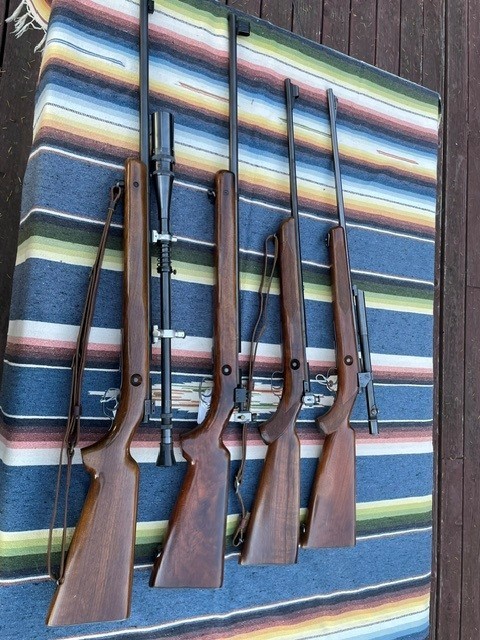
I had a bit of time this afternoon…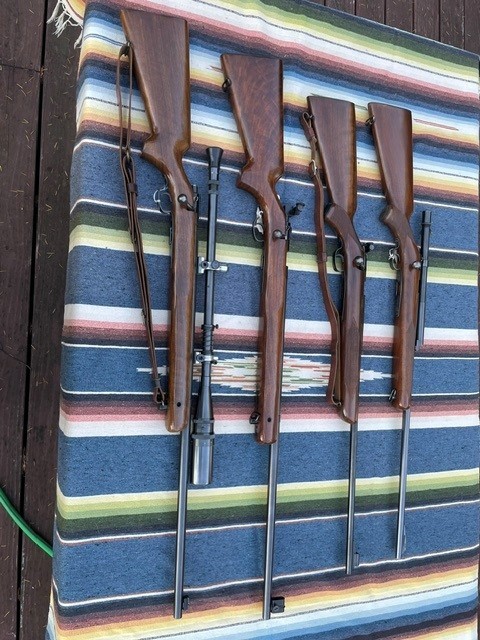


1 Guest(s)
