

 Log In


January 8, 2025
 Offline


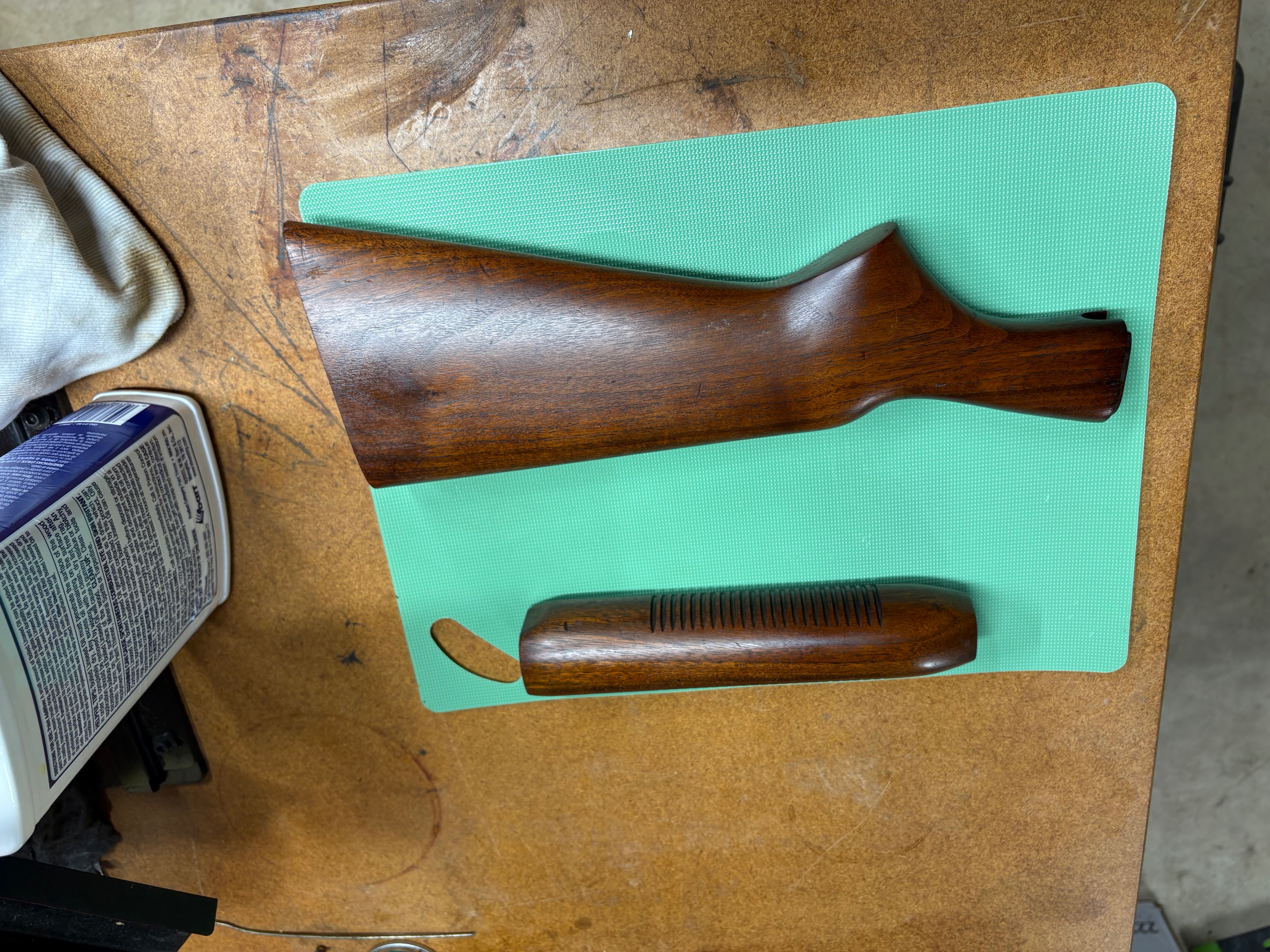
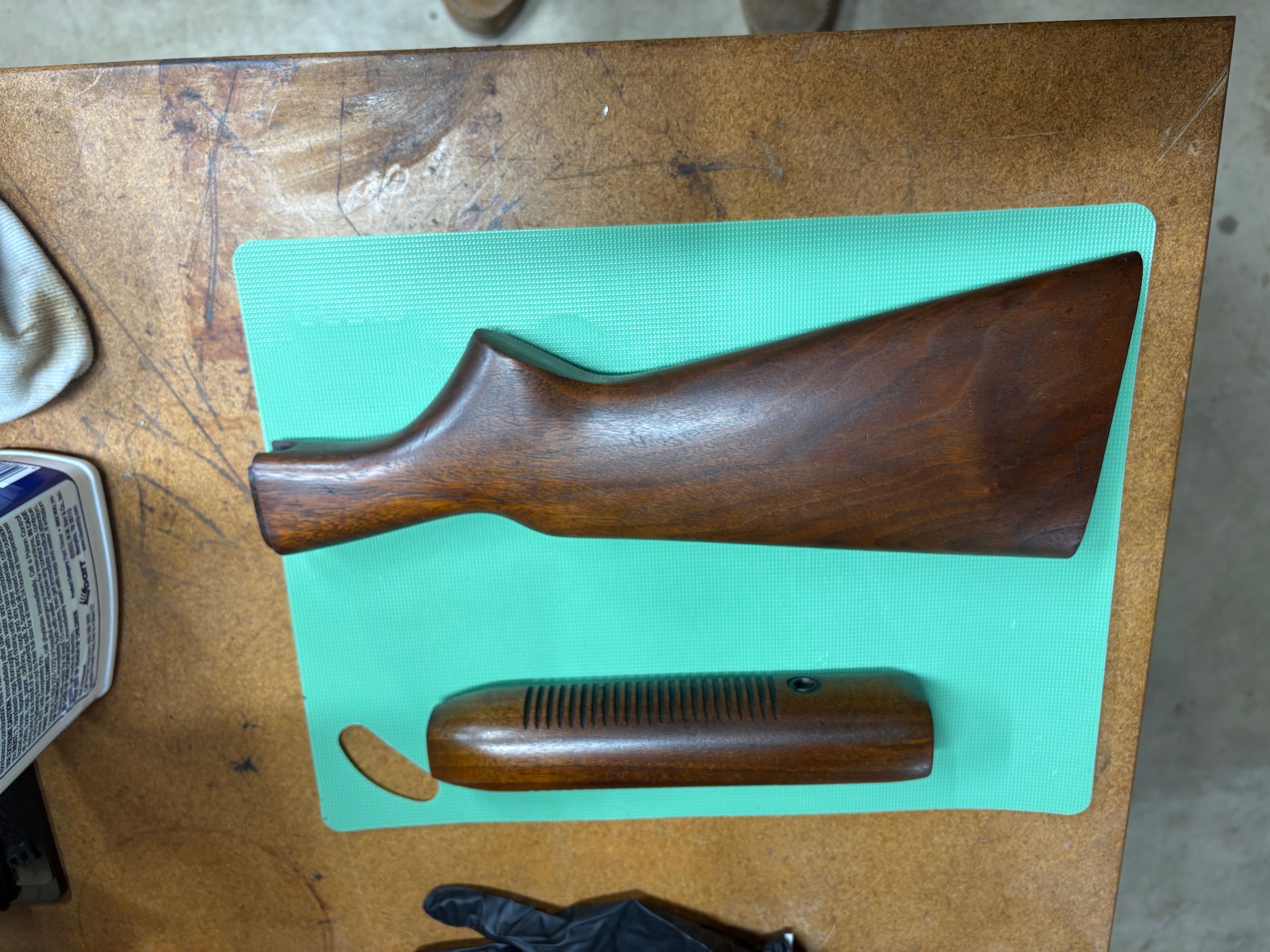
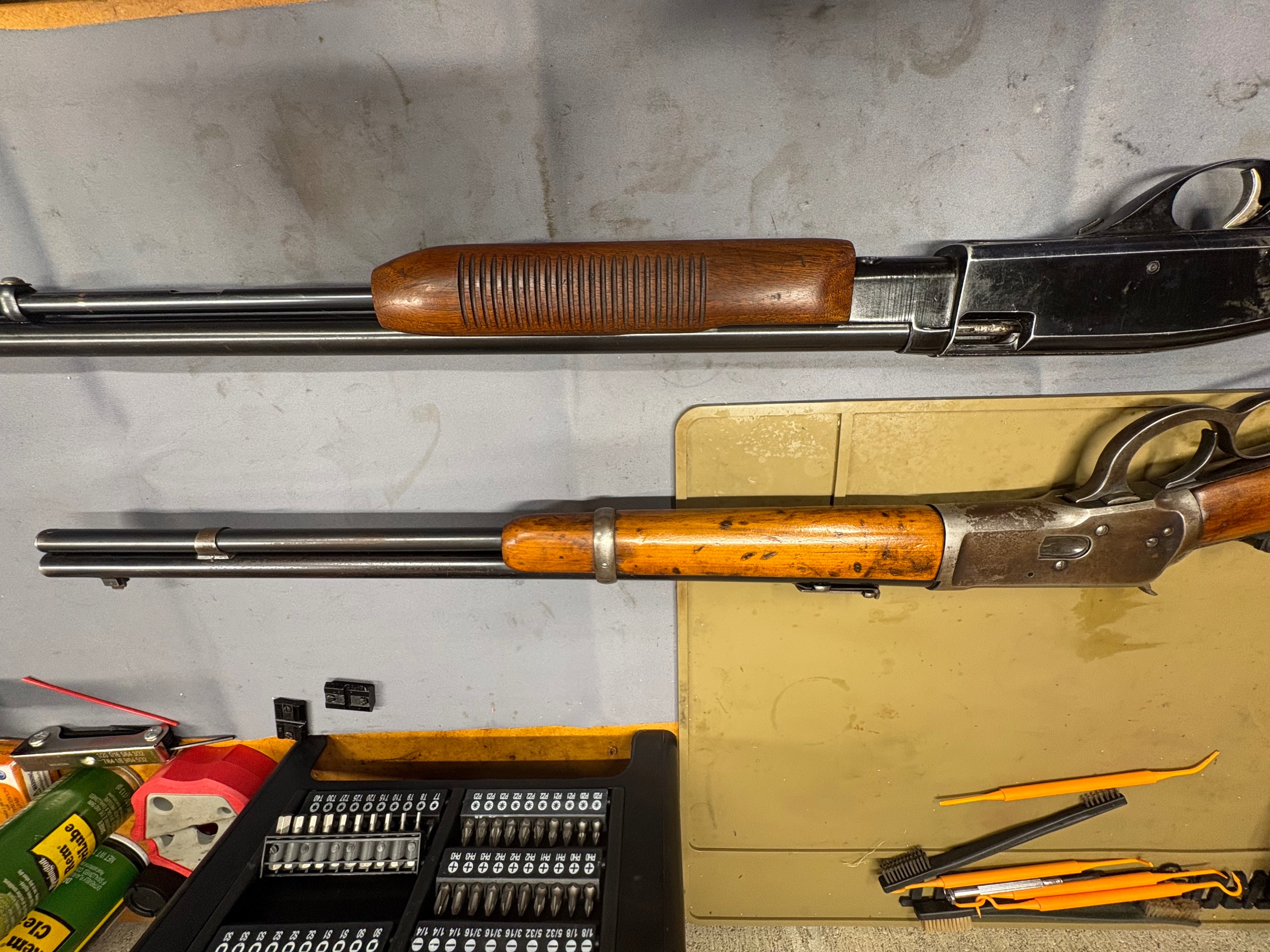
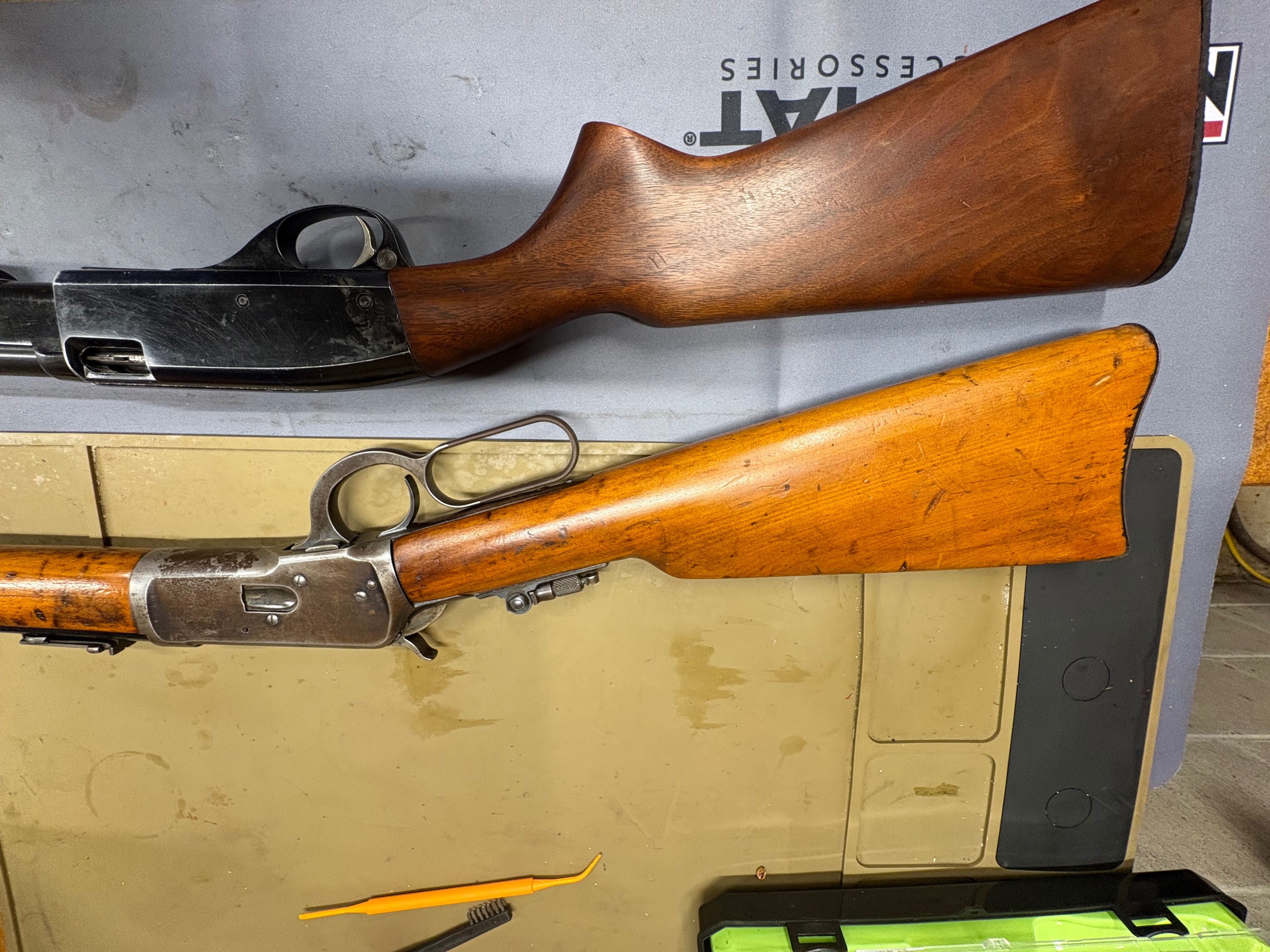
After reading all the things that have been replied when someone new or a guest asks about cleaning up an old rifle, I decided I had the perfect candidate to experiment with. While cleaning up an inherited 22 I accidentally got some carb cleaner on the butt stock and found out pretty quick why you don’t use carb cleaner around guns. This is a 60s vintage R word 22 that had a lot of surface rust. Something that lived in the barn for taking care of whatever a 22 was needed for. I cleaned up the metal with pb blaster and brass wool. The rear stock i used carb cleaner on the entire thing to remove the rest of whatever the original accident turned the finish into. Then I wiped both stocks with acetone, 2 applications of danish oil, and finished with 2 applications of boiled linseed oil. They aren’t perfect but I wasn’t looking for perfect. I am going to try this on an 1892 I just purchased that had been sanded and varnished. I plan to use denatured alcohol to remove the varnish and the carb cleaner will never come back to the gun room. Please let me know what you think, and offer any advice.
Thanks,
Adam

April 15, 2005
 Online
It looks very good to me 
Bert
WACA Historian & Board of Director Member #6571L
January 8, 2025
Offline
Bert H. said
It looks very good to me
Bert
Bert, Is it ok if I show a picture of the complete rifle once it’s back together? I don’t want to dirty your forum with a non Winchester.
April 15, 2005
Online
MidwestCrisis said
Bert H. said
It looks very good to me
Bert
Bert, Is it ok if I show a picture of the complete rifle once it’s back together? I don’t want to dirty your forum with a non Winchester.
Only if you promise to first say “Hail Winchester” three times out loud before posting the pictures!
Bert
WACA Historian & Board of Director Member #6571L
January 8, 2025
Offline
Bert H. said
MidwestCrisis said
Bert H. said
It looks very good to me
Bert
Bert, Is it ok if I show a picture of the complete rifle once it’s back together? I don’t want to dirty your forum with a non Winchester.
Only if you promise to first say “Hail Winchester” three times out loud before posting the pictures!
Bert
I’ll include the 92 I’m going to start on.
January 8, 2025
Offline
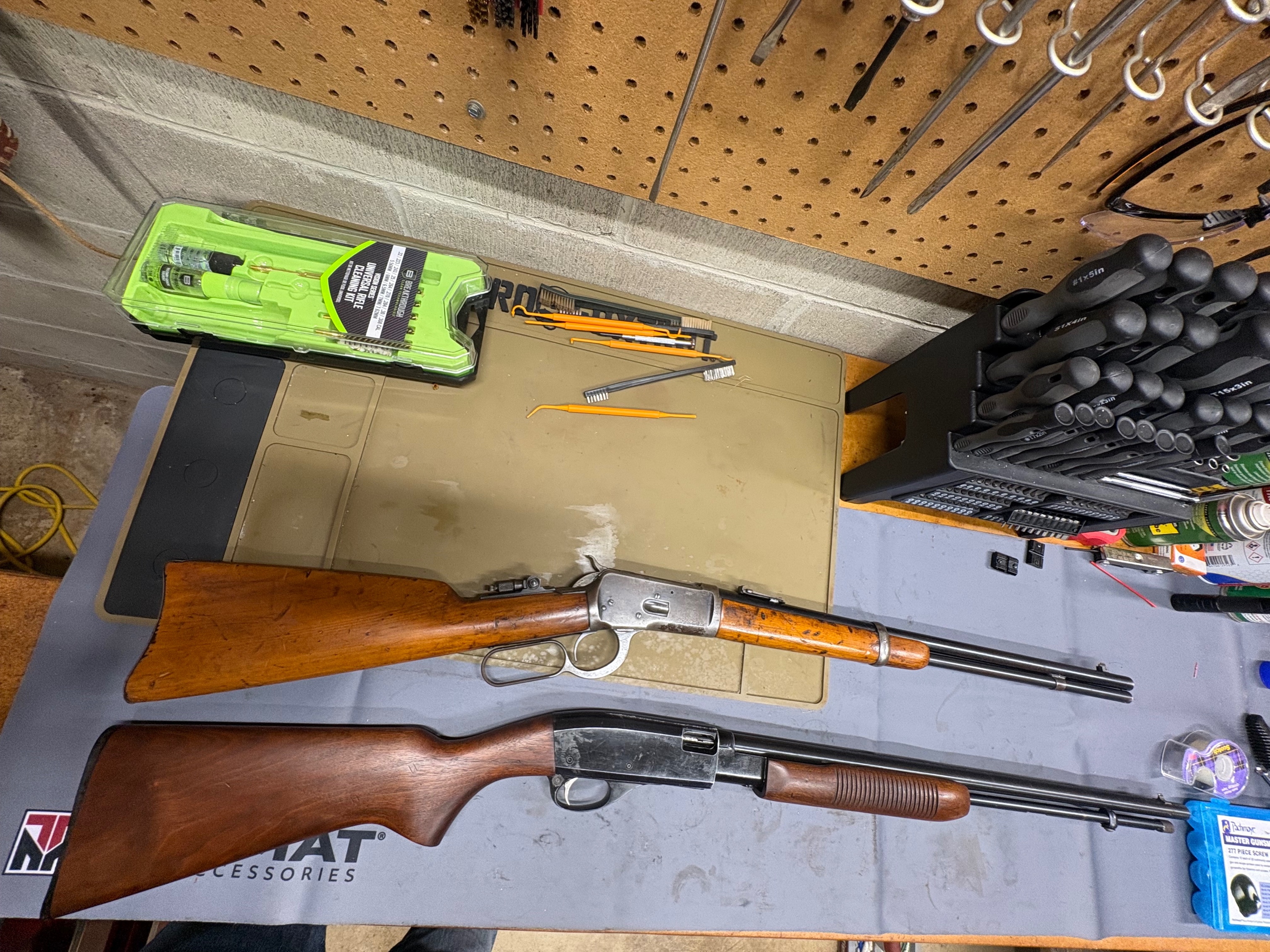
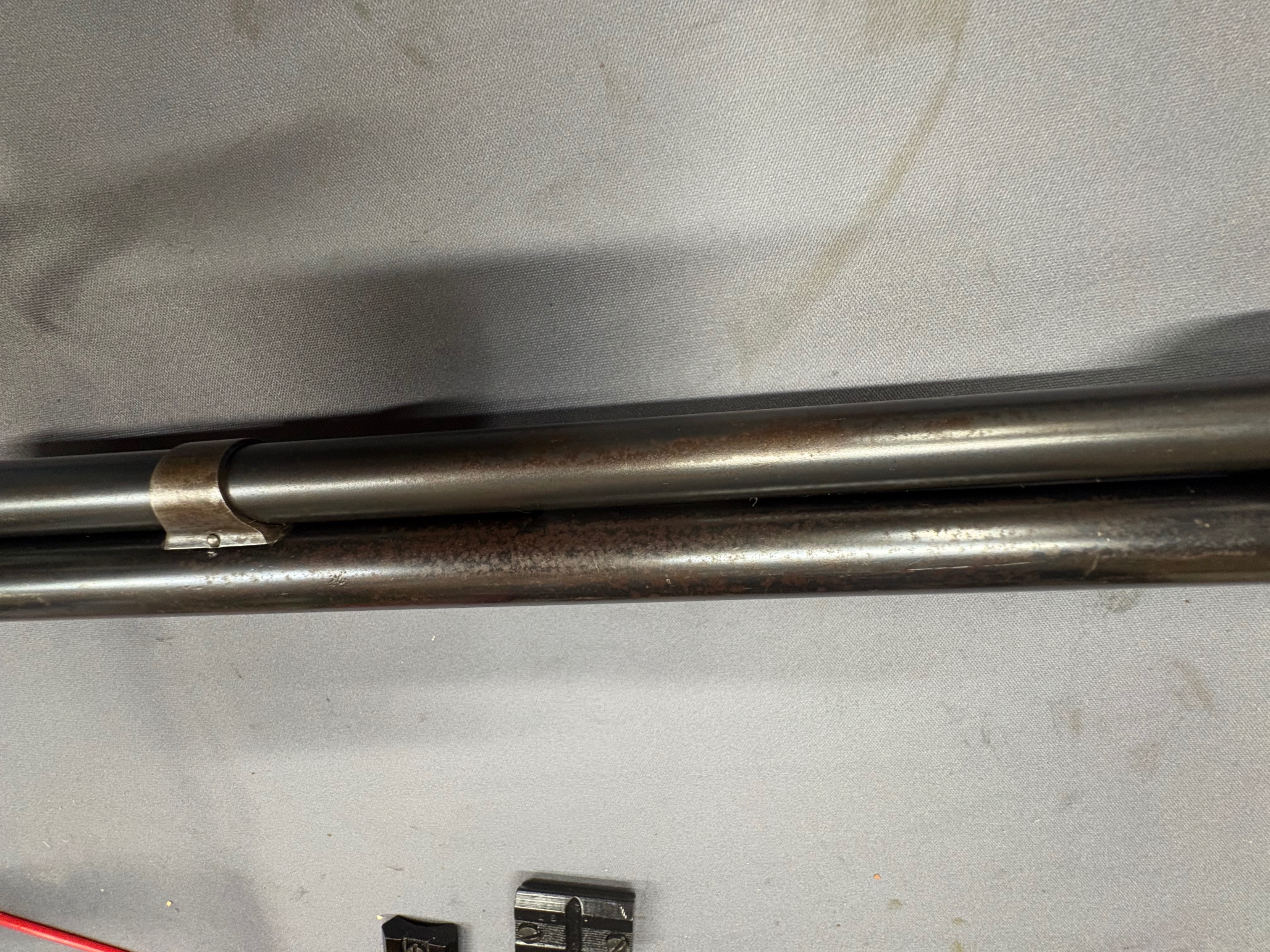
I’ve worked on this 92 a with brass wool. So do I need to use more elbow grease, or should I move towards boiling and carding? Since the stocks have been sanded, I’m planning to repeat what I’ve done with the pump just to make them look better. The 92 receiver I would like some advice on as to how hard it should be cleaned. There doesn’t seem to be pitting but you can definitely see it’s been carried a lot. Also for the R riffle, which may apply to post 64 “Winchesters”. What can you do to bring the finish back on the “pot metal”.
Thanks,
Adam

April 30, 2023
Offline
This is a good wood process and very similar to what I do, usually comes out pretty good if you take your time. Looks nice!
November 7, 2015
Online
Looks like it ought to, good call using the R-word for a test mule.
Mike

July 14, 2016
Offline
MidwestCrisis said
I’ve worked on this 92 a with brass wool. So do I need to use more elbow grease, or should I move towards boiling and carding? Since the stocks have been sanded, I’m planning to repeat what I’ve done with the pump just to make them look better. The 92 receiver I would like some advice on as to how hard it should be cleaned. There doesn’t seem to be pitting but you can definitely see it’s been carried a lot. Also for the R riffle, which may apply to post 64 “Winchesters”. What can you do to bring the finish back on the “pot metal”.
Thanks,
Adam
That 1892 SRC also has gumwood, not walnut.
Good job on the ‘R’!
A man can never have too many WINCHESTERS...

January 20, 2023
Offline
These suggestions might be too expensive because you can’t [at least, I couldn’t]
DIY them.
- As for the 1892 receiver, weld up and file/stone down the pits and have it electroless nickeled.
- For the Remington pump, Cerakote the receiver. It covers a lot of sins and is durable. I’d choose flat black but if you like DayGlo Orange you can have it.
To illustrate Cerakote, I’ve attached pics of a police trade-in Sig Sauer P220 .45 ACP that I picked up because it has the Kellerman Light Double Action trigger i like and Sig once offered. The anodyzing on the frame was a little tired compared to the harder nitride finish of the stainless steel slide. I had the frame stripped and refinished in FDE Cerakote, then ordered FDE grip panels from SIG USA. It serves as a home office gun with a 10-round Chip McCormick magazine of Federal flying ashtrays. A veritable one-handed Linus blanket. 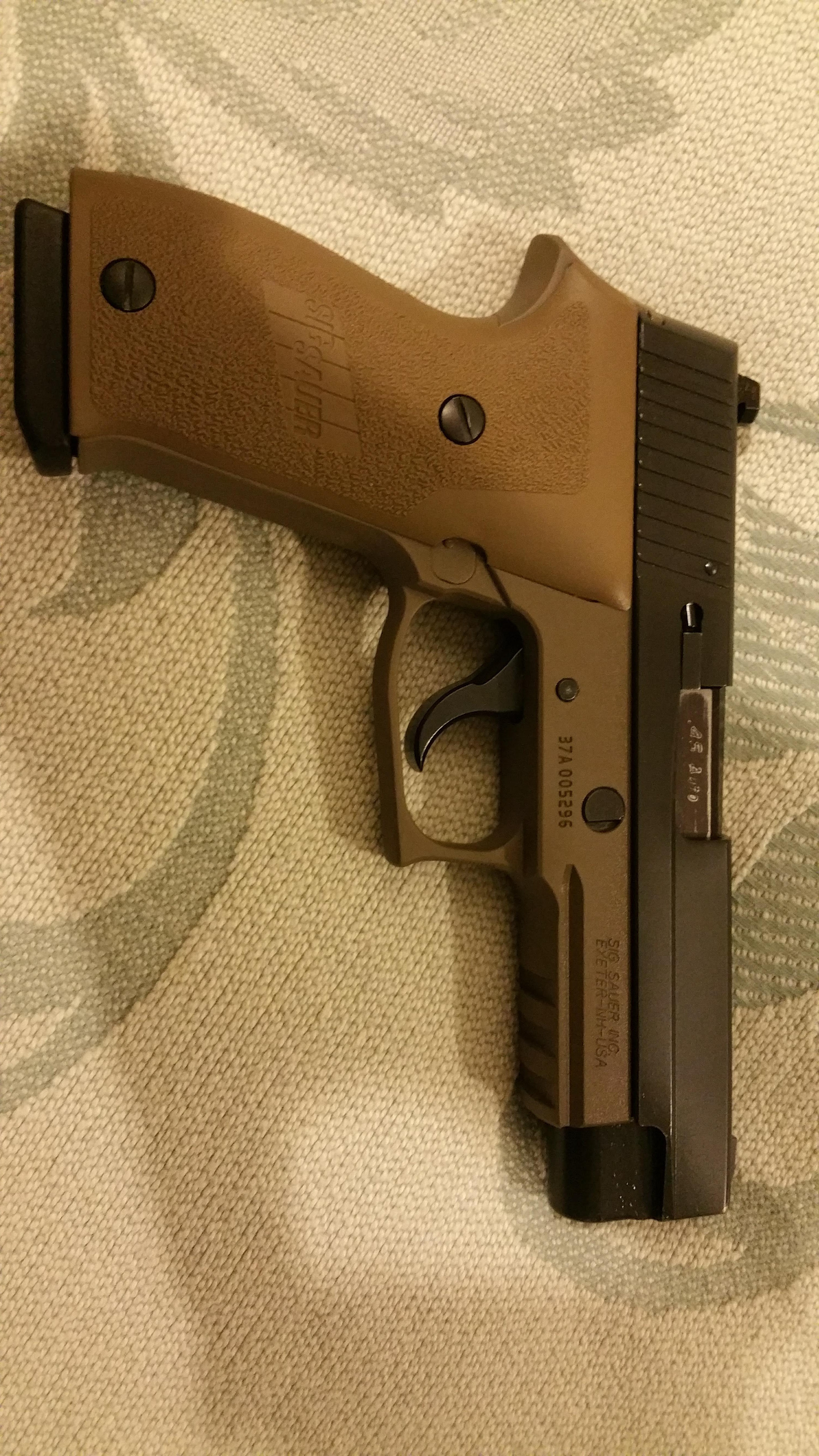
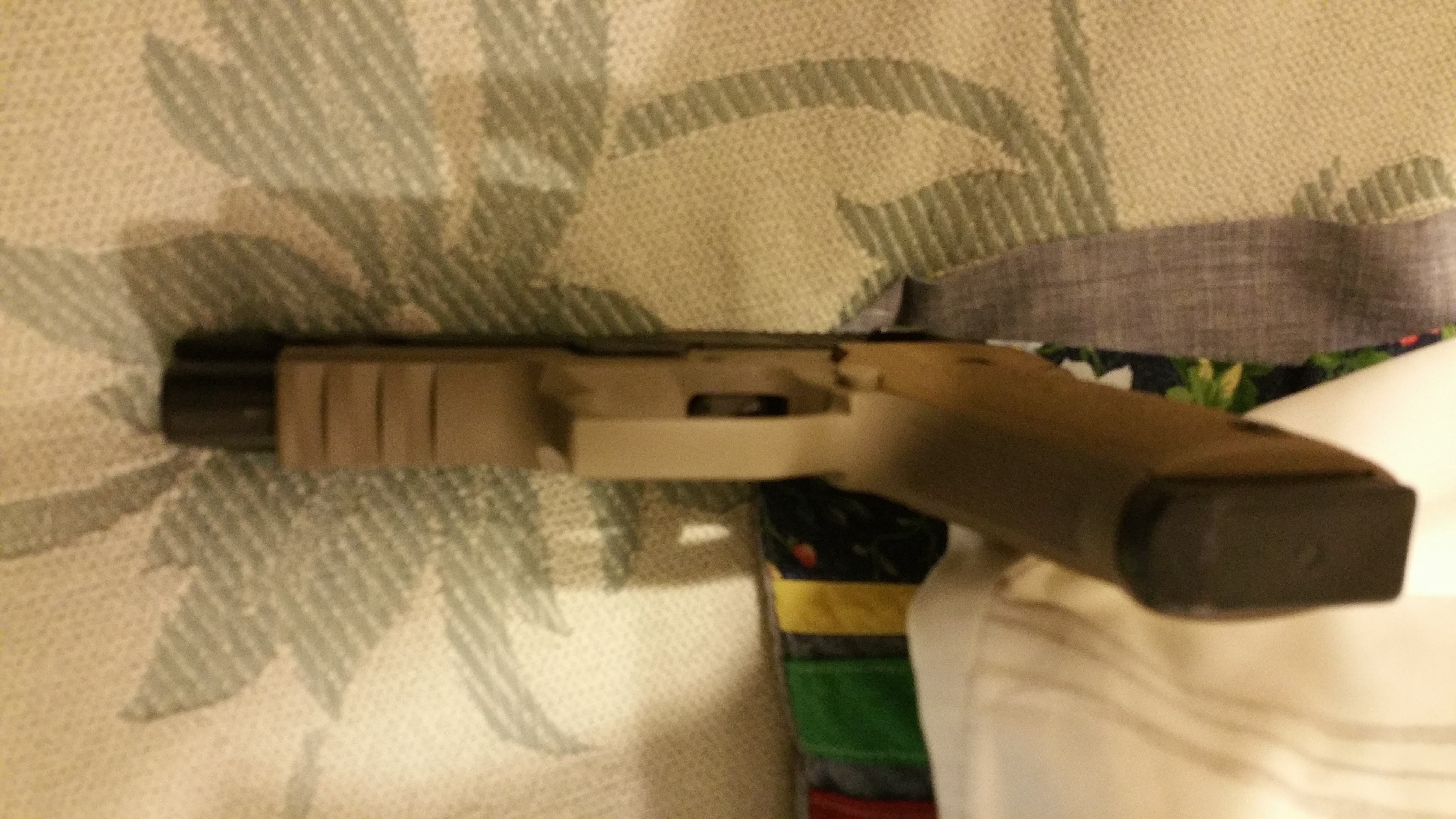
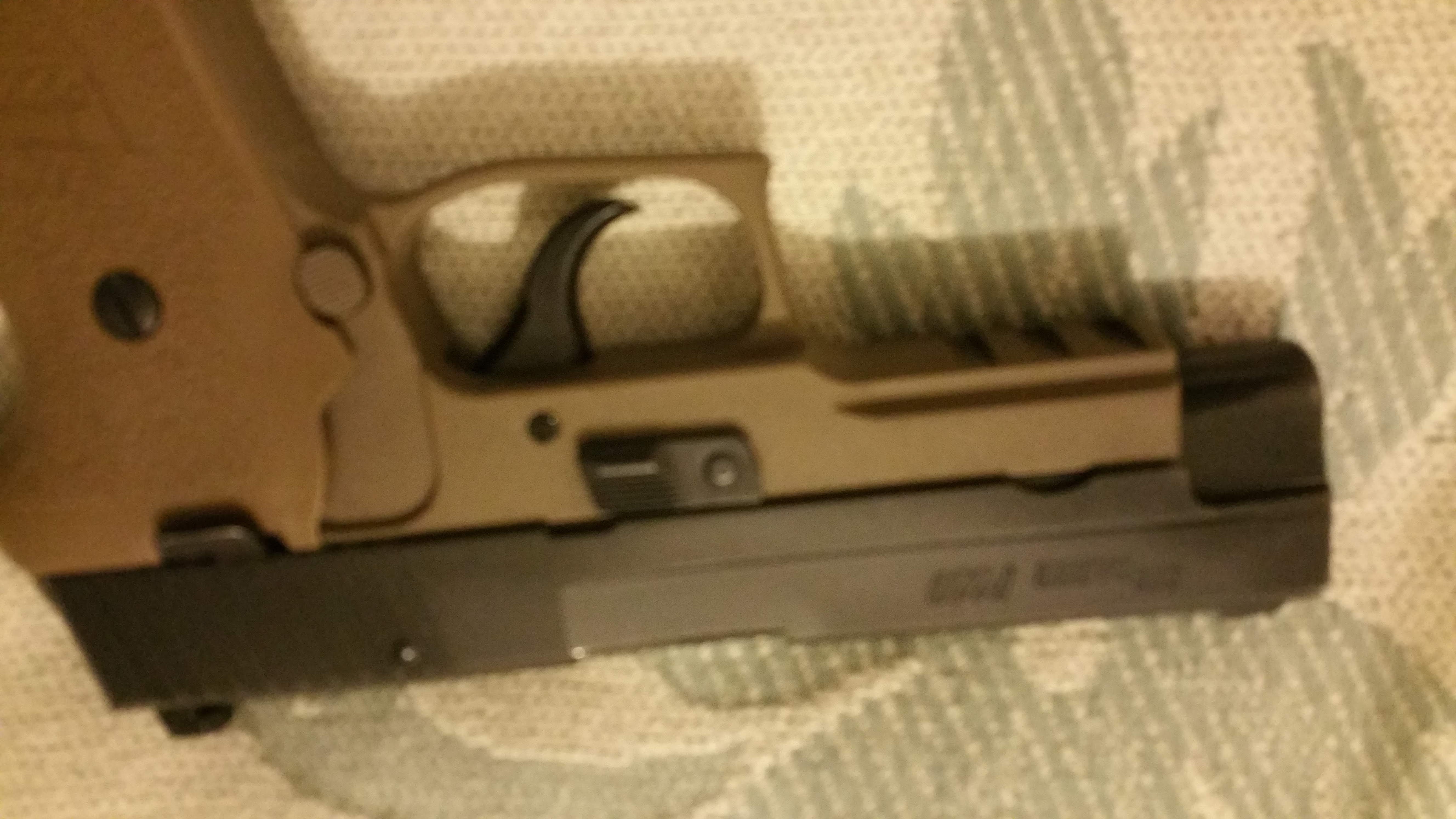
- Bill
WACA # 65205; life member, NRA; member, TGCA; member, TSRA; amateur preservationist
"I have seen wicked men and fools, a great many of both, and I believe they both get paid in the end, but the fools first." -- David Balfour, narrator and protagonist of the novel, Kidnapped, by Robert Louis Stevenson.
January 8, 2025
Offline
Chris D said
MidwestCrisis said
I’ve worked on this 92 a with brass wool. So do I need to use more elbow grease, or should I move towards boiling and carding? Since the stocks have been sanded, I’m planning to repeat what I’ve done with the pump just to make them look better. The 92 receiver I would like some advice on as to how hard it should be cleaned. There doesn’t seem to be pitting but you can definitely see it’s been carried a lot. Also for the R riffle, which may apply to post 64 “Winchesters”. What can you do to bring the finish back on the “pot metal”.
Thanks,
Adam
That 1892 SRC also has gumwood, not walnut.
Good job on the ‘R’!
Should the stocks being gum wood change anything in my process. Did they receive the same finish as the walnut stocks at the factory?
January 8, 2025
Offline
Zebulon said
These suggestions might be too expensive because you can’t [at least, I couldn’t]
DIY them.As for the 1892 receiver, weld up and file/stone down the pits and have it electroless nickeled.
For the Remington pump, Cerakote the receiver. It covers a lot of sins and is durable. I’d choose flat black but if you like DayGlo Orange you can have it.To illustrate Cerakote, I’ve attached pics of a police trade-in Sig Sauer P220 .45 ACP that I picked up because it has the Kellerman Light Double Action trigger i like and Sig once offered. The anodyzing on the frame was a little tired compared to the harder nitride finish of the stainless steel slide. I had the frame stripped and refinished in FDE Cerakote, then ordered FDE grip panels from SIG USA. It serves as a home office gun with a 10-round Chip McCormick magazine of Federal flying ashtrays. A veritable one-handed Linus blanket.
Thanks Zeb. As you said, probably cost more than the rifles are worth. I’ll see what I can diy. For now as long as they function, I’ll have to be content with the appearance.
January 20, 2023
Offline
MidwestCrisis said
Chris D said
MidwestCrisis said
I’ve worked on this 92 a with brass wool. So do I need to use more elbow grease, or should I move towards boiling and carding? Since the stocks have been sanded, I’m planning to repeat what I’ve done with the pump just to make them look better. The 92 receiver I would like some advice on as to how hard it should be cleaned. There doesn’t seem to be pitting but you can definitely see it’s been carried a lot. Also for the R riffle, which may apply to post 64 “Winchesters”. What can you do to bring the finish back on the “pot metal”.
Thanks,
Adam
That 1892 SRC also has gumwood, not walnut.
Good job on the ‘R’!
Should the stocks being gum wood change anything in my process. Did they receive the same finish as the walnut stocks at the factory?
Same finish.
- Bill
WACA # 65205; life member, NRA; member, TGCA; member, TSRA; amateur preservationist
"I have seen wicked men and fools, a great many of both, and I believe they both get paid in the end, but the fools first." -- David Balfour, narrator and protagonist of the novel, Kidnapped, by Robert Louis Stevenson.
January 8, 2025
Offline
I started on the’92 and denatured alcohol will not remove the finish. That would suggest it’s a polyurethane or another varnish. The stocks have been sanded once, so I need to be careful not remove any more material. Should I try a citrus chemical stripper? Another option would be to just leave them alone for now and hopefully one day in the future replace them when I stumble upon the right deal.
Thanks,
Adam
January 20, 2023
Offline
Adam,
If you can find it and are prepared to protect yourself against its highly toxic properties, Methylene Chloride will do it quickly. It can hurt you and I would myself stay away from it.
Otherwise, Citristrip or another Orange/Citrus solvent is safer but slower.
I don’t know how badly the wood has been sanded down but, unless you are determined to keep it “all original” – a questionable goal since you are already scrubbing on it — I’d be inclined to save my money against a future set of CNC reproduction stocks and try my hand at inletting and fitting them up. We already know you can finish handsomely.
The steel may be a little rough but what everybody sees first is the furniture because there’s so much more of it. No matter how hard you work on those sanded stocks, you will never be happy with the way they detract from the look of the gun. Repro stocks are not costly and it s a chance to work at a new skill. I would bet a donut you would get a pleasing result — so much so that the flaws in the steel will actually fade in prominence. And you will be happier with the result.
Gunville, for example, will sell you a 98% inletted Black Walnut set for about $140 USD..
Just my opinion.
- Bill
WACA # 65205; life member, NRA; member, TGCA; member, TSRA; amateur preservationist
"I have seen wicked men and fools, a great many of both, and I believe they both get paid in the end, but the fools first." -- David Balfour, narrator and protagonist of the novel, Kidnapped, by Robert Louis Stevenson.
April 15, 2005
Online
MidwestCrisis said
I started on the’92 and denatured alcohol will not remove the finish. That would suggest it’s a polyurethane or another varnish. The stocks have been sanded once, so I need to be careful not remove any more material. Should I try a citrus chemical stripper? Another option would be to just leave them alone for now and hopefully one day in the future replace them when I stumble upon the right deal.
Thanks,
Adam
Adam,
Try using some 100% pure acetone on the wood finish. If it works (the odds are good that it will), a 1-hour soak in the acetone will eliminate much of your work. It will however require adding some stain to the new finish you put back on it.
Bert
WACA Historian & Board of Director Member #6571L

March 31, 2009
Offline
Bert H. said
MidwestCrisis said
I started on the’92 and denatured alcohol will not remove the finish. That would suggest it’s a polyurethane or another varnish. The stocks have been sanded once, so I need to be careful not remove any more material. Should I try a citrus chemical stripper? Another option would be to just leave them alone for now and hopefully one day in the future replace them when I stumble upon the right deal.
Thanks,
Adam
Adam,
Try using some 100% pure acetone on the wood finish. If it works (the odds are good that it will), a 1-hour soak in the acetone will eliminate much of your work. It will however require adding some stain to the new finish you put back on it.
Bert
Or lacquer thinner. I would hand apply it.
January 20, 2023
Offline
FWIW, I’ve tried both acetone and lacquer thinner on cured polyurethane and got nowhere. It is possible I misdiagnosed the target finish. If you guys say you’ve used those two for a solvent, I wouldn’t presume to doubt either of you but that was my experience.
- Bill
WACA # 65205; life member, NRA; member, TGCA; member, TSRA; amateur preservationist
"I have seen wicked men and fools, a great many of both, and I believe they both get paid in the end, but the fools first." -- David Balfour, narrator and protagonist of the novel, Kidnapped, by Robert Louis Stevenson.
April 15, 2005
Online
Zebulon said
FWIW, I’ve tried both acetone and lacquer thinner on cured polyurethane and got nowhere. It is possible I misdiagnosed the target finish. If you guys say you’ve used those two for a solvent, I wouldn’t presume to doubt either of you but that was my experience.
I do not know if acetone will dissolve polyurethane, but I doubt that it will. That stated, I would be very surprised if the finish on that old Model 92 is actually polyurethane.
Bert
WACA Historian & Board of Director Member #6571L


1 Guest(s)
