

 Log In


March 4, 2018
 Offline


I have finally decided to upgrade/ improve my favorite shooter. The current 24” barrel is at best in fair condition but is very accurate using jacketed Remington .257”, 86 grain bullets that are currently out of production. I have tried many loads using .258”, 85 grain cast bullets and cannot get near the same accuracy as with the Remington bullets.
I am looking at a Hunter brand replacement barrel but there are many options:
5 or 6 groove rifling
single point or broached rifling
barrel length (would it help accuracy at 100 yards to longer than 24”?)
rate of twist
Does as anyone have experience with cast bullets with the above options? I would like to choose the best option for exclusively shooting cast bullets.

March 31, 2009
Offline
Mike Hunter is a long time WACA member and is very capable.
November 7, 2015
 Online
If you’re set on a replacement barrel I’d go with one as close to original specs as possible. Which cast bullet are you using? I’m not sure you’d get any benefit from single point rifling but that’s a question I’d run past Mr. Hunter.
Mike
March 4, 2018
Offline
TXGunNut said
If you’re set on a replacement barrel I’d go with one as close to original specs as possible. Which cast bullet are you using? I’m not sure you’d get any benefit from single point rifling but that’s a question I’d run past Mr. Hunter.
Mike
Hi Mike, I am leaning towards the factory standards which include single point rifling. I have been using Meister bullets with .258 dia and 86 grain weight but now hear they are no longer available. I may start casting my own so that I’ll always have a steady supply. There’s not much written about the 25-20
November 7, 2015
Online
MCorrell said
TXGunNut said
If you’re set on a replacement barrel I’d go with one as close to original specs as possible. Which cast bullet are you using? I’m not sure you’d get any benefit from single point rifling but that’s a question I’d run past Mr. Hunter.
Mike
Hi Mike, I am leaning towards the factory standards which include single point rifling. I have been using Meister bullets with .258 dia and 86 grain weight but now hear they are no longer available. I may start casting my own so that I’ll always have a steady supply. There’s not much written about the 25-20
I have a ball with my 32WCF but was not able to find a 25-20 with a decent bore. I understand that’s pretty common. There are some good commercial cast bullets out there but casting may ensure a good supply once you find a bullet that works for you. Sounds like an interesting project. Please keep us posted.
Mike
March 4, 2018
Offline
My goal is to build what I can’t buy, a nice half octagon barrel model 1892 with a good shoot able bore. Since I have to go the new barrel route I might as well go with CCH of my existing action and components and eventually new wood. This will be a lifetime gun for sure.
November 7, 2015
Online
I like the way you think. I bought an 1892 in 32WCF awhile back and quite honestly it was a mistake. I doubled down and had it relined, put a Marble tang sight and Lyman 17 front sight on it and it became quite the shooter.
Mike
April 26, 2019
Offline
I like the way you guys think too.
March 4, 2018
Offline
Thanks Pete. I’ll be looking for the whole story. I’ll be sure to keep good notes on my project as it moves on.
April 26, 2019
Offline
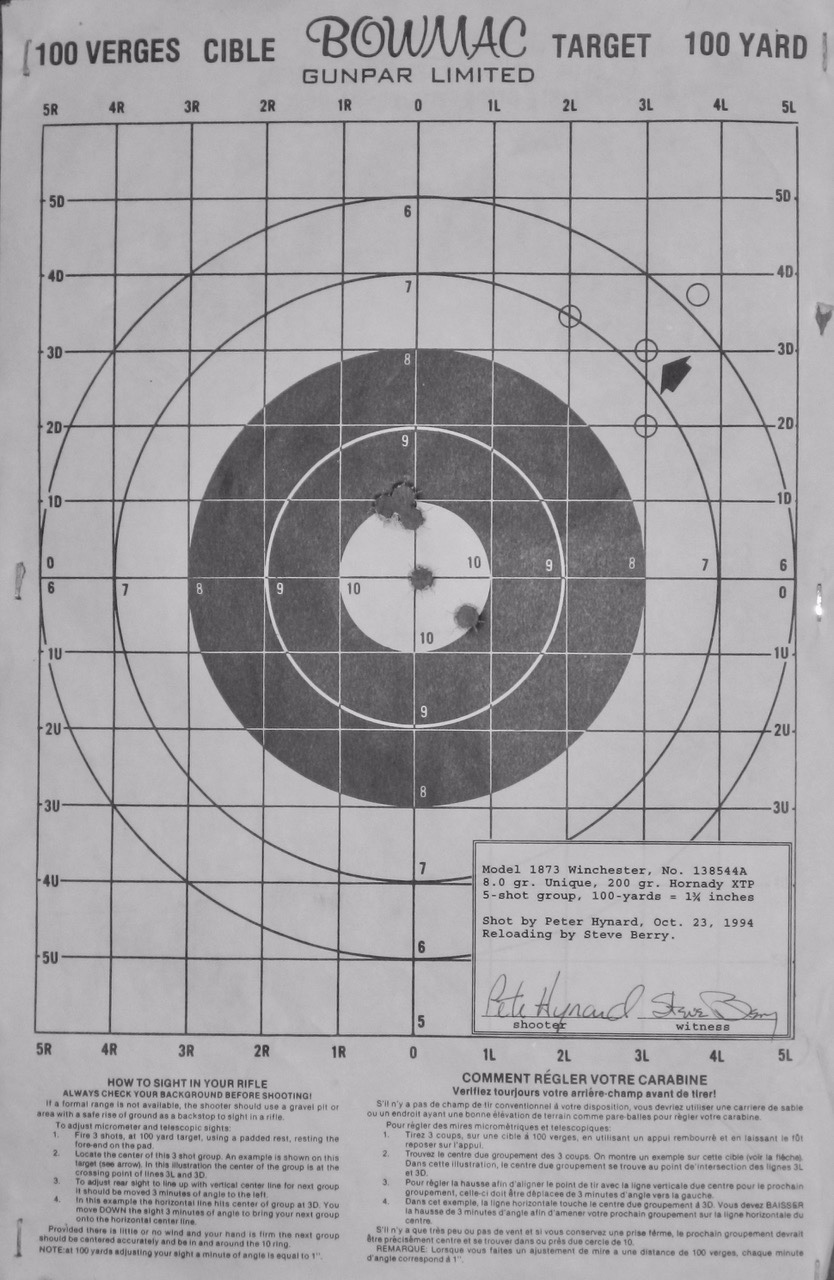
Mark, when you started this thread, you asked about experience shooting cast bullets in the .25-20.
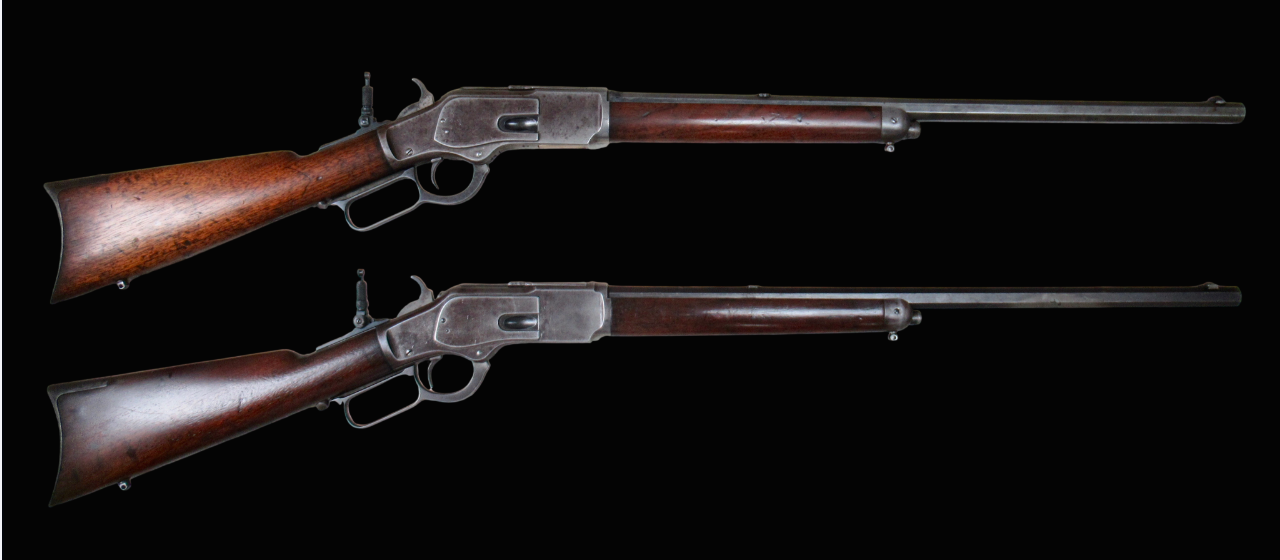
Besides the Model ’73 I told you about, I have a Model 1892 in .25-20. All I shoot in it is cast bullets. I can tell you what my experience has been.
First off, I have found the .25-20 to be a good calibre for cast bullets. The smaller calibres have the reputation of being difficult to cast and load for, but I haven’t found that to be true of the .25-50. Be sure your mould is in good condition, size your bullets 0.001” oversize, use a good lube and be sure to bell the case mouth slightly before seating. Other than that, the normal rules apply.
Cast bullets need a good bore to shoot well and this is particularly true of the smaller calibres. What I look for in a used gun is a bright, shiny bore with strong rifling and no visible pitting or wear. You really want a bore that is near-perfect; otherwise, the bullet will leave a streak of lead on the rough spots and each bullet will leave a little more. A lot of .25-20s date from the era of corrosive primers and rough bores are common. If your rifle was made before 1920, it definitely used corrosive primers and it probably has a rough bore. Rough bores can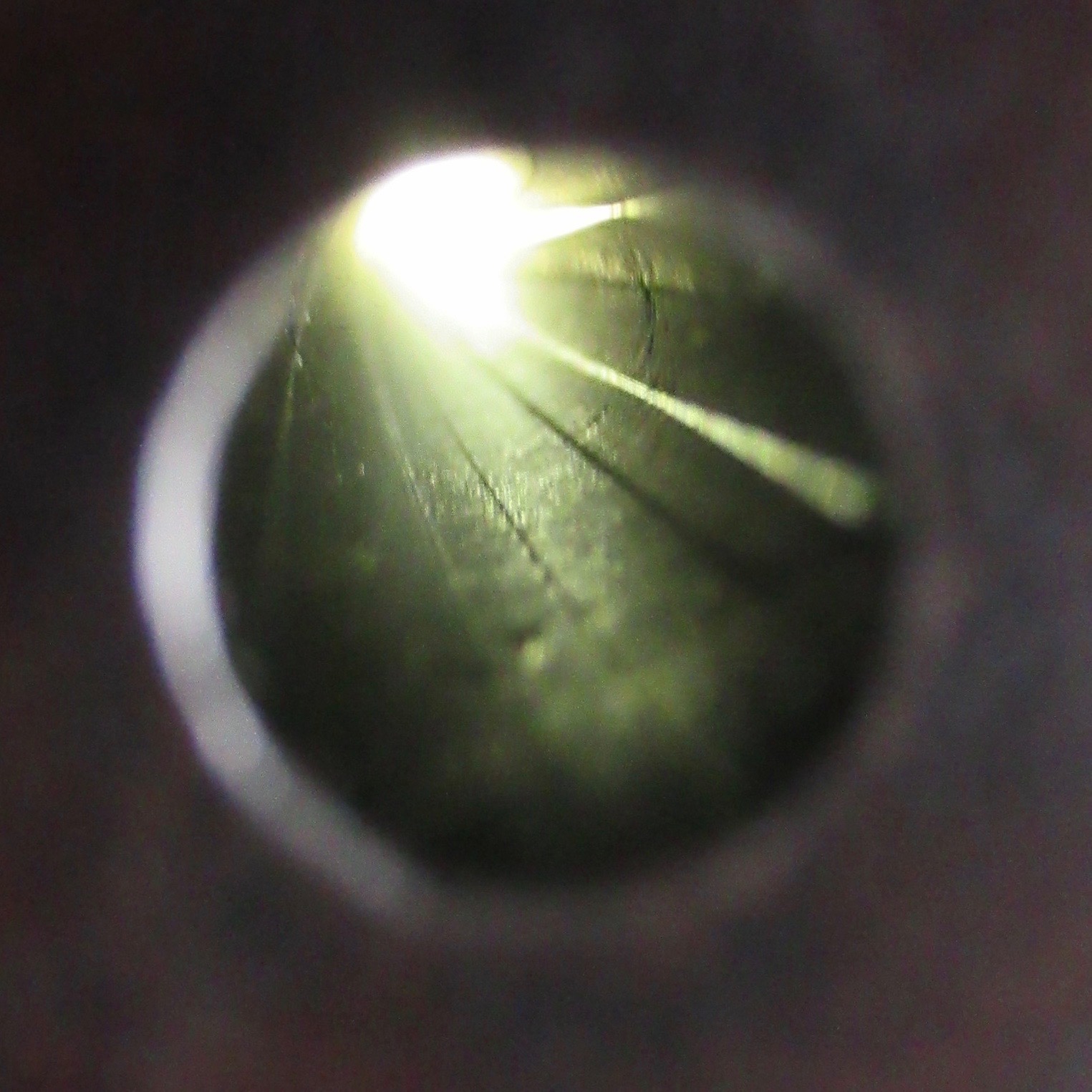
 shoot jacketed bullets OK, but not cast.
I attached a look down the bore of my Model ’92. It was made in 1914. It’s OK but it’s not perfect. If your bore looks any worse than this, it probably won’t shoot cast bullets well.
.25-20s do best with low-velocity loads and this is especially true for cast bullets. The original ammo shot an 86-grain lead bullet at 1,460 f.p.s. and that’s a good place to start. The loading that I settled on is a plain-base 85-grain bullet over 7.0 grains of IMR 4227 for a velocity of 1,356 f.p.s. The alloy I use is wheel-weight metal and the mould is RCBS #25-85-CM. With a hard alloy like that and slow velocity, the bullets pass through small game with minimal meat damage. For target shooting, it’s mild and gentle to shoot. In my rifle, group size is ½ inch at 25 yards and 3 inches at 100 yards.
For anything faster than 1,500 f.p.s., you’ll need a gas-check bullet and a harder alloy. I’ve tried a 65-grain GC bullet, Lyman No. 2 alloy and 10.5 grains of IMR 4227 for a velocity of 1,950 f.p.s. Accuracy stayed good at 3 inches @ 100 yards. But if you’re after varmints, you really need a proper varmint bullet, not a hard-alloy casting.
You asked about rate-of-twist. Winchester made its Model ’92/.25-20 barrels with a 1:14 twist. That’s what mine has.
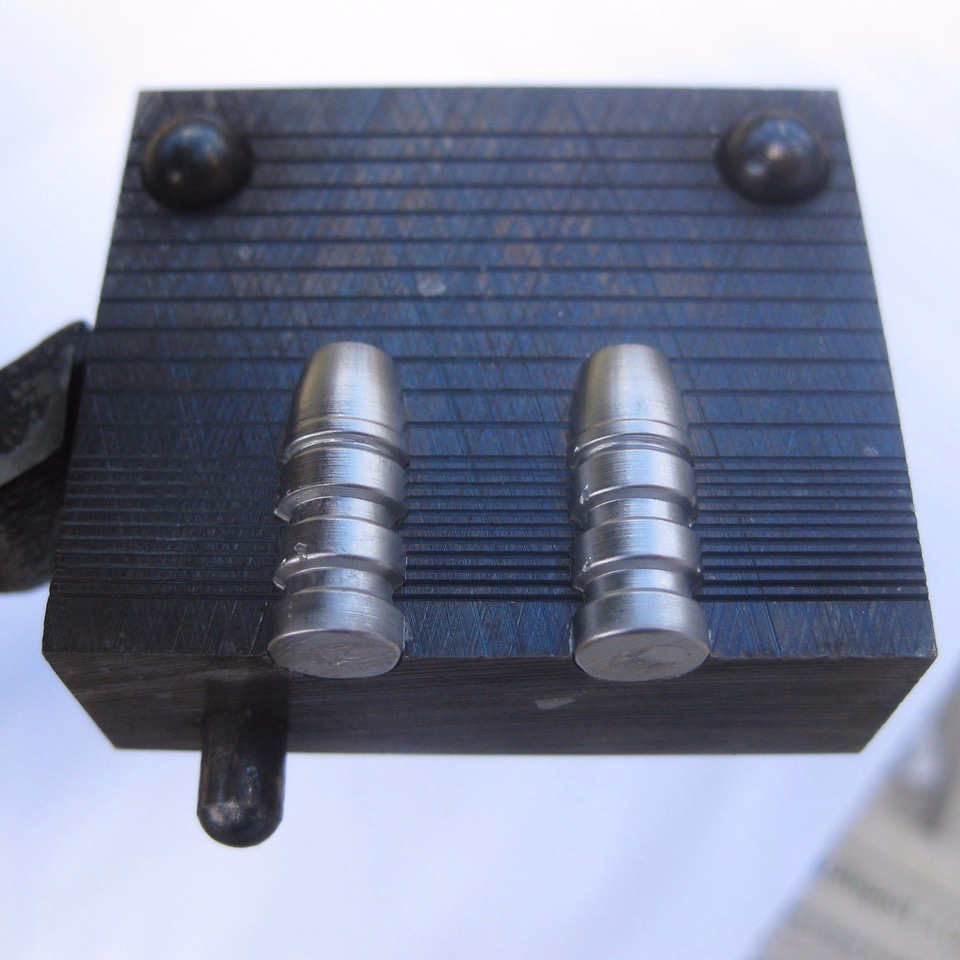
The Greenhill Formula is the standard method for determining optimal rate-of-twist. The link down below will take you to the vCalc.com website where you can do the calculation yourself. You will need to know the diameter, length, specific gravity and speed of the bullet to do the math. I attached a pic of my 85-grain cast bullet. For it, the calculation worked out to 1:15. As my gunsmith Steve said, “It’s OK to spin them too fast, just don’t spin them too slow”.
If you’re getting a custom barrel made, talk to your barrel maker. He will know more about this than me and he will give you better advice.
Good luck. Let me know how things work out.
Pete
https://www.vcalc.com/wiki/AndrewBudd/Greenhill+Formula+for+Optimal+Rifling+Twist+Rate
March 4, 2018
Offline
Hi Pete, thanks for the info and bore pic. The bore on mine isn’t as nice as yours but isn’t too bad. The groove diameter is .258 inch.
Going through my reloading notes, I had the best grouping by far using the Remington 86 grain JSP bullets of .258 inch diameter over 8 grains of IMR 4227 powder with an average velocity of 1324 FPS and average 50 yard groupings of .42 inches. This was on the bench with a tang peep sight.
My best results with cast bullets was Meister 85 grain plain base bullet of .258 inch diameter with 7 grains of IMR 4227 powder. This gave an average velocity of 1138 FPS and 1.36 average 50 yard groupings.
My goal has been to find a cast load that matches the JSP accuracy, but, so far no luck. If I try to push the cast bullets closer to 1300 FPS the groupings open up to 5 to 6 inches with some keyholes appearing.
April 26, 2019
Offline
Mark, those are exceptional groups you’re getting with the Remington 86-grain JSP bullet. My compliments. There’s nothing wrong with your shooting.
March 4, 2018
Offline
Thanks Pete. Here is a pic of my gun’s bore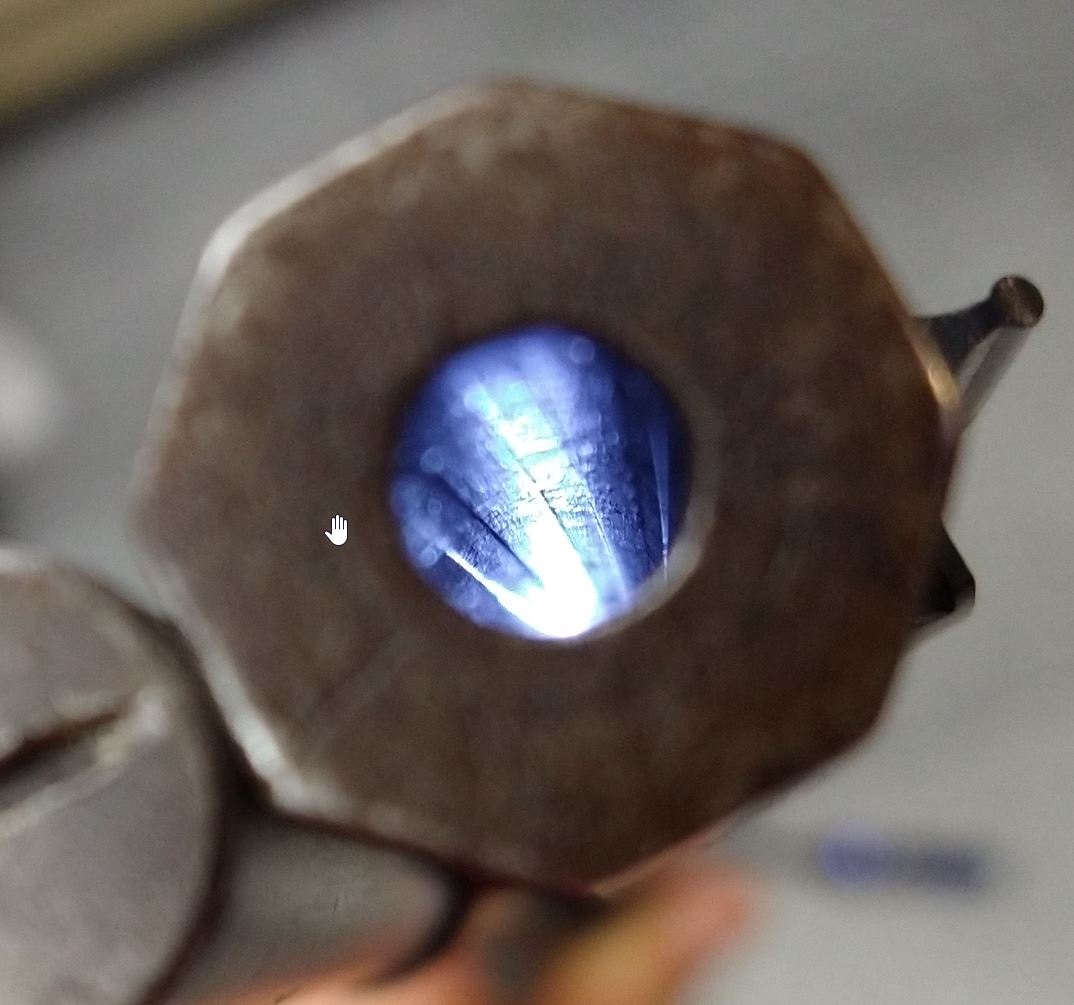
it is like this throughout. I wish I had a lifetime supply of the JSP Remington bullets. I found a box of 500 locally for 30 bucks a few years back not long after buying this gun at a local gunsmith. IIRC I have a sample of some coated .259 diameter, 85 grain coated bullets from Missouri Bullet to test when my local range reopens and my health returns.
November 7, 2015
Online
Mark-
I think with that level of pitting cast bullets may be a challenge. As a rule a properly lubed and sized bullet will not lead a good bore. Sometimes a hard lead alloy will actually lead more than a softer bullet because the harder bullet will not obturate to fill and seal off the bore. Coated bullets are often soft and perform well in worn bores but I haven’t tried them.
Have you cleaned the rifle yet? I’m curious about the type and level of fouling.
Mike
March 4, 2018
Offline
Mike, I use coated cast bullets almost exclusively these days with good results. When I bought this gun we were in the COVID mess and coated bullets for it weren’t available, so I bought lubed cast bullets and the Remington JSP as mentioned previously.
The bore was cleaned prior to shooting included 2 or 3 consecutive applications of Hoppe’s Elite foaming cleaner and then after every trip to the range since. It was very dirty and heavily lead fouled. I was surprised it came out as clean as it did.
April 26, 2019
Offline
Nice work on the bore photo, Mark.
As you said, the bore isn’t as good as mine but it’s not that bad. As Mike said, even that level of pitting is enough to be a problem. The fact that your cleaning patches show heavy lead fouling is proof of that.
The bore is certainly good enough to shoot jacketed bullets well but you already know that.
I don’t know what to suggest. If the coated bullets are working well, maybe that’s the solution.
Pete


1 Guest(s)
