

 Log In


April 15, 2005
 Offline


This post is directed to Bob (1873man), but I invite all to participate and weigh in with any pertinent comments or information.
I discovered something very odd while looking at my November 1885 Winchester catalog (No. 39) to answer a question that Chuck posed… and the answer is, No, it is not marked “No. 39” anywhere on or in the catalog.
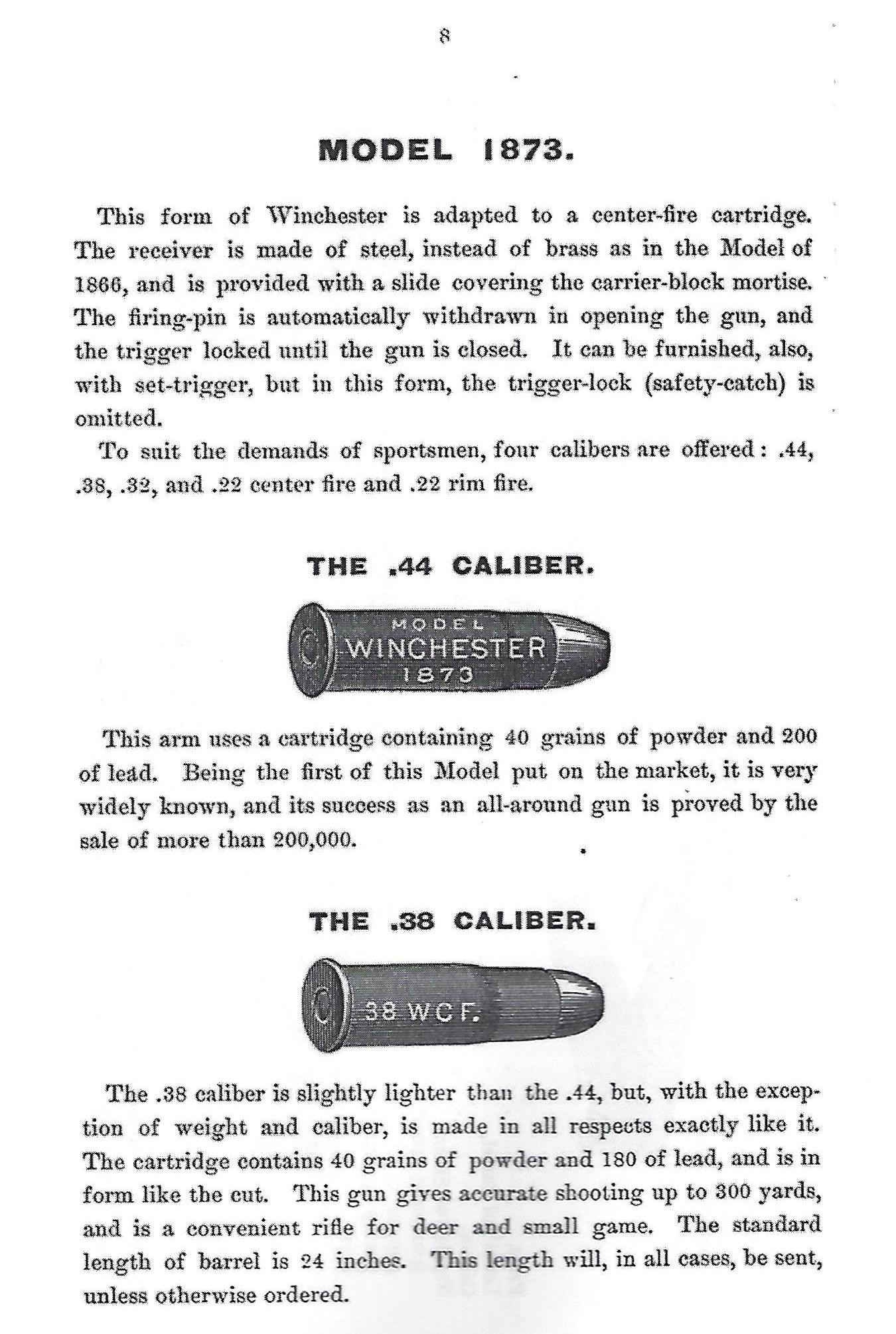
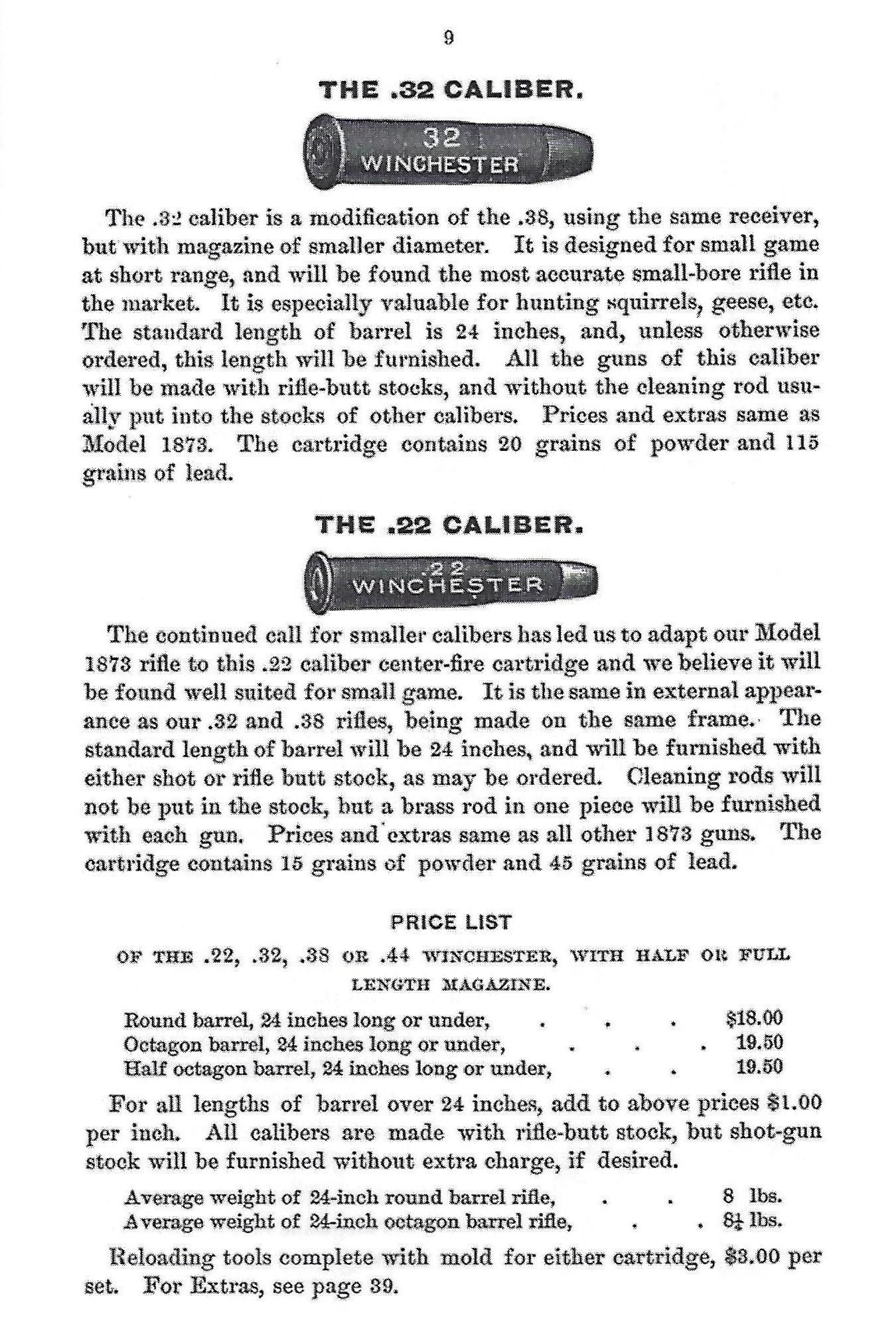
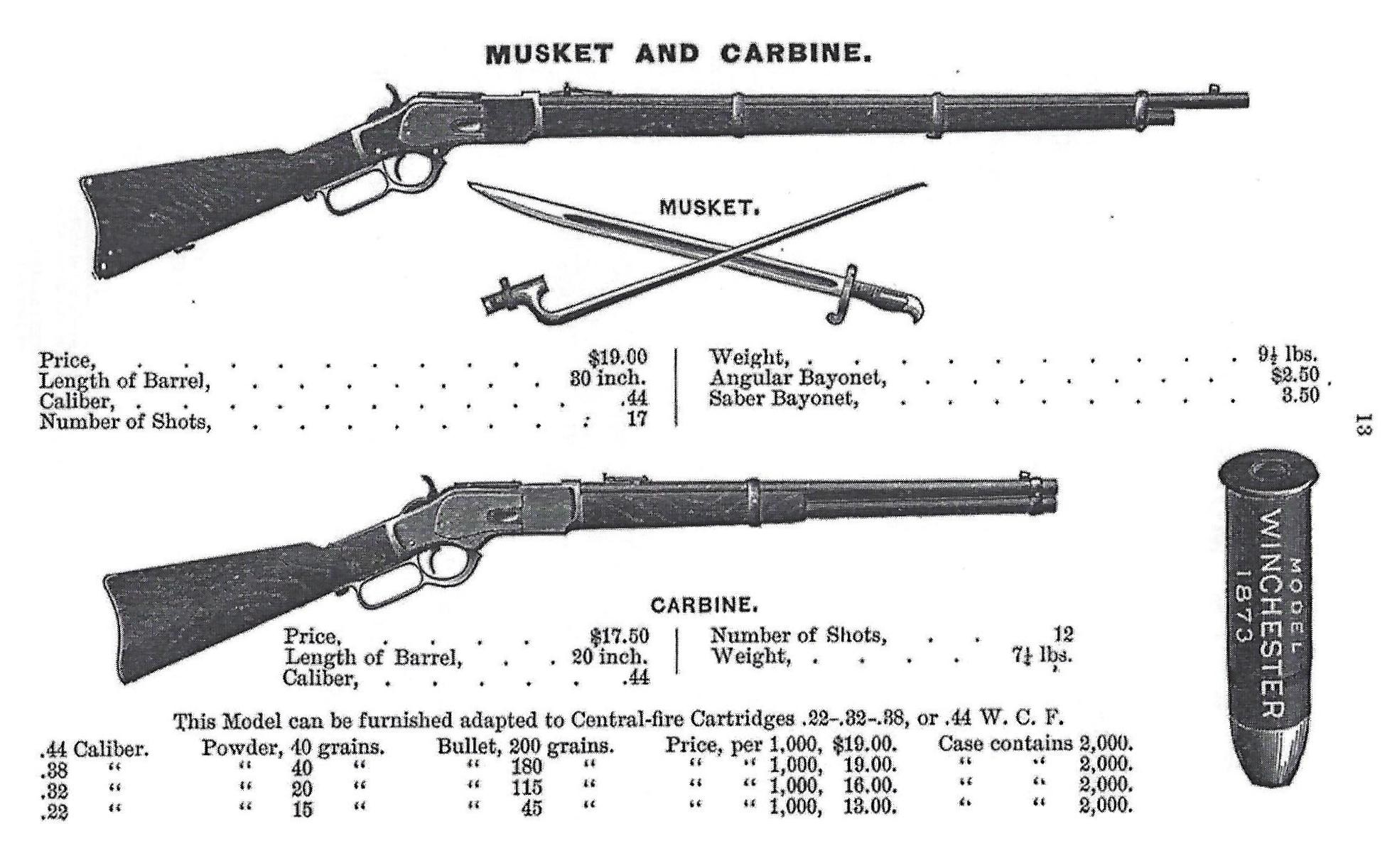
Now, getting back to the reason I am posting this, I discovered that somebody at Winchester apparently thought that they were going to manufacture the Model 1873 lever-action repeaters for the .22 center fire (WCF) cartridge. Below, I have included a scanned copy of pages 8, 9, and 13 that indicate that the Model 1873 was offered in the 22 center fire cartridge!
My question… did this really happen?
Bert
WACA Historian & Board of Director Member #6571L

November 19, 2006
Offline
Very interesting. My initial speculation was that it was a mistake. Wires crossed with the advertising department. What furthers my speculation is that the .22 rimfire came out in 1884 and this is an 1885 catalog – and there is not mention of the .22 rimfire?
When is the .22 rimfire first mentioned in a catalog? And while I’m at it, was it offered in .22 short, .22 long and .22 extra long (i.e. all mentioned in the catalog)?
December 9, 2002
Offline
Steve,
My initial thought on this was that it wasn’t necessarily a mistake by Winchester , as we’ve seen in the past, and even recently, that Winchester’s advertising publications of the time we’re just that, and in many cases, a caliber, such as the .405 caliber and the .35 caliber for the model 1895 we’re advertised, as in Winchesters plans, and seen a year previous as either experimental cartridges or calibers that we’re produced by them.
Like Bert said let’s see what Bob has to say, but I also have thoughts on the advertising of the .22 C.F cartridge in the advertising, Bert showed us, and find it interesting, as I feel it was in their plans, but it didn’t develop, as they had issues with their Take Down design, that they scrapped, after only 5 months of production in 1884,(July/1884 – January/1885) but continued they’re production of the 73/22 for several years.
We know Winchesters Advertising department was second to none, as far as self promoting, as getting these catalogs out to their jobbers and or distributors was everything, back in the day. The .22 WCF, was first developed by Winchester in 1884. The .22 short was first developed by S&W, in 1857,(with a few others in between), which we know was purchased by Oliver Winchester. Stetson’s patent of 1871, for the .22 short is well documented, and this being a short version, many of us are aware of this. Naturally there’s a lot more to this as far as the history of the cartridges, but I’m trying to stay on point.
Tony

May 2, 2009
Offline
I have never come across a 73 chambered in 22 center fire or any documentation besides it being advertized in the catalog. Several books written about the 73 mention the 22 center fire but all said it was never made. Looking at the OAL of the shell, it would of fit in the action but the case diameter being smaller would of required a smaller mag tube smaller than the 32 WCF, a new elevator and a redesigned loading gate so it would hold the smaller diameter case from going out the back of the elevator.
Bert, how did they enter the 22 center fire caliber in the 1885 ledgers?
Bob
WACA Life Member---
NRA Life Member----
Cody Firearms member since 1991
Researching the Winchester 1873's
Email: [email protected]
April 15, 2005
Offline
steve004 said
Very interesting. My initial speculation was that it was a mistake. Wires crossed with the advertising department. What furthers my speculation is that the .22 rimfire came out in 1884 and this is an 1885 catalog – and there is not mention of the .22 rimfire?
When is the .22 rimfire first mentioned in a catalog? And while I’m at it, was it offered in .22 short, .22 long and .22 extra long (i.e. all mentioned in the catalog)?
Steve,
The November 1885 catalog did mention the .22 rim fire variation (on page 10). I simply scanned just the pages listing the 22 center fire.
Bert
WACA Historian & Board of Director Member #6571L
April 15, 2005
Offline
1873man said
Bert, how did they enter the 22 center fire caliber in the 1885 ledgers?
Bob
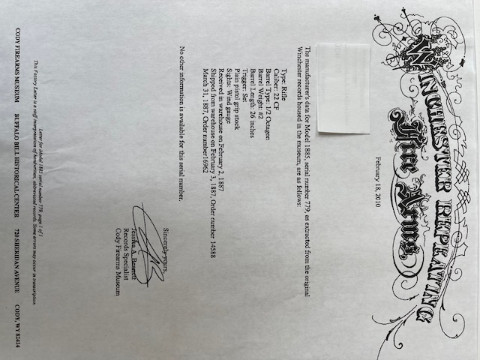
The early entries were “22 CF”, but sometime within the first year it was changed to “22 WCF”. Serial number 779 was the first Single Shot rifle chambered for the 22 WCF.

Bert
WACA Historian & Board of Director Member #6571L
December 9, 2002
Offline
Bert H. said
1873man said
Bert, how did they enter the 22 center fire caliber in the 1885 ledgers?
Bob
The early entries were “22 CF”, but sometime within the first year it was changed to “22 WCF”. Serial number 779 was the first Single Shot rifle chambered for the 22 WCF.
Bert
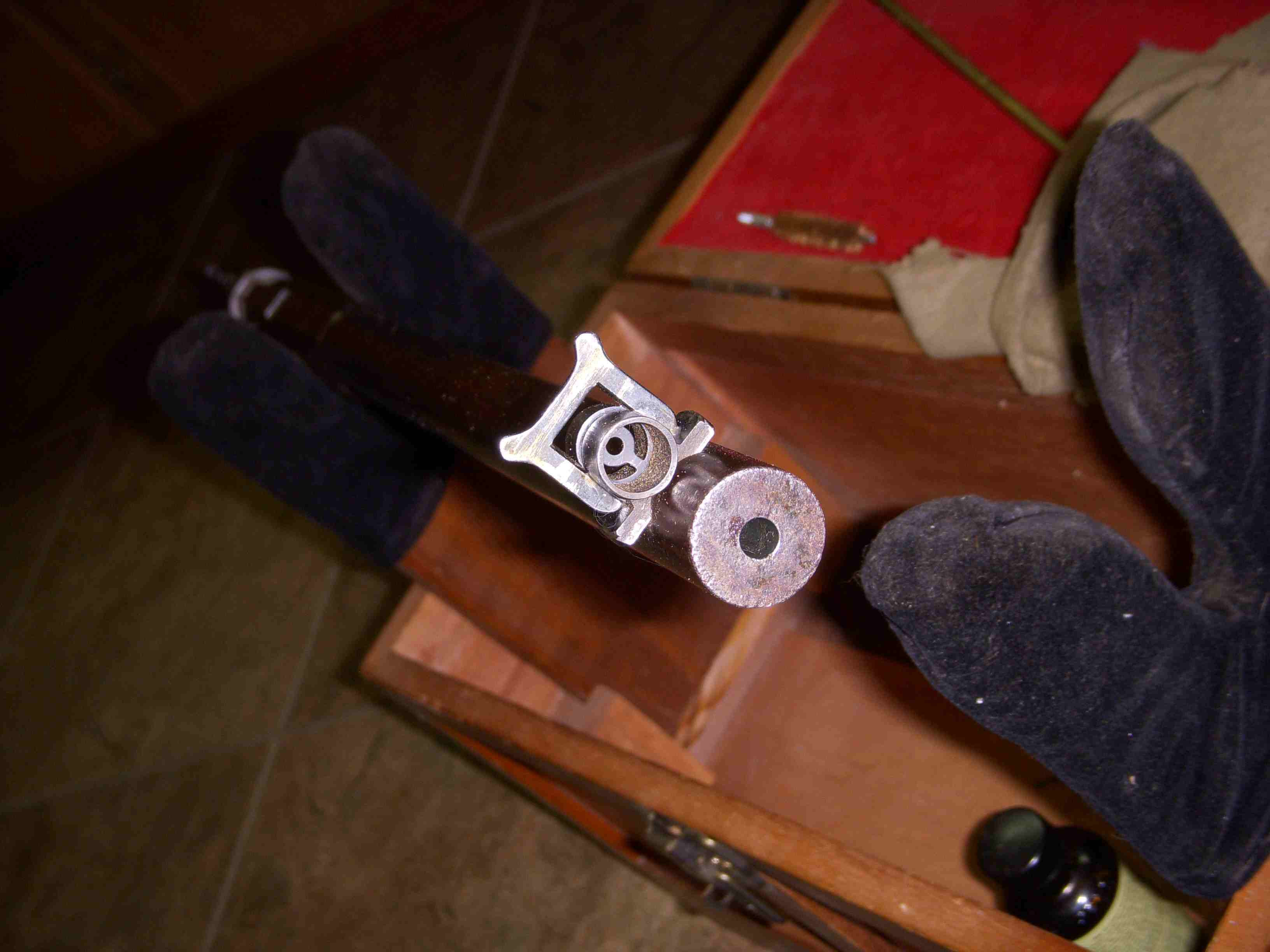
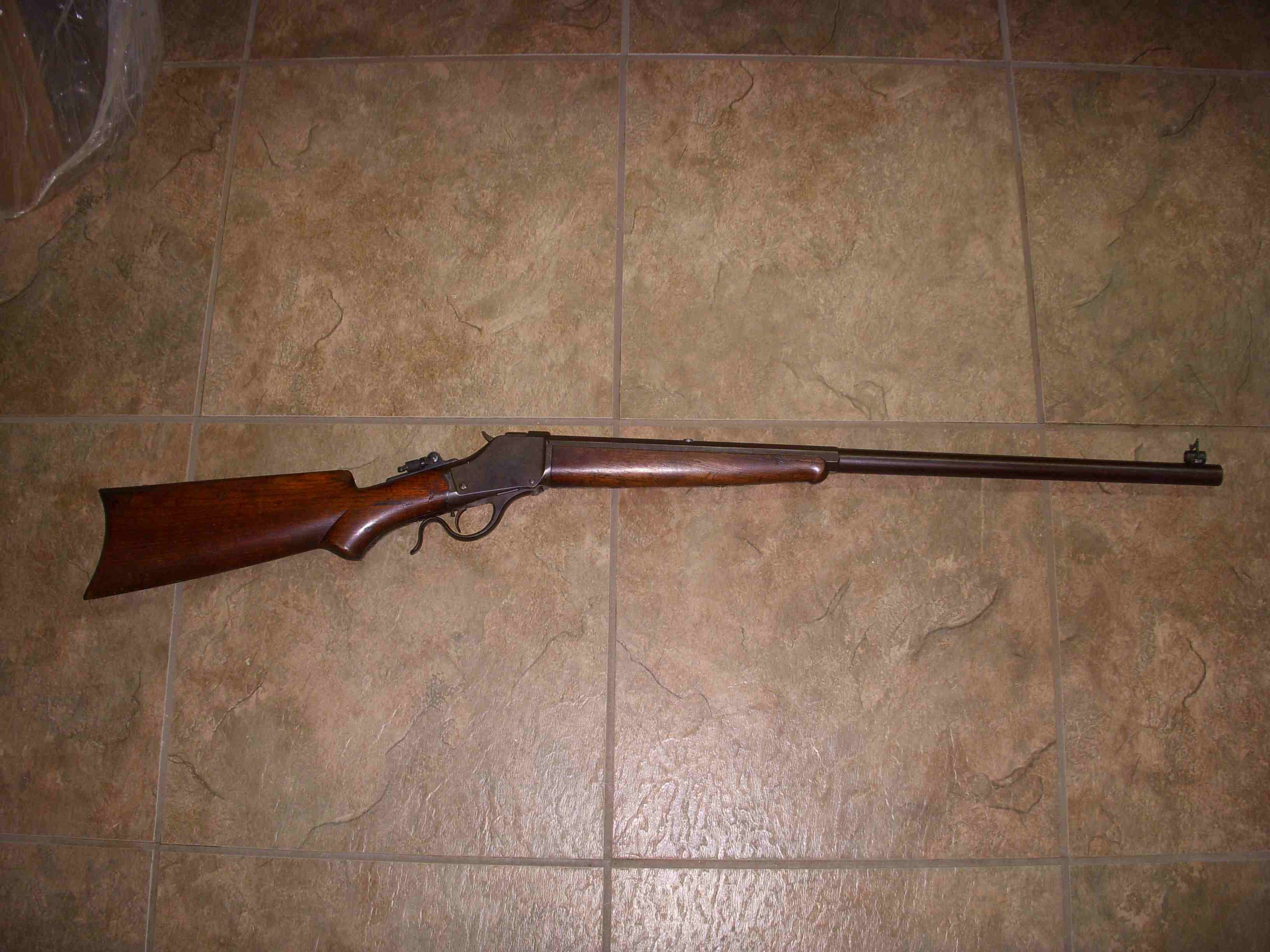
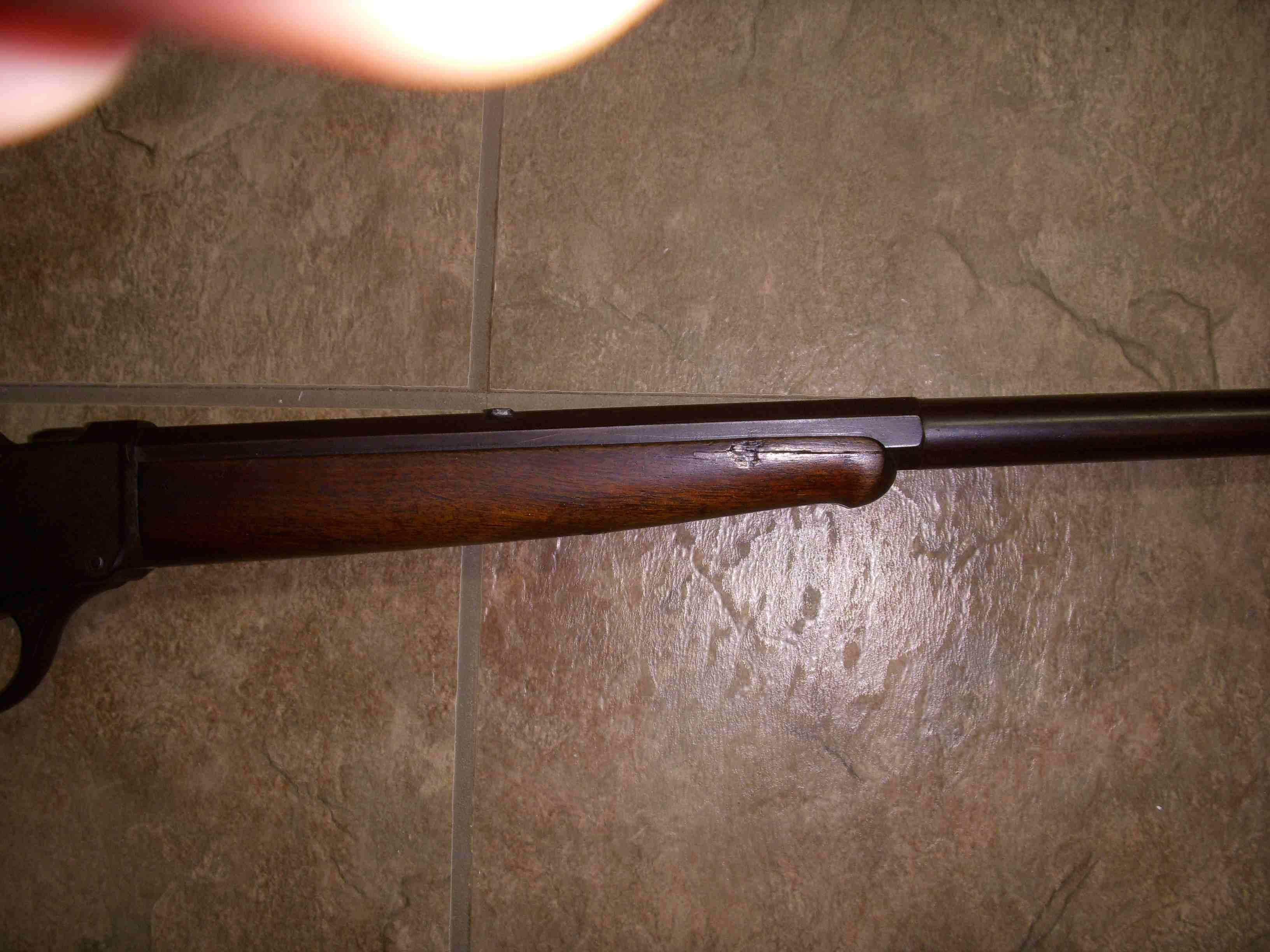
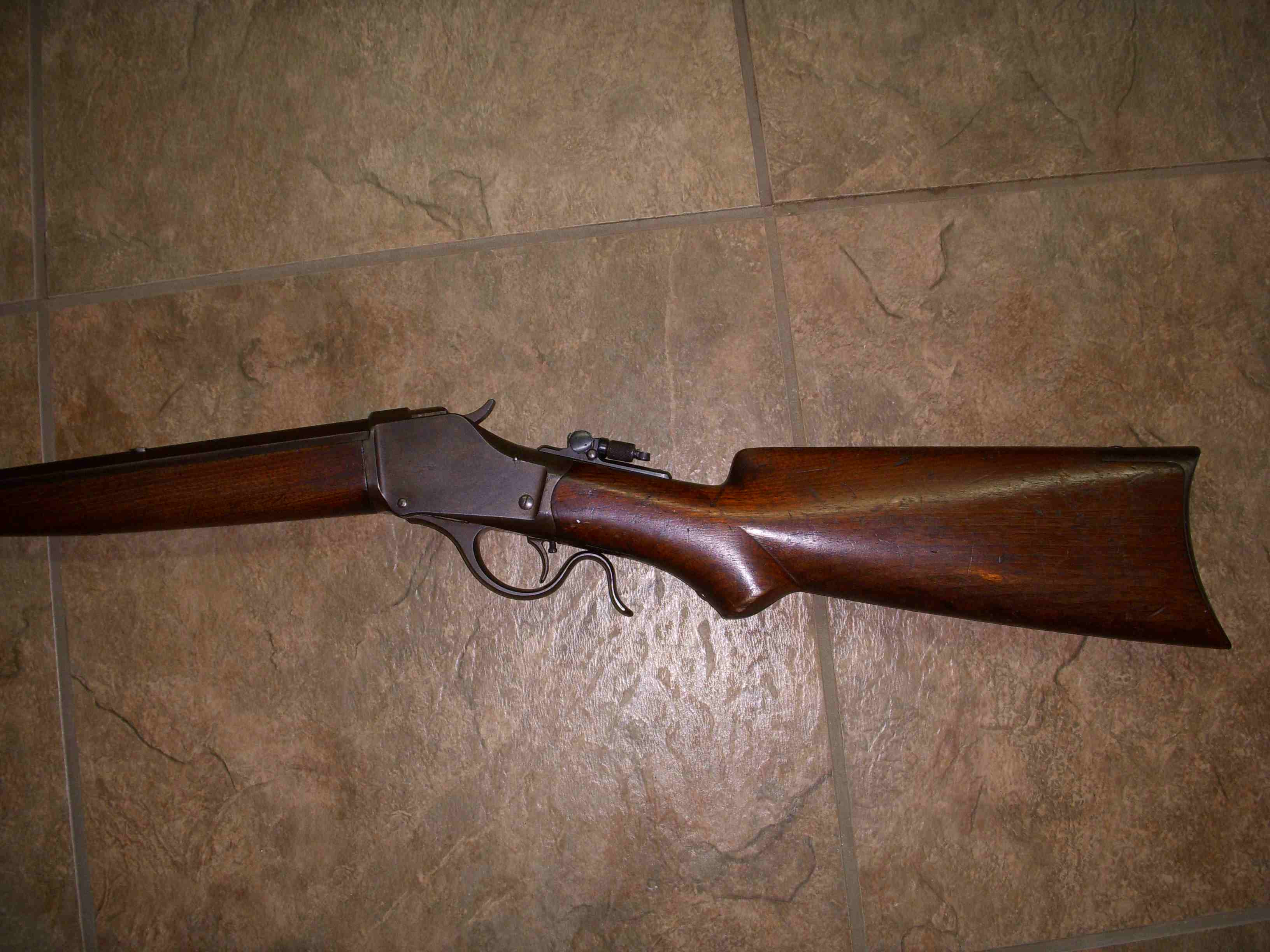
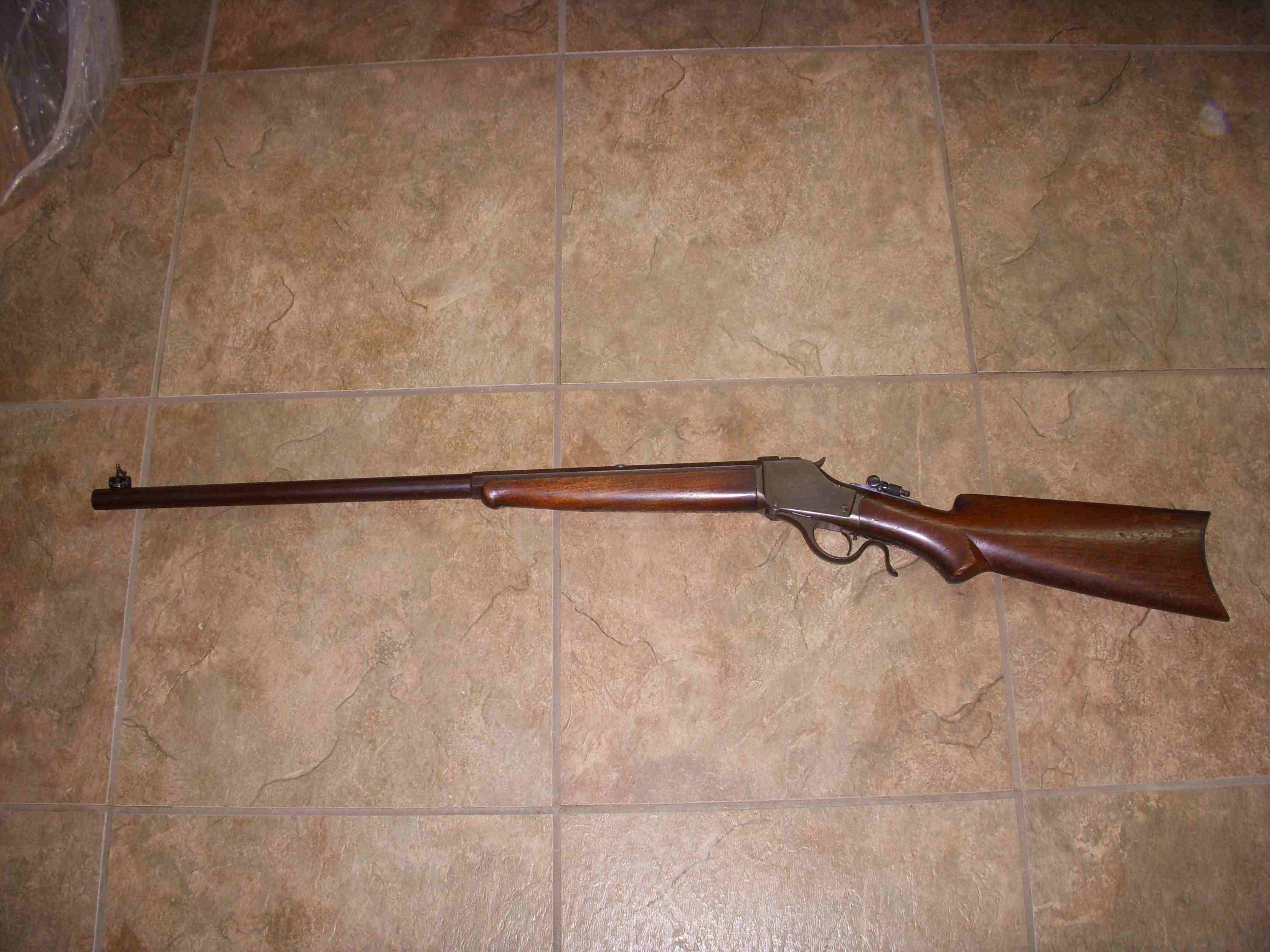
Bert and I have had this discussion before, and I passed on #779, in the past for about $3,000.00 Bucks ,(my pics tell me 2010), which I did not know was the first S.S. in the .22 WCF caliber. My friend had it, and sold it and can’t remember who he sold it to here in Ohio. The hunt continues to help out our beloved 1885 Guru!
April 15, 2005
Offline
Anthony,
I would have bought that rifle for $3,000. If you find it again, try to make a deal for it.
Bert
WACA Historian & Board of Director Member #6571L
May 2, 2009
Offline
Bert,
I can say I have never seen 22 WCF or 22 CF in the ledgers. In the 73’s they did list some just “22” for caliber with no differentiating for long or short. When I saw a gun that letter just 22 they were either long or short.
Bob
WACA Life Member---
NRA Life Member----
Cody Firearms member since 1991
Researching the Winchester 1873's
Email: [email protected]
December 9, 2002
Offline
April 15, 2005
Offline
1873man said
Bert,
I can say I have never seen 22 WCF or 22 CF in the ledgers. In the 73’s they did list some just “22” for caliber with no differentiating for long or short. When I saw a gun that letter just 22 they were either long or short.
Bob
I am of the belief (opinion) that Winchester did not ever actually manufacture any Model 1873 rifles in 22 WCF simply because none have ever surfaced in the flesh, or in the ledger records.
The early entries in the Single Shot ledgers for the 22 Short were usually “22 R”, “22 RF”, or sometimes just “22”. For the 22 Long, the entries were nearly always “22 L”, but rarely “22 Long”.
Bert
WACA Historian & Board of Director Member #6571L

March 31, 2009
Offline
Bert H. said
I discovered something very odd while looking at my November 1885 Winchester catalog (No. 39) to answer a question that Chuck posed… and the answer is, No, it is not marked “No. 39” anywhere on or in the catalog.
Bert
Thanks Bert.
November 19, 2006
Offline
Surely they made one or more prototypes. However, a lot of items haven’t survived. One can imagine any prototypes might have been discarded. In addition, one would think there would be some notes somewhere. Of course not all the notes survive either.
November 7, 2015
Offline
Interesting note in Cartridges of the World; Barnes apparently noticed the 1873 listing in the catalog as well, I was thinking it would be too long for the 1873 action and Barnes thought so, too. Haven’t found the OAL of the 22 WCF in any of my loading manuals yet to confirm.
Mike
March 31, 2009
Offline
TXGunNut said
Interesting note in Cartridges of the World; Barnes apparently noticed the 1873 listing in the catalog as well, I was thinking it would be too long for the 1873 action and Barnes thought so, too. Haven’t found the OAL of the 22 WCF in any of my loading manuals yet to confirm.
Mike
Loaded length is 1.61″. Case dimentions are very close to the Hornet. Hornet OAL is 1.80″.
May 2, 2009
Offline
The length of the elevator slot is just over that so it would fit.
Bob
WACA Life Member---
NRA Life Member----
Cody Firearms member since 1991
Researching the Winchester 1873's
Email: [email protected]
April 15, 2005
Offline
Chuck said
TXGunNut said
Interesting note in Cartridges of the World; Barnes apparently noticed the 1873 listing in the catalog as well, I was thinking it would be too long for the 1873 action and Barnes thought so, too. Haven’t found the OAL of the 22 WCF in any of my loading manuals yet to confirm.
Mike
Loaded length is 1.61″. Case dimentions are very close to the Hornet. Hornet OAL is 1.80″.
Chuck,
Where are you getting 1.80″ OAL for the Hornet? All of my reloading manuals show 1.73″.
Bert
WACA Historian & Board of Director Member #6571L

October 19, 2008
Offline
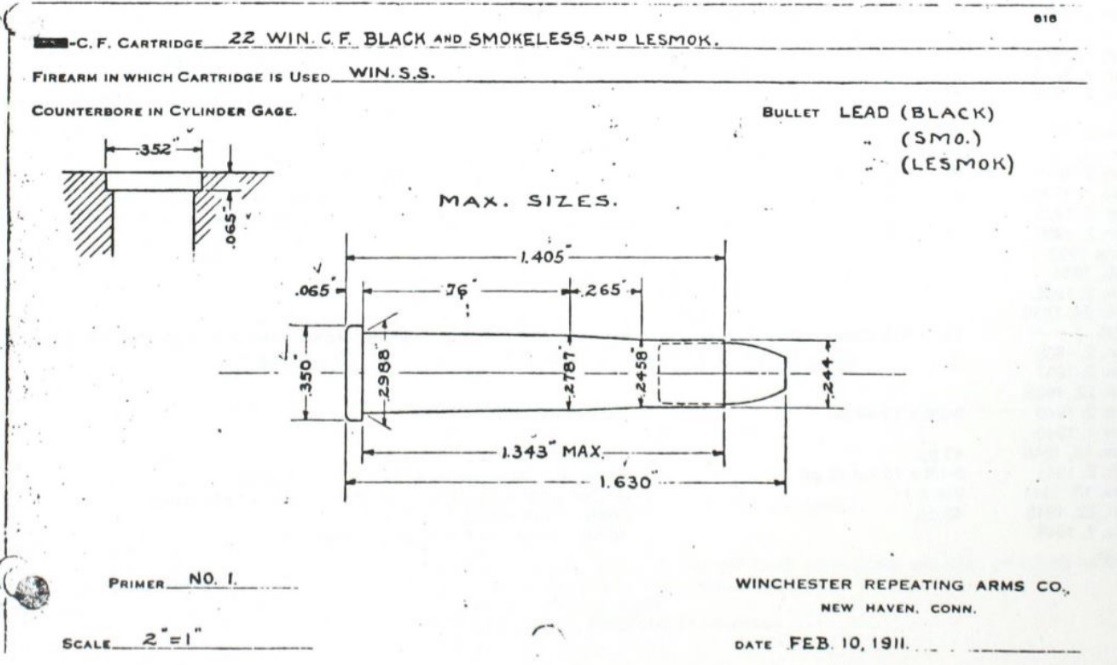
The elevator mortise in my Model 1873 (mfg. in 1892) measures 1.627 inches in length. A factory drawing of the .22 W.C.F., dated Feb. 10, 1911, indicates a max. O.A.L. of 1.630 inches. I have a handful of original Winchester-manufacture .22 W.C.F. cartridges which measure 1.688-inches O.A.L. I have also loaded .22 W.C.F. cartridges, using bullets from an original Winchester bullet mold which were seated using an original Winchester loading tool. These cartridges measure 1.678-inches O.A.L.
SAAMI O.A.L. min./max. for the centerfire Model 1873 chamberings: .32-20 – 1.540 / 1.592; .38-40 – 1.560 / 1.592; .44-40 – 1.540 / 1.592
At least in the case of my Model 1873, a cartridge O.A.L. of 1.592-inches leaves only 0.032-inches of clearance to prevent the cartridge dragging against the ends of the elevator mortise. With an O.A.L. of 1.630-inches, as shown in the 1911 drawing, there would be a 0.003-inch interference. It MIGHT feed, but not without some difficulty (and aggravation). The original Winchester cartridges I have, as well as my reloads, would be an outright impossibility.
Could the Model 1873 be made to feed .22 W.C.F.? Of course it could, and Winchester certainly could have done it. I kind of hope there was at least one made, sitting quietly forgotten and yet to be rediscovered in a dark and dusty corner. Maybe Winchester considered it, cataloged it, then quietly abandoned it. Too bad, ’cause I’d really like for there to be one.
Jim
November 19, 2006
Offline
30gov03 said
The elevator mortise in my Model 1873 (mfg. in 1892) measures 1.627 inches in length. A factory drawing of the .22 W.C.F., dated Feb. 10, 1911, indicates a max. O.A.L. of 1.630 inches. I have a handful of original Winchester-manufacture .22 W.C.F. cartridges which measure 1.688-inches O.A.L. I have also loaded .22 W.C.F. cartridges, using bullets from an original Winchester bullet mold which were seated using an original Winchester loading tool. These cartridges measure 1.678-inches O.A.L.
SAAMI O.A.L. min./max. for the centerfire Model 1873 chamberings: .32-20 – 1.540 / 1.592; .38-40 – 1.560 / 1.592; .44-40 – 1.540 / 1.592
At least in the case of my Model 1873, a cartridge O.A.L. of 1.592-inches leaves only 0.032-inches of clearance to prevent the cartridge dragging against the ends of the elevator mortise. With an O.A.L. of 1.630-inches, as shown in the 1911 drawing, there would be a 0.003-inch interference. It MIGHT feed, but not without some difficulty (and aggravation). The original Winchester cartridges I have, as well as my reloads, would be an outright impossibility.
Could the Model 1873 be made to feed .22 W.C.F.? Of course it could, and Winchester certainly could have done it. I kind of hope there was at least one made, sitting quietly forgotten and yet to be rediscovered in a dark and dusty corner. Maybe Winchester considered it, cataloged it, then quietly abandoned it. Too bad, ’cause I’d really like for there to be one.
Jim
Jim –
That was great information. I appreciated the detailed measurements and the comprehensiveness of your post.
I see you’ve been around here for about 18 years. We don’t often hear from you but when we do, it’s notable.
You mention Winchester could have made the .22 WCF feed through the action. I agree and when I think about this, I reflect on the effort Winchester went through to make the .50 caliber cartridges feed through the Model 1886 action. They did it – but it wasn’t easy.
October 19, 2008
Offline
steve004 said
That was great information. I appreciated the detailed measurements and the comprehensiveness of your post.
I see you’ve been around here for about 18 years. We don’t often hear from you but when we do, it’s notable.
You are kindly welcome. I don’t post much here, as there are many fine folks with much greater knowledge regarding all things Winchester than I have. But on those rare occasions when I feel I have something useful and constructive to add to the conversation, I do my best.
Thank you for the kind words.
On an additional note, it appears there was a change to the .22 W.C.F. cartridge’s O.A.L. From the earliest appearance through early 1907 (Catalog No.73), the catalog illustration, as well as cartridge box labels, showed the .22 W.C.F. with the bullet seated with an exposed groove just ahead of the case mouth. In 1908 (Catalog No.74) the cartridge illustration showed the cartridge with a bullet having an obvious profile change and a larger flat on the nose. If you compare the 1907 and earlier illustrations to those from 1908 and later, there is a noticeable – and measurable – difference between them. This difference is roughly equivalent to the difference between the factory Winchester cartridges I have (which, like the early illustrations, have the exposed groove) and the factory drawing of 1911… just shy of 1/16-inch (0.0625-inch), somewhere in the neighborhood of the 0.058-inch difference between my measurements and the factory drawing.
And, yes, I’m aware that measuring the illustrations in the catalogs is imprecise and subject to errors in printing, but I’ve found that if you compare actual cartridges to them, side-by-side, they’re not that far off.
Cartridge box labels also reflect this change, but just a bit later (the earliest label date I have seen is 4-10). I attribute this to there being box labels I haven’t seen, combined with Winchester’s policy of continuing to use up old stock – even if newer was available.
Jim


1 Guest(s)
