

 Log In


January 20, 2023
 Online

Because I know a nice Sharps can turn the head of the most avid Winchester collector, the authors of the 4-volume set have published a boiled down Collector’s Guide that summarizes all the relevant details of every model.and style. It is beautifully and copiously illustrated and well worth the price. About sixty bucks hardbound. Mine came yesterday and you want it for your reference library. 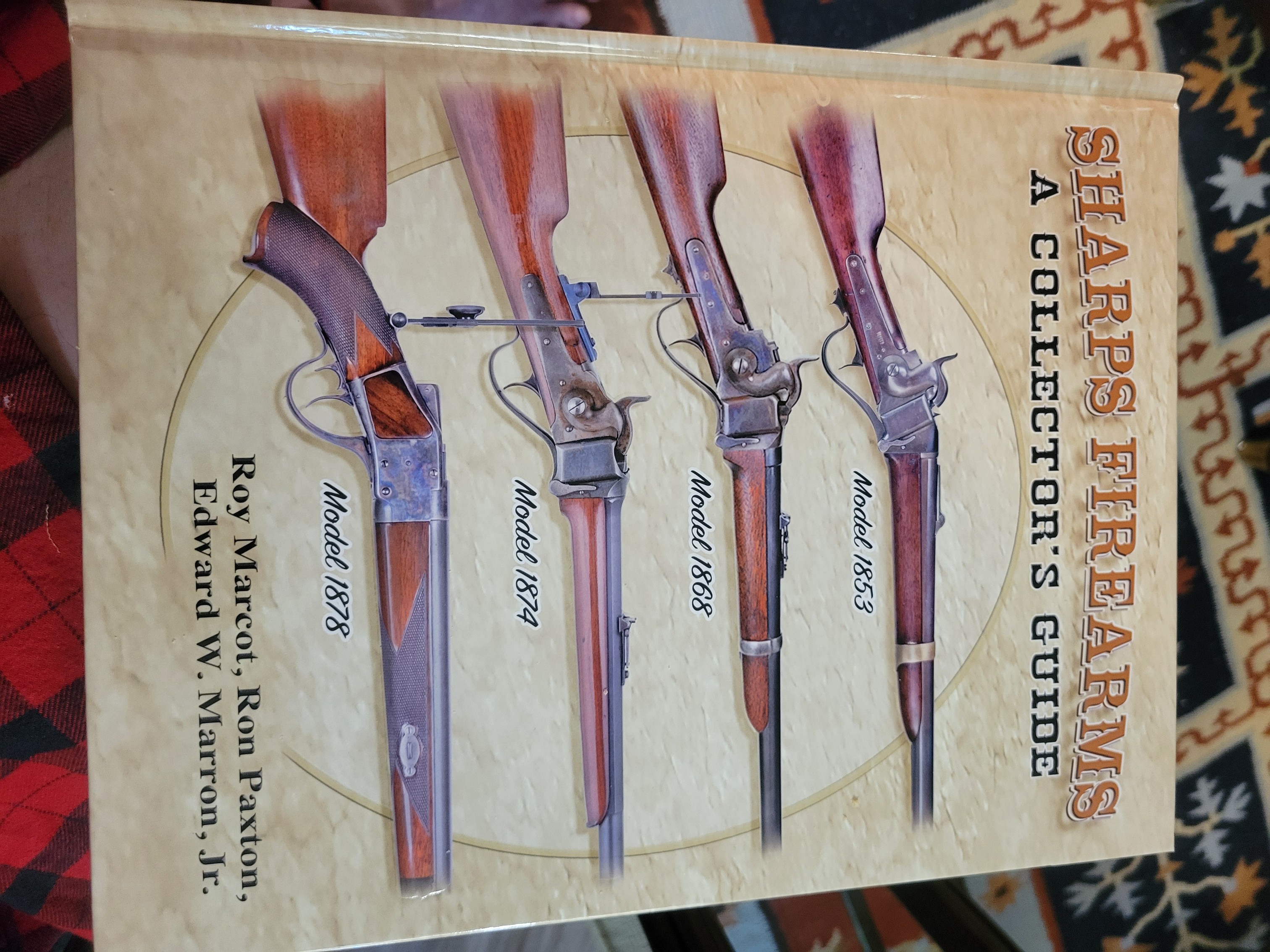
- Bill
WACA # 65205; life member, NRA; member, TGCA; member, TSRA; amateur preservationist
"I have seen wicked men and fools, a great many of both, and I believe they both get paid in the end, but the fools first." -- David Balfour, narrator and protagonist of the novel, Kidnapped, by Robert Louis Stevenson.

April 30, 2023
 Offline
I also got mine yesterday and it’s on top of the read pile, right under Stroebel’s combined sights and scopes book.

December 21, 2006
Offline
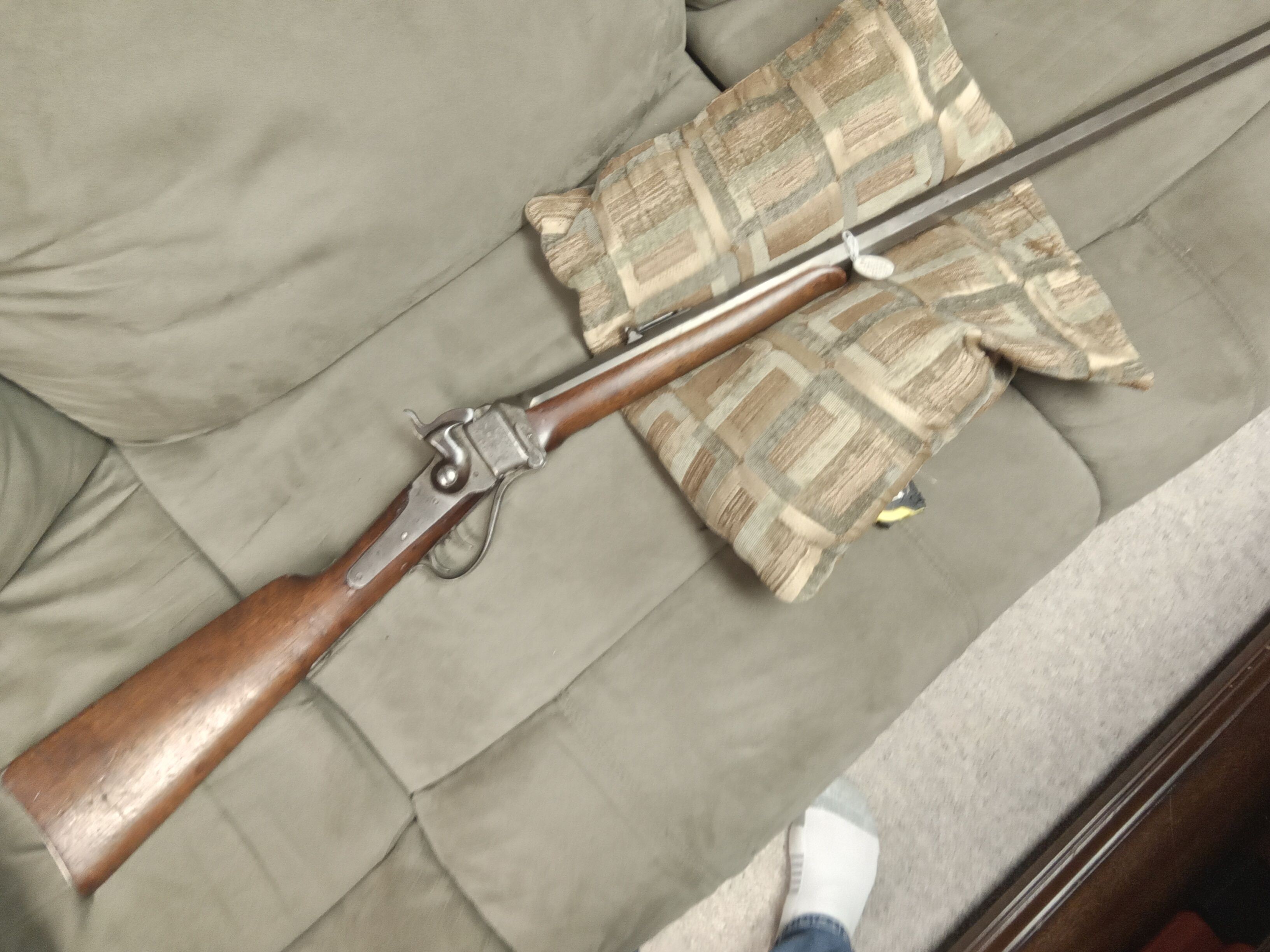
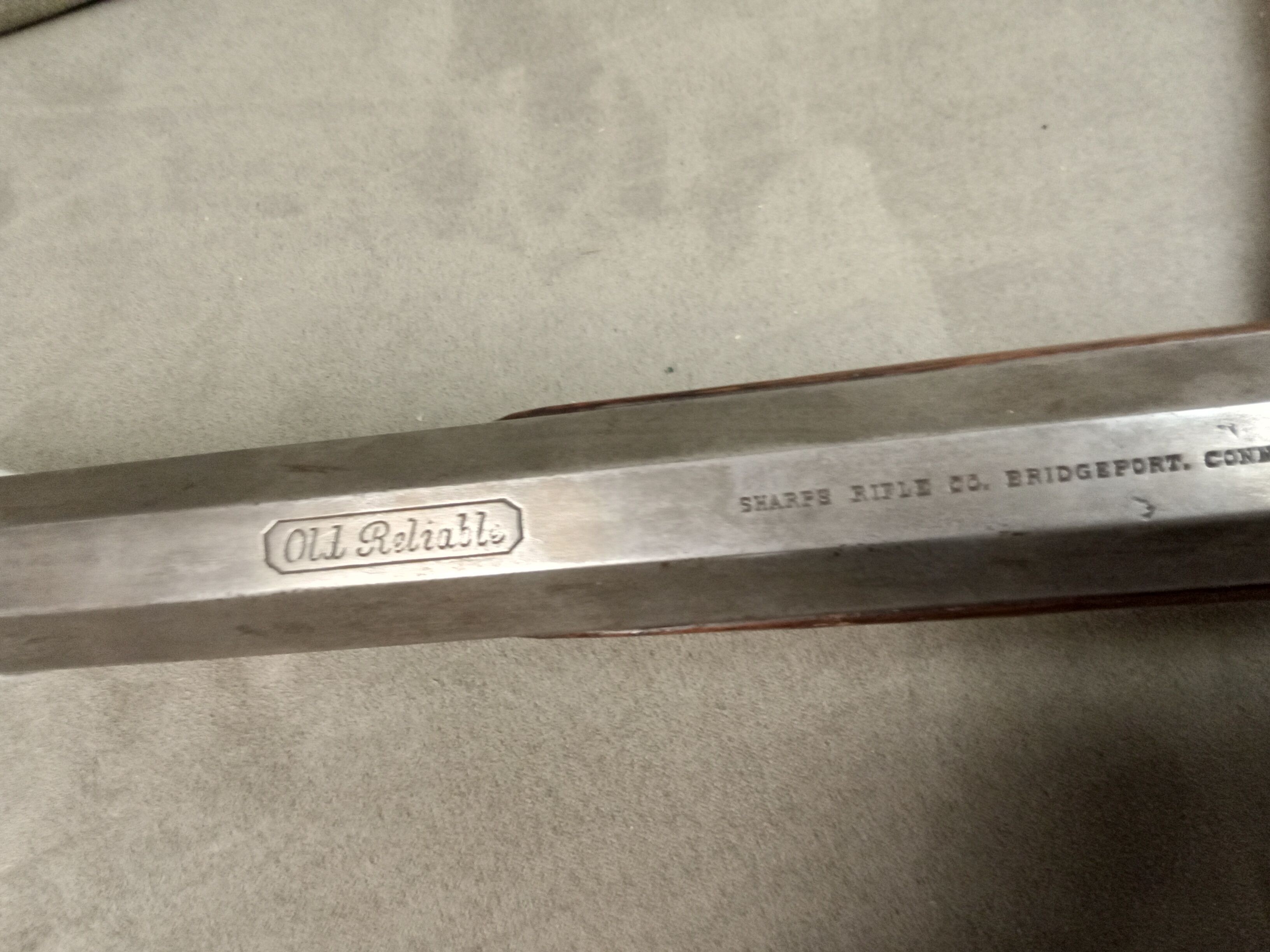
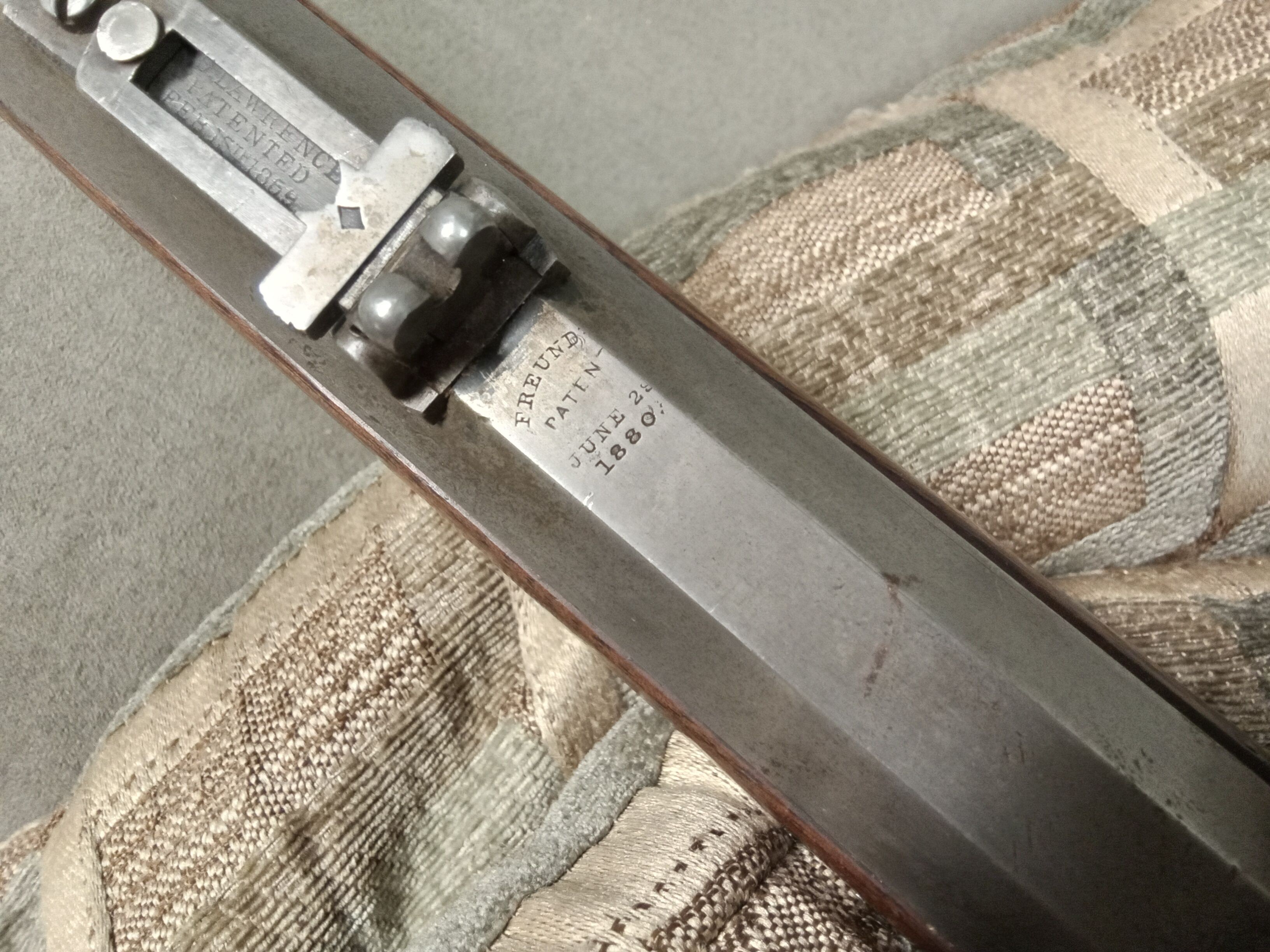
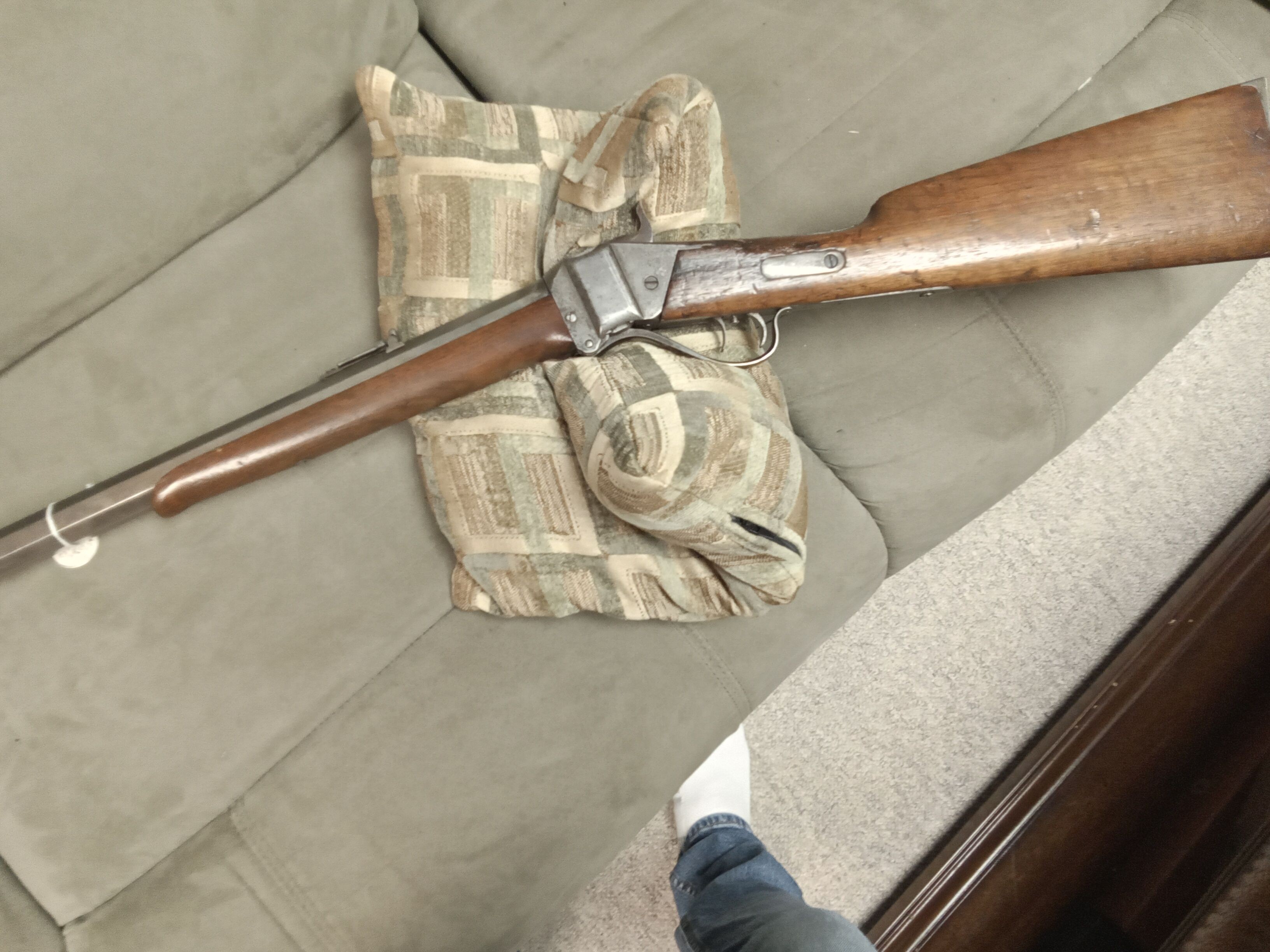
I know absolutely nothing about the Sharps rifles, so I do have a question, actually a cople of questions, is the value of them going up or going down, and would this one be tentativly be worth anything????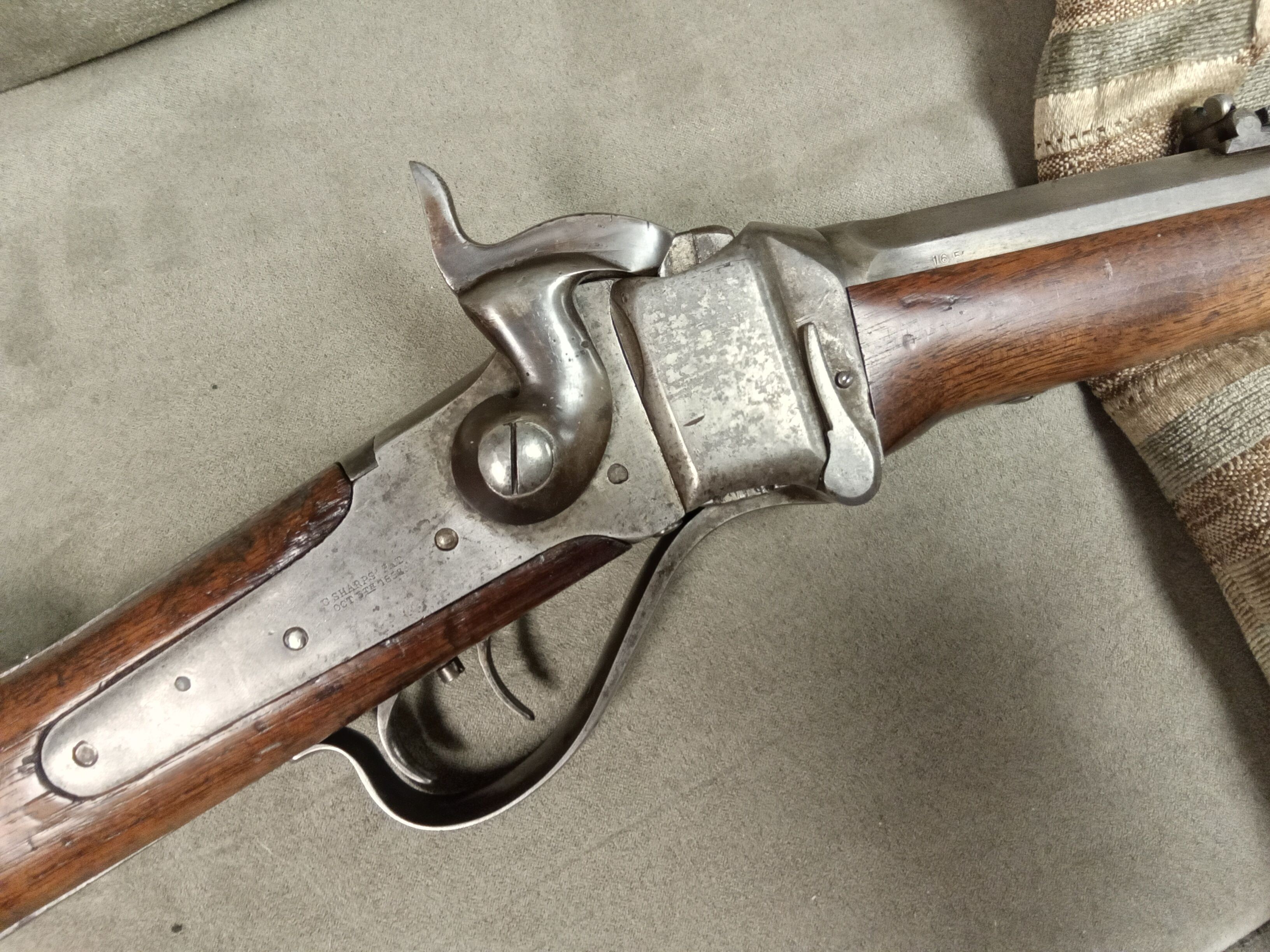
W.A.C.A. life member, Marlin Collectors Assn. charter and life member, C,S.S.A. member and general gun nut.
December 9, 2002
Offline

Henry,
I’m certainly no expert on these but I like them as others do also. It looks like to me you have a “Heavy Barrel”, M-1874, and with the Famed, “FREUND”, Dealer markings out of Colorado, I think you might have a desirable prize there!
I sure wouldn’t hesitate to hold and look at that, if you make it down to the OGCA/WACA Show in September. Who knows we might come to an understanding, or Deal!
I’m guessing it’s in the 45-70!!!
To answer you’re question, Yes, it’s worth something! 
Caused me to dig this out!

According to the book, they we’re in Cheyenne Wyoming in 1880, which is stamped on the rifle as a patent date.
Tony
January 20, 2023
Online
Henry, What Tony said is the straight dope. Even I know the Freund logo means this rifle was more than likely a “real” buffalo rifle and carries with it all the romance of that Era.
(Why do I have the feeling Henry’s question has an echo of Sergent Bilko? “What is this game you call ‘poker’?”)
- Bill
WACA # 65205; life member, NRA; member, TGCA; member, TSRA; amateur preservationist
"I have seen wicked men and fools, a great many of both, and I believe they both get paid in the end, but the fools first." -- David Balfour, narrator and protagonist of the novel, Kidnapped, by Robert Louis Stevenson.
December 9, 2002
Offline
Zebulon said
Henry, What Tony said is the straight dope. Even I know the Freund logo means this rifle was more than likely a “real” buffalo rifle and carries with it all the romance of that Era.
(Why do I have the feeling Henry’s question has an echo of Sergent Bilko? “What is this game you call ‘poker’?”)
Poker, did you say? Aren’t most Collectors poker players, so to speak???
Heck, we all like westerns, and have seen plenty of them, and in watching John Wayne in “The Shootist”, he’s haggling with “Mose”, the stable hand taking care of his horse, and they get to haggling, over who’s the best Haggler! That’s how enjoyable it is to deal with an expert like Henry, a true gentleman in every sense of the word 
The “Freund Brothers”, we’re well known of the Era, or time period, back when Winchester was doing they’re thing along with the many others, plying trades. The Freund family originated in Prussia. Which the name means, Friend in English. Many of the family found themselves in Germany, and Frank Freund, emigrated to America, in New York, as many did, in 1857. After the Civil War, Frank Freund, a skilled craftsman, opened a gun shop in 1866 at Nebraska City along the Missouri River, in far Eastern Nebraska Territory. Frank took his brother George in and the “Freund Bros.”, were off and running. Having shops in Nebraska, then moving to several different locations over the years, as the newly invention of travel back then known as the “Railroad”, surely expanded the West, from back East.
With the “Freund Bros.’, they had a shop in Cheyenne, Wyoming as Frank liked to refer to an Armory. They even had a shop in Salt Lake City, Utah, not far from Ogden, Utah, where the “Browning Brothers”, set up shop.
The brothers did so well, in those early years that Winchester had them on their list of nineteen, (19),”dealers and jobbers”, of the famed Winchester model 1866. In the Salt lake City directory and Business guide, in 1869, they ran an ad stating;
“We are agents for the Winchester Patent Repeating Rifles and Carbines”, for the Whole West”!
The “Freund”, brothers did a lot of advertising in many papers of the West among others and had several locations over the years, and were well known for they’re works. Denver, Colorado was another well known location, as was Durango, Colorado. They we’re known to have a location in New Jersey as a move East in 1885, also. The reason Frank stated was to better manufacture his rifles.
I’m sure that Frank Freund, along with his brother George, was aware of the relationship that the Browning Brothers had with Winchester, and this had some influence on them, way back then.
The west was, being Cheyenne Wyoming was always the place they liked to refer to as home. Both Frank and his brother George passed in 1910, and 1911, respectively in the West.
Tony
January 20, 2023
Online
Tony, That’s a fine history lesson, for which my thanks.
Before I forget, I learned something from the new Collector’s Guide. Shiloh and others have written that “our” saddle rifle was never a named model but rather a common reference to a Sharps buffalo rifle with a shortened barrel for scabbard carry.
However, see page 130, excerpted below.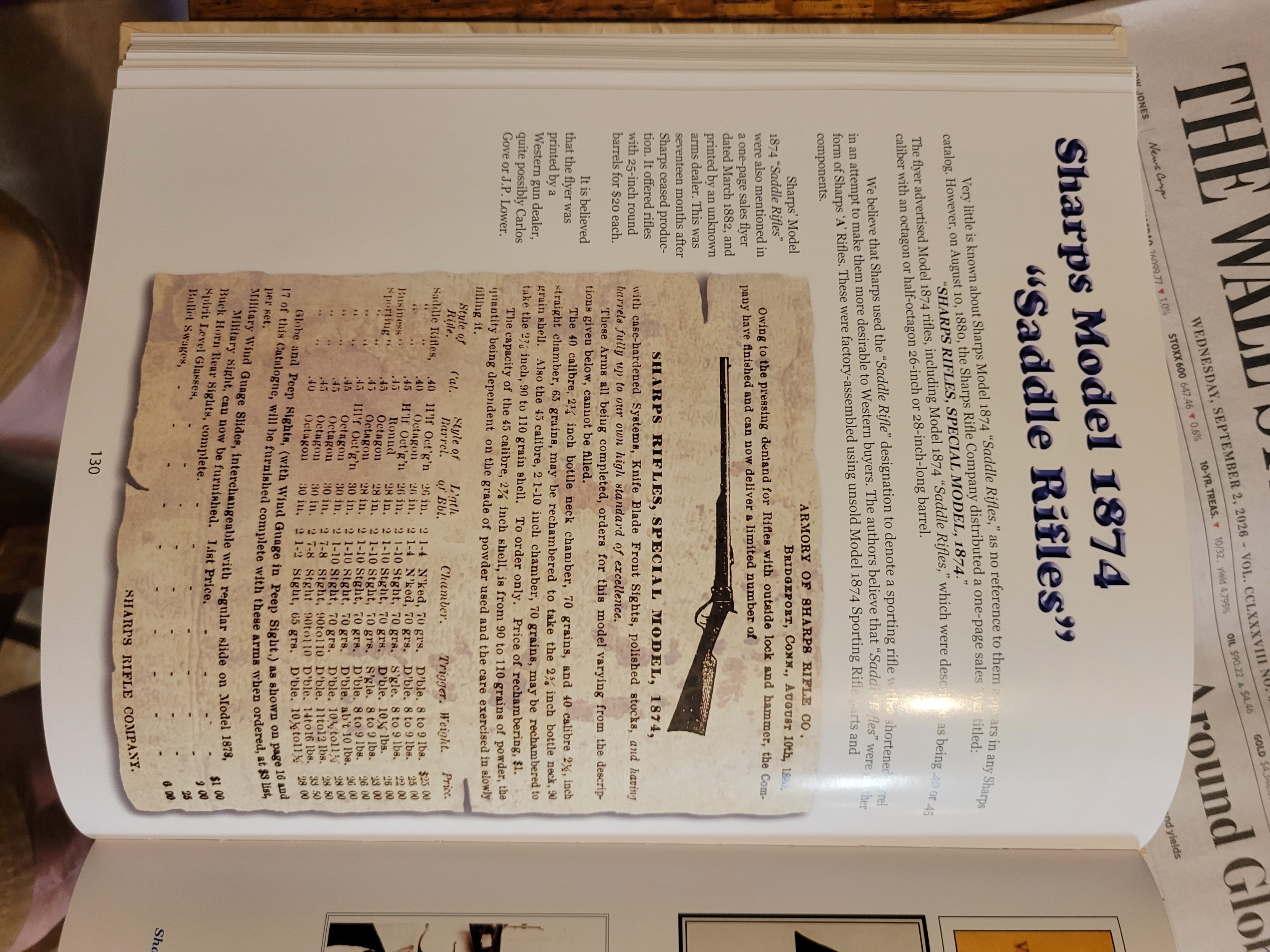
- Bill
WACA # 65205; life member, NRA; member, TGCA; member, TSRA; amateur preservationist
"I have seen wicked men and fools, a great many of both, and I believe they both get paid in the end, but the fools first." -- David Balfour, narrator and protagonist of the novel, Kidnapped, by Robert Louis Stevenson.
December 9, 2002
Offline
Zebulon said
Tony, That’s a fine history lesson, for which my thanks.
Before I forget, I learned something from the new Collector’s Guide. Shiloh and others have written that “our” saddle rifle was never a named model but rather a common reference to a Sharps buffalo rifle with a shortened barrel for scabbard carry.
However, see page 130, excerpted below.
Bill,
Thanks for the kind words, as I surely tried to condense it down, as much as I could and hit some finer points.
Correct, the “saddle rifle”, term is a collector terminology, like the different terminology that us Winchester collectors have for the so called, “Trapper”.
Does the book mention anything as to the, “OLD RELIABLE”, years that was stamped into the barrel?
I spoke with Henry a little bit this morning, and was telling him to take a look at his friends rifle and collection, as in front of the front sight, “Freund”, sometimes liked to put a skull and crossbones design that George was fond of, and rarely seen! When I asked him on the caliber he did say it was the .45 2 1/2 caliber.
Pretty sure the .45-70- Government cartridge came about 1873, and the .45 2 1/2 was considered this cartridge with a 405 grain or 500 grain bullet. Sharps likely started using this cartridge in 1875 in their rifles.
Tony
January 20, 2023
Online
The late, former Texas Ranger and Sheriff of Cochise County, Arizona, John Horton Slaughter, was known to routinely carry (when on horseback — which, like most Rangers of that Era, was if he was going more than a city block) a sawed-off Colt’s 10 gauge shotgun, in addition to his Colt’s revolver and Winchester 44. If the old buscadero had to track a man across the desert, he added a Sharps buffalo rifle. I suspect this was a “saddle rifle” of most likely .45 Gov’t caliber.
- Bill
WACA # 65205; life member, NRA; member, TGCA; member, TSRA; amateur preservationist
"I have seen wicked men and fools, a great many of both, and I believe they both get paid in the end, but the fools first." -- David Balfour, narrator and protagonist of the novel, Kidnapped, by Robert Louis Stevenson.

March 31, 2009
Offline
Anthony said
Zebulon said
Tony, That’s a fine history lesson, for which my thanks.
Before I forget, I learned something from the new Collector’s Guide. Shiloh and others have written that “our” saddle rifle was never a named model but rather a common reference to a Sharps buffalo rifle with a shortened barrel for scabbard carry.
However, see page 130, excerpted below.
Bill,
Thanks for the kind words, as I surely tried to condense it down, as much as I could and hit some finer points.
Correct, the “saddle rifle”, term is a collector terminology, like the different terminology that us Winchester collectors have for the so called, “Trapper”.
Does the book mention anything as to the, “OLD RELIABLE”, years that was stamped into the barrel?
I spoke with Henry a little bit this morning, and was telling him to take a look at his friends rifle and collection, as in front of the front sight, “Freund”, sometimes liked to put a skull and crossbones design that George was fond of, and rarely seen! When I asked him on the caliber he did say it was the .45 2 1/2 caliber.
Pretty sure the .45-70- Government cartridge came about 1873, and the .45 2 1/2 was considered this cartridge with a 405 grain or 500 grain bullet. Sharps likely started using this cartridge in 1875 in their rifles.
Tony
In 1875 the manufacture of Sharps rifles moved from Hartford to Bridgeport. In 1876 Old Reliable was added to the barrel. The 45 Cal is confusing depending upon what type of rifle it is. Long range target or sporting etc.
December 9, 2002
Offline
Chuck said,
In 1875 the manufacture of Sharps rifles moved from Hartford to Bridgeport. In 1876 Old Reliable was added to the barrel. The 45 Cal is confusing depending upon what type of rifle it is. Long range target or sporting etc.
I appreciate it Chuck.
In the Frank Sellers, Sharps book, in the back he has a cartridge section ans a paragraph on each cartridge describing and explaining the cartridges that Sharps used in their rifles. He shows several early linen cartridges, and percussion cartridges and also talks about the paper patch cartridges, and all the way up to the famed “Big 50″ cartridge,but no mention of the 50-3 1/4”, or 50-140, cartridge,(in which great discussions are had on another post), in his 1988, (third printing), book which is pretty detailed.
The first .45 caliber cartridge he lists: .45 CALIBRE 2.1-INCH STRAIGHT (.45-70 GOVERNMENT) Listed as the .45 2 1/4 in 1875 and .45 2 1/12 inch in 1876.
2 nd : .45 CALIBRE 2.4-INCH STRAIGHT Commonly called the 45-90 Models 1874, 1877, and 1878 Long Range rifles.
3 rd : .45 CALIBRE 2.6-INCH STRAIGHT The common load for this was the .45/100/550, Paper Patch.
4 th : .45 CALIBRE 2-7/8 INCH STRAIGHT This was the longest factory case loaded by the Sharps Rifle Company.
Tony
September 22, 2011
Offline
Zebulon said
Because I know a nice Sharps can turn the head of the most avid Winchester collector, the authors of the 4-volume set have published a boiled down Collector’s Guide that summarizes all the relevant details of every model.and style. It is beautifully and copiously illustrated and well worth the price. About sixty bucks hardbound. Mine came yesterday and you want it for your reference library.
Where can I order this?
January 20, 2023
Online
Ian, Hang on and I’ll look it up.
Bill
- Bill
WACA # 65205; life member, NRA; member, TGCA; member, TSRA; amateur preservationist
"I have seen wicked men and fools, a great many of both, and I believe they both get paid in the end, but the fools first." -- David Balfour, narrator and protagonist of the novel, Kidnapped, by Robert Louis Stevenson.
January 20, 2023
Online
Ian, here’s the dope for Sharps Firearms – A Collector’s Guide.
Mail check for $65.00 made out to Northwood Heritage Press, to
Roy Marcot
4680 Placita Casa Sevilla
Marana, AZ 85658
You can also order it on Amazon but I think they collect Texas sales tax.
Bill
- Bill
WACA # 65205; life member, NRA; member, TGCA; member, TSRA; amateur preservationist
"I have seen wicked men and fools, a great many of both, and I believe they both get paid in the end, but the fools first." -- David Balfour, narrator and protagonist of the novel, Kidnapped, by Robert Louis Stevenson.
September 22, 2011
Offline
Zebulon said
Ian, here’s the dope for Sharps Firearms – A Collector’s Guide.
Mail check for $65.00 made out to Northwood Heritage Press, to
Roy Marcot
4680 Placita Casa Sevilla
Marana, AZ 85658
You can also order it on Amazon but I think they collect Texas sales tax.
Bill
Thank you, Bill!


1 Guest(s)
