

 Log In


January 27, 1992
 Offline


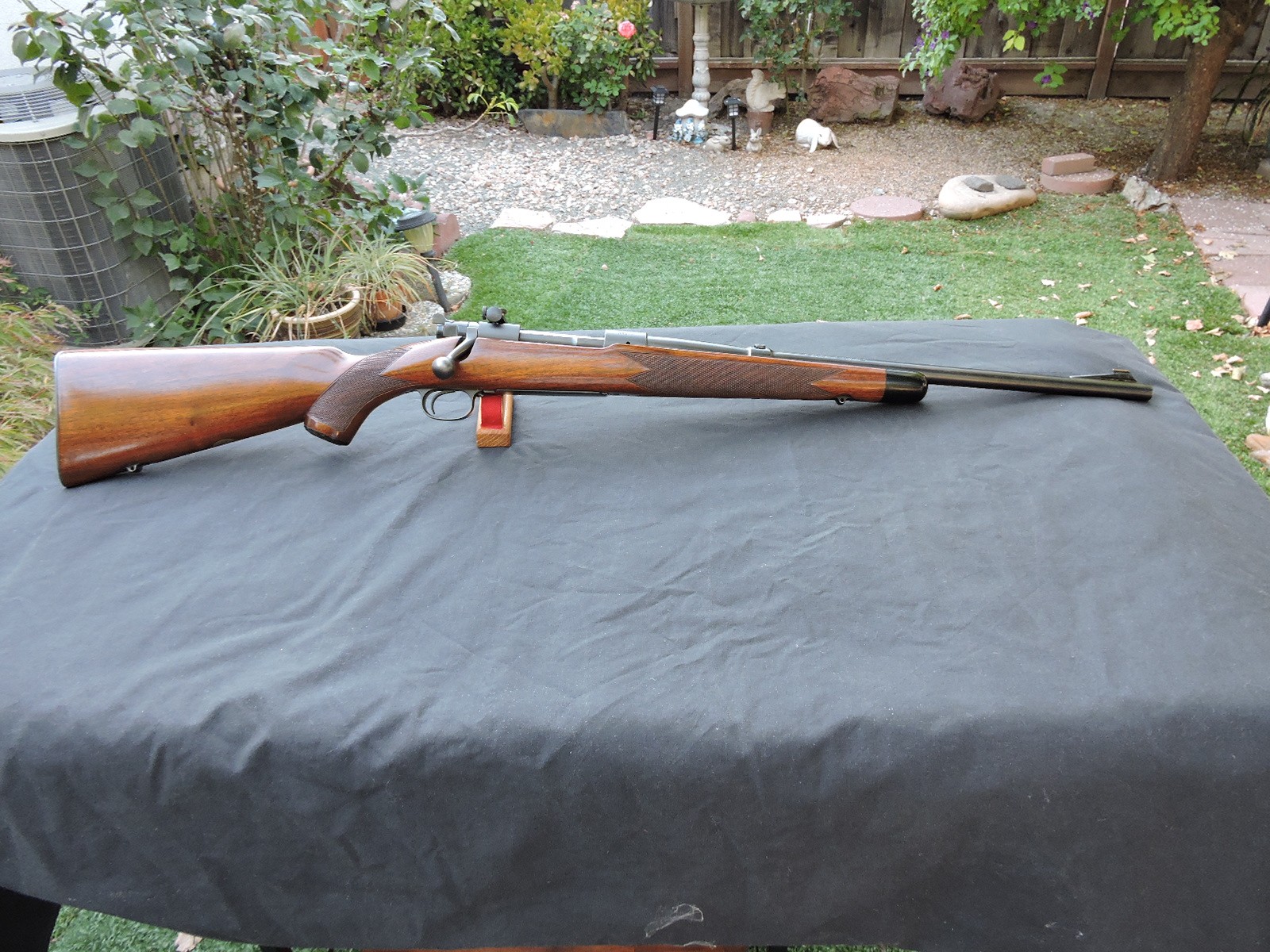
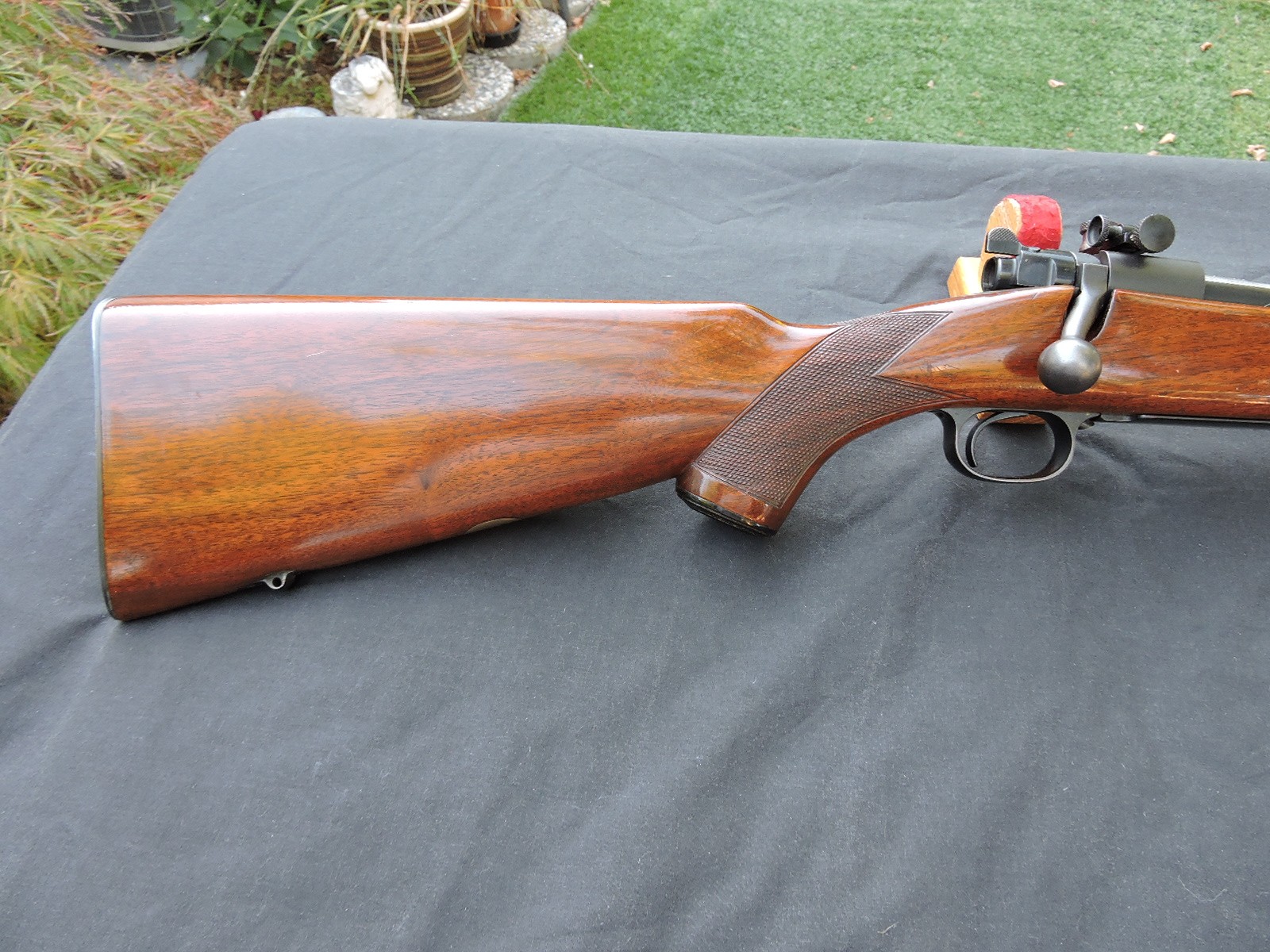
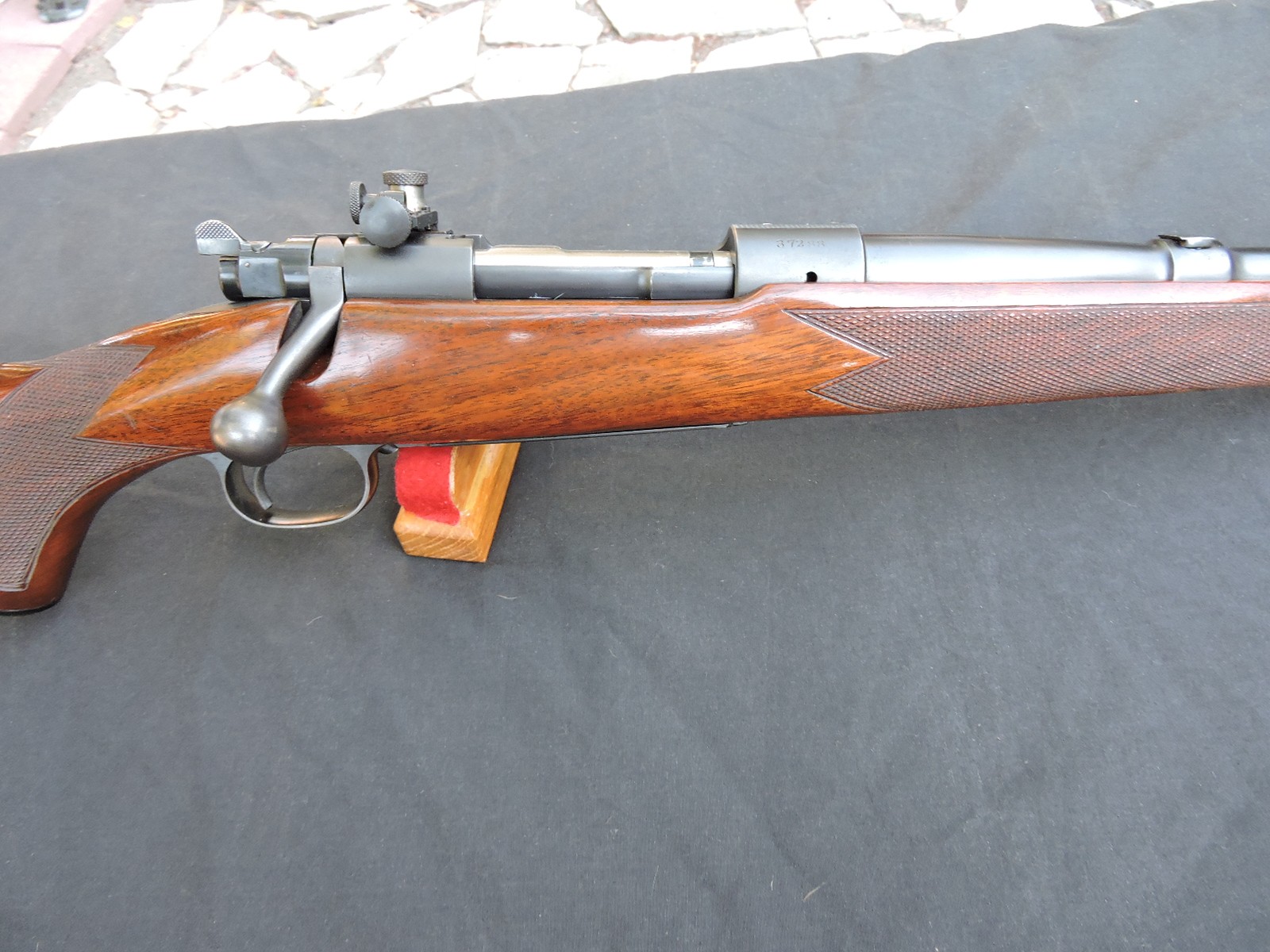
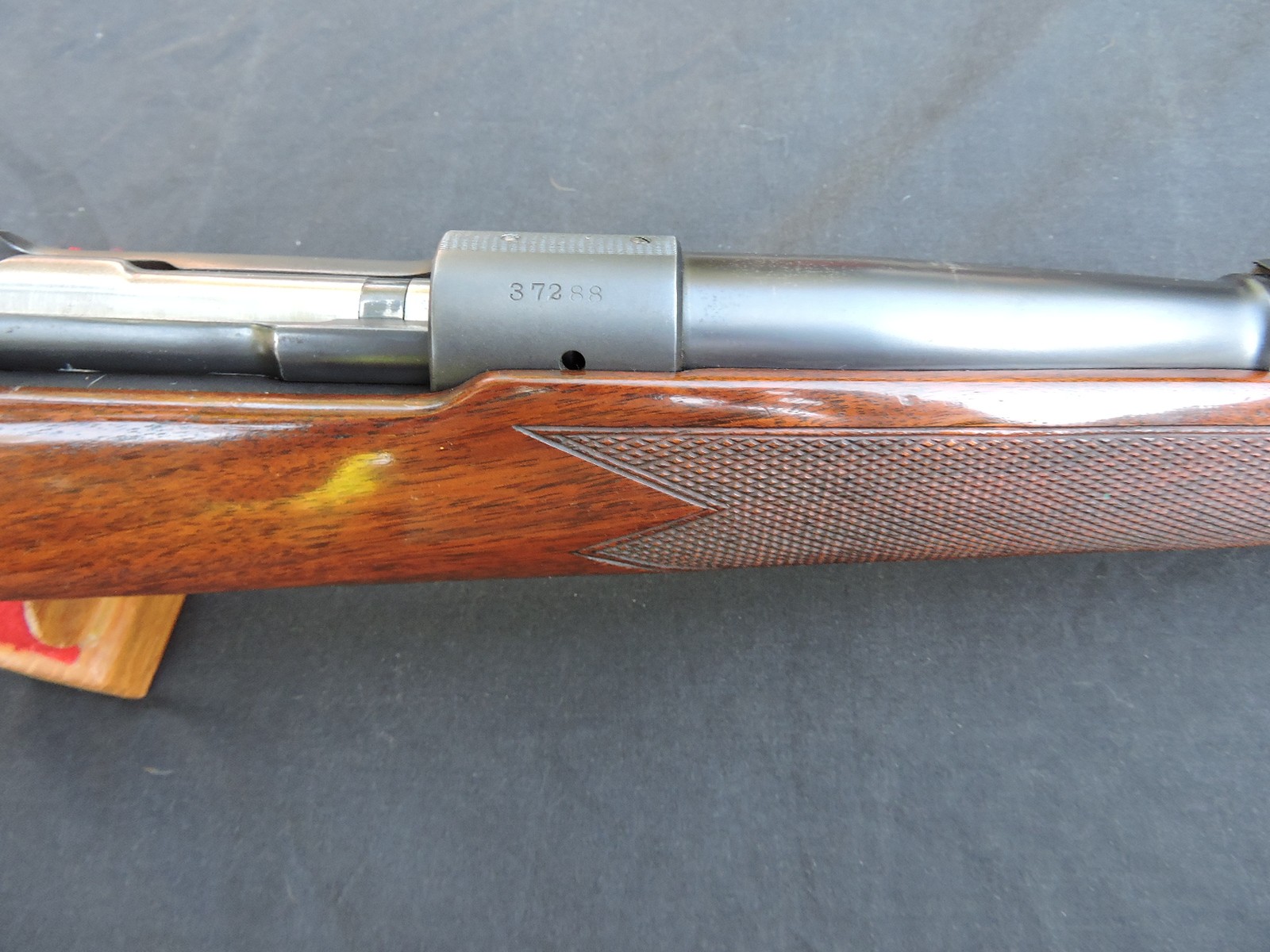
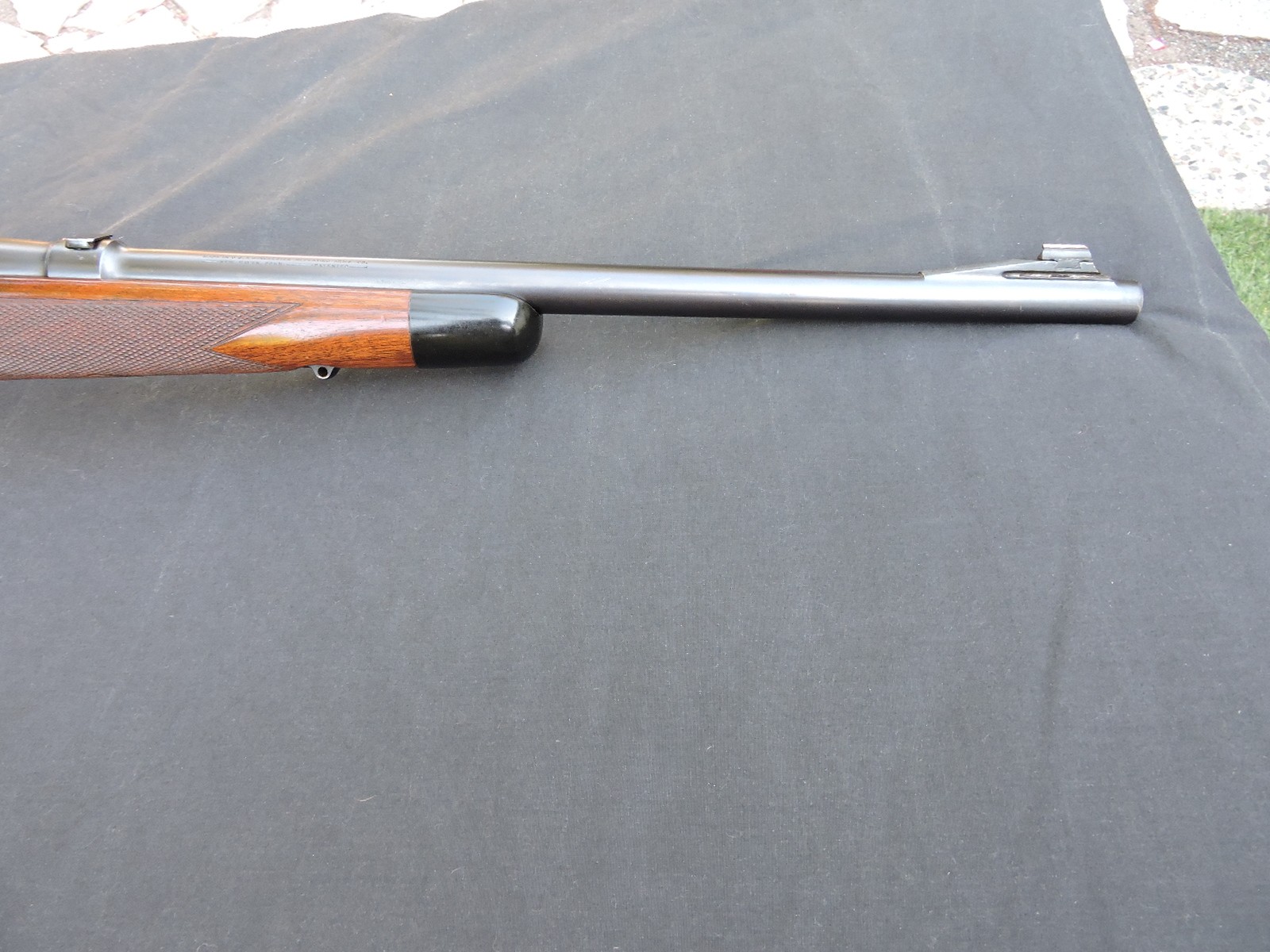
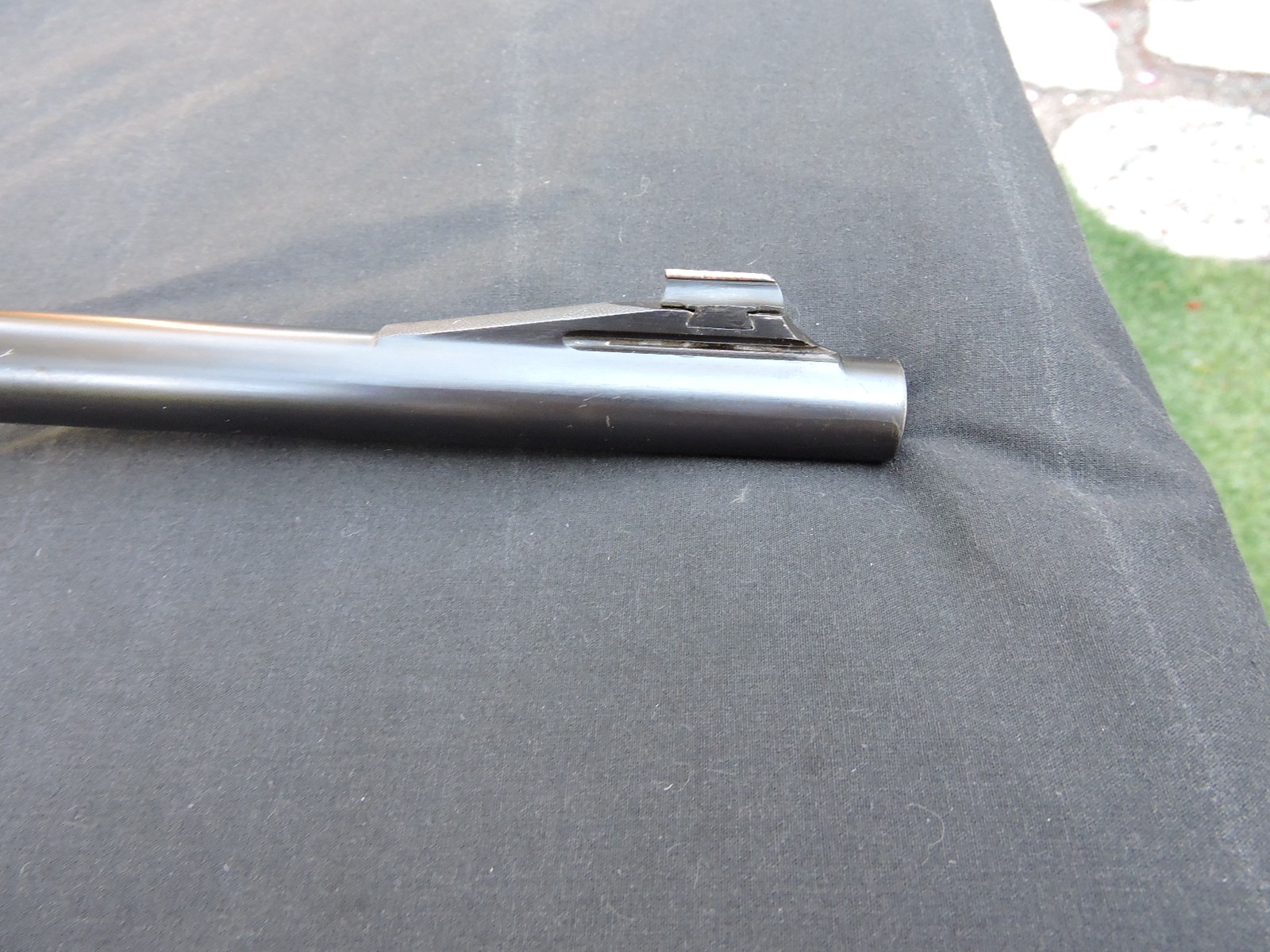
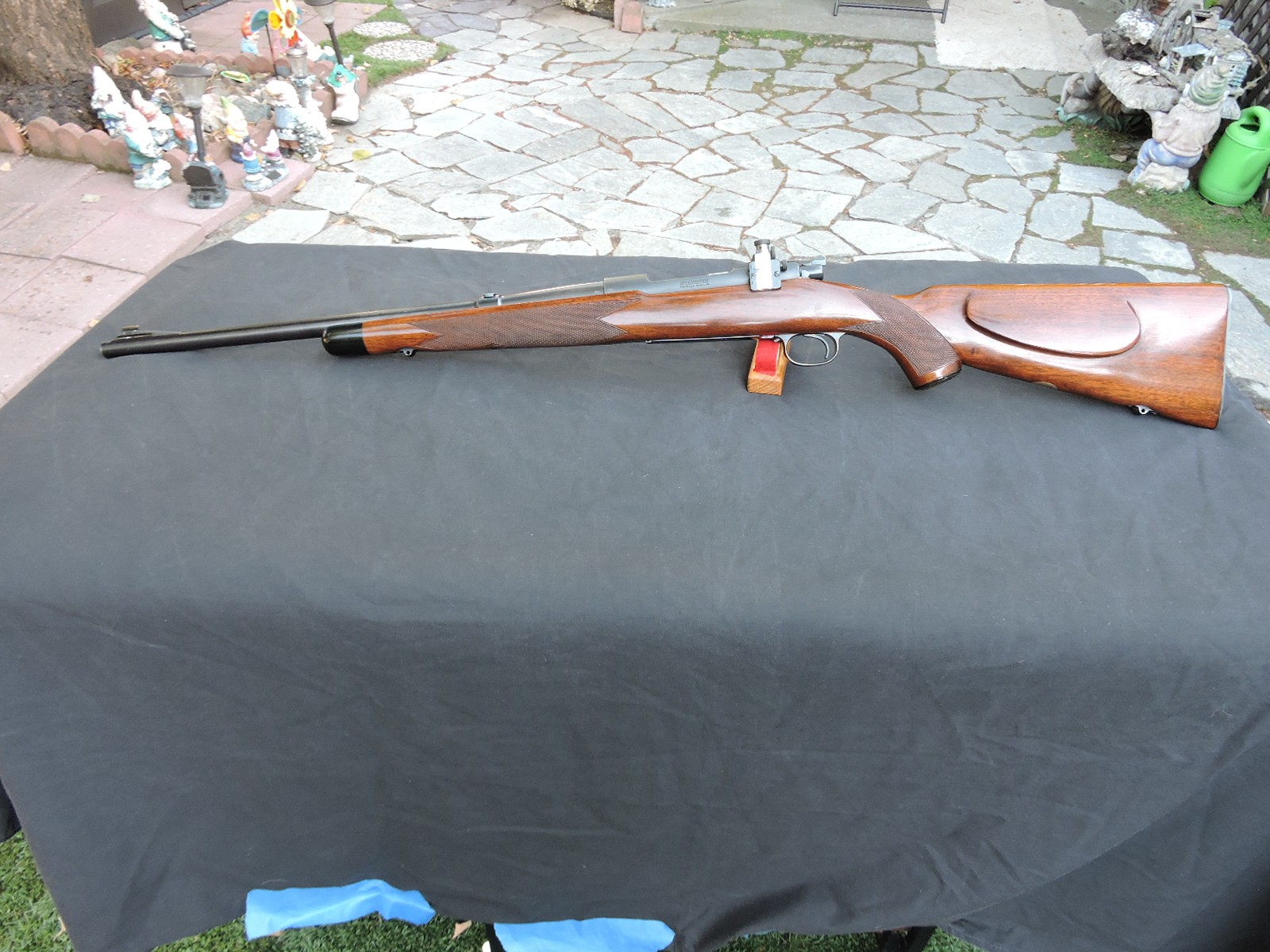
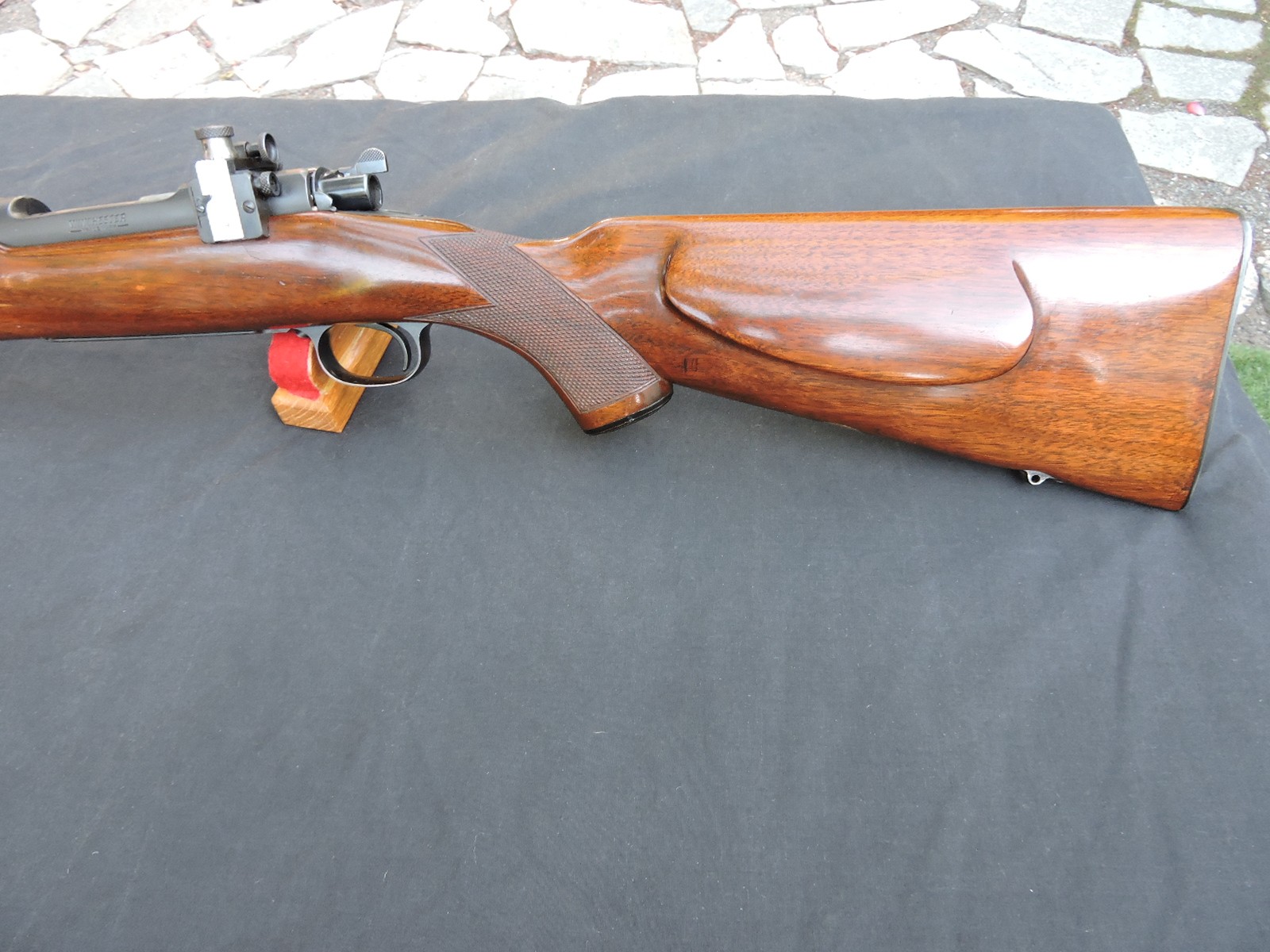
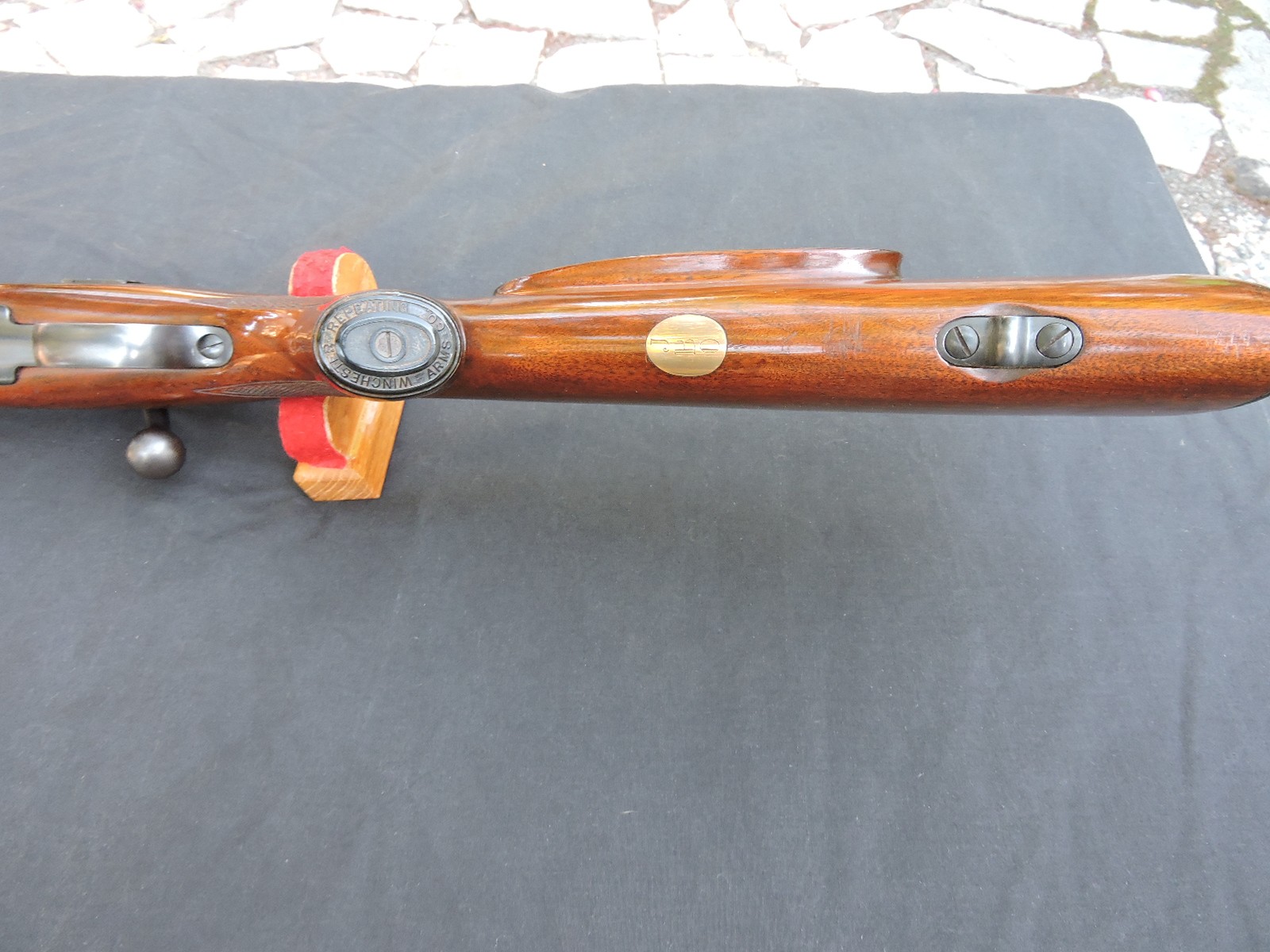
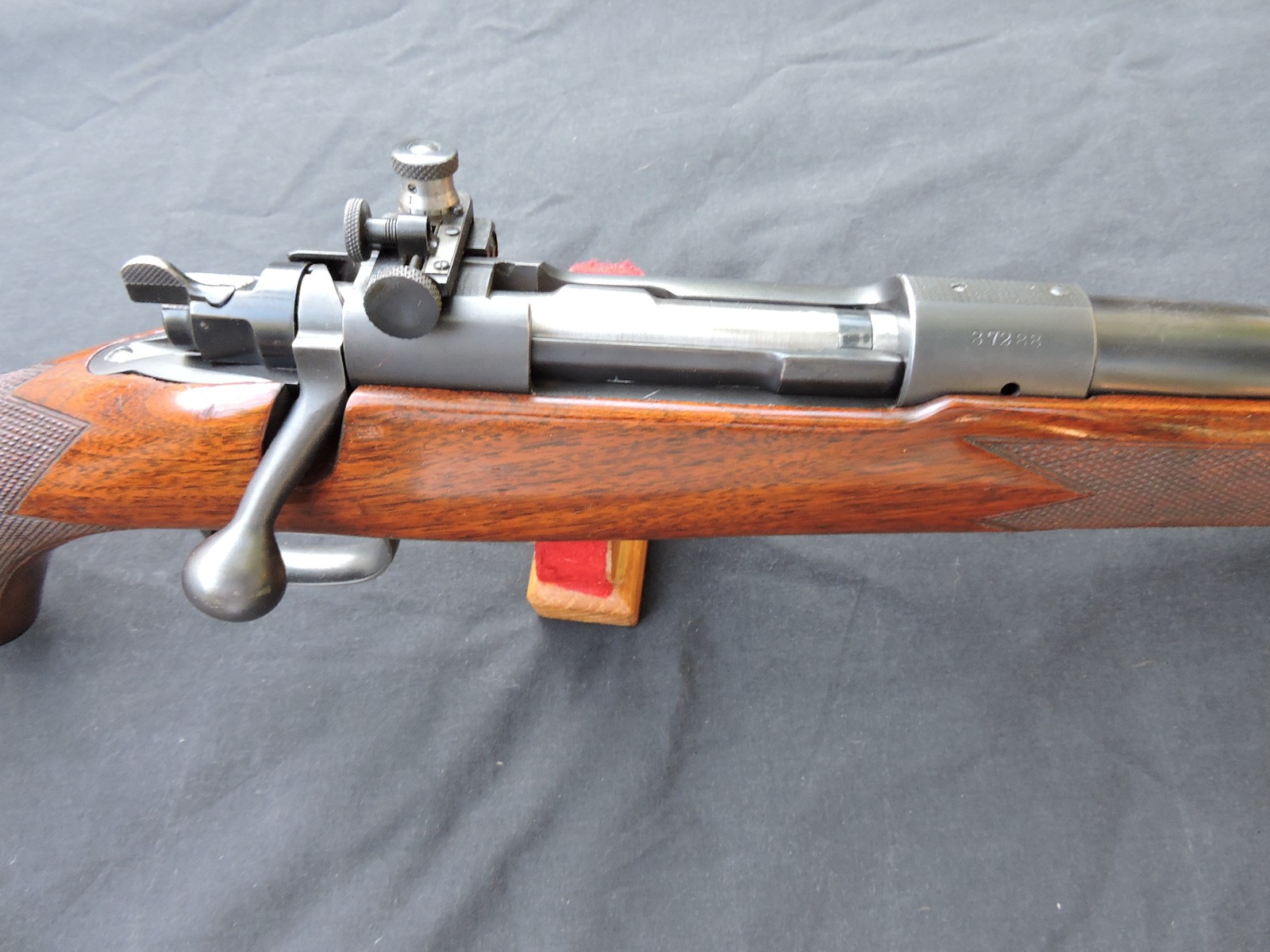
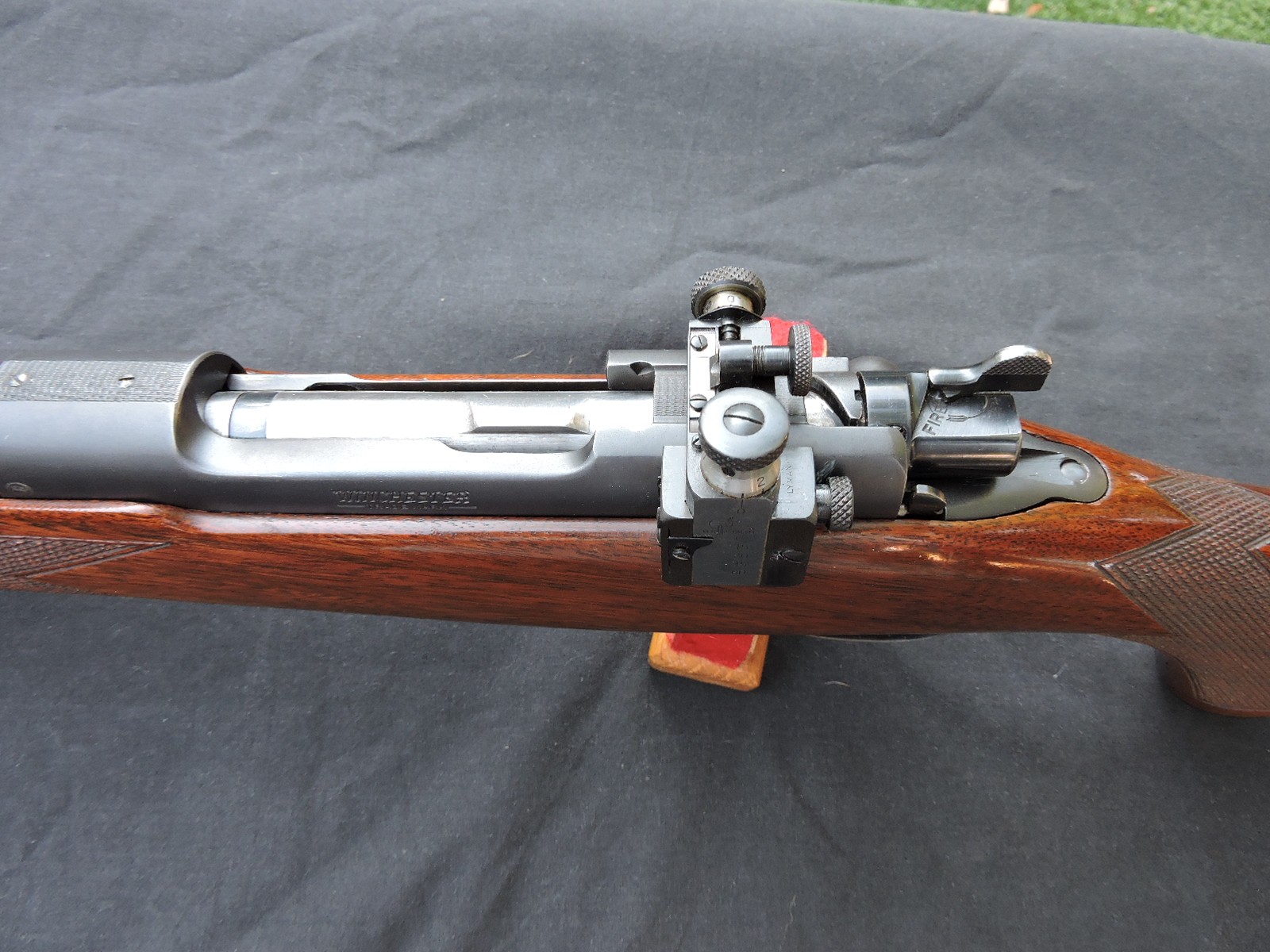
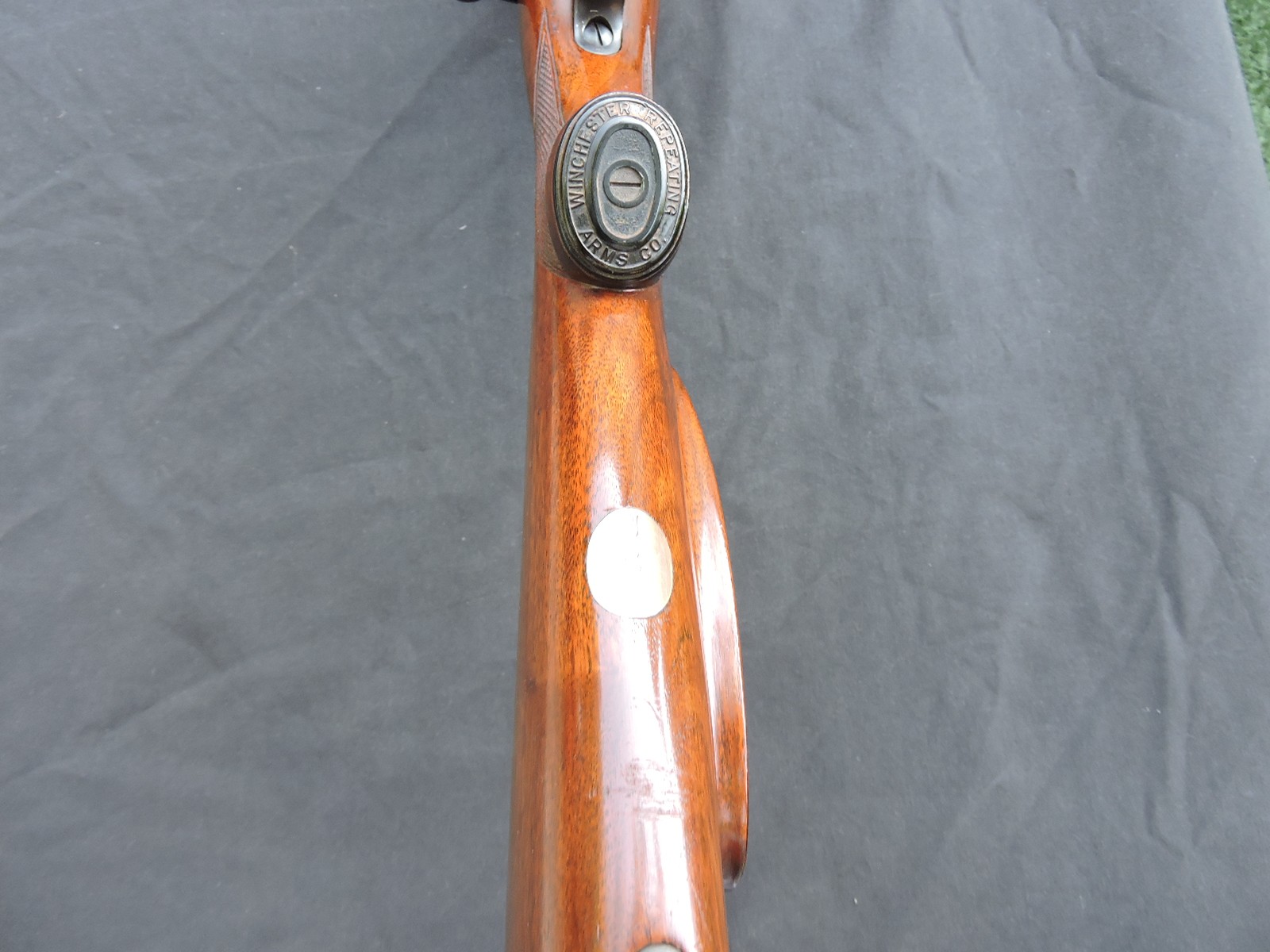
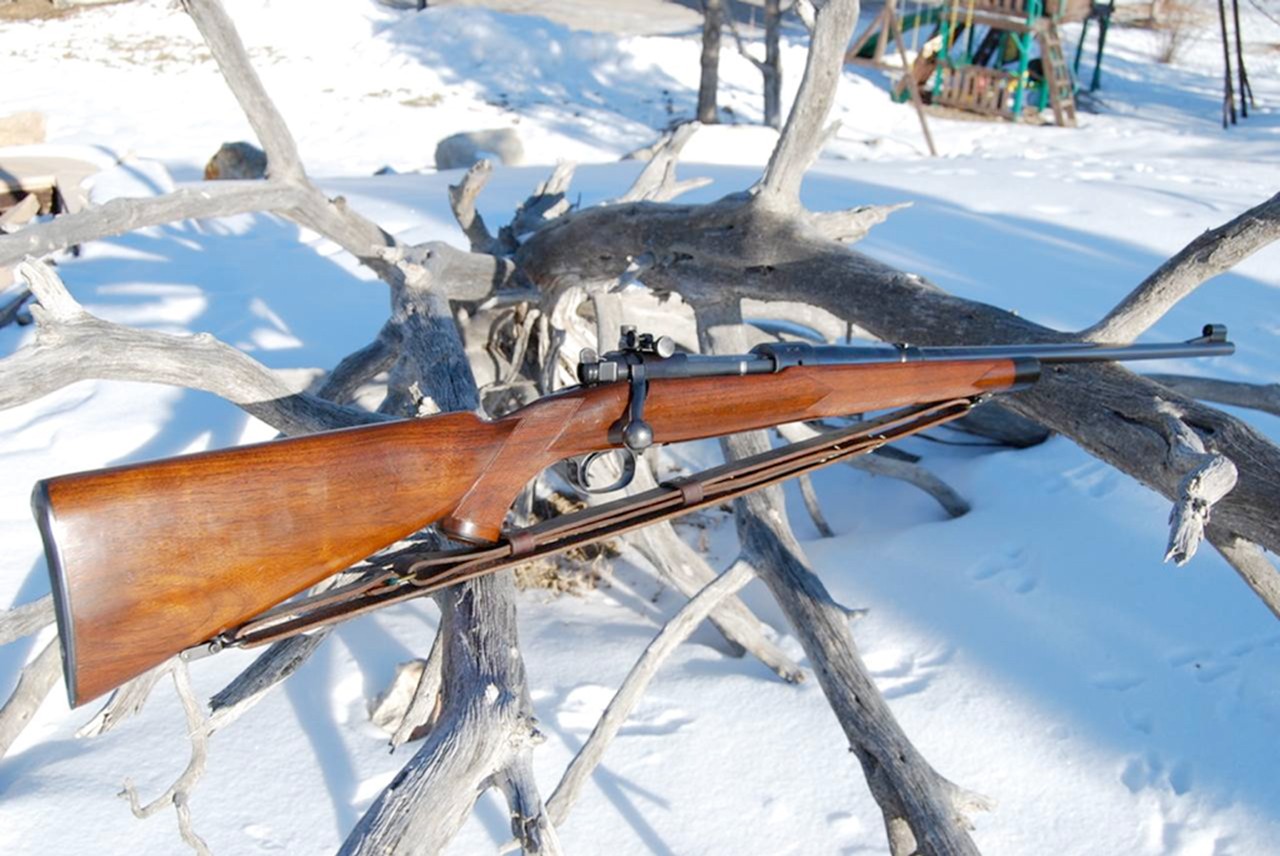
I have had this rifle for about 20 years. I have never gained a critical eye for what’s original and correct. Feel free to voice your views both positive and negative . The finish on the stock has always been questionable to me, but the wood seems to remain “proud” to the metal. I did remove sight hood to show the sight and it does have the swivels and a sling. Thanks for your input. RDB P.S. It is a 30-06. 

August 8, 2024
Offline
Roger, You have a very nice carbine. With the Super Grade carbine being very easy to upgrade. Most all examples that I see I value them as a sum of parts. With the exception of one being chambered in the .30Gov’t06. Then maybe it is correct. That is how I feel about them. Other Collectors may not. Just be careful!
November 19, 2006
Offline
Roger –
It sure is a very nice looking rifle 
I don’t have the knowledge or experience to comment on the originality.
Roger – you have added some very interesting and appealing rifles to your collection over the years. You’ve enjoyed them – and that’s what counts.
I often reflect on how my enjoyment of a piece can get derailed by that, “fussy collector” section of my brain that can be a real downer.

November 5, 2014
Offline
Hi Roger-
I like your rifle!!!  It would look real nice in my gun room…
Like Bob said, the problem with Super Grade Carbines is that they are too easy to “make” (inside or outside the factory) if you have the three necessary parts (stock, floor plate and front sight) to swap. So I too regard them all as “parts guns” (that includes the two I have). The question is where were the parts assembled, inside or outside the factory…
Since you invited comments… IMHO the rifle is definitely a pre-war 30 GOV’T’06 Carbine (not a fake barrel). The SG stock (with 18-line checkering and later front swivel position) is appropriate for the 1941 date. The monogram plate looks to be about the right size and right place for where Winchester would put one if so ordered. I’ve seen some pre-war Super Grades with very slick finishes that I think are factory, so I wouldn’t question yours. Of course if the monogram plate was added later the stock may have gotten extra attention at that time. I wouldn’t care. The floor plate should read with the Helvetica “G” and probably the oversized/misaligned “P” and “A” like on the GB gun we were discussing in the other thread.
I do have a couple issues with the sights… The Lyman 48WJS receiver sight appears to be one with the coved base that didn’t require a stock cut and the shortened external leaf spring on the left side. That is a 1947-1950 sight. The front sight is a Redfield full gold, I think a 255 (0.360″ tall). Most Standard Carbines and most pre-1952 Super Grades I’ve seen have a 0.310″ tall front sight. So my guess is that the sights have been changed at some point. Are there “elevator tracks” on top of the barrel from a Winchester 22G?
Very Nice!!! Factory original??? I don’t think it can be determined with certainty. That’s the problem with SG Carbines…
Just my take,
Lou
WACA 9519; Studying Pre-64 Model 70 Winchesters
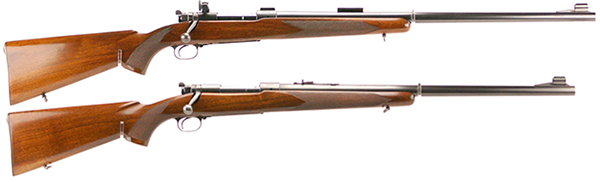
December 13, 2006
 Online
Louis Luttrell said
The SG stock (with 18-line checkering and later front swivel position) is appropriate for the 1941 date. . . . . .
Louis . . . I thought all pre-war M70s had 20-line checkering . . . .as does my December 1939 M70 Hornet?
August 8, 2024
Offline
Most agree that 1941 is when Winchester went from 20 lines per inch, to 18 lines per inch on the checkering.
January 27, 1992
Offline
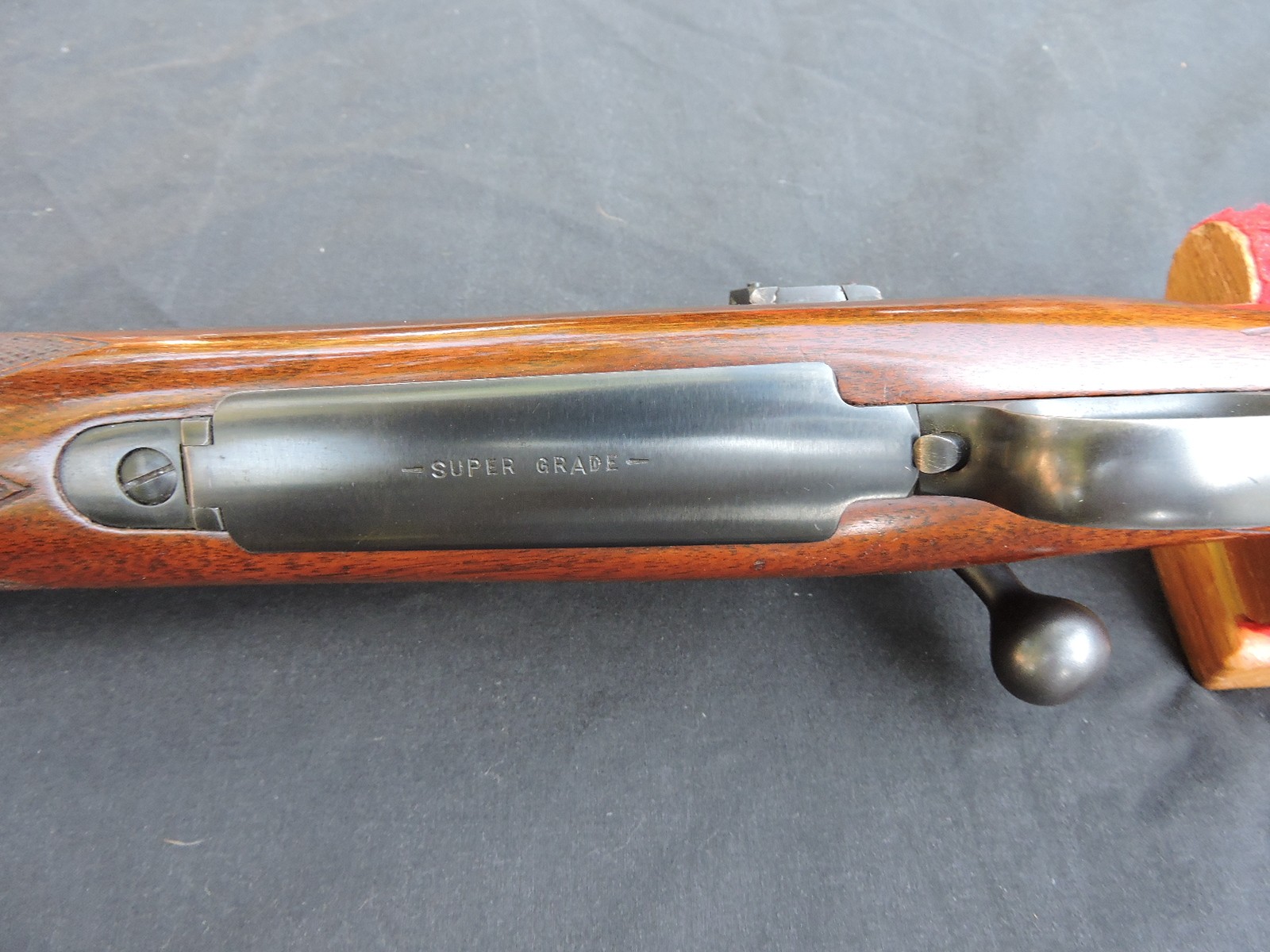 Thanks Lou. It definately had a barrel sight originally. The rub marks the elevator left, lead me to believe the rifle had not been reblued. The receiver sight is the later coved production. So no stock modification. Just checked and the front sight measures .310. Nice “Parts Gun” so far. I am partial to the carbines, but only have three. My other ’06 Carbine is “standard” configured rifle with a Stith mounted Weaver 330. It has been “redone”. It had a receiver mounted scope at one time. The 4 filled receiver holes are visible, if you look carefully. Like all Model 70s it is very accurate! Thanks for your input. RDB
November 5, 2014
Offline
Hi Jim-
I’m going to get in trouble here, b/c I’m going to contradict the “Gospel according to Rule” and agree with the lesser known tenant of Dean Whitaker…
There’s a difference between Standard rifles and Super Grades. Standard rifles were originally all 20-line checkered. The factory authorized the change to 18-line checkering in 1941, but either the “memo” didn’t reach the factory floor before WWII hostilities broke out, or they had a healthy inventory of already finished standard stocks, b/c you can encounter 20-line checkered stocks at least into 1947 (mixed with 18-line after 1941).
Super Grades OTOH… Both 20-line and 18-line checkering was used from the beginning. According to Whitaker, it was up to the checkerer and based on whether they thought the wood could handle the finer wrap-around pattern. Rule just says that Super Grades (like Standards) were all 20-line before 1941.
The best evidence I have that Whitaker is correct stems from the position of the front sling swivel base relative to the black fore end tip. Initially the swivel base was further forward such that its front edge was only about 1/4″ from the black tip. This apparently led to wood splitting between the swivel base and fore end tip, so pretty early on the swivel was moved back to leave about 5/8″ of wood in that location. Best I can tell, these “later” SG stocks appear in good numbers in early 1938, although the “early” stocks can be found on guns well into 1939. So IMHO the front swivel position is a way to “date” pre-war SG stocks (since stocks aren’t dated).
So what’s that go to do with checkering? Looking at stocks with the early swivel position (c. 1936-1938), you can find either 20-line or 18-line checkering. Same is true of pre-war SG stocks with the later swivel position, but they’re harder to date. For example, in my gun room I have three Super Grades with the early swivel position. The earliest, S/N 3789 (early 1937) has 18-line checkering, while S/Ns 13264 (early 1938) and 26401 (1939) have 20-line checkering. The SG Carbine I posted yesterday, S/N 21064 (1939) also has the early swivel position and 20-line checkering. I do not believe any of these guns were re-checkered at any point. Small sample, I know, but I’ve also discussed this with some dealer friends (Dave Morris and Justin Hale) and their observations coincide with mine (and Whitakers).
So, short story is that in my opinion, the 18-line checkering on Roger’s SG Carbine stock is period correct…
Just my take,
Lou
WACA 9519; Studying Pre-64 Model 70 Winchesters
December 9, 2002
Offline
Roger,
I sure do like you’re example and find the knowledgeable comments interesting once again. My first thought we’re when I saw it yesterday was I would probably gone after it, if I liked the asking price!
I was glad to see a couple expert members help us out with they’re knowledge.
Thanks for Sharing!
Tony
November 5, 2014
Offline
Hi Roger-
Yup… That’s the right floor plate. If the front sight is 0.310″ tall as you say, then everything about your gun looks period correct to me except the added receiver sight. Like the one I posted yesterday, I can’t find fault. I just can’t prove the factory put it together…
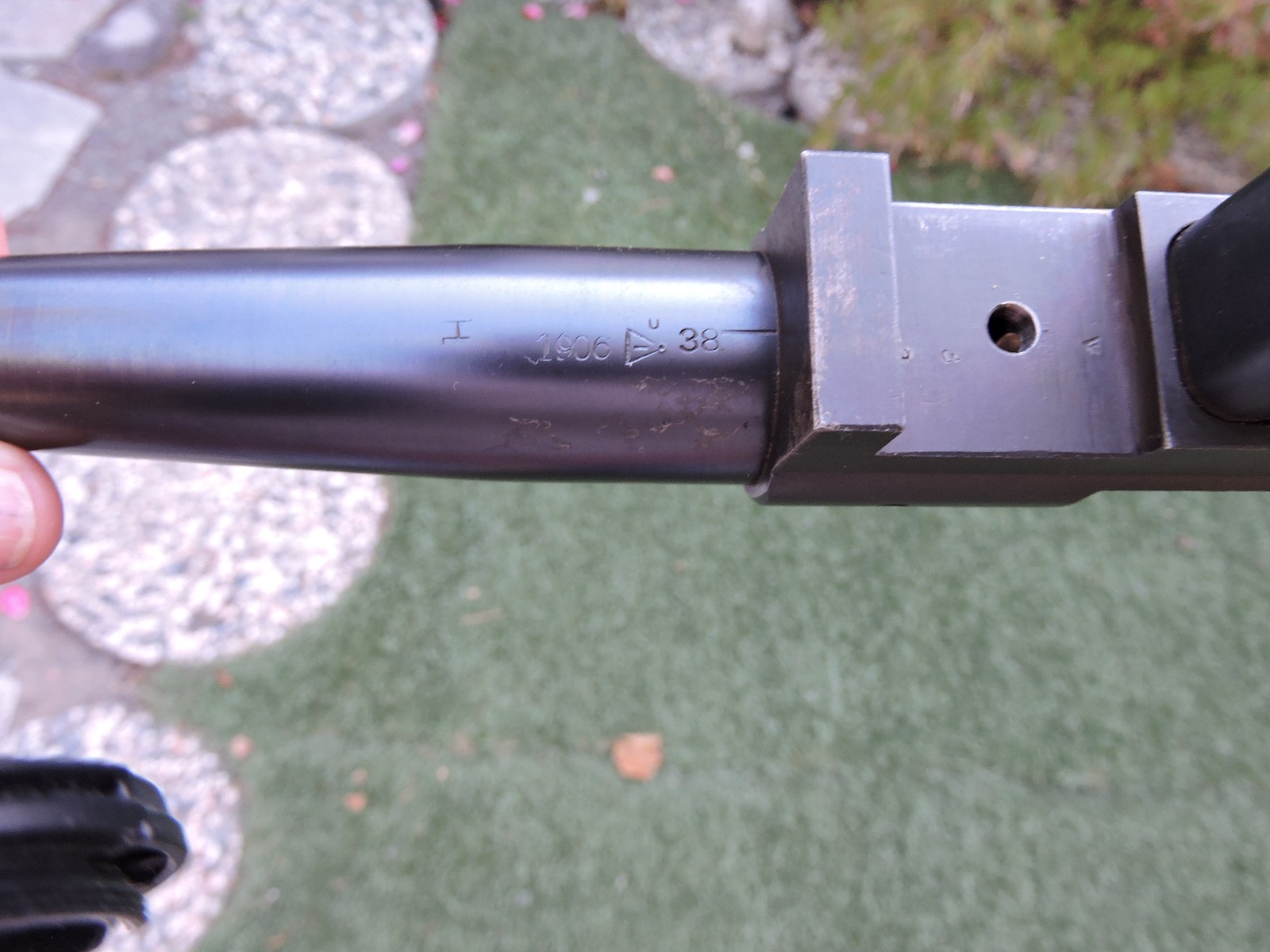
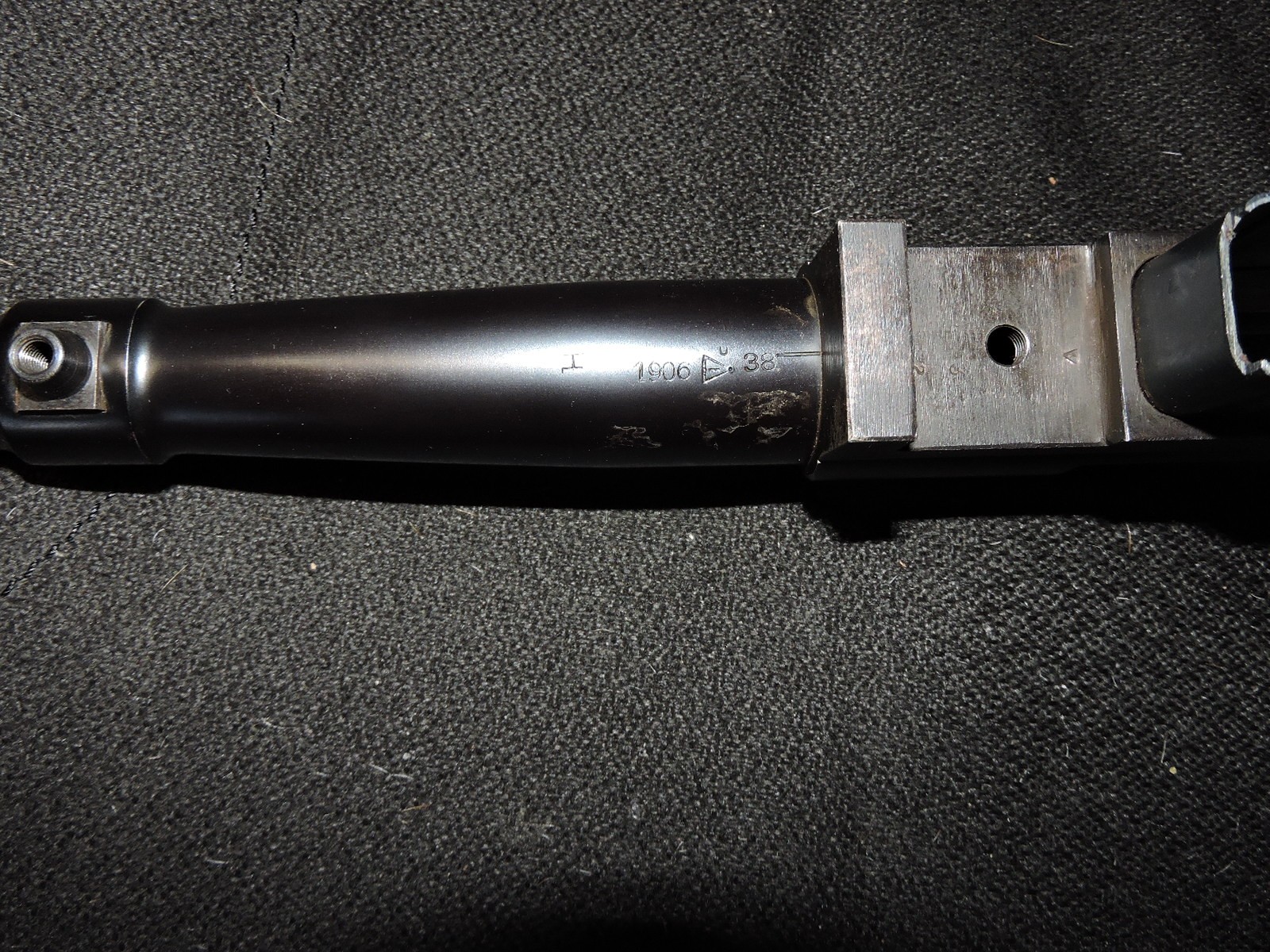
BTW… Did you ever take it out of the stock? If not, don’t do it on my account, there’s nothing to prove. But if you did, I’m curious if the barrel is stamped “SUPER” underneath and whether there are any other numbers (besides “1906”, “triangle I” inspection mark, and barrel date) stamped on the barrel or in the stock barrel channel.
I know that pre-war barrels are not supposed to be stamped “SUPER” (and the vast majority are not), but I’ve seen a handful of pre-war and transition guns that are stamped and they’re often guns with special order features. Rarely there are other things (order or assembly numbers?) stamped as well. But I don’t know if they’re “real” or not…
Cheers,
Lou
WACA 9519; Studying Pre-64 Model 70 Winchesters
January 27, 1992
Offline
My curiosity got to me. Here is the barrel date.
November 5, 2014
Offline
Hi Roger-
That’s totally correct lMHO… The “H” and “u” are typical barrel inspection stamps. I’ve spent way too much time studying M70 inspection stamps… The “triangle I”, “2” and “3” inspection stamps on the bedding flat are on most everything up to about 1952… Much longer time than the “triangle I” stamp lasted on any other M70 part…
If anyone is interested, this is what it should look like… If you disagree, PLEASE educate me!!!
Lou
WACA 9519; Studying Pre-64 Model 70 Winchesters
August 8, 2024
Offline
As I have stated before. I agree with Roger Rule on the 20 lines per inch checkering on all Model 70s made before 1941. Others may disagree. But, it just does not add up. All the Winchesters that I own from that era have 20 lines per inch checkering. This includes the Model 21, and the slightly earlier Model 54s. Why would they use 18 lines per inch on the more expensive Super Grade, and use 20 lines per in on a Standard rifle? Louis I agree with 99.99% with you. I will have to defer on the above.
November 5, 2014
Offline
Hi Bob-
I KNEW I was going to get into trouble for that one!!! I hold a number of heretical beliefs related to Model 70s…
Do we at least agree that the coarser checkering on Roger’s 1941 Super Grade is acceptable, i.e. not definitive evidence of forgery?
Rule says that the checkering was changed in “late 1941”, in the description of the Standard stock (p.150) and later says the Super Grade went through the same change at the same time (p.159). He never brings up the front sling swivel position change, even though he owned (and pictured) S/N 13264 which has the early swivel position (and 20-line checkering). I have not seen the 1941 Product Change Notice related to Model 70 checkering so I can’t say whether it applied to the standard checkering pattern or to all checkering patterns. Nor have I seen enough M54 Super Grades to know how they were all checkered.
Whitaker says (in a footnote on p.45) “During the ‘Pre-War’ era, if the experts felt that a particular stock would not take and hold the 20-line checkering, then the coarser pattern was applied”. So maybe Rule and Whitaker are saying the same thing, only Whitaker didn’t reckon on the 1941 change and just “made up” the part about the checkerer having some discretion when it came to the wrap-around Super Grade pattern???
It’s a mystery I don’t think I can answer…  I’m pretty sure that we’ve all seen Super Grade stocks with cloverleaf tang inletting that have 18-line checkering. Thing is they made those stocks as late as about 1947 or 1948. Well after 1941. But in my experience it’s not uncommon for a Model 70 Super Grade made in 1940 or earlier to have the coarser checkering. Maybe (???) that’s because they’re all upgraded guns put together with post-1941 parts??? That’s certainly possible if the stock has the later front swivel base position, since the wood cannot be dated pre- or post-war. The ones I can’t explain are those with the early swivel position, which IMHO dates the stock to 1938 or earlier, that have the coarser checkering.
I’m currently drafting the book chapter on stocks, so I need to decide how I want to address this uncertainty (in my mind, if not yours). I think I’ll probably give the Rule dogma in the text and add a footnote saying that “Whitaker says…”, while avoiding photos of the checkering on pre-1940 guns with the early swivel and coarser checkering. I would save me from getting pilloried… .
Here’s a related question for you… Have you ever seen a regular production 1936 or 1937 Super Grade with the “extra fishtail” grip checkering that Rule says was used during the first year? I’ve see quite a few early Super Grades, but none with that checkering pattern. Rule doesn’t even picture one in his book. The only place I’ve seen it is on guns with Special Order features, and it was a listed special order option. But if, as Roger sad, it was used in regular production early on, I’d like to find an example. It’s true that the Super Grades pictured in the 1936-37 Pocket Catalogs and the first version of the “Green Brochure” have that grip checkering pattern, but I’m doubting that it was ever used for regular production. Even the M54 Super Grade wasn’t checkered that way… 
Since I’ve “run on at the mouth” so long, here’s pretty picture of S/N 3748. Early swivel, coarser checkering, no “extra fishtail”.
Cheers,
Lou
WACA 9519; Studying Pre-64 Model 70 Winchesters
August 8, 2024
Offline
Louis, Let me try to answer some of your questions. Yes, I do believe that Roger’s rifle has the correct checkering pattern. No, I have not seen a early Model 70 Super Grade with the extra fishtail grip pattern. Louis, if you feel strongly about the 18 lines per inch on a Pre 1941 Super Grade, then you should include that in your book ( that I am very much looking forward to). Perhaps you should note that some Collectors will question this. I just happen to fall into that category. Again, as I stated above; all my Winchester made Pre 1941 have 20 LPI checkering. This would include the Model 21, 54, 70, and 71. Are you planning on attending the WACA/OGCA show in September?
November 5, 2014
Offline
Hi Bob-
As of the moment, YES I am planning to attend the OCGA/WACA show next month. I hope we can get together (once you’ve snagged everything worth getting). I’ll probably be broke (as usual) as I’m kind of working on a (costly) deal at the moment…
I’m thinking of treating the SG checkering thing as more of a “question” than a “fact”… Just include a footnote that “Roger says this…” and “Dean says that…” If I make a dogmatic statement in the text it will tend to mislead people into thinking that 18-line checkering on a pre-1941 gun is OK, when IMHO it’s at least a “yellow (caution) flag”… For me it’s just not a total “red flag”… Part of the plan is to confine my “opinions” to footnotes (and WACA posts) and limit the text to stuff I can “document” (even if the “documentation” is the survey, i.e. no factory paperwork). Problem is that I can’t “document” everything Rule says!!!
The earliest believable SG I’ve actually handled is S/N 1748. Early swivel position and, as you said, 20-lpi checkering. No “extra fishtail”… I do have a Super Grade with that checkering pattern (S/N 27881). A heavy barrel 375 MAGNUM. Later swivel position and 20-lpi checkering. But it’s also got select wood, a gold monogram plate (like Roger’s SG Carbine), and a barrel without rear sight dovetail (factory Lyman 48WJS). So if it’s “real” it was a special order and the fancy checkering was a cataloged option.
I just don’t think that the fancier grip checkering was ever used in regular production. If somebody can change my mind, PLEASE do so!!!
Cheers,
Lou
WACA 9519; Studying Pre-64 Model 70 Winchesters
August 8, 2024
Offline
Louis, I just got done with a few “costly deals” myself. So, it looks like we both will be broke! I can concur with you, in that I can’t document all of Mr. Rule as well. Don’t get me wrong! Roger Rule wrote a fabulous book. But, the fact is that it is over 40 years old now, and a lot has been discovered on the Pre 1964 Model 70 since. That is why I am looking forward to your updated version. After all, our favorite rifle deserves this treatment.
November 5, 2014
Offline
Hi Bob-
We’ll talk about it next month, but I’d like you to be one of my “content readers” before the book is finished… A couple active WACA members are my current “comprehension readers” (they’re getting my drivel chapter by chapter) and I appreciate every bit of their input !!! Just b/c my words make sense to me (Duh!!!) doesn’t mean they make sense to any other literate/intelligent reader…
I have a few (so far two) “content experts” who have (foolishly) volunteered (you might guess who they are)… That job is simple… Tell me when I’m saying something that’s FOS (meaning I cannot sufficiently “prove” it)…
So far I’ve only got about six (of possibly 17) chapters drafted, so (if I live long enough) it’ll still be a while. It probably makes the most sense to distribute the whole draft.
Talk later,
Lou
P.S. My “readers” each get a FREE copy, but only IF I ever finish it!!!
WACA 9519; Studying Pre-64 Model 70 Winchesters
November 7, 2015
Offline
My observation (worth every penny you pay for it) is that Rule likely handled many examples before “parts guns” became a lucrative business. I think the information gathered in surveys is very valuable and certainly adds to the pool of knowledge. I don’t doubt a few got “upgraded” in those days, I’m sure it happened for a variety of reasons. OTOH I will need to lean on you guys if I ever decide to make room in my modest collection for a collectable M70. EG my only concerns with the suspect carbine were the front sight and crown and I was wrong on both counts! Unfortunately there are more Super Grade Carbines now than there ever were and if I were a betting man I’d bet “fake” every time and be ahead on the money.
I agree that an update of Rule’s book is a great idea and dealing with the “upgrades” will certainly be a challenge. Good luck on the research!
Mike


1 Guest(s)
