

 Log In


November 19, 2006
 Offline

I’ve always enjoyed sights. The less common, more elaborate, rarer, the greater the appeal to me. This interest intersects with my interest in the early competition between Winchester and its competitors.
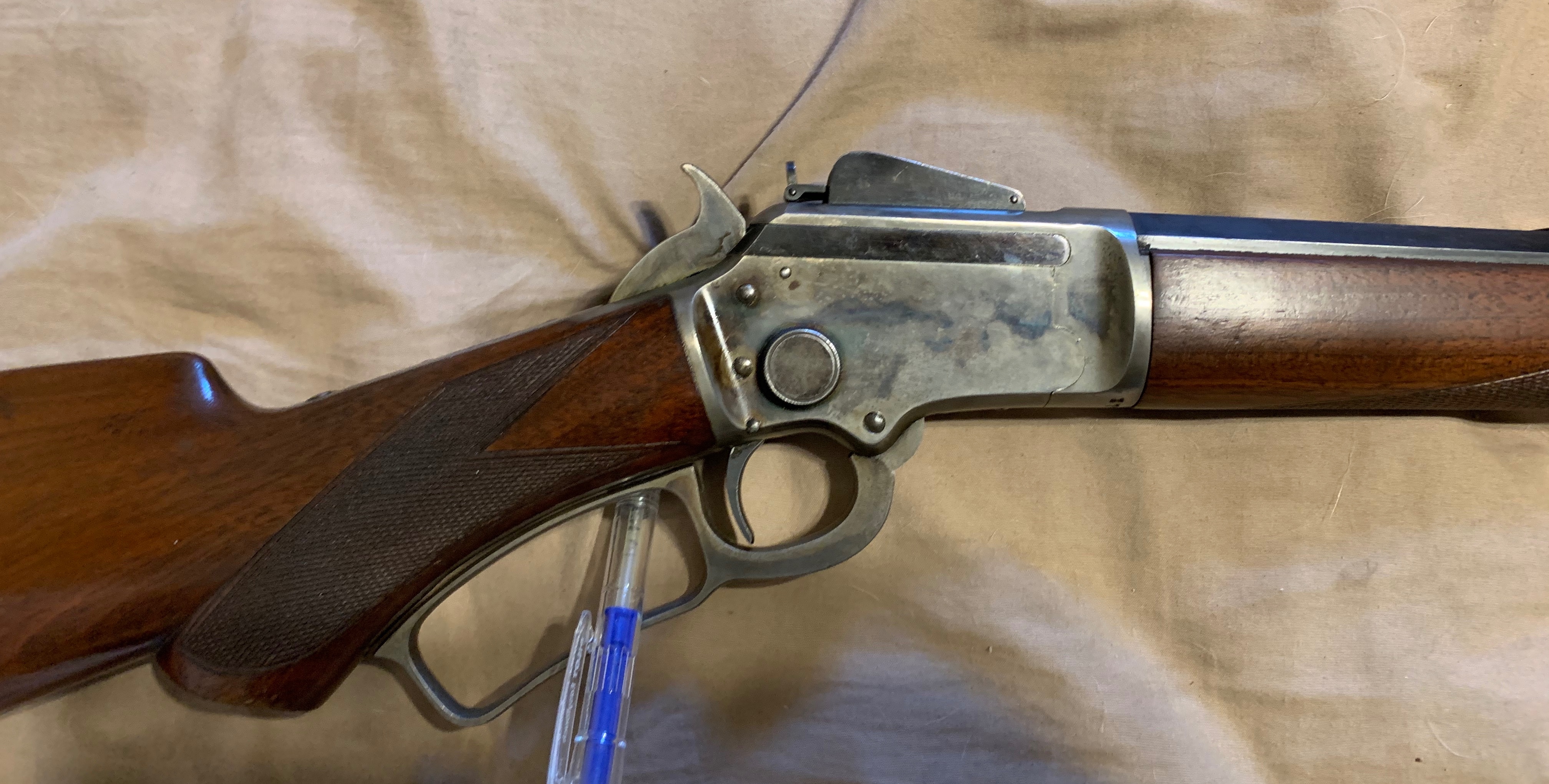
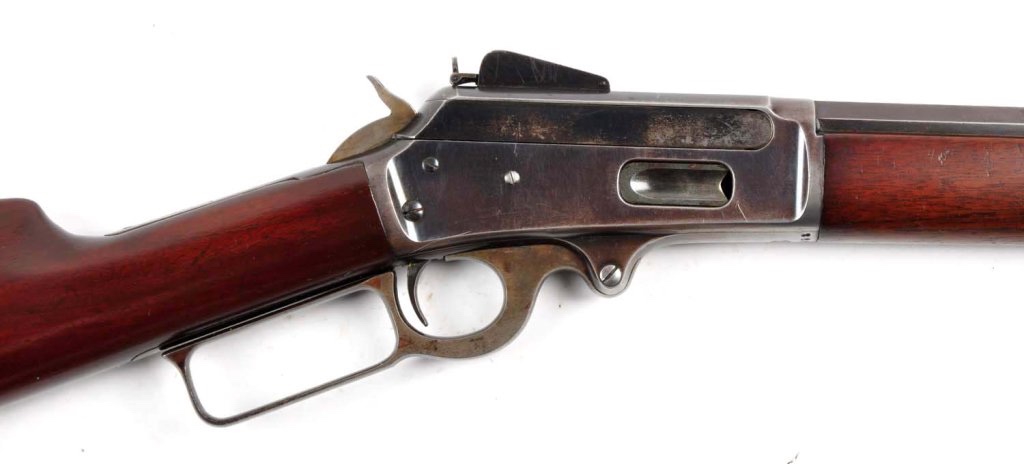
The various lever rifles of the day each offered specific challenges for the mounting of scopes and sights. As top action ejectors, Winchester and Savage lever rifles were less suited than the Marlin for a top mounted sight. Receiver and tang sights were routinely mounted on Winchester, Savages and Marlins. There wasn’t great need for top mounted sights. Nonetheless, Marlin decided to capitalize on their top flat receiver surface and in 1903 when they begin placing two tap holes on the top of the receiver of their lever action and slide action rifles (centerfire and rimfire) to accommodate the Hepburn sight. Winchester waited until 1935 to put a top mounted bolt peep on their .348. Winchester followed with the bolt peeps for the Model 64 and 65, but did not expand to models beyond that.
I would be fascinated to know what Winchester thought of the Hepburn sight on the Marlin and the extent to which they noodled the idea of their own version. Obviously they ended up there in 1935. I assume the felt need was minimal given there was already plenty of choices of tang and receiver sights. However, while factory tang sight holes were typical for Winchester from early on, side receiver sight holes came much later. Winchester likely monitored Marlin’s level of success with their Hepburn sight. For several decades, most Marlin rifles (including rimfire and centerfire slide actions) were drilled for the Hepburn sight but relatively few were mounted.

April 15, 2005
Offline

This is just my opinion… that is an ugly sight, and mounted on an ugly gun
I much prefer the tang sight option that Winchester stuck with through July 1942. The shift to receiver mounted sights in the post-WW II production years was a mistake (again in my opinion), as I do not care for a lump of steel hanging on the left-hand side of the receiver frame. The No. 98 series bolt peep sights were innovative and should have been continued beyond the year 1948.
Bert
WACA Historian & Board of Director Member #6571L
November 19, 2006
Offline
Bert H. said
This is just my opinion… that is an ugly sight, and mounted on an ugly gun
I much prefer the tang sight option that Winchester stuck with through July 1942. The shift to receiver mounted sights in the post-WW II production years was a mistake (again in my opinion), as I do not care for a lump of steel hanging on the left-hand side of the receiver frame. The No. 98 series bolt peep sights were innovative and should have been continued beyond the year 1948.
Bert
Bert –
I appreciate your opinion. Given I look at most everything these days through collector’s eyes, I can forgive a lot of ugliness in favor of rarity.
I certainly agree about the desirability of the No. 98 series bolt peep. It was a fine innovation. Not surprisingly, for a couple decades, there’s been a market for the reproduction of that sight. This includes gunsmiths who specialize in slotting bolts. And this includes slotting bolts on reproduction Model 1895’s.

January 20, 2023
Offline
I agree the Hepburn sights illustrated fell out of the ugly tree and got mashed by several branches on the way to the ground. (The rifles are no things of grace mostly because of the downward projecting lump from which the lever is suspended. Are these the earlier Hepburn branded rifles or the later Marlin/Hepburns? )
I also wish the 98a bolt peep had continued as an option for the top-ejecting Winchester lever actions. They have a minimalist appeal and don’t clutter up the stock wrist as tang sights do. They look good on a Model 71 or 64 but I think they really shine on a 94 carbine. The closest thing to it I know of still available is a Skinner in black finish.
Although many collectors dote on a side-mounted Lyman 21 or 38, those look like a Rube Goldberg [over-complicated] invention to me and do not seem to be much, if any, more precisely adjustable than the 98a.
However, given a choice and from a shooter’s perspective, I prefer micrometer adjustable receiver sights with hunter knobs, my favorite being the old Redfield 70 or the steel 80. Compared to a Lyman 21 they are almost invisible and the aperture is comfortably further away from my eye than a tang peep allows, which can be a hazard on hurried, uphill shots with a light, heavily recoiling rifle.
Truth be told, the most inconspicuous receiver sight is a black aluminum Williams FP with screwdriver adustments. Anathema to originalists and even I wouldn’t put it on a Winchester. It does look right on a Mountie because of the cover illustration on the old Outdoor Life anthology.
- Bill
WACA # 65205; life member, NRA; member, TGCA; member, TSRA; amateur preservationist
"I have seen wicked men and fools, a great many of both, and I believe they both get paid in the end, but the fools first." -- David Balfour, narrator and protagonist of the novel, Kidnapped, by Robert Louis Stevenson.
November 7, 2015
Offline
I’m a fan of almost every sight Winchester used and quite a few that they didn’t. Presbyopia precludes the use of most of them but I still think many are clever, precise and in most cases robust. Sight in question resembles the 32Spl BP sight moved back aways. Never was a fan of that sight. I’ve always suspected a bolt mounted sight would move a bit with the bolt but I’ve never explored that prejudice. I’ve used tang and receiver sights on the range and in the field without issue. I suppose the receiver mounted Hepburn sight would increase the sight radius significantly so it would be somewhat better than a barrel mounted rear sight. I could put up with a little “ugly” to get help with aiming. Just my opinion, of course.
Mike

November 9, 2008
Offline
I’m a fan of both Marlin and the sight and have a few
November 19, 2006
Offline
Zebulon said
I agree the Hepburn sights illustrated fell out of the ugly tree and got mashed by several branches on the way to the ground. (The rifles are no things of grace mostly because of the downward projecting lump from which the lever is suspended. Are these the earlier Hepburn branded rifles or the later Marlin/Hepburns? )
I also wish the 98a bolt peep had continued as an option for the top-ejecting Winchester lever actions. They have a minimalist appeal and don’t clutter up the stock wrist as tang sights do. They look good on a Model 71 or 64 but I think they really shine on a 94 carbine. The closest thing to it I know of still available is a Skinner in black finish.
Although many collectors dote on a side-mounted Lyman 21 or 38, those look like a Rube Goldberg [over-complicated] invention to me and do not seem to be much, if any, more precisely adjustable than the 98a.
However, given a choice and from a shooter’s perspective, I prefer micrometer adjustable receiver sights with hunter knobs, my favorite being the old Redfield 70 or the steel 80. Compared to a Lyman 21 they are almost invisible and the aperture is comfortably further away from my eye than a tang peep allows, which can be a hazard on hurried, uphill shots with a light, heavily recoiling rifle.
Truth be told, the most inconspicuous receiver sight is a black aluminum Williams FP with screwdriver adustments. Anathema to originalists and even I wouldn’t put it on a Winchester. It does look right on a Mountie because of the cover illustration on the old Outdoor Life anthology.
Bill –
All four of these, “Marlin Combination Receiver Sights” are marked Marlin, with the June 30, 1903 patent dates. I’ve vaguely heard of variations that are unmarked – so perhaps those are the other versions you are referring to? I realize this is a Winchester forum and I don’t want to out you … but I’ve collected and studied Marlins for 50 years… and there is some evidence to suggest that you know more about Marlins than I do 

January 20, 2023
Offline
Good morning, Steve. No, I know very little about Marlins, particularly compared to you. I was questioning the brand of the rifles, not the sights. My very limited understanding of the Hepburn Marlin relationship is that Marlin bought the Hepburn patents and Marlin rifles are based on those.
I was born into a family of loyal Winchester customers. My paternal grandfather’s duck gun was a Winchester 1911 self loader. An uncle was a Winchester sales rep and knew Ad Topperwein and his wife quite well. Another uncle who owned the farm on which I learned to shoot was a locally renowned sportsman, a Master of Hounds, and the Game Warden of Warren County, MS. His shotgun was a Model 1897 and he bought his grandson a Model 42. My Dad had a Model 90 in 22 WRF.
But where we lived on the Texas Gulf Coast, there was no free hunting land and Dad saw no reason for me to have an expensive 22. I got a Sears single shot. The only local store with a gun counter was a Western Auto and it was not a Winchester dealer. The only lever action rifle I could even look at was a Marlin 336. Even at age 10 I thought of it as a weird, misshapen and disappointing pseudo-Winchester. Like Bert does.
Years later, the first time I did get to go deer hunting, some bozo almost gut shot me with — you guessed it, a 336.
But I always wanted a Mountie.
- Bill
WACA # 65205; life member, NRA; member, TGCA; member, TSRA; amateur preservationist
"I have seen wicked men and fools, a great many of both, and I believe they both get paid in the end, but the fools first." -- David Balfour, narrator and protagonist of the novel, Kidnapped, by Robert Louis Stevenson.
November 19, 2006
Offline
Zebulon said
Good morning, Steve. No, I know very little about Marlins, particularly compared to you. I was questioning the brand of the rifles, not the sights. My very limited understanding of the Hepburn Marlin relationship is that Marlin bought the Hepburn patents and Marlin rifles are based on those.
I was born into a family of loyal Winchester customers. My paternal grandfather’s duck gun was a Winchester 1911 self loader. An uncle was a Winchester sales rep and knew Ad Topperwein and his wife quite well. Another uncle who owned the farm on which I learned to shoot was a locally renowned sportsman, a Master of Hounds, and the Game Warden of Warren County, MS. His shotgun was a Model 1897 and he bought his grandson a Model 42. My Dad had a Model 90 in 22 WRF.
But where we lived on the Texas Gulf Coast, there was no free hunting land and Dad saw no reason for me to have an expensive 22. I got a Sears single shot. The only local store with a gun counter was a Western Auto and it was not a Winchester dealer. The only lever action rifle I could even look at was a Marlin 336. Even at age 10 I thought of it as a weird, misshapen and disappointing pseudo-Winchester. Like Bert does.
Years later, the first time I did get to go deer hunting, some bozo almost gut shot me with — you guessed it, a 336.
But I always wanted a Mountie.
Bill –
If I had the reading comprehension of a second-grader, I might have been able to grasp your question. I’m not aware of any actual Hepburn branded rifles (other than prototypes), but Hepburn did create the patents for the Marlin Models, 1888, 1889, 1891, 1892, 1893, 1894, 1895 and 1897. The rifles I pictured are all Marlin Model 1893’s.
I believe, I too, could be described as having come from a family of loyal Winchester customers. My Dad’s first deer rifle was an ’86 in .33, my Grandfather used an ’86 in .45-90 (and later a Model 54 in .30-06), my Great uncle used a M1876 in .40-60, many uncles and cousins used M94 carbines in .32 special (with a couple .30WCF carbines thrown in). My Dad’s shotgun was a M1897 12 gauge. My Dad also later purchased a M100 in .308. I do recall one alternate brand deer rifle of note that received strong family admiration was a Savage .250-3000 that my cousin shot an enormous deer with.
I probably used a greater variety of rifles over the years at the family deer hunt than anyone else. Winchesters were included and my M94 .32 Special carbine accounted for many deer.
Now, true confession time. For many years I also used a Marlin M1894 .44 magnum carbine. And it did account for many deer. As I think of it, I can’t recall any other family member using a Marlin  I recall one year I used a Winchester M70 custom rifle – but it was in .450 Marlin
November 19, 2006
Offline
I want to add to my above post – I believe that at one time, I did possess the reading comprehension of a second grader. Time is rarely kind.
January 20, 2023
Offline
I want to amend my statement about Marlins. Not only did I yearn for a Model 39 Mountie — and actually bought a 1958 Golden Mountie from Dwight van Brunt several years ago and equipped it like the one on the cover of Outdoor Life’s anthology — with a Williams receiver sight –but I have often thought about a new 1894, one of the ones built by Sturm Ruger, in 44 Magnum, a really flexible cartridge I’ve loaded for years. The 1894 shares the looks of the Mountie sufficiently, and I particularly like the octagon barrel Cowboy.
- Bill
WACA # 65205; life member, NRA; member, TGCA; member, TSRA; amateur preservationist
"I have seen wicked men and fools, a great many of both, and I believe they both get paid in the end, but the fools first." -- David Balfour, narrator and protagonist of the novel, Kidnapped, by Robert Louis Stevenson.
November 19, 2006
Offline
Zebulon said
I want to amend my statement about Marlins. Not only did I yearn for a Model 39 Mountie — and actually bought a 1958 Golden Mountie from Dwight van Brunt several years ago and equipped it like the one on the cover of Outdoor Life’s anthology — with a Williams receiver sight –but I have often thought about a new 1894, one of the ones built by Sturm Ruger, in 44 Magnum, a really flexible cartridge I’ve loaded for years. The 1894 shares the looks of the Mountie sufficiently, and I particularly like the octagon barrel Cowboy.
I have had a fondness for .44 magnum carbines. I’ve already referenced my Marlin M1894, but I will mention that I have owned two Winchester M1894 .44 mag. carbines. Both were circa early 70’s as I recall. I’ve also owned several Ruger .44 autoloader carbines. I greatly enjoyed the portability and handling of the Rugers. Accuracy however was abysmal. As a handloader I’ve found the .44 magnum very versatile. I’ve loaded bullets ranging from 180 grains to 300 grains. It’s not a long range cartridge of course but as a deep woods hunter, the .44 mag cartridge was a fine choice. Add in the portability of a carbine and you have a fine set-up.
January 20, 2023
Offline
 It’s my understanding that Ruger finally yielded to the entreaties of handloaders and they cut the barrels of their 44 magnum carbines with a faster twist, traditional groove-depth rifling, rather than the Micro-Groove style that handles cast lead poorly. I’ve read, at least, that 300 grain cast lead will properly stabilize and that Brian Pearce had some influence with the Mayodan upper management on that subject. He was sent a pre-production specimen prototype and asked to comment.
- Bill
WACA # 65205; life member, NRA; member, TGCA; member, TSRA; amateur preservationist
"I have seen wicked men and fools, a great many of both, and I believe they both get paid in the end, but the fools first." -- David Balfour, narrator and protagonist of the novel, Kidnapped, by Robert Louis Stevenson.
November 19, 2006
Offline
Just about all of my .44 magnum handloading for rifles have been with jacketed bullets. As I mentioned, I’ve used 180 grain to 300 grain jacketed bullets. Most commonly I used 200 and 240 grainers. None of these bullets produced anything close to acceptable accuracy in my Ruger autoloaders.
Bill mentioned the outstanding accuracy of his Ruger .250 Savage. I wonder how Bill Ruger was able to tolerate sending out rifles as inaccurate as his .44 autoloader? On that note, I recall the earlier Ruger mini-14’s were generally very inaccurate as well. I would have welcomed an opportunity to visit with Bill Ruger about this topic.
January 20, 2023
Offline
Not all of Ruger’s products were focused on accuracy – at least the level of accuracy currently in vogue.
The Mini-14 was designed and produced with military and law enforcement contracts in mind and for that purpose MOA accuracy is not required, as witness the Kalashnikov line. The Mini underwent a redesign and the subsequent 5.56 mm versions are more accurate than the early ones but they are not target rifles. In that respect they are not at all like the military M14 and its civilian counterpart, the M1A..A National Match MiA can shoot sub minute groups all day long..
I have no experience with the Ruger 44 carbine and all I know about it is it wasnt a successful product. The rimfire Ruger auto is another matter, although it takes an aftermarket barrel to win..
The company keeps accuracy data on the Ruger 77 and the No. 1. The 77 is more accurate. Alot of accuracy problems with both rifles occurred when Ruger was buying barrels to make those rifles. .Now they make their own.
- Bill
WACA # 65205; life member, NRA; member, TGCA; member, TSRA; amateur preservationist
"I have seen wicked men and fools, a great many of both, and I believe they both get paid in the end, but the fools first." -- David Balfour, narrator and protagonist of the novel, Kidnapped, by Robert Louis Stevenson.
November 19, 2006
Offline
Zebulon said
Not all of Ruger’s products were focused on accuracy – at least the level of accuracy currently in vogue.
The Mini-14 was designed and produced with military and law enforcement contracts in mind and for that purpose MOA accuracy is not required, as witness the Kalashnikov line. The Mini underwent a redesign and the subsequent 5.56 mm versions are more accurate than the early ones but they are not target rifles. In that respect they are not at all like the military M14 and its civilian counterpart, the M1A..A National Match MiA can shoot sub minute groups all day long..
I have no experience with the Ruger 44 carbine and all I know about it is it wasnt a successful product. The rimfire Ruger auto is another matter, although it takes an aftermarket barrel to win..
The company keeps accuracy data on the Ruger 77 and the No. 1. The 77 is more accurate. Alot of accuracy problems with both rifles occurred when Ruger was buying barrels to make those rifles. .Now they make their own.
Bill – thanks for the information. You know much more about Rugers than I do.
I didn’t have MOA accuracy in mind. Rather, MOPP (minute of pie plate). If a modern rifle can’t do that, I’m going to be disappointed.

April 3, 2018
Offline
Greetings Bill and Bert;
My utilitarian opinion has always favored the Winchester 98a sight along with the Lyman 21/38 excellent unique version. The tang sights, though I have them, are not satisfactory for lever rifles IMO due to the almost unique hunting and horseback adventures that are encountered. The best tang sight I have found to date is the short unobtrusive folding Lyman that sits on a 1954 EG Savage 99 of mine in 250-3000.
I have an Axtell Mid-range on a Sharps, and a Winchester mid-range sitting affixed to an 1885 HW SS in 45-60. The rear tang sight seems almost natural on a single shot rifle. Especially with a fold-down Winchester or Marble fold-down 95 sporting rear sight. The Marlin 1897 rifles in 22lr are a joy to carry and shoot. An engraved, factory carved stock- special order version I owned found its way to a Texas dairy ranch owner decades ago.
Sights are like rifles, very personal when it comes to choice, use- and purchase.
Ridge Marriott
November 7, 2015
Offline
Zebulon said
Not all of Ruger’s products were focused on accuracy – at least the level of accuracy currently in vogue.
The Mini-14 was designed and produced with military and law enforcement contracts in mind and for that purpose MOA accuracy is not required, as witness the Kalashnikov line. The Mini underwent a redesign and the subsequent 5.56 mm versions are more accurate than the early ones but they are not target rifles. In that respect they are not at all like the military M14 and its civilian counterpart, the M1A..A National Match MiA can shoot sub minute groups all day long..
I have no experience with the Ruger 44 carbine and all I know about it is it wasnt a successful product. The rimfire Ruger auto is another matter, although it takes an aftermarket barrel to win..
The company keeps accuracy data on the Ruger 77 and the No. 1. The 77 is more accurate. Alot of accuracy problems with both rifles occurred when Ruger was buying barrels to make those rifles. .Now they make their own.
I had an early Mini-14 and understood why the characters of the very entertaining A-Team TV show seemed unable to hit anything smaller than a pickup truck. I briefly entertained the idea of buying a Ranch Rifle or later the Mini-30 but the early spray & pray Mini-14 soured me on that idea. OTOH I had a Ruger MK I Target .22 pistol that thought Winchester Wildcat was target ammo and together we terrorized the folks who thought informal plate matches were an equipment game. Col. Townsend Whelen said it best.
Mike
January 20, 2023
Offline
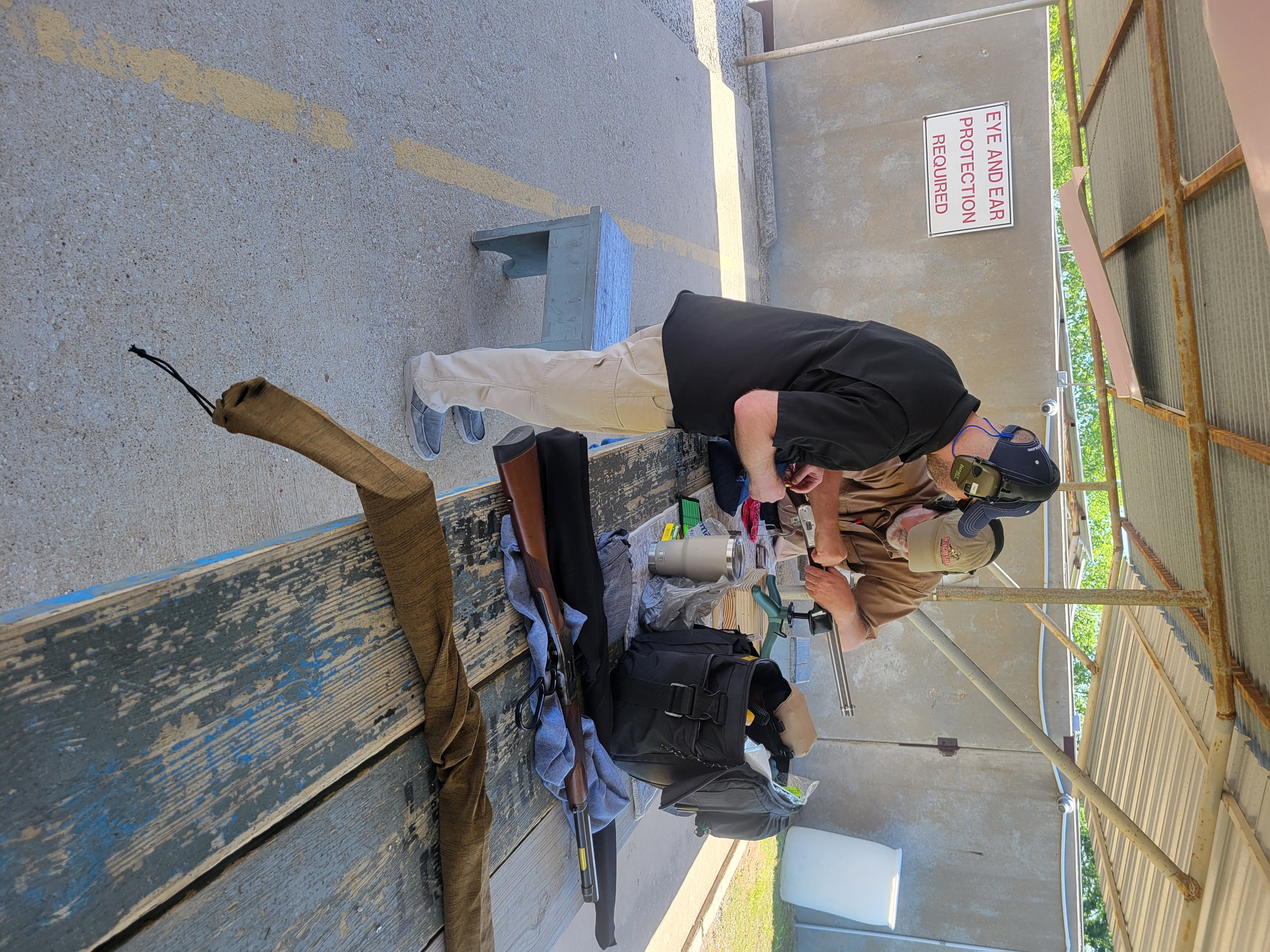 Ridge, I don’t ride horses like I don’t jump out of perfectly good airplanes. But I assume your objection to tang sights on a lever action rifle has to do with saddle scabbards.
My objection to tang sights – even those that have azimuth adjustment – is the lack of micrometer adjustments and visible scales.
I spent the morning with Mike and Jeremy sighting in various rifles and listening to the two of them hammering and sawing – Mike spotting and Jeremy shooting — to get a barrel sighted rifle to shoot where it looked instead of way over toward Fort Mudge. Give me (preferably) a Redfield 80 with slide release for big changes instead of counting 57 clicks. But at least something that clicks and has a scale I can see for future reference.
I’m not going to tap your Lightweight 86 receiver but my rice-powered 86 45-90 came that way and enjoys the Redfield 80 Erin G. sold me. Inauthentic? Only if you believe 1886 Winchesters became useless in 1935. The Redfield sight catalog lists the 86 for its new-for-1935 Model 70.receiver sight.
It slides into a scabbard, if those owning a 1500 pound widow maker are interested.
Hotty Toddy.
- Bill
WACA # 65205; life member, NRA; member, TGCA; member, TSRA; amateur preservationist
"I have seen wicked men and fools, a great many of both, and I believe they both get paid in the end, but the fools first." -- David Balfour, narrator and protagonist of the novel, Kidnapped, by Robert Louis Stevenson.
April 3, 2018
Offline
Agreed Bill;
I have owned steel Redfield and Lyman sights. and prefer them to an eye-gouging tang sight with lever rifles. I used to ride and own horses when younger, but age and common sense have crept in on little cat’s feet. In the 1980s, have even crossed the US-Mexican line near Naco, AZ. on a Morgan with a 44 revolver.A few violations, but my friends in the Border Patrol just lost a bet. Like Charlie Askins, a varied Govt career wins both friends and enemies. These years, such red-blooded adventures along the border are not only unhealthy, it is virtually impossible without a welding torch in your saddle bags.
As to lever-action rifles, sights are pretty much the owner’s options. Where I do step off the train, however, is with the newer alteration of J. Browning, J. Marlin, and Oliver Winchester’ s original trigger and hammer design and patents.. ANY new safety is both dangerous to the owner and is also an indication that corporate counsel has overstepped its bounds.
I would like to see a few civil punitive actions brought against these modifications, due to some Alaskan or Canadian hunter being mauled and disabled by a bear that could not be stopped due to a malfunctioning or maladjusted safety/hammer/trigger. Of my collection of Winchester and Marlin rifles, none are newer or new enough to be so equipped with such infernal diabolical offending appendages. I find no room for compromise on this issue, as I pretty much have wisely invested in and hunt with-the originals. Charles Askins Jr. and Senior would probably be in my camp on lever – action rifle design abuses. Seems that the Savage 99 has dodged these pitfalls, though my 1950s 250-3000 is old enough to know better.
RM


1 Guest(s)
