

 Log In


November 1, 2026
 Offline


I bought a 1886 , 40-82 but the sn was buffed off. I guess it must have been stolen. The lower tang where the number was the same darker color as the rest of the metal, so old buffing. I bought it through a dealer that didn’t seem to think it was a big deal. Can x rays of any type of scan resurrect the number? If it does belong to someone years back that lost it to a thief, I would return it. If not I will enjoy the rifle. Good bore and forty rounds of smokeless.

July 17, 2012
Offline

Hi and Welcome!
X-ray (aka RT) is typically not the correct method for detecting serial numbers.
For serial number recovery there are two paths, the destructive path which are the more definitive methods and utilizes an acid etchant and requires polishing of the surface. This method provides the best results.
The other path is to utilize non-destructive test methods (NDT) such as Magneto-Optical or Magnetic Particle inspection using the wet fluorescent method (aka MT “Wet-Mag”).
I am retired but all of my ASNT NDT Level III certifications are still current. You are welcome to contact me directly if you have any technical questions or looking for a reputable lab near you. I am familiar with large independent firearms testing labs in CA, NH, VA and PA. For criminal work, the ATF and FBI have the best facilities for recovering serial numbers but they are very slow due to case backlogs.
Best Regards,
WACA Life Member #6284 - Specializing in Pre-64 Winchester .22 Rimfire

April 30, 2023
Offline
July 17, 2012
Offline
Thanks for posting that Jeremy, I did not know Mark did a video on the process! It is excellent as usual.
Best Regards,
WACA Life Member #6284 - Specializing in Pre-64 Winchester .22 Rimfire
April 30, 2023
Offline
JWA said
Thanks for posting that Jeremy, I did not know Mark did a video on the process! It is excellent as usual.
Best Regards,
Absolutely, I found it very interesting to say the least…a glimpse into forensic science!

March 31, 2009
Offline
Another great video by Mark.
November 1, 2026
Offline
I liked to see the video, thank you.
Owen
November 7, 2015
Offline
Hightime-
Does your 1886 have a set trigger?
Mike
December 9, 2002
Offline
Hightime said
I liked to see the video, thank you.
Owen
Owen,
I used Mark’s process, and it worked. The only difference is that the “Regent”, stuff he used in his video, is a little pricey,(and seemed to be sold in larger containers or volume only), for us collectors and as a one time user, so I did some research, and I had some Muriatic Acid on hand, and using his method, carefully it worked out well for me. Mark’s videos are very good, and his shared knowledge is second to none. IMO!
With good ventilation, and the proper safety equipment, glasses, gloves, etc….It’s worth it to carefully try it, but make sure you remove the wood, and get set up properly. There’s no short cuts doing this! IMHO!
Tony
November 1, 2026
Offline
I don’t have set trigger.
On the muriatic acid. Does it take any patina off? I might try that on another old cheaper gun.
Owen
December 9, 2002
Offline
Hightime said
I don’t have set trigger.
On the muriatic acid. Does it take any patina off? I might try that on another old cheaper gun.
Owen
I’m not sure, but would think so. The one I was working on was a pitted and cleaned up example with no finish or patina on it at all! Smart to try it on another example or something else first.
The “Regent”, that Mark used has Muriatic Acid in it, as it’s leading chemical, from my research and the MSDS information that I found on it.
Remember, it’s not something that you want to inhale in, as it will burn you’re throat and take you’re breath away. Trust me I have a lot of experience with this from over fifty years ago and up to now. If a person wanted to wear a mask, I wouldn’t stop them from doing it as Scouts and cleaning the concrete pool, (a summer project towards an Eagle Scout Merit badge), the instructor made it mandatory for all of us to be masked up! We we’re all pretty grateful for that, and the fresh supply of a garden hose near by, as the splashing stung/burned on our skin, in the hot sun. Many consider the Muriatic, and Hydrochloric Acid as the same stuff, as it has similar properties, and both clean concrete, along with the steel quite well, without harming the paint, in most cases.
Tony
November 1, 2026
Offline
Well not working on that today, but very close examination with magnification and good light. I saw a 3 for the first number and nothing more, but that should mean it was made in 1889, that’s helpful.
Owen
December 9, 2002
Offline
Hightime said
Well not working on that today, but very close examination with magnification and good light. I saw a 3 for the first number and nothing more, but that should mean it was made in 1889, that’s helpful.
Owen
As you’re well aware of it’s very important that you get you’re serial number correct. I also had an advantage, as I was able to see just a little bit of a partial number or numbers, and in removing the wood stock, the correct serial number, was stamped on the inside of the lower tang. Giving me a huge advantage. It took a lot of guess work out of the equation! Plus having the Cody Letter from the previous owner didn’t hurt!
Tony
November 1, 2026
Offline
I just had the stock off and didn’t see any more stampings. Is it common to have another location for the number? I wonder why yours did.
December 9, 2002
Offline
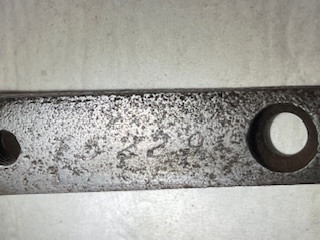
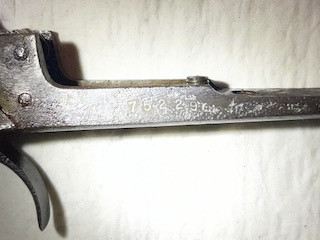
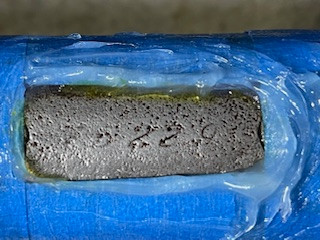
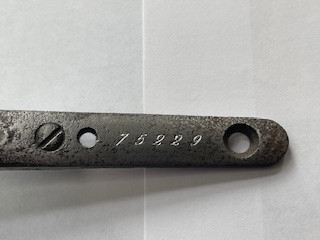
I tried to show a few pics here as you can see the pitting in the steel and no finish or patina on the metal. Once I was confident that I had the proper location of the serial number, I traced over it with a pencil, to locate the numbers properly. Using the picture as a reference, then using the silicone caulk to create the dam, as Mark did. Making sure that the surface was very clean with alcohol, so the silicone would stick, and then making sure it was dry and cured, the next day was Muriatic Acid Day!The Winchester numbers are proprietary and in all likely hood impossible to find, as I was advised by Mark, as being very helpful, with this, along with another member. Instead of trying to locate a jeweler to engrave the numbers, I fashioned a small engraving tool, and hardened it, and started to engrave over the numbers, that I made sure with my pencil enhancement, and plenty of good light, I spent a week off and on, while snow was on the ground, at my bench, with the tang securely locked in! A small like jewelers hammer, as my late Father in Law was a gun smith, and taught me some tricks, and I have a lot of his tools, was a patient, yet very rewarding task.
Tony
December 9, 2002
Offline
Hightime said
I just had the stock off and didn’t see any more stampings. Is it common to have another location for the number? I wonder why yours did.
On the M-1885 Low Wall tang,(mfg. 1896), that can be removed and changed out, it was common to stamp the number on the lower tang, as a removable part.
You won’t find the number on you’re rifle anywhere else in all probability.
Tony

May 2, 2009
Offline
The serial number is stamped in one place, on the outside. I would say having the number on the inside and outside would be very rare. The only time I have seen that is on the 66’s. Normally the numbers in the inside are assemble numbers with other informational stamps.
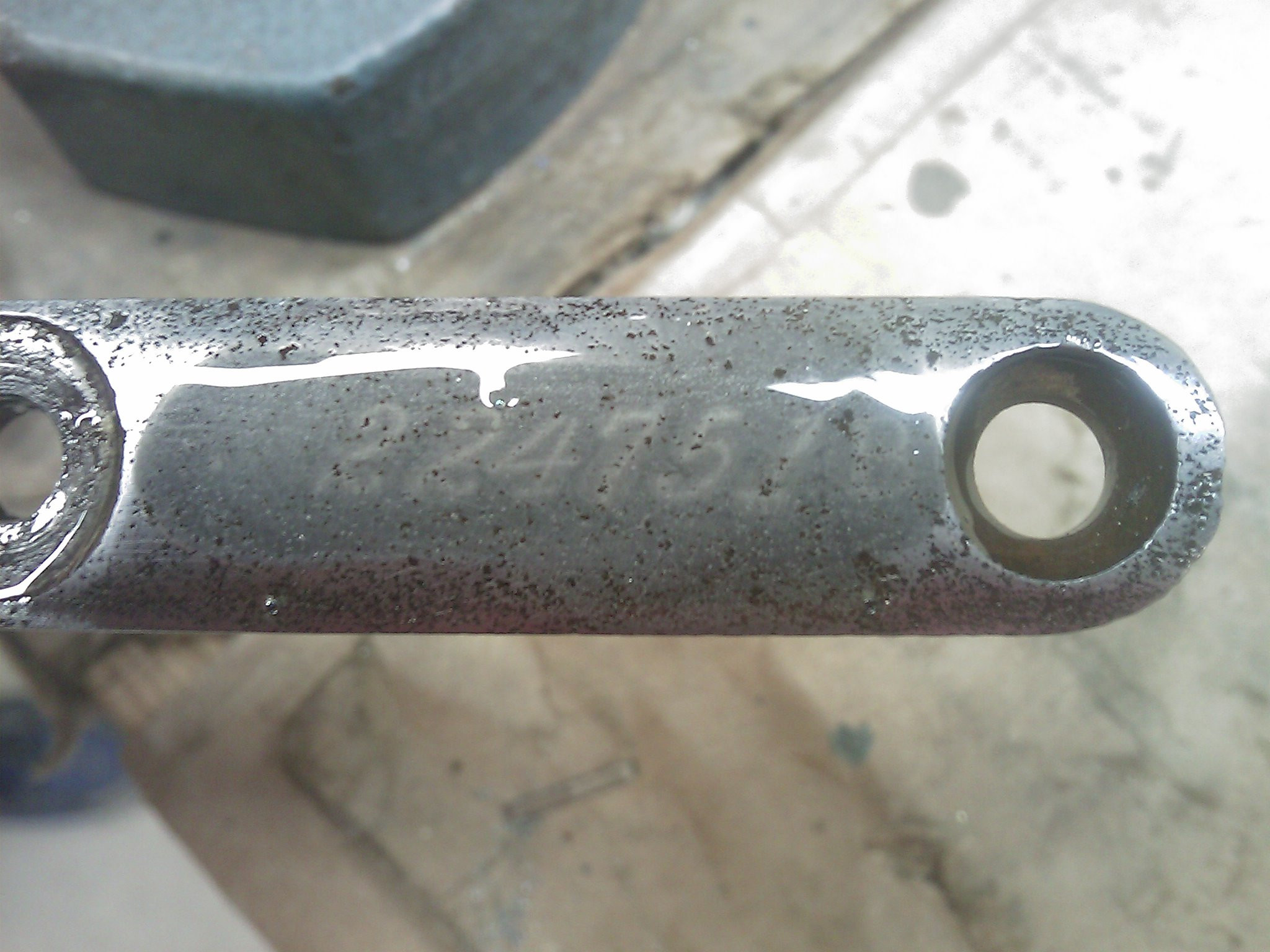
I have tried to use Magnaflux to pull a serial number and never was able to since there is no crack or fold to the metal but I only used the coil with the tang. I tried several different orientations of the tang in the coil with no indications each time but not between the plates.
I have used a single step acid to recover the number but you had to polish the area to a shine to get a contrast. I buy 5 bottles since they have a $25 minimum.
Bob
WACA Life Member---
NRA Life Member----
Cody Firearms member since 1991
Researching the Winchester 1873's
Email: [email protected]
December 9, 2002
Offline
Bob,
It looks to me like you’re method works pretty well. Great picture of it and keeping the glare down.
Like Mark showed in his video, I also refreshed the Acid with a Q-Tip several times, and removing any excess to keep the mess down, while I was doing it. I definitely had an advantage having the letter, and the number stamped on the lower tang.
Tony
May 2, 2009
Offline
I haven’t used the dam method just kept it wet with a Q tip. Took about 10 to 15 minutes.
Bob
WACA Life Member---
NRA Life Member----
Cody Firearms member since 1991
Researching the Winchester 1873's
Email: [email protected]


