

 Log In


November 5, 2014
 Offline

Bert-
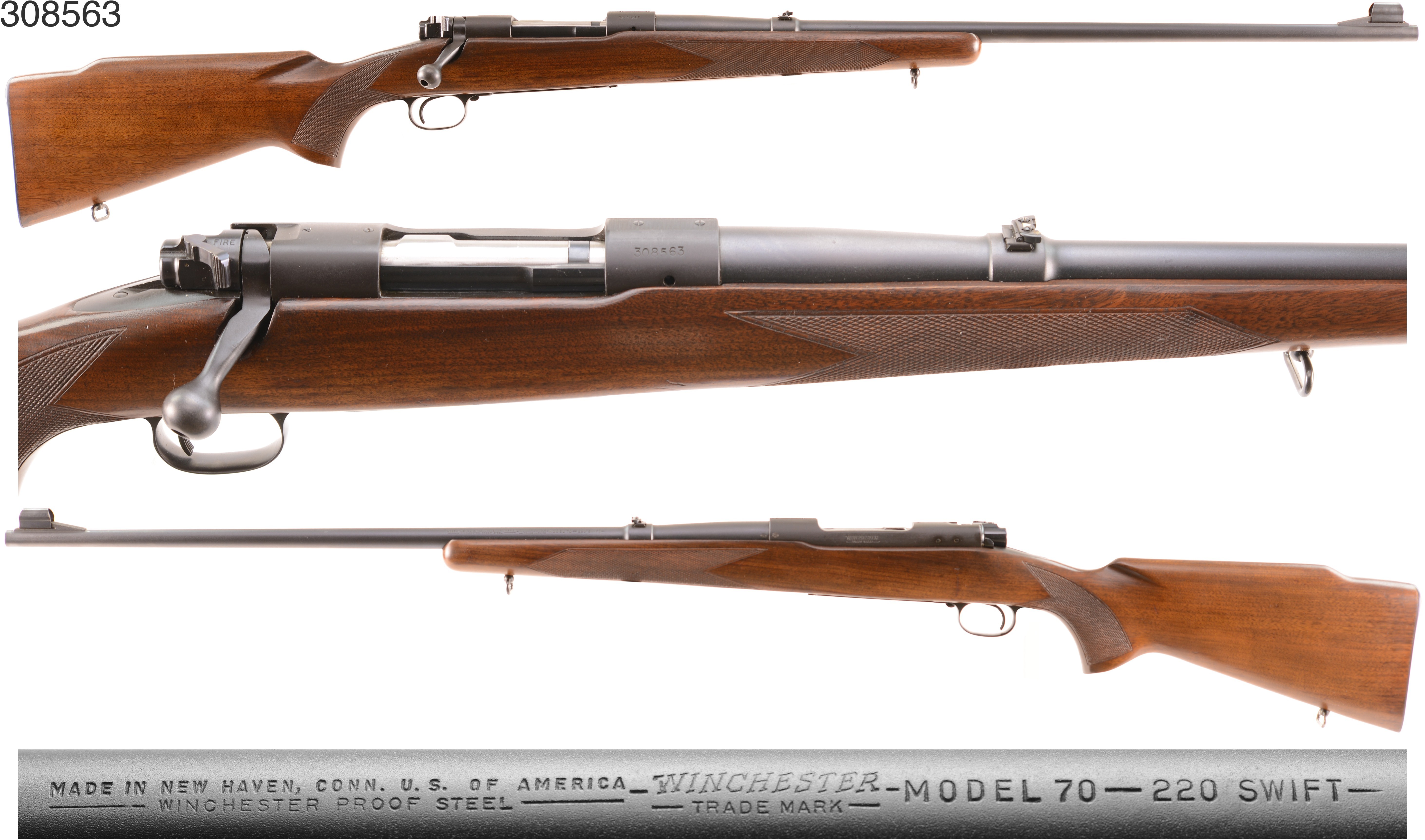
That’s a VERY GOOD question… But it’s true of all the M70 stainless barrels, even those on the 220 SWIFT barrels that were always stainless after 1937, not just these special order oddballs…
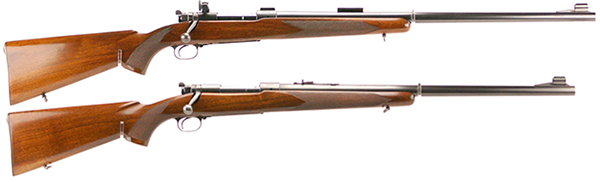
Winchester just used the same roll dies regardless of steel. The stainless barrels are generally stamped “ST” underneath the chamber, but still say “Proof Steel” where you can see it. Here’s a garden variety 220 SWIFT Standard rifle with stainless barrel…
Best,
Lou
WACA 9519; Studying Pre-64 Model 70 Winchesters

April 15, 2005
Offline
Lou,
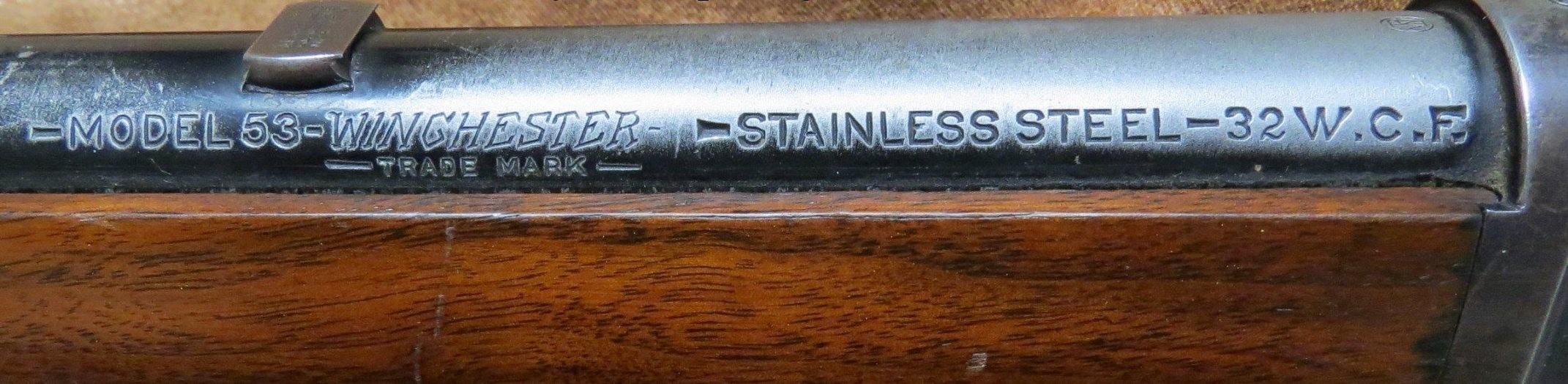
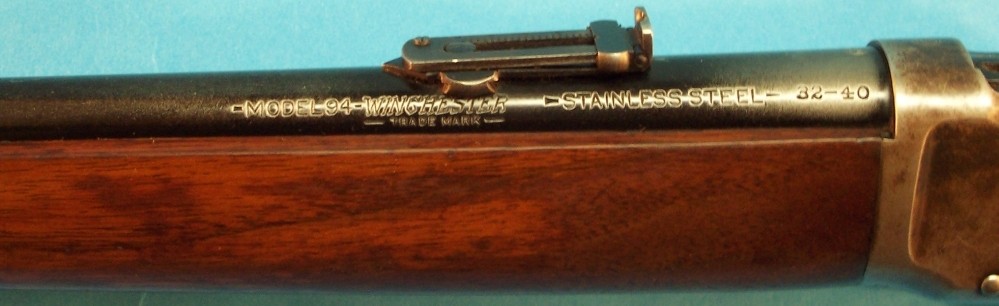
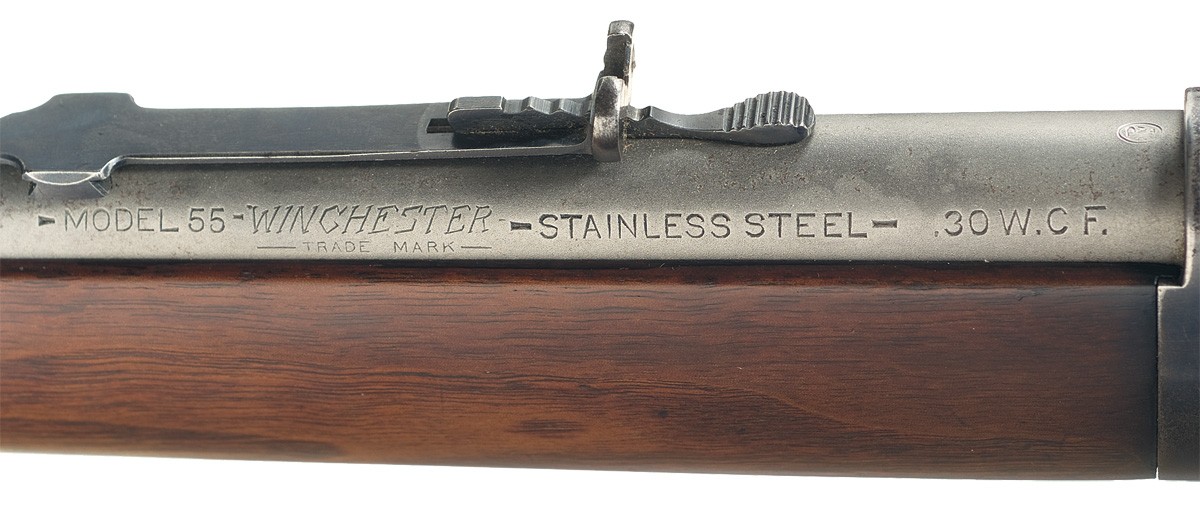
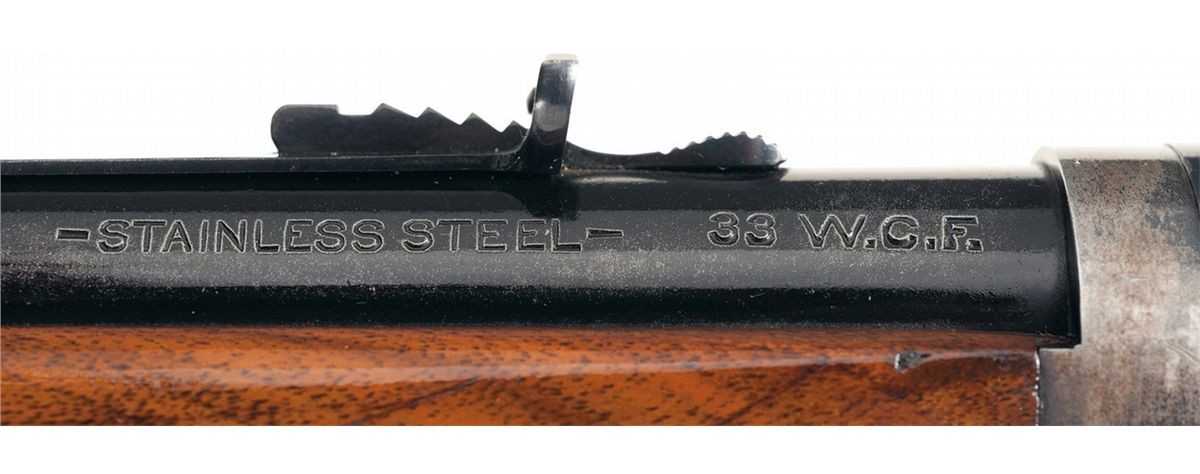
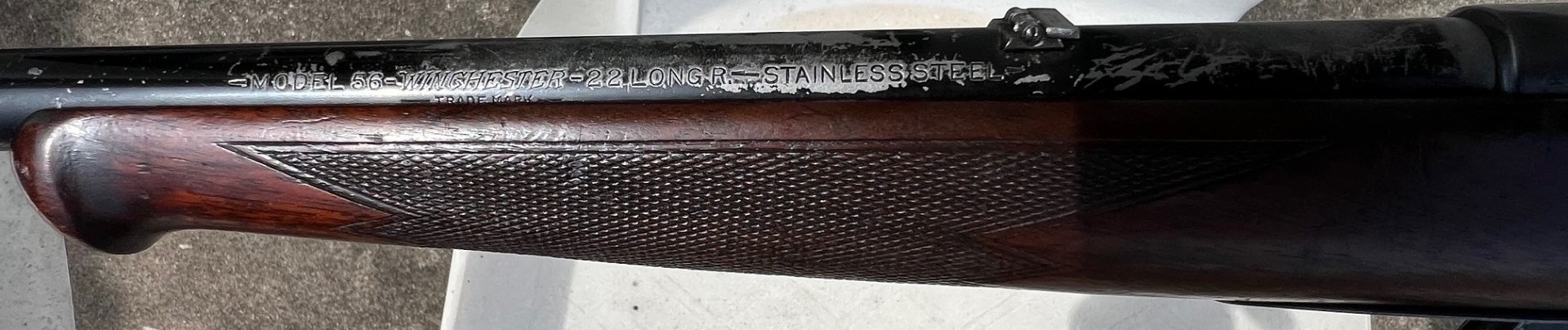
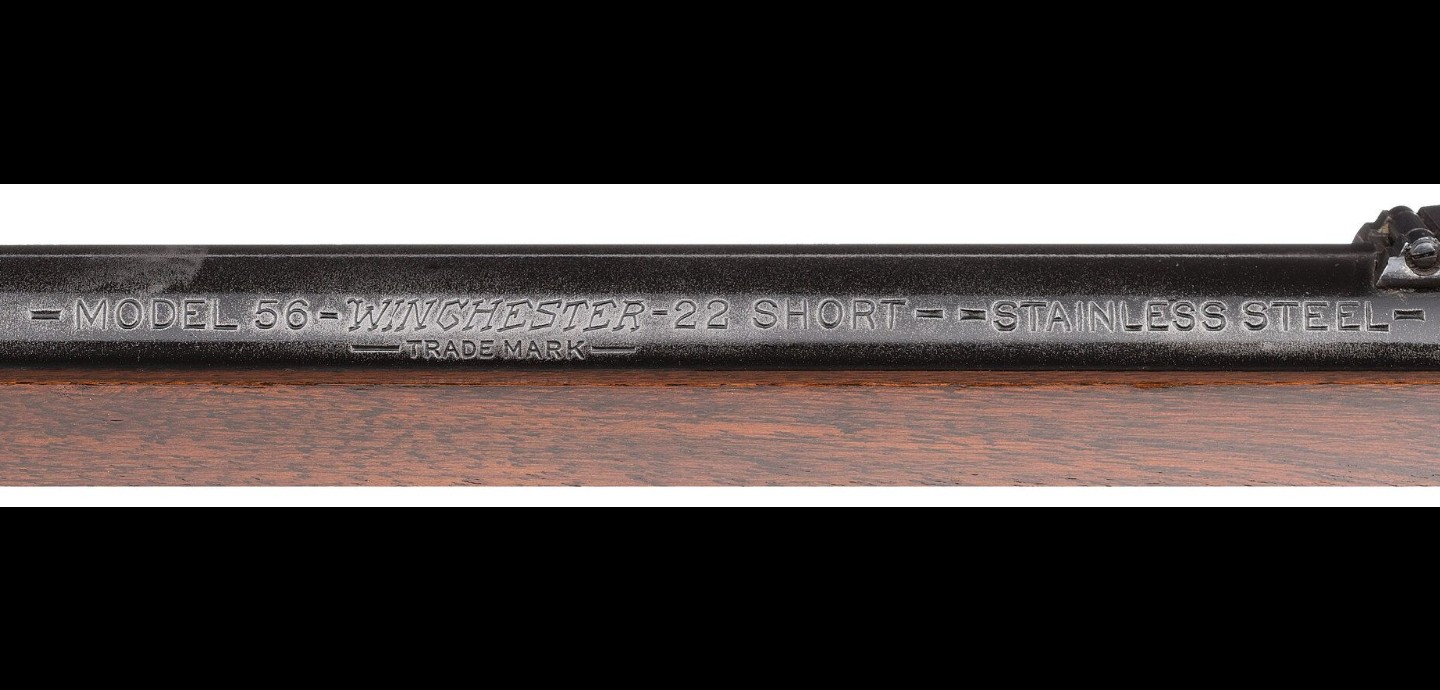
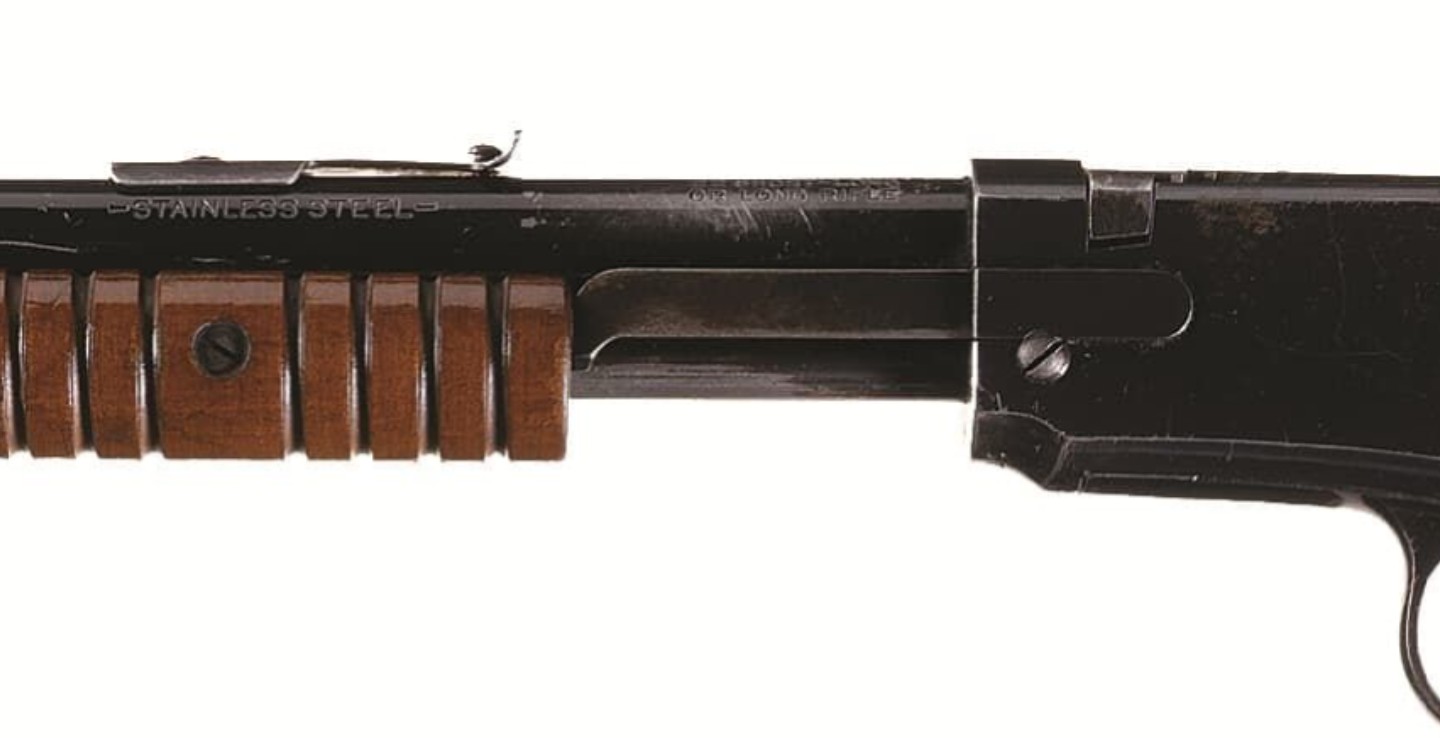
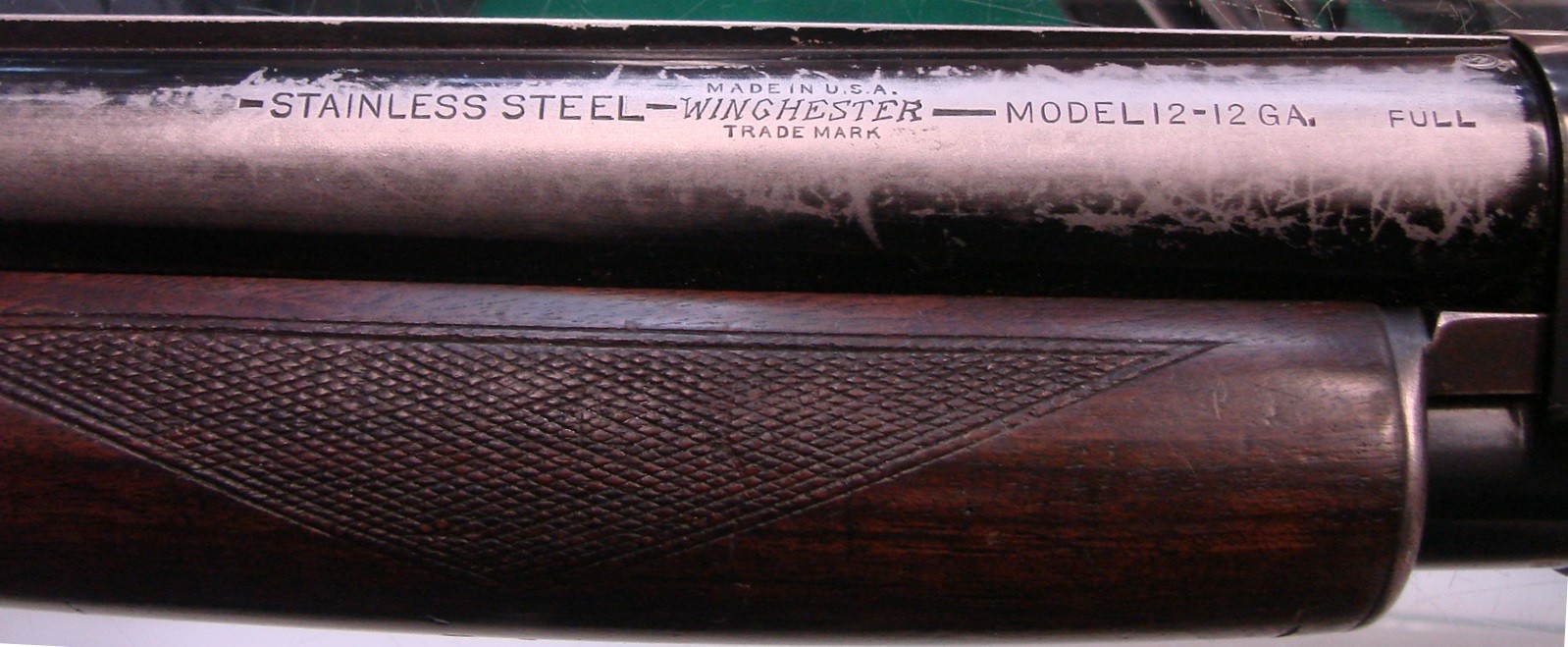
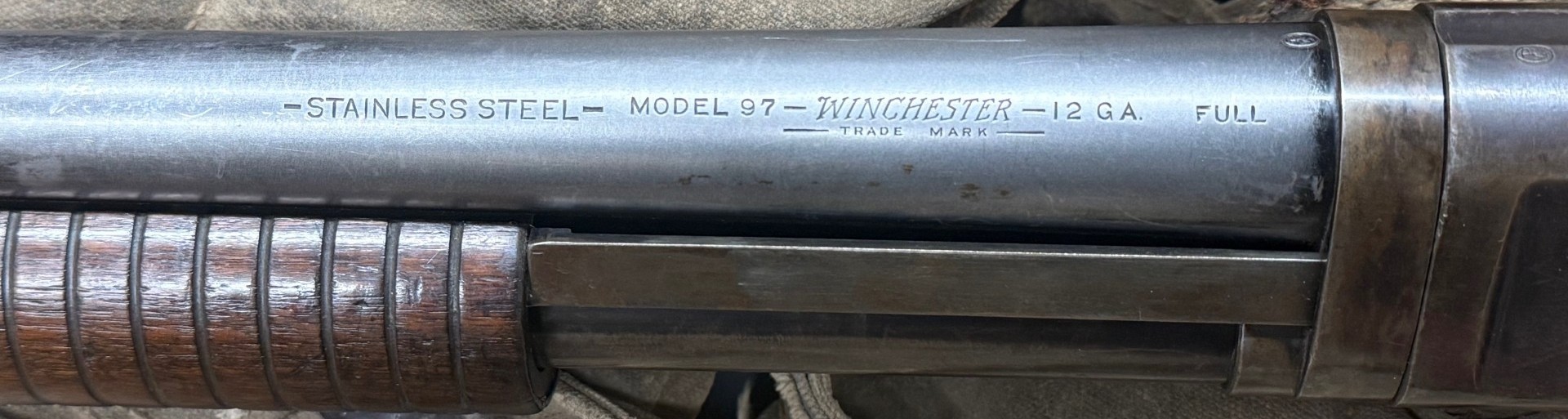
I really have to question why Winchester would have abandoned marking the barrels “STAINLESS STEEL” as they had done just a few years earlier on all of the other models that were fitted with a Stainless Steel barrel versus the standard Proof Steel barrel?
I have many dozens of examples of Model 53s, Model 54s, Model 55s, Model 56/57s, Model 86s, Model 90s, Model 94s, Model 97s, Model 06s, and Model 12s, all marked “STAINLESS STEEL”.

Bert
WACA Historian & Board of Director Member #6571L

June 1, 2023
Offline
Lou is correct. I checked half a dozen stainless steel barrel Model 70’s I have in .243 Winchester and .220 Swift (Target rifles and Varmint rifles) and all six of them have the “Winchester Proof Steel” roll mark, even though the barrels are certainly stainless steel. I would surmise that Winchester did not think it important enough to create a separate roll mark die for their Model 70 rifles wearing stainless steel barrels.
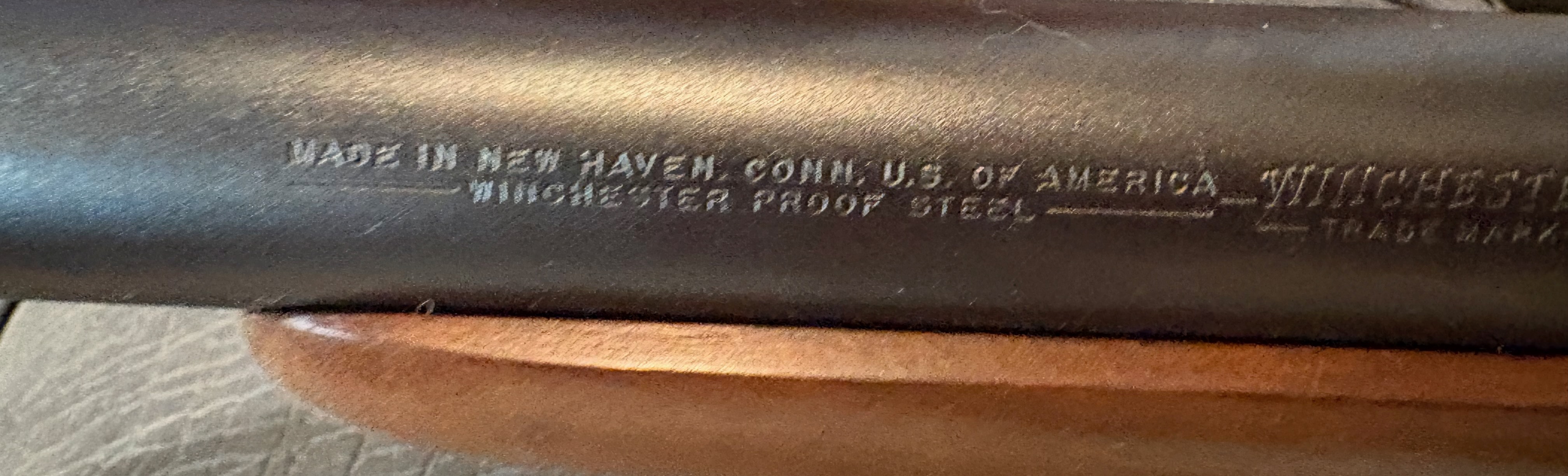
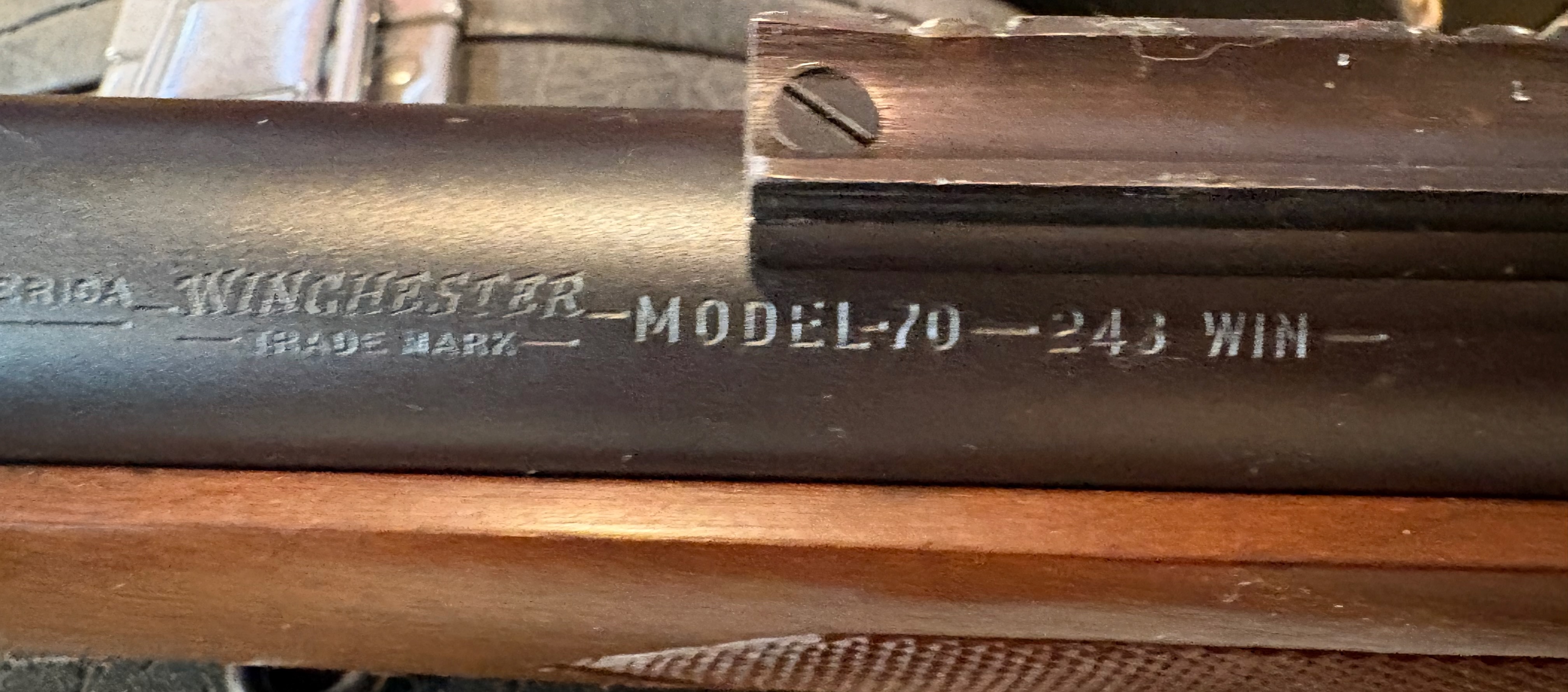
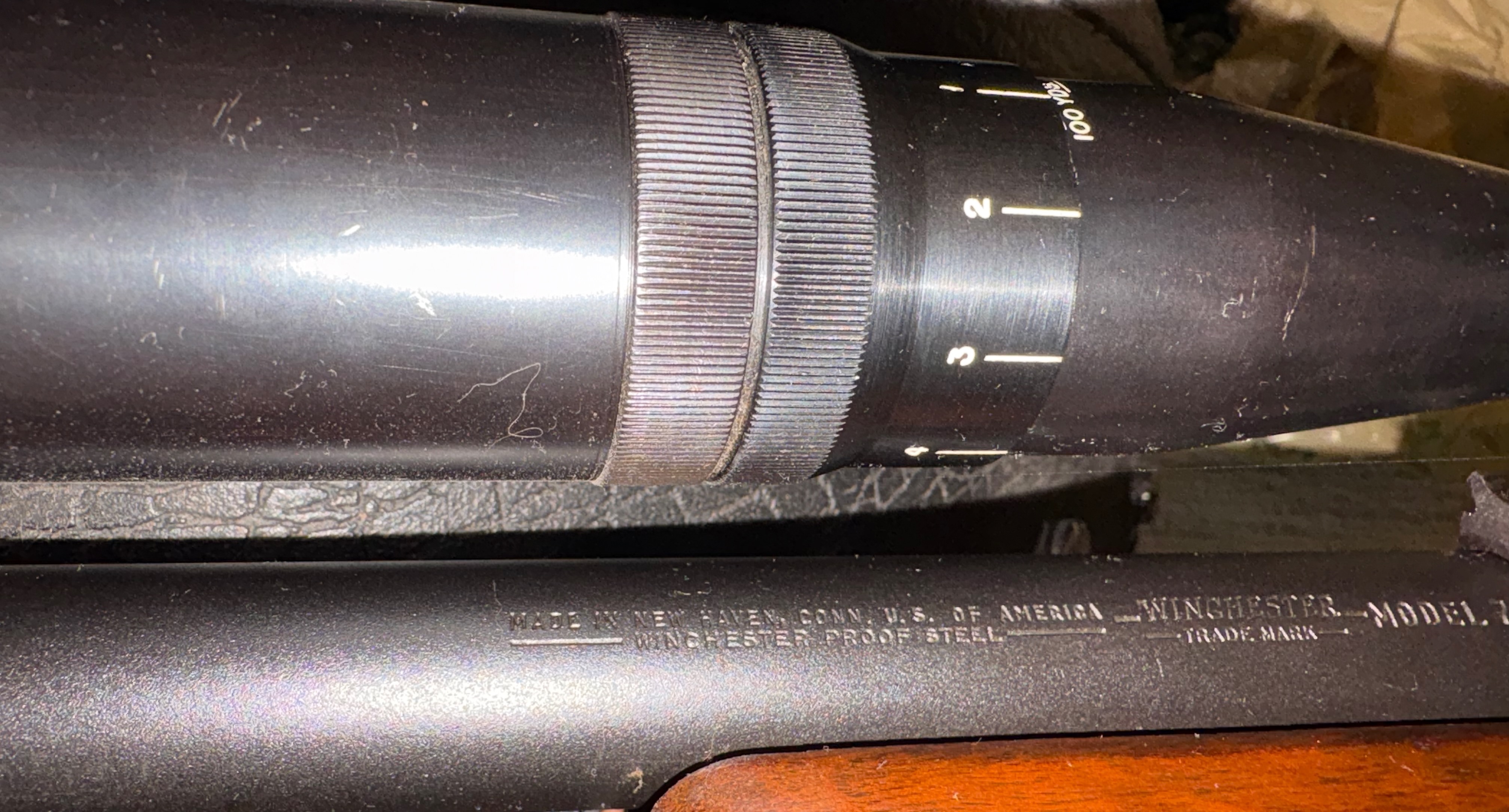
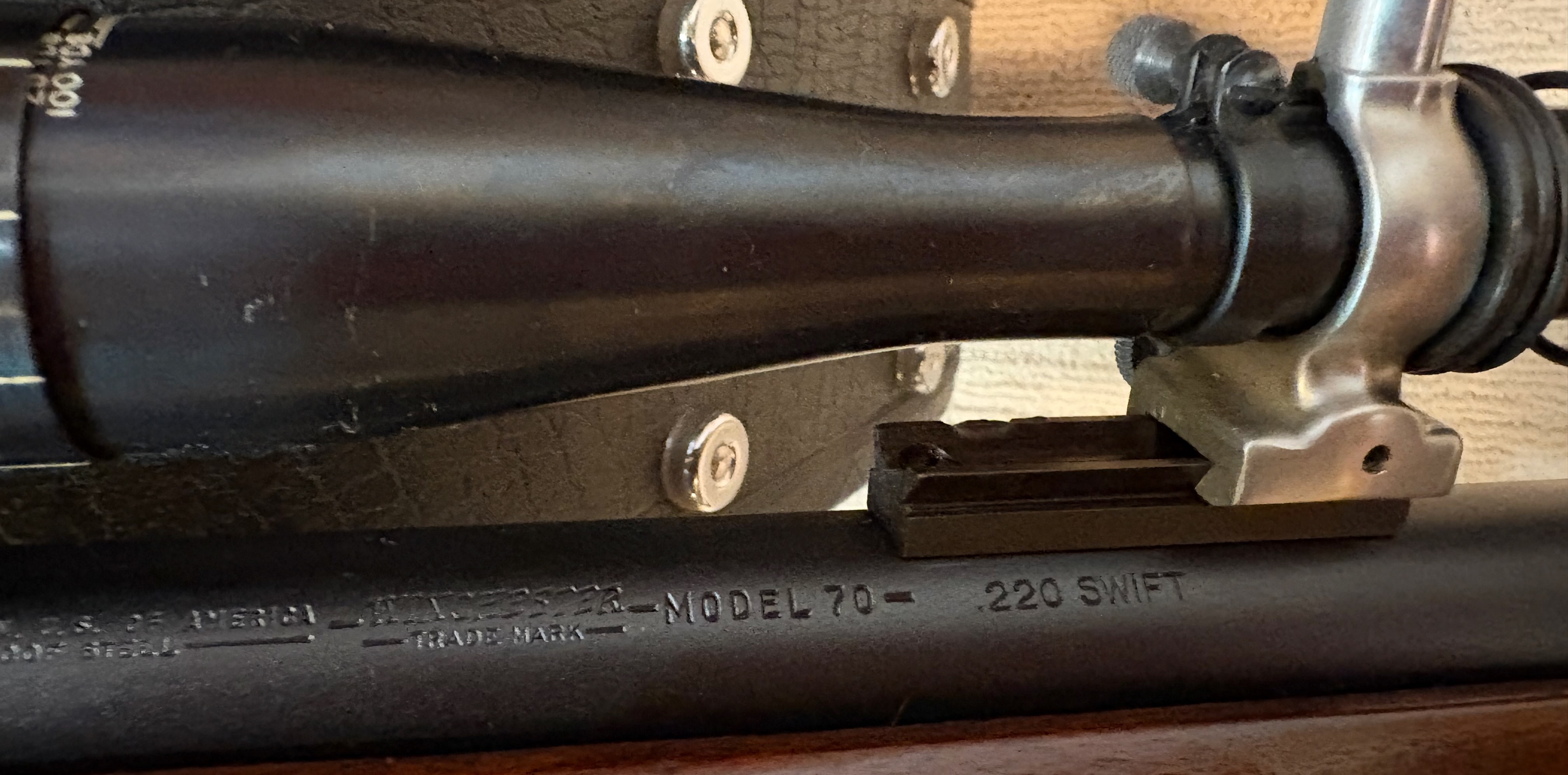
BRP
June 1, 2023
Offline
I’m just guessing, but it could also be the case that Winchester still had mud on their face for the poor adhesion of the Japanned finish to earlier Stainless Steel barrels, and chose not to advertise the Stainless barrels they used later on. As I understand it, the stainless barrels on the Model 70’s I have (from the 1950’s) were first iron plated, sand blasted, and then the bluing was applied to the iron plating. Unlike the earlier stainless finish, it adheres just fine.
BRP
April 15, 2005
Offline
Blue Ridge Parson said
Lou is correct. I checked half a dozen stainless steel barrel Model 70’s I have in .243 Winchester and .220 Swift (Target rifles and Varmint rifles) and all six of them have the “Winchester Proof Steel” roll mark, even though the barrels are certainly stainless steel. I would surmise that Winchester did not think it important enough to create a separate roll mark die for their Model 70 rifles wearing stainless steel barrels.BRP
So, Winchester thought it wiser to falsely advertise their products? While litigious lawyers were not common place in the 1950s, I still believe that false advertising was highly frowned upon.
Bert
WACA Historian & Board of Director Member #6571L
November 5, 2014
Offline

Hi Bert-
My thinking is that when Winchester first introduced Stainless Steel it was as an extra cost alternative to Nickel Steel. They probably considered it superior and they charged more for it. Since the regular M54 barrels were clearly marked NICKEL STEEL they marked the stainless barrels STAINLESS STEEL both for “truth in advertising” purposes and as a marketing ploy.
When Winchester switched from Nickel Steel to Chrome Moly Steel in 1932, they didn’t stamp “Chrome Molybdenum” on the M54 barrels. Instead they came up with a new term “WINCHESTER PROOF STEEL”, which is marked on all the CMS M54 barrels. What, exactly, is “WINCHESTER PROOF STEEL” except an advertising slogan??? You can’t go to a foundry and purchase “WINCHESTER PROOF STEEL”… The term does not imply what the steel is made of, only that it met Winchester’s proof testing standards.
By the time Winchester decided to make Model 70 220 SWIFT barrels from stainless in 1938 (M54 and 1st year M70 220 Swift barrels were CMS), I suspect that “stainless steel” wasn’t considered an advertising point any more. Besides, the M70s routinely made with stainless barrels were priced the same as the M70s regularly made with CMS barrels.
The only way the stainless barrels are marked is with an “ST” stamped under the barrel. Since these under barrel marks were applied before the barrels were polished and blued, I suspect the ST stamp was there as a reminder that barrels so marked had to be bead blasted and iron plated before bluing…
FWIW… The stainless M70 barrels Winchester used in regular production were in 220 SWIFT (standard and target contour), 243 WIN (target contour only), and about half of the 264 WIN MAGNUM barrels (standard contour). Other M70 barrels in stainless were special order, albeit still labeled with the generic “Winchester Proof Steel” moniker. Those are decidedly uncommon, but 270 WIN (standard contour), 300 (H&H) MAGNUM (standard contour), and 30-06 SPFLD (target contour) turn up on occasion.
Just my take, 
Lou
WACA 9519; Studying Pre-64 Model 70 Winchesters

August 8, 2024
Offline
I have owned many Model 70s over the years with Stainless steel barrels. The only owns that were not marked ST on the barrel bottom were two. One was a .270, the other a .300 H&H Mag. With the exception of the later .264 Win Mag. So, I have found like Louis, most were marked as above. Bert, you bring up a interesting point. Maybe, Winchester thought it as a up grade to use on there higher velocity chamberings of the Model 70. Winchester Proof Steel made with Stainless Steel? I would think that the first style Stainless Steel barrels on the Model 70 were more expensive to finish with the iron coating applied before it was blued to a matte finish. Winchester cataloged the rifles that were fitted with Stainless Steel barrels. As having that feature. So, I beleive it was a selling point as well.
I find the Model 70s with the Stainless Steel barrel very interesting. I have been Collecting, and researching them for a while. I find it interesting that the .243 Win. Varmit, and Target Models were made with Stainless Steel barrels. But, not the Standard Grade. As of yet I have not seen a Feather Weight with a Stainless Steel barrel. The only .220 Swift Feather Weight that I have seen. A non cataloged rifle was fitted with a Winchester Proof Steel barrel.

November 7, 2015
Offline
I suppose it’s possible the stainless steel alloy used in these barrels contained some nickel but that doesn’t make it nickel steel…or does it?
Mike
April 15, 2005
Offline
Hmmm… great replies, and it gives me more to ponder.
Another question for anyone willing to add to this conversation;
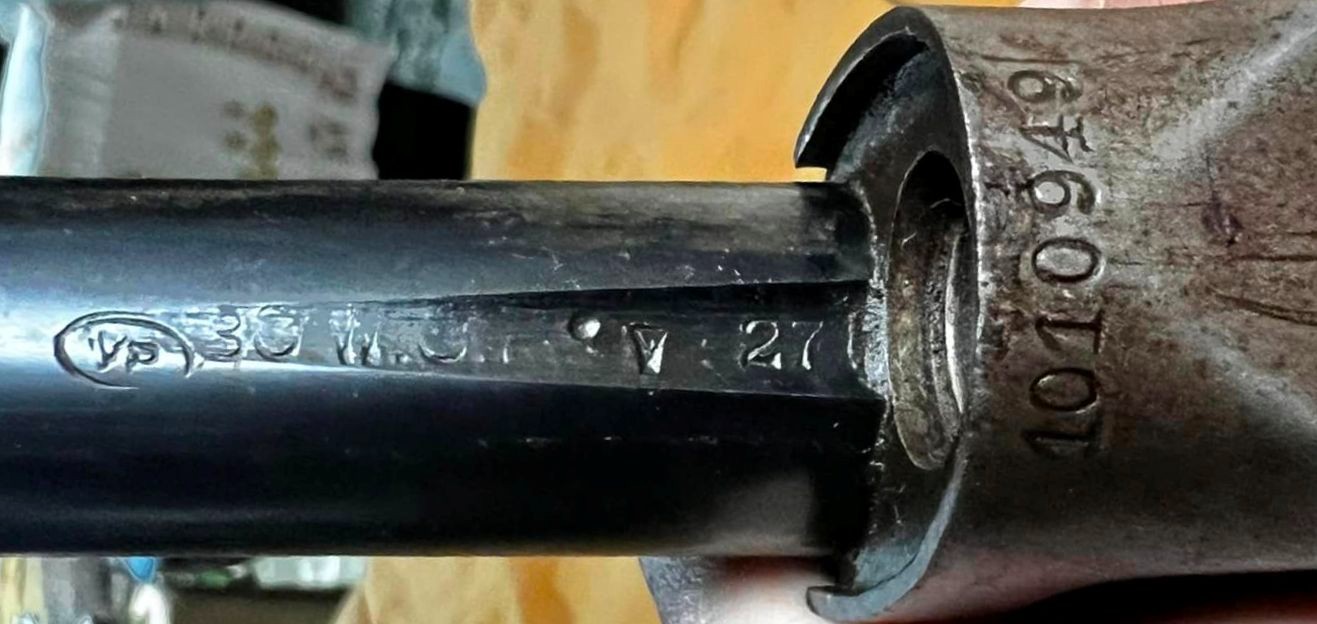
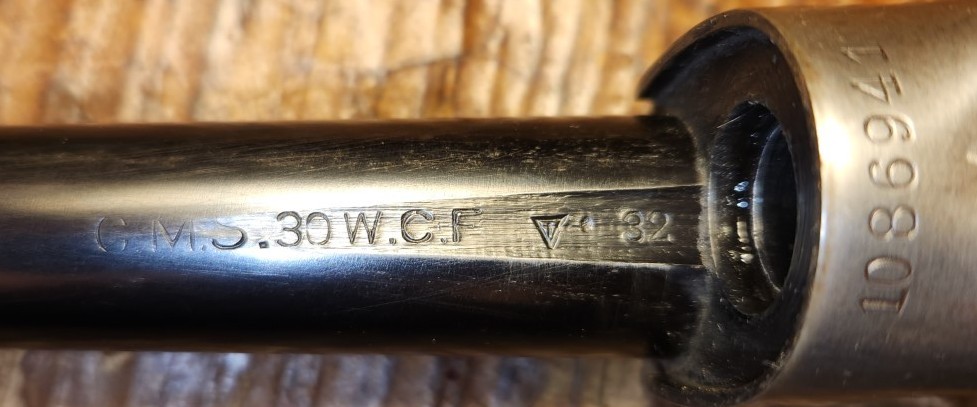
It has been my observation that Winchester abandoned the “VP” (in an oval) under barrel marking at the same time Nickel Steel barrels were abandoned. Has anyone encountered a CMS barrel with that marking? It was common practice on all of the high strength steel and Nickel Steel barrels.
Bert
WACA Historian & Board of Director Member #6571L
November 5, 2014
Offline
Hi Bert-
Short answer… YES. Long answer below… 
It has been said (not by me) that when Winchester first started making CMS barrels, at least some were subjected to the VP test that had been normal practice with Nickel Steel barrels. Apparently it didn’t take them long to figure out that the CMS barrels, which on the M70 at least were treated to withstand 90,000 to 100,000 lbs of pressure (according to the barrel blueprints), did not need to be tested. So they stopped doing it…
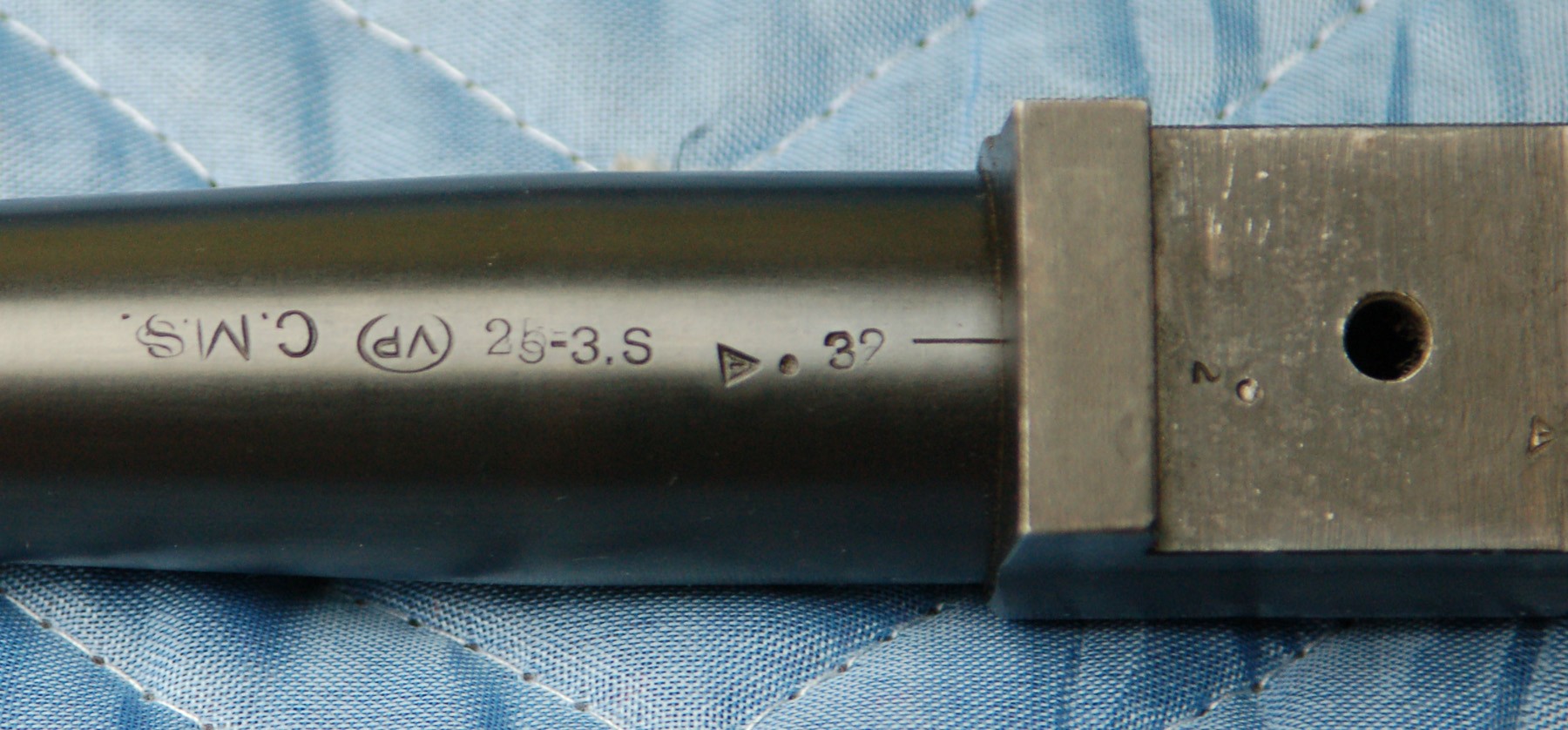
I have seen a couple ’32 date CMS barrels (stamped “CMS”, which is something else they stopped doing after manufacture of Nickel Steel barrels had been discontinued), with the “oval VP” stamp. These would have been early CMS barrels (with the forged integral front ramp) intended to build M54s. The ones I’ve seen on M70s are all in 250-3000 Savage. Apparently Winchester made a lot more 250-3000 barrels than they ever sold on M54s, b/c these ’32 date barrels turn up on M70s as late as 1946!!!
Here’s the underside of one such barrel on an early 1938 M70 250-3000 SAV Carbine:
Oddly, some of these ’32 date barrels (found on M70s and marked “MODEL 70” on the left side) also have the “PATENTS APPLIED FOR” (instead of “PATENTED”) roll mark on the right side. Since the “PATENTS APPLIED FOR” stamp was only used for about a year circa 1932, it’s hard to explain how a MODEL 70 marked barrel could wind up marked that way. But there are enough of them that I do not believe it to be the work of forgers.
A mystery for another day!!!
Lou
WACA 9519; Studying Pre-64 Model 70 Winchesters

March 20, 2010
Offline
Bert H. said
It has been my observation that Winchester abandoned the “VP” (in an oval) under barrel marking at the same time Nickel Steel barrels were abandoned. Has anyone encountered a CMS barrel with that marking?
Bert
Yes, I once had an 1894 TD in 30WCF (881755) that is marked with the C.N.S. and “VP” on the underside of the 1/2 Oct barrel. The second is an 1894 sn 76556, which is a solid frame rifle in 25-35 with 1/2 Oct bbl. The rifle was subject of a prior WACA article I wrote (dont remember when) regarding the use of discontinued TD barrels fitted to standard frame rifles. If I remember, the barrel was 25 5/8″ in length (shorter due to the removal of the TD ring thread spacing). Top of barrel is marked with “WP” and Circle P.
Regarding 1894’s, what Ive seen most commonly with “VP”, and if indicated, are M.N.S, “M”, “C” within circle, “Y” within circle, “M” with smaller font “NS” next to it.
1892takedown @sbcglobal.net ......NRA Endowment Life Member.....WACA Member
"God is great.....beer is good.....and people are crazy"... Billy Currington
April 15, 2005
Offline
Lou,
Thanks for the response and picture! Hopefully this topic line is not too esoteric for the forum regulars… but I know that you find it fascinating.
So, it appears that for a very short period of time, the CMS barrels were “VP” tested and marked. I have examined at least a dozen “32” date stamped Model 94 barrels without finding that marking (yet), but I now believe that it is possible that a few exist. I was recently discussing this very topic with a Model 12 Guru and he asked if I had ever seen a “VP” marked Proof Steel barrel.
Bert
WACA Historian & Board of Director Member #6571L
March 20, 2010
Offline
Apologies Bert, my dyslexia set in, my 1894 examples are CNS marked, not CMS. 
1892takedown @sbcglobal.net ......NRA Endowment Life Member.....WACA Member
"God is great.....beer is good.....and people are crazy"... Billy Currington
November 5, 2014
Offline
As long as we’re sowing confusion…
According to my learned friend Seewin, “CMS” does NOT stand for “Chrome Molybdenum Steel”. It stands for “Crucible Molybdenum Steel”, a resulfurized Chrome Moly steel Winchester purchased from Crucible Steel Corporation.
In other words, the first letter identifies the foundry that made the steel, not its content. So… “MNS” is a .45% carbon steel made by Midvale Steel Corporation, “CNS” is the same steel made by Crucible, and “INS” is the same steel made by Illingsworth Steel Corporation. Presumably the “NS” part of all three stands for “Nickel Steel”…
If that’s what Steve says I’m going with it!!!
Lou
WACA 9519; Studying Pre-64 Model 70 Winchesters
April 15, 2005
Offline
1892takedown said
Apologies Bert, my dyslexia set in, my 1894 examples are CNS marked, not CMS.
No problem…
“C.N.S.” = Crucible Nickel Steel.
WACA Historian & Board of Director Member #6571L
April 15, 2005
Offline
Louis Luttrell said
As long as we’re sowing confusion…
According to my learned friend Seewin, “CMS” does NOT stand for “Chrome Molybdenum Steel”. It stands for “Crucible Molybdenum Steel”, a resulfurized Chrome Moly steel Winchester purchased from Crucible Steel Corporation.
In other words, the first letter identifies the foundry that made the steel, not its content. So… “MNS” is a .45% carbon steel made by Midvale Steel Corporation, “CNS” is the same steel made by Crucible, and “INS” is the same steel made by Illingsworth Steel Corporation. Presumably the “NS” part of all three stands for “Nickel Steel”…
If that’s what Steve says I’m going with it!!!
Lou
Thanks for the clarification (but do not tell Steve that I said that!) and that makes much better sense!
Bert
WACA Historian & Board of Director Member #6571L


1 Guest(s)
