

 Log In


January 23, 2026
 Offline

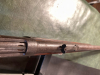
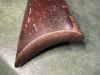
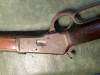
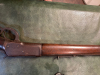
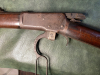
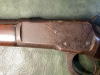
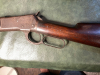
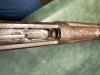
Recently got this 1892 (s/n 81847 made in 1897) at a farm equipment sale.
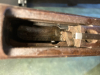
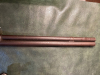
While the finish is in rough shape the bore is bright with decent grooves. Seems to function as designed (cock, half cock, trigger).
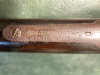
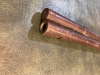
It is not marked but seems to be a wcf.44.
I am going to take apart for a good cleaning.
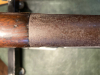
Looking for comments/suggestions on what else should be done. I come from more of antique furniture background and under stand “it is only original once”. But this one seems to have no original finish and completely covered in rust. My first thoughts are to bring it up to full function if anything is mechanically wrong and some level of work on the metal.
Not in a hurry and would love to hear some thoughts on this.


August 27, 2014
 Online

I’d resist the urge to take the gun apart for a ‘good cleaning’ and first see how much I can clean it up when it’s together
If it’s cycling correctly that’s perfect. I prefer the current look to a refinished gun. Spend your $’s on another gun
“If you can’t convince them, confuse them”
President Harry S. Truman

April 30, 2023
Offline
I’m opposite of TedK, I always disassemble a new to me gun (within reason) to make sure no active (bad) rust is hiding. If you have the correct tools/screwdrivers (hollow ground) and experience, that’s what I’d do.
Other than that, I wouldn’t do much else with this one other than stop any active rust and shoot some rounds through it. You can use 000 or 0000 bronze or copper wool and some oil to clean up the surfaces a little (with a light touch of course). Lots of YT videos on it.
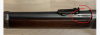
It has no caliber marking at the indicated spot below? Could have been polished or pitted away…does the barrel have the other Winchester roll markings?

April 15, 2005
Offline
In this case (based on what I can see in the pictures), I too would be inclined to fully disassemble it and clean up all of the active rust.
It is imperative that you use a set of proper sized gunsmith screwdriver/bits.
I would first remove the stocks and then presoak every single screw with Kroil before taking a screwdriver to them. Go slow, and do not force anything. After you have it fully disassembled, soak all of the steel parts in Kroil before attempting to clean them. Use copper or bronze wool (not steel wool) to gently scrub the active rust & crud off of the steel. After you have the crud & rust removed, dunk or wipe down everything in acetone (to remove the Kroil), and then when reassembling, lightly oil the screw threads and friction points.
Bert
WACA Historian & Board of Director Member #6571L
November 7, 2015
Offline
I believe it is our duty as custodians to stop further damage to the firearms we love. The subject gun apparently hasn’t met Bubba so as others pointed out if you’re going to take an aggressive approach do so carefully! It took years to deteriorate to this condition, take your time addressing these concerns. Those screws apparently haven’t moved in a long time so they’ll likely need some penetrating oil to come out without damage. Once you have the wood off you can put a generous amount of oil on the screws and pins and just let them sit for a day or two. After the active rust is stopped it’s decision time.
Mike
November 8, 2011
Offline
There is a caliber mark on top of the barrel in your photo
I think it says 38 WCF
August 27, 2014
Online
sb said
There is a caliber mark on top of the barrel in your photo
I think it says 38 WCF
Good eye!
“If you can’t convince them, confuse them”
President Harry S. Truman
January 8, 2025
Offline
Can someone explain why you need to remove the penetrating oil please?
April 15, 2005
Offline
MidwestCrisis said
Can someone explain why you need to remove the penetrating oil please?
Technically, it is not “oil” as its name implies, and it is not a lubricate or a preservative. It was made to do what it does best… eat through rust and crud and penetrate deeply into the untouchable recesses.
Bert
WACA Historian & Board of Director Member #6571L
November 19, 2006
Offline
Tedk said
sb said
There is a caliber mark on top of the barrel in your photo
I think it says 38 WCF
Good eye!
Wow – I sure agree with that!
October 14, 2024
Offline
If it were my rifle, I would disassemble it into her component pieces and boil all metal to convert the active rust. Card off the pieces and repeat if necessary.

March 20, 2009
Offline
Good morning. And good luck! SN 81847 was originally a 44 WCF round barrel sporting rifle so I see no reason to think that this is not the current chamber. Keep us posted as you progress with the cleanup.
Michael
Model 1892 / Model 61 Collector, Research, Valuation
December 9, 2002
Online
A very interesting M-1892, and with the above suggestions and information, I can agree with what the members are saying,in most regards, as I would try to do a gentle wipe down and clean up on it also.
I don’t want to say you can’t hurt it, because you can! Like was mentioned, some Kroil, on those screws, and letting it set in a warm environment, and even applying some extra heat or warmth to it with a heat gun, or blow dryer, not a flame, would help assists. Don’t rush it, as tempting as it may be, but letting it set longer than not, is advisable! IMHO!
Not trying to make it new again is the key, as just cleaning it up, is the goal, as you stated! IMO!
Keep us posted!
Anthony
November 7, 2015
Offline
sb said
There is a caliber mark on top of the barrel in your photo
I think it says 38 WCF
Wow, I can see that it is marked but couldn’t make it out.
Mike

May 2, 2009
Offline
It’s better to rotate pictures so things are right side up which makes it easier to recognize markings rather than having to rotate it your mind or rotating the screen. I do this anytime someone sends me gun pictures as well as adjusting light levels to see detail. The gun is marked 44 WCF
Bob

WACA Life Member---
NRA Life Member----
Cody Firearms member since 1991
Researching the Winchester 1873's
Email: [email protected]
April 30, 2023
Offline
kevindpm61 said
If it were my rifle, I would disassemble it into her component pieces and boil all metal to convert the active rust. Card off the pieces and repeat if necessary.
I do this too (when needed) but the suggestion often inflames the debate of “leaving it original”…. original or not, I’m not a lover of red rust and active disintegration.
April 30, 2023
Offline
1873man said
It’s better to rotate pictures so things are right side up which makes it easier to recognize markings rather than having to rotate it your mind or rotating the screen. I do this anytime someone sends me gun pictures as well as adjusting light levels to see detail. The gun is marked 44 WCF
Bob
Took me awhile but I see it now. That was like one of those damn 3D puzzle pages you had to stare at as a kid to see the picture!
January 8, 2025
Offline
Will removing the active rust with brass wool and oil stop it? Or do you have to boil and convert it?
April 30, 2023
Offline
MidwestCrisis said
Will removing the active rust with brass wool and oil stop it? Or do you have to boil and convert it?
I’ve found the brass wool method good for just very thin surface stuff. Boiling gets a lot more at one time but requires more tools/materials and more effort obviously. Might take several rounds of boil/card to get deeper stuff.
You can boil/card and then take an actual copper penny to the deeper pits and still find red rust underneath the converted stuff.


