

 Log In


August 8, 2024
 Offline

Blue Ridge Parson, May I add that the most accurate Model 70s that I have shot have been .300 H&H Magnums!

January 20, 2023
Offline

BRP has just described one of the happiest aspects of the Super 30 – its long, asparagus-like shape. When pukka Sahib has flesh wounded a 600 pound Bengal Tiger just enough to get its undivided murderous attention, hanging up the next round’s 25 degree shoulder – a feature of the 300 Winchester and other contemporary magnum cartridges — on the chamber face of his magazine rifle, from the adrenaline fueled violence of his bolt work, would be……ungood.
At best, Sahib’s bush shorts would never be the same. At worst, what’s left of him would go home in a small rubber bag.
I don’t think Holland’s reason for shaping the case was anything other than enabling the long strands of Cordite to be loaded on a production line. But, if I were going Bengal Tiger stalking on foot in a jungle, I think a Super 30 or its big brother 375 Belted Magnum Rimless would be comforting. If I couldn’t have a Colt Monitor….
- Bill
WACA # 65205; life member, NRA; member, TGCA; member, TSRA; amateur preservationist
"I have seen wicked men and fools, a great many of both, and I believe they both get paid in the end, but the fools first." -- David Balfour, narrator and protagonist of the novel, Kidnapped, by Robert Louis Stevenson.

June 1, 2023
Offline
Bo, Zeb, and I can certainly form the nucleus of the Holland Super 30 fan club!
As Bo echoes my sentiments about the accuracy of the 300 H&H, it is perhaps redundant of me to mention that the 1935 Wimbledon Cup at Camp Perry Ohio was won by Ben Comfort shooting a Rem****** Model 30-S Express rifle that had been re-barreled to 300 H&H. That may have been one of the reasons Winchester chose to offer their brand new Model 70 rifle in that chambering in 1936.
Down in my man cave I have exactly ONE Western factory round of .275 H&H —- that’s right, not 375, but 275 H&H Magnum. As I look at that single cartridge, it seems to me that wider acceptance of that cartridge would have rendered all the other (later) 7mm Magnums superfluous.
BRP
January 20, 2023
Offline
Actually, it was a 275 Holland that led to the watershed 7mm Remington Magnum. While Warren Page was a major proponent of 7mm magnum cartridges, particularly the 7mm Mashburn Short Magnum, he was not the progenitor.
The Wyoming outfitter Les Bowman had been given a 275 Holland rifle by Jack O’Connor. Bowman guided for Elk and his clients used the rifle to great success. Fred Huntington, chief of RCBS, was a friend and client of Bowman and learned from Bowman how impressed he was with the round, although ammunition and .288 bullets were a problem.
Huntington went home to Lewiston, Idaho and used the new 338 Winchester Magnum case to create a 7mm wildcat cartridge, necking it down to .284 to employ commonly available bullets. RCBS made up a set of dies to go with the rifle and a quantity of ammunition and components, and sent the package down to Wyoming. Bowman and his clients tested the rifle and cartridge extensively on game of all sizes and Bowman became very enthusiastic.
Remington design engineers Wayne Leek and Mike Walker were also clients of Bowman and came to hunt and visit. After range testing the rifle and cartridge and reviewing Bowman’s game logs, they got Bowman to come to Ilion and help persuade upper management to adopt the cartridge. Remington made a couple of minor changes to ease production and applied to SAAMI for standardization of the 7mm Remington Magnum. Just in time to be included in the list of available calibers for which the new Remington 700 rifle would be first offered, in 1962. It would quickly become a top selling chambering in the new rifle.
It was the Remington Model 700 and its 7mm Remington Magnum cartridge that brought the Pre64 Model 70 temple to the ground in 1964. I was there and saw it.
- Bill
WACA # 65205; life member, NRA; member, TGCA; member, TSRA; amateur preservationist
"I have seen wicked men and fools, a great many of both, and I believe they both get paid in the end, but the fools first." -- David Balfour, narrator and protagonist of the novel, Kidnapped, by Robert Louis Stevenson.

April 15, 2005
Offline
Zebulon said
Actually, it was a 275 Holland that led to the watershed 7mm Remington Magnum. While Warren Page was a major proponent of 7mm magnum cartridges, particularly the 7mm Mashburn Short Magnum, he was not the progenitor.
The Wyoming outfitter Les Bowman had been given a 275 Holland rifle by Jack O’Connor. Bowman guided for Elk and his clients used the rifle to great success. Fred Huntington, chief of RCBS, was a friend and client of Bowman and learned from Bowman how impressed he was with the round, although ammunition and .288 bullets were a problem.
Huntington went home to Lewiston, Idaho and used the new 338 Winchester Magnum case to create a 7mm wildcat cartridge, necking it down to .284 to employ commonly available bullets. RCBS made up a set of dies to go with the rifle and a quantity of ammunition and components, and sent the package down to Wyoming. Bowman and his clients tested the rifle and cartridge extensively on game of all sizes and Bowman became very enthusiastic.
Remington design engineers Wayne Leek and Mike Walker were also clients of Bowman and came to hunt and visit. After range testing the rifle and cartridge and reviewing Bowman’s game logs, they got Bowman to come to Ilion and help persuade upper management to adopt the cartridge. Remington made a couple of minor changes to ease production and applied to SAAMI for standardization of the 7mm Remington Magnum. Just in time to be included in the list of available calibers for which the new Remington 700 rifle would be first offered, in 1962. It would quickly become a top selling chambering in the new rifle.
It was the Remington Model 700 and its 7mm Remington Magnum cartridge that brought the Pre64 Model 70 temple to the ground in 1964. I was there and saw it.
Bill,
My father was one of the very early 7MM Magnum fans, and he bought a brand new Model 700 BDL in late 1962… I inherited it in May of 1999. His pet load for it was 64-grains of IMR 4350 under a 160-grain Speer Grand Slam bullet. It really gets your attention when the Federal 215 primer ignites all of that powder!
Bert
WACA Historian & Board of Director Member #6571L
January 20, 2023
Offline
Bert, That quantity of 4350 would certainly be attention-getting and your Dad recognized the heavy bullet – 160 grains and up – is what makes the big seven the Big Seven, as Warren Page said. It is at that point the 7mm magnum does what the 26 and 27 caliber belted cartridges can’t match. And, in practice, it will do 99% of what the .30 magnums can do, without the attendant recoil.
There is a limit to what most hunters – not gun nuts like us – can shoot accurately. Ive heard a hundred times from friends who shoot the 7mm Rem Magnum that it “feels like a 30/06.” They don’t say that about the big thirties.
When your Dad bought the BDL, I’d just started college and didn’t start shooting centerfire rifles until 1966, my second year of law school. At a local range, a classmate urged me to try his new 700 ADL, a 7mm Rem. I shot it a couple of times and was amazed at how mild the recoil seemed.
My hunting opportunities have always been limited by time, money, or both and the used Browning High Power 7mm Rem I hunted our Central Texas deer with for a season was a bit much. Later, on West Texas leases when the deer were much heavier amd distances longer, it would have been useful.
I couldn’t afford either in 1966 but I remember handling a 700 BDL and a 1966 Model 70 at Oshman’s and wondering what New Haven had been smoking. The 700 BDL was a whole lot of gun for the money. I just didnt quite have it at the time.
- Bill
WACA # 65205; life member, NRA; member, TGCA; member, TSRA; amateur preservationist
"I have seen wicked men and fools, a great many of both, and I believe they both get paid in the end, but the fools first." -- David Balfour, narrator and protagonist of the novel, Kidnapped, by Robert Louis Stevenson.

February 17, 2022
Offline
Blue Ridge Parson said
Bo, Zeb, and I can certainly form the nucleus of the Holland Super 30 fan club!
As Bo echoes my sentiments about the accuracy of the 300 H&H, it is perhaps redundant of me to mention that the 1935 Wimbledon Cup at Camp Perry Ohio was won by Ben Comfort shooting a Rem****** Model 30-S Express rifle that had been re-barreled to 300 H&H. That may have been one of the reasons Winchester chose to offer their brand new Model 70 rifle in that chambering in 1936.
Down in my man cave I have exactly ONE Western factory round of .275 H&H —- that’s right, not 375, but 275 H&H Magnum. As I look at that single cartridge, it seems to me that wider acceptance of that cartridge would have rendered all the other (later) 7mm Magnums superfluous.
BRP
lets not forget that GySgt Carlos Hathcock won it in ’65 with a 300 win mag. Semper Fi.
November 7, 2015
Offline
lets not forget that GySgt Carlos Hathcock won it in ’65 with a 300 win mag. Semper Fi. -oldcrankyyankee
I’ve always wondered how many snipers of that era used the M70. I knew one who used the R-word rifle at some point in that conflict and he used one later in life in police work. He was also pretty salty with a handgun, revolver or 1911. He got me into PPC competition over 40 years ago, he even got pretty good with a scattergun after a fashion.
Mike
December 9, 2002
Offline
I have been following this thread since the beginning and didn’t really have anything positive to add, until it turned here at the end with oldcrankyyankee, adding his comments on the caliber that was used by the well known Sniper.
lets not forget that GySgt Carlos Hathcock won it in ’65 with a 300 win mag. Semper Fi. -oldcrankyyankee
First off Tom, Thank you for you’re service!
Let me add that my late Brother in Law, the CW05, who was a Navigator on the C-130 Transport planes, in the Corps, was able to help out and get the rifle or rifles that Carlos Hathcock used, into the Marine Corps Museum in Triangle, Virginia, near Quantico as we visited there last year, as a section was dedicated to the Air Wing my BIL was attached to! If you haven’t been to this Marine Corps Museum, it’s worth the visit.
My youngest Son, a Sniper in the Corps, used several rifles to qualify, but said not one M-70 was used some 15-20 years ago, when he was using the “R” word as a bolt rifle that Mike mentioned, along with a few others, but not one M-70 Rifle. He was fortunate to meet the other well known Sniper Chuck Mawhinney, in Hawaii at the Marine Corps Base, while attending Sniper school.
This conversation has seemed to come full circle here for me, as the Louis find at the last OGCA/WACA show, this past weekend of the M-70 wood shipping crate/box, that has the Triangle, Virginia markings, along with the “Evaluators Limited”, markings that the well known, U.S. Marine Brigadier General George O. VAN Orden, and address that he is known for starting and associated with in his retirement from the Corps.
Tony
February 17, 2022
Offline
Anthony #5411 said
I have been following this thread since the beginning and didn’t really have anything positive to add, until it turned here at the end with oldcrankyyankee, adding his comments on the caliber that was used by the well known Sniper.
lets not forget that GySgt Carlos Hathcock won it in ’65 with a 300 win mag. Semper Fi. -oldcrankyyankee
First off Tom, Thank you for you’re service!
Let me add that my late Brother in Law, the CW05, who was a Navigator on the C-130 Transport planes, in the Corps, was able to help out and get the rifle or rifles that Carlos Hathcock used, into the Marine Corps Museum in Triangle, Virginia, near Quantico as we visited there last year, as a section was dedicated to the Air Wing my BIL was attached to! If you haven’t been to this Marine Corps Museum, it’s worth the visit.
My youngest Son, a Sniper in the Corps, used several rifles to qualify, but said not one M-70 was used some 15-20 years ago, when he was using the “R” word as a bolt rifle that Mike mentioned, along with a few others, but not one M-70 Rifle. He was fortunate to meet the other well known Sniper Chuck Mawhinney, in Hawaii at the Marine Corps Base, while attending Sniper school.
This conversation has seemed to come full circle here for me, as the Louis find at the last OGCA/WACA show, this past weekend of the M-70 wood shipping crate/box, that has the Triangle, Virginia markings, along with the “Evaluators Limited”, markings that the well known, U.S. Marine Brigadier General George O. VAN Orden, and address that he is known for starting and associated with in his retirement from the Corps.
Tony
Tony. First I will say I am truly envious of your son. I tried to get to scout sniper school to no avail. Wasn’t in the cards. For him to first get accepted is worthy of foot kissing. then to become a full fledge member of the USMC scout/ sniper roll is no less than god like. But for the meat and potato’s here, The reason the R word wasn’t chosen as a sniper platform during the early stages of VN was two fold. I will pre qualify the following statement as my opinion only, based on what i have been told, read, and heard from people in the know.
First, the USMC did in fact fact field R word 700’s in 308/7.62 for trial purposes. But the wood they used for the stocks did not measure up to the task in that very humid environment, causing expansion of the grain and causing the zero on the rifle to change.( not good for a sniper rifle) Guess that means our beloved Winchester company did it right!
Second, In the case of Gunny Hatchcock his preference for the venerable 30-06 is really easy to understand. He and others truly felt at that time the old ’06 could carry a little more sugar down range. Plus the recoil was such that it allowed a faster reset for a follow up on either the same or next target and was less likely to make a flinching problem with the shooter like a 300WM can.
Again, I have formed this opinion and it is only mine based on the above pre statement. But my understanding is that R word 700’s became the norm after a serios vetting process and several changes to address the stock warping in the humidity. And as they say the rest is history. The M40 became the premier sniper platform and today I believe we are on the 5th iteration of it.
Ok I ran of off at the mouth long enough.
OK. Not done yet, First I will say Van Orden knew what he was looking for in a sniper platform and Winchester had it!
Second Chuck Mawhinney is a hero. Whether he believes it or not. I wish I had the chance to meet him. I missed out on meeting Hathcock because I couldn’t get a ride to the USO were he was speaking. . Big regret.
OK now I’m done,
December 9, 2002
Offline
Tom,
Thanks for you’re kind words. I sent you a PM.
Tony
April 29, 2024
Offline
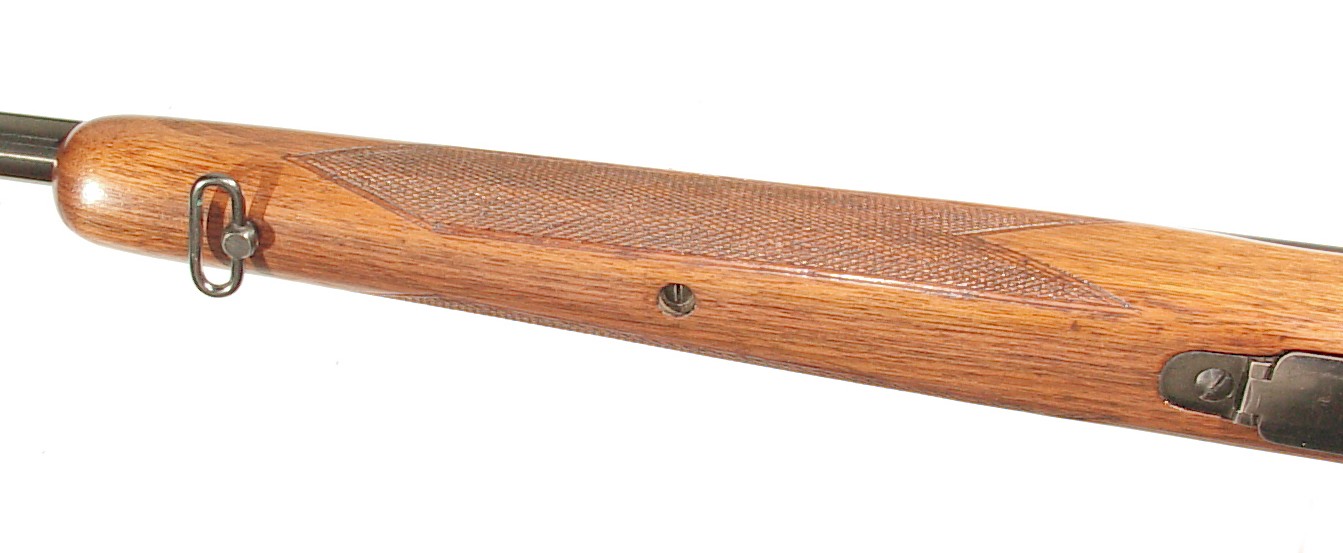
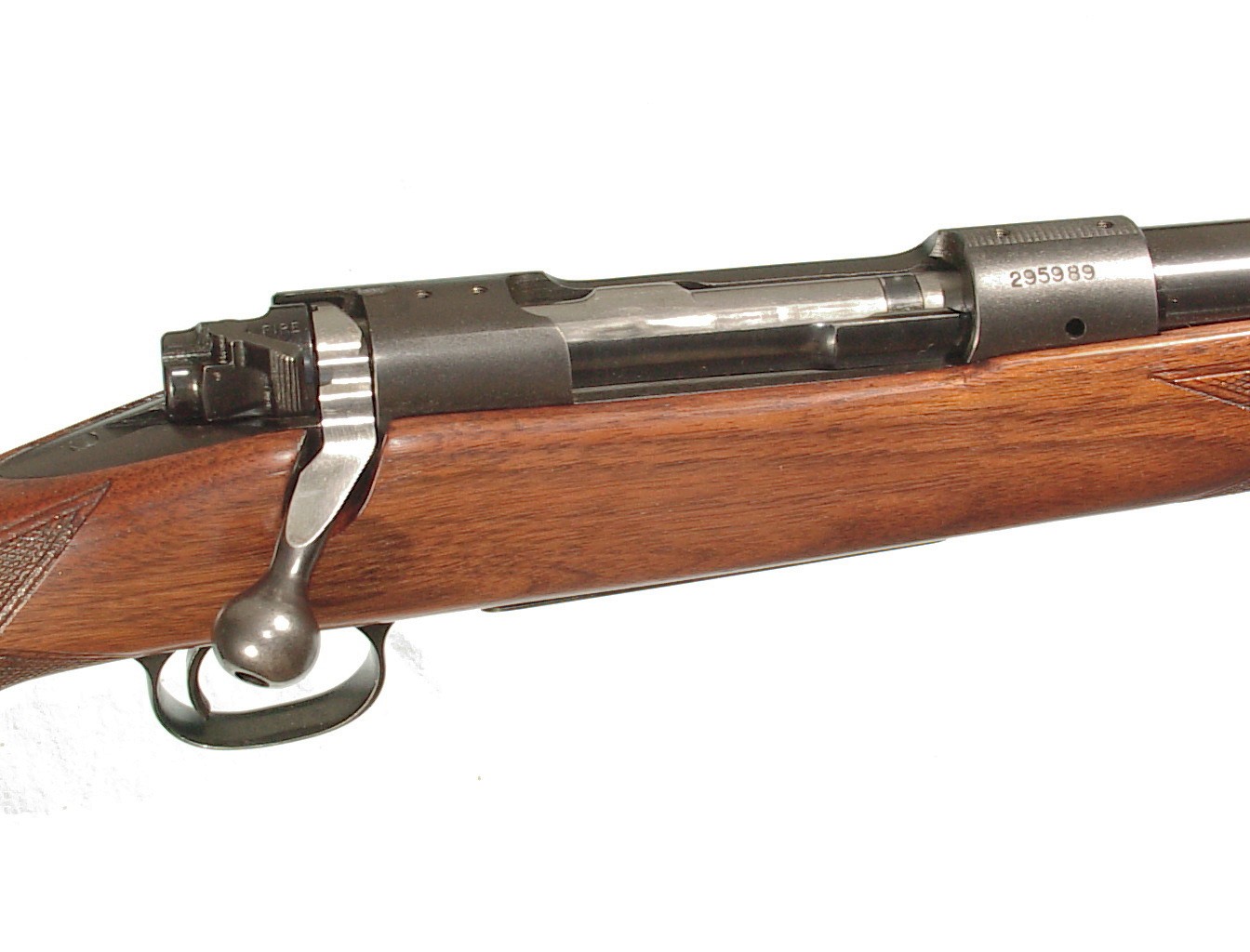
OK thanks to all it did turn out to be a Weatherby 300 Mag beautiful gun but noy what I was looking for. Butttttttttt after searching I found a mint 1954 in 300 H&H 🙂 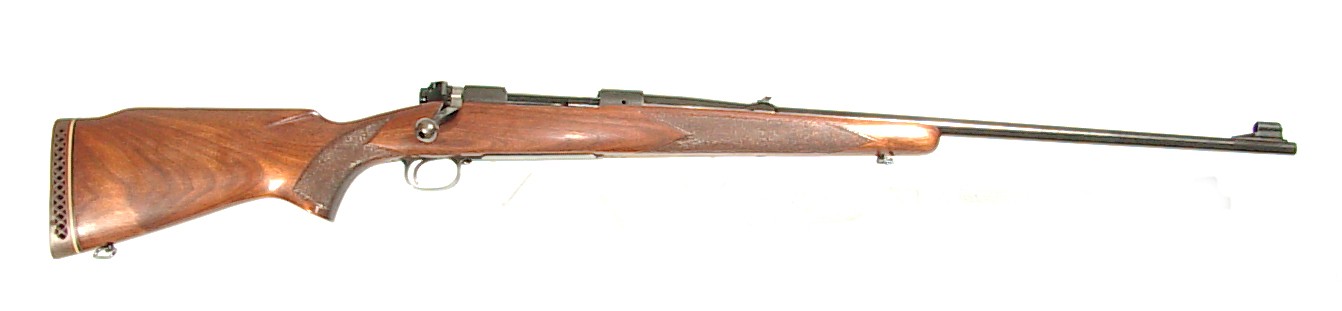
Patriot Member NRA
Life member VFW
Life Member NAGR
Life Member Great Lakes Gun Rights
Life Member 2AF'
Retired US Navy
December 9, 2002
Offline
Kevin,
I do apologize for hijacking you’re thread post, and at first glance it looks like you found a nice rifle. In all honesty, I’m glad that you passed on the first one that you posted. 
Tony
June 4, 2017
Offline
I have hunted for 30 some years with a model 70 300HH about in the same serial number range as yours. Great guns and great caliber. I load my own with 60grs of 4895 and 150gr Nosler ballistic tips, 3150fps. It shoots flat enough to 250 yards so I don’t have to worry about elevation.
I see yours has a recoil pad, I assume added. The gun does kick but I can’t bring myself to cut the stock. I bought a 30-06 cheap because the stock was cut and pad added for my grandson. It feels nice at the range but you don’t notice the difference when you shoot the buck. T/R
November 7, 2015
Offline
Very nice! I’ve noticed when we pass on a gun that isn’t quite right the gun we’re looking for will come along soon, if we’re patient and watch for it. Looking forward to a range report!
Mike
November 19, 2006
Offline
Anthony #5411 said
I have been following this thread since the beginning and didn’t really have anything positive to add, until it turned here at the end with oldcrankyyankee, adding his comments on the caliber that was used by the well known Sniper.
lets not forget that GySgt Carlos Hathcock won it in ’65 with a 300 win mag. Semper Fi. -oldcrankyyankee
First off Tom, Thank you for you’re service!
Let me add that my late Brother in Law, the CW05, who was a Navigator on the C-130 Transport planes, in the Corps, was able to help out and get the rifle or rifles that Carlos Hathcock used, into the Marine Corps Museum in Triangle, Virginia, near Quantico as we visited there last year, as a section was dedicated to the Air Wing my BIL was attached to! If you haven’t been to this Marine Corps Museum, it’s worth the visit.
My youngest Son, a Sniper in the Corps, used several rifles to qualify, but said not one M-70 was used some 15-20 years ago, when he was using the “R” word as a bolt rifle that Mike mentioned, along with a few others, but not one M-70 Rifle. He was fortunate to meet the other well known Sniper Chuck Mawhinney, in Hawaii at the Marine Corps Base, while attending Sniper school.
This conversation has seemed to come full circle here for me, as the Louis find at the last OGCA/WACA show, this past weekend of the M-70 wood shipping crate/box, that has the Triangle, Virginia markings, along with the “Evaluators Limited”, markings that the well known, U.S. Marine Brigadier General George O. VAN Orden, and address that he is known for starting and associated with in his retirement from the Corps.
Tony
Tony – kudos to your son for his achievement!
December 9, 2002
Offline
Thanks Steve,
You’re kind words are appreciated. My wife and I are very grateful, in so many ways to have him home, and enjoying the private sector in life, as so many of us can relate to. We constantly try to give back on such a small scale in comparison to others who might need the uplifting support along the way.
Tony
August 4, 2023
Offline
TXGunNut said
Very nice! I’ve noticed when we pass on a gun that isn’t quite right the gun we’re looking for will come along soon, if we’re patient and watch for it. Looking forward to a range report!
Mike
My experience seems to be the opposite of yours. If I buy something that is acceptable but not exactly what I’m after, a better example then will turn up fairly soon. If I pass on one that might cost a little more than I’d like, or not be exactly what I’m after, I end up with regrets.
I did find a 70 in 375 H&H I was looking for not too long ago so I shouldn’t be too negative. I found this thread interesting, because I guess it could have been converted to 375 Weatherby, but there are no markings to indicate that happened. It also doesn’t say H&H either but it’s old enough that it wouldn’t to my understanding. I figured I’d buy a box of 375 Weatherby if I could find one at the local Cabela’s and see if it chambers, then return it if it doesn’t. That would be my test. I haven’t done that yet. The rifle looks unfired, but other than the bolt face looking perfect, I don’t know how to tell. I also think if it was converted it would have been more likely done to be used, would be my guess.
November 7, 2015
Offline
triggerhappy said
TXGunNut said
Very nice! I’ve noticed when we pass on a gun that isn’t quite right the gun we’re looking for will come along soon, if we’re patient and watch for it. Looking forward to a range report!
Mike
My experience seems to be the opposite of yours. If I buy something that is acceptable but not exactly what I’m after, a better example then will turn up fairly soon. If I pass on one that might cost a little more than I’d like, or not be exactly what I’m after, I end up with regrets.
I did find a 70 in 375 H&H I was looking for not too long ago so I shouldn’t be too negative. I found this thread interesting, because I guess it could have been converted to 375 Weatherby, but there are no markings to indicate that happened. It also doesn’t say H&H either but it’s old enough that it wouldn’t to my understanding. I figured I’d buy a box of 375 Weatherby if I could find one at the local Cabela’s and see if it chambers, then return it if it doesn’t. That would be my test. I haven’t done that yet. The rifle looks unfired, but other than the bolt face looking perfect, I don’t know how to tell. I also think if it was converted it would have been more likely done to be used, would be my guess.
Buying a box of 375 WBY ammo with plans of returning it may be an expensive mistake. I’m pretty sure Cabelas will not let you return ammunition. As noted above a chamber cast is best method of determining the chambering of a rifle and checking with a set of gauges is often a good idea as well.
Mike
August 4, 2023
Offline
You probably are right about their return policy, I don’t know, but if I have to pay a gunsmith to do a chamber cast, I doubt they do those free either. Selling the Weatherby ammo at a slight discount shouldn’t be difficult, and who knows maybe I need it. At the end of the day I think I’d save money, and I don’t have somebody handling my rifle, and telling me “that scratch was already there”. I had that happen with my truck.


1 Guest(s)
