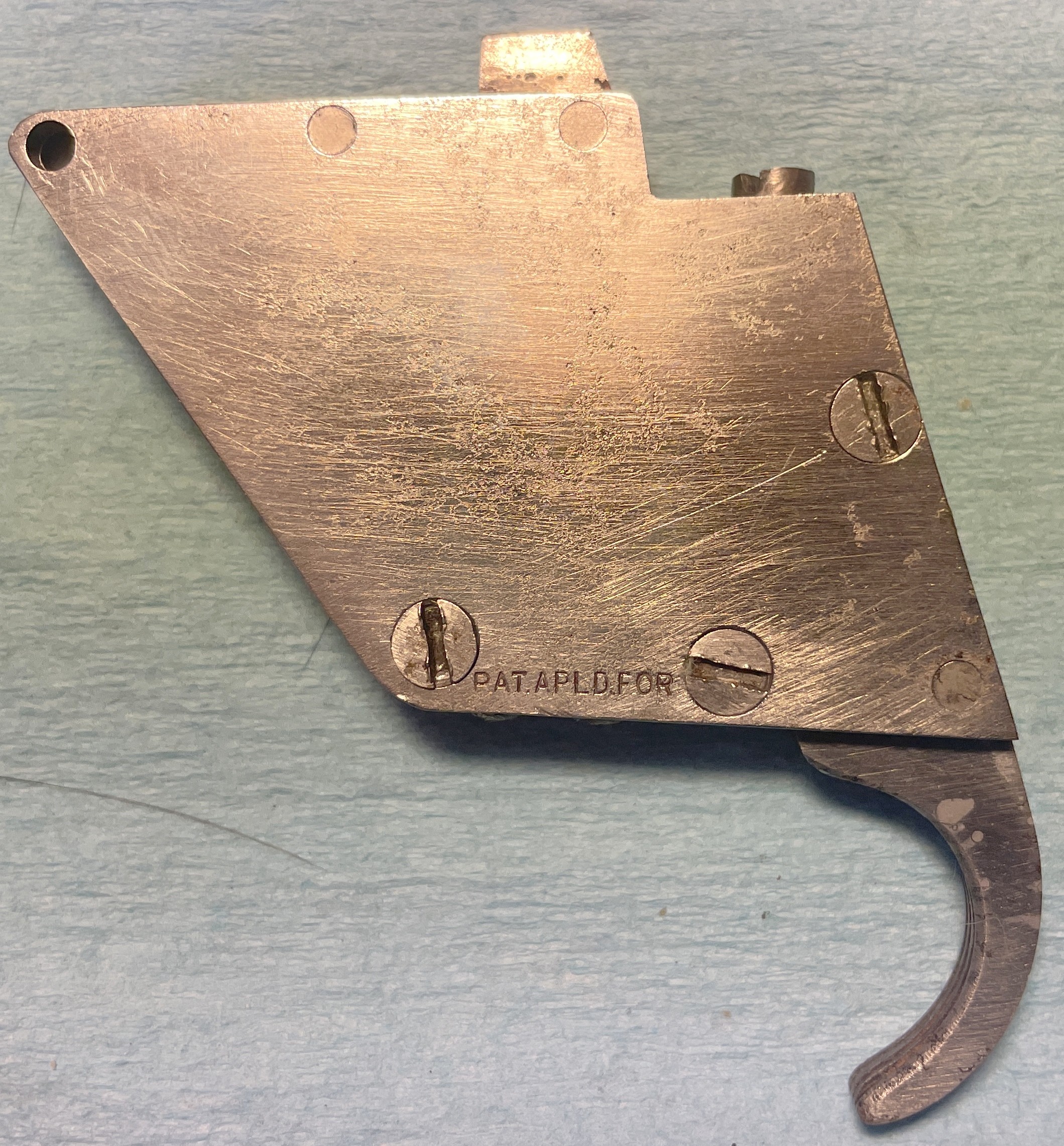
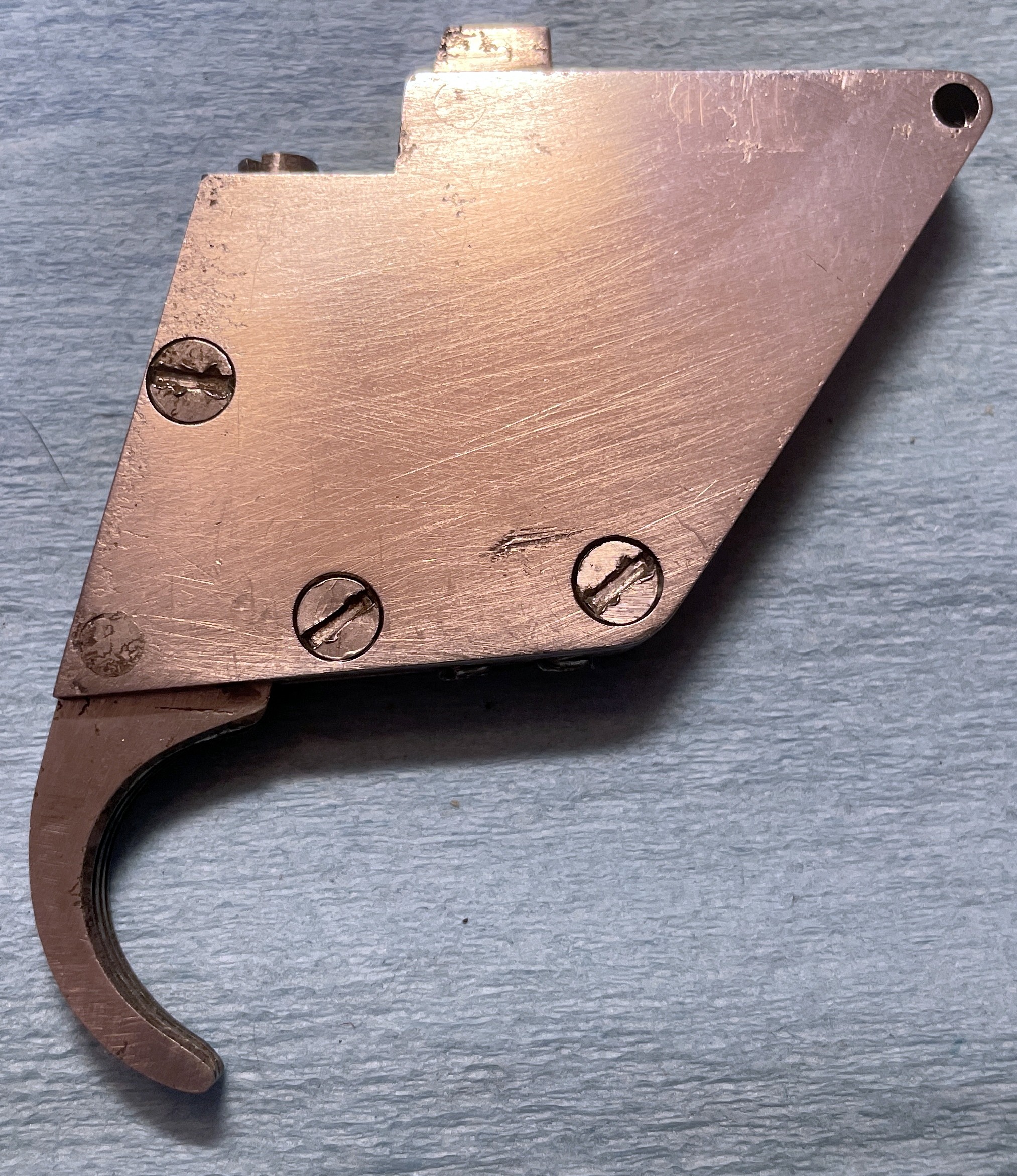
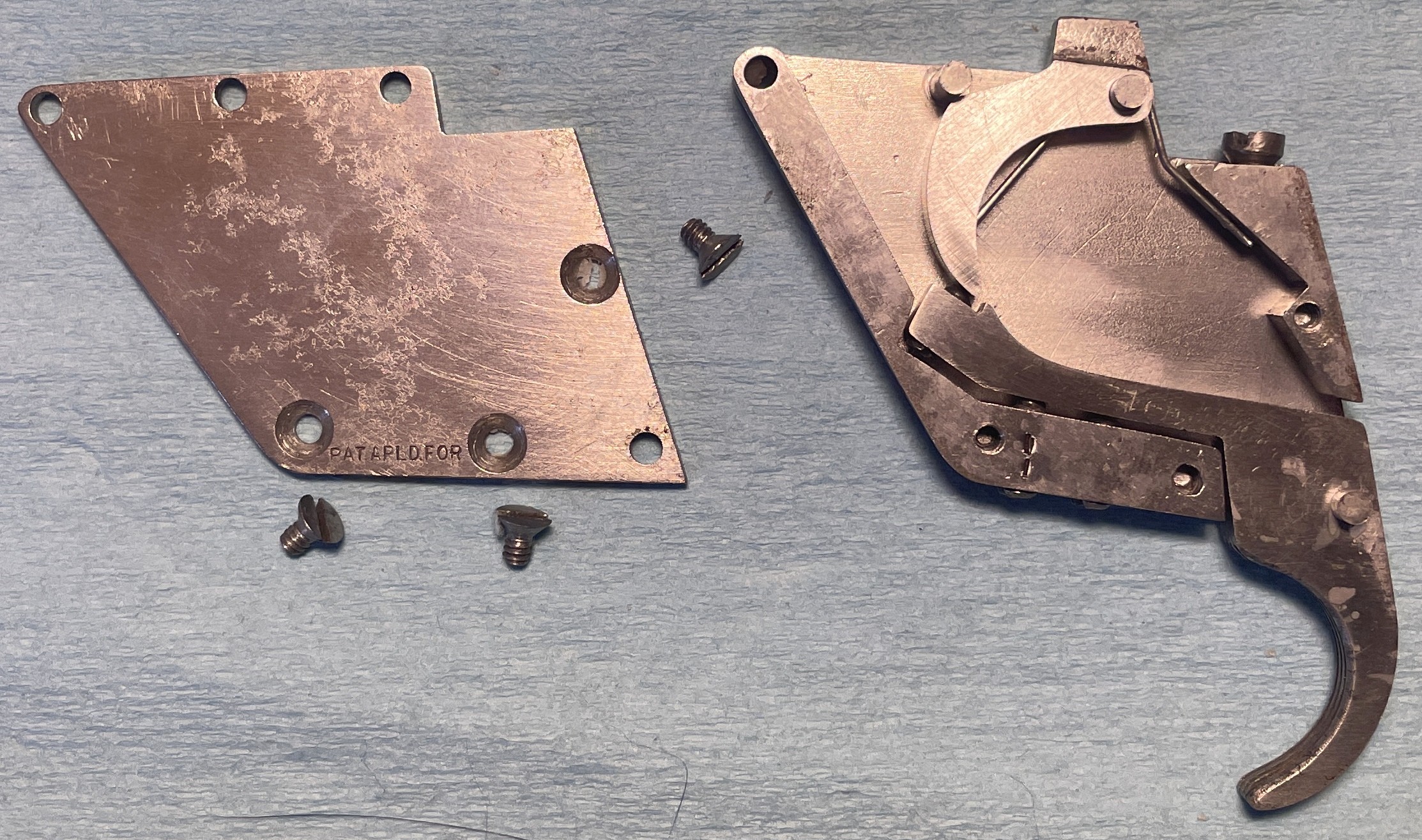
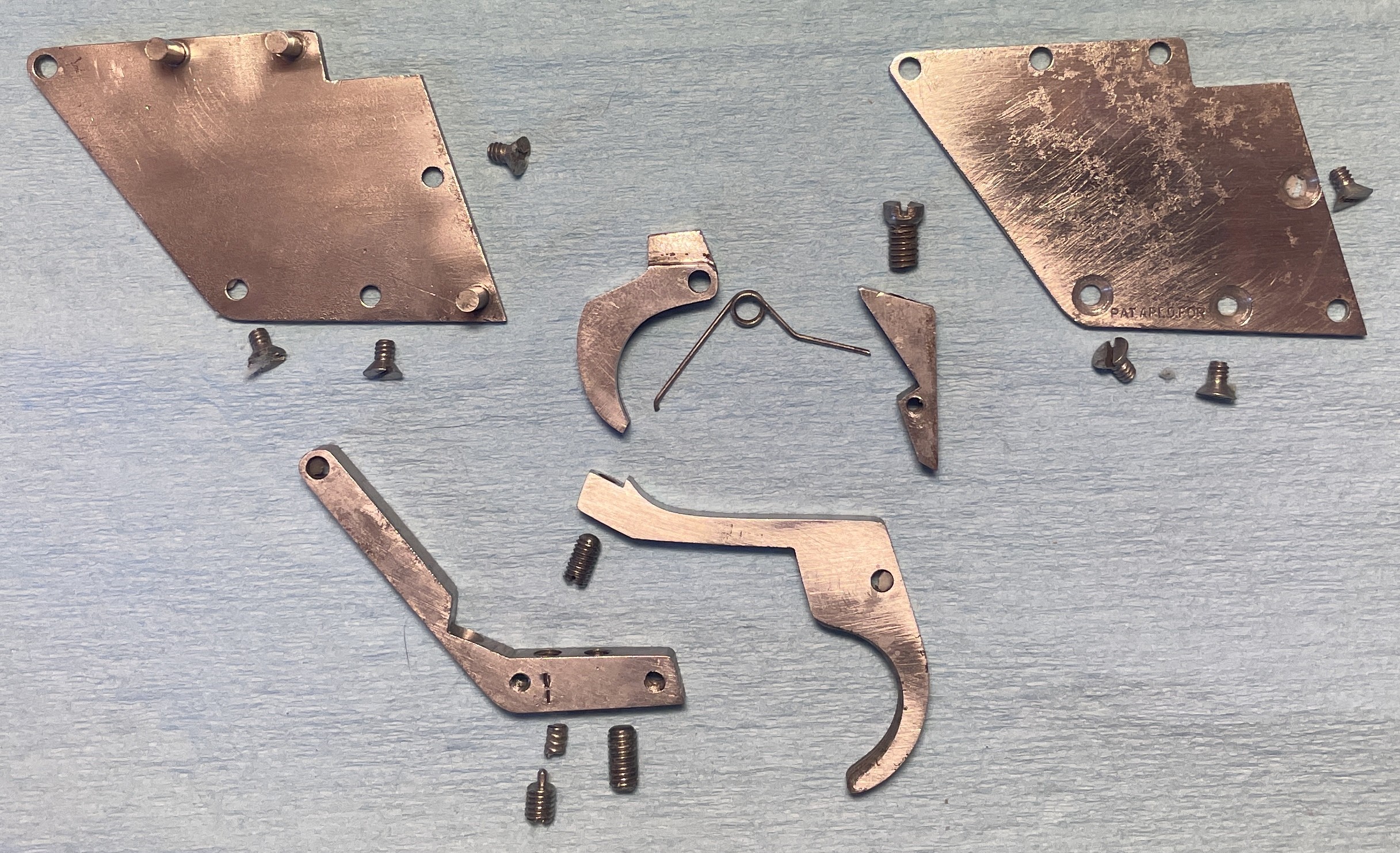
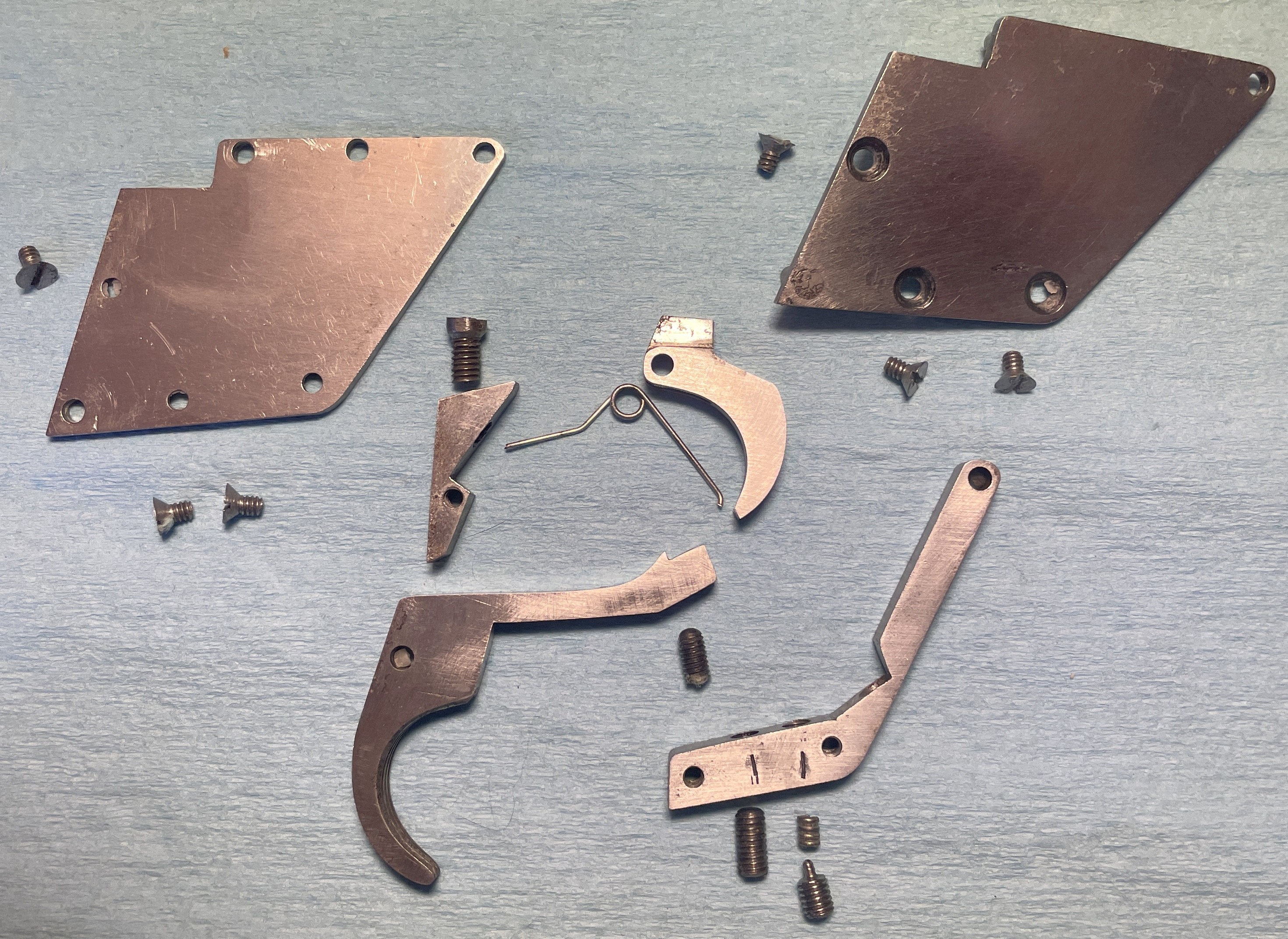
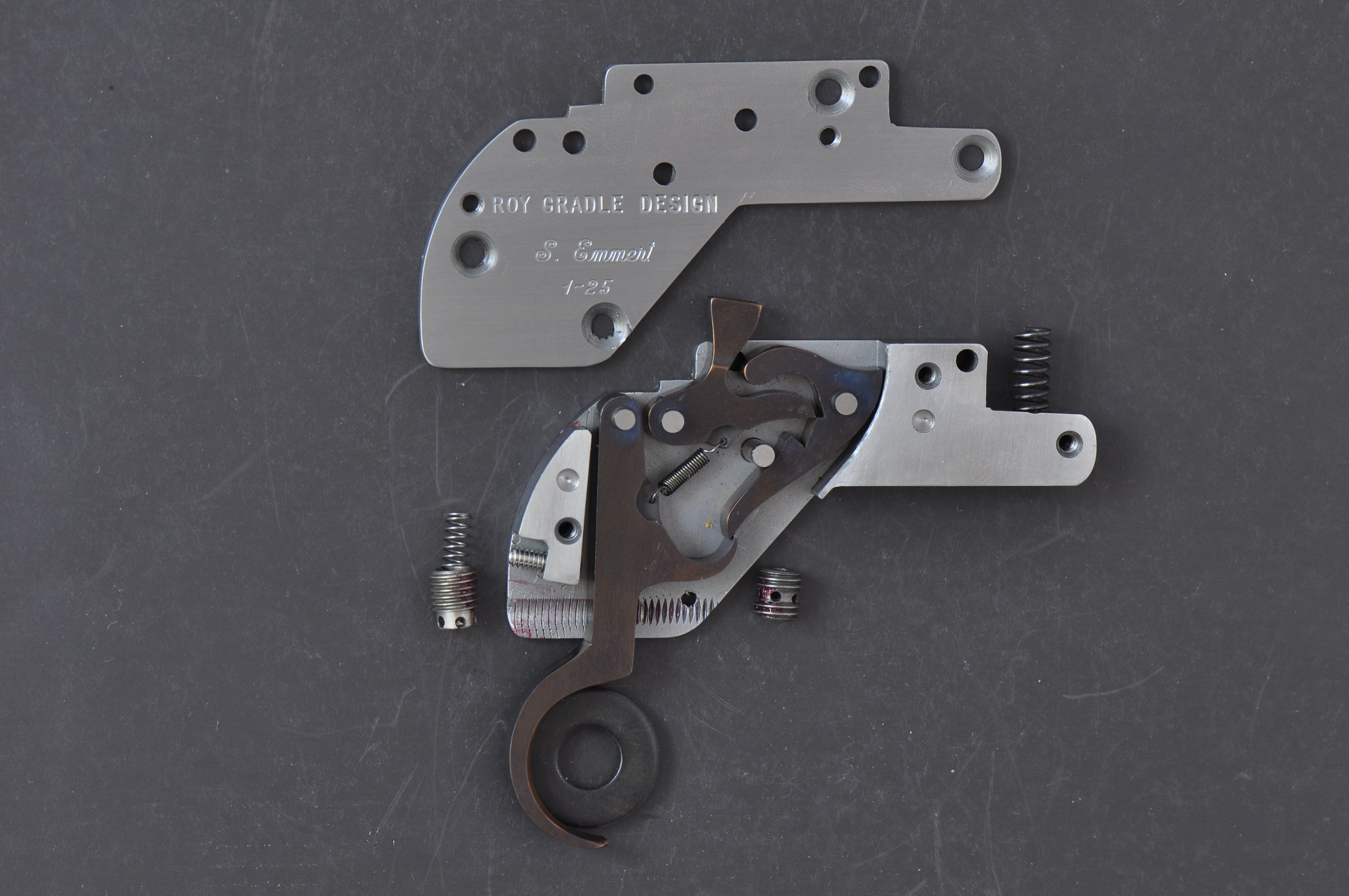
I picked up an interesting trigger, which looks very similar to the Gradle Winchester Model 52B trigger posted by Seewin (Steve) in the RFC “Win 52 Trigger Info” supersticky thread.
https://www.rimfirecentral.com/posts/2802891/
The trigger posted by Seewin is marked ROY GRADLE SANTA BARBARA PAT. 2346484, whereas mine has no markings except for “PAT.APLD.FOR”, so is likely an earlier version. Among other differences, the height of the sear “nose” appears a bit lower on mine that on the one in Seewin’s photo.
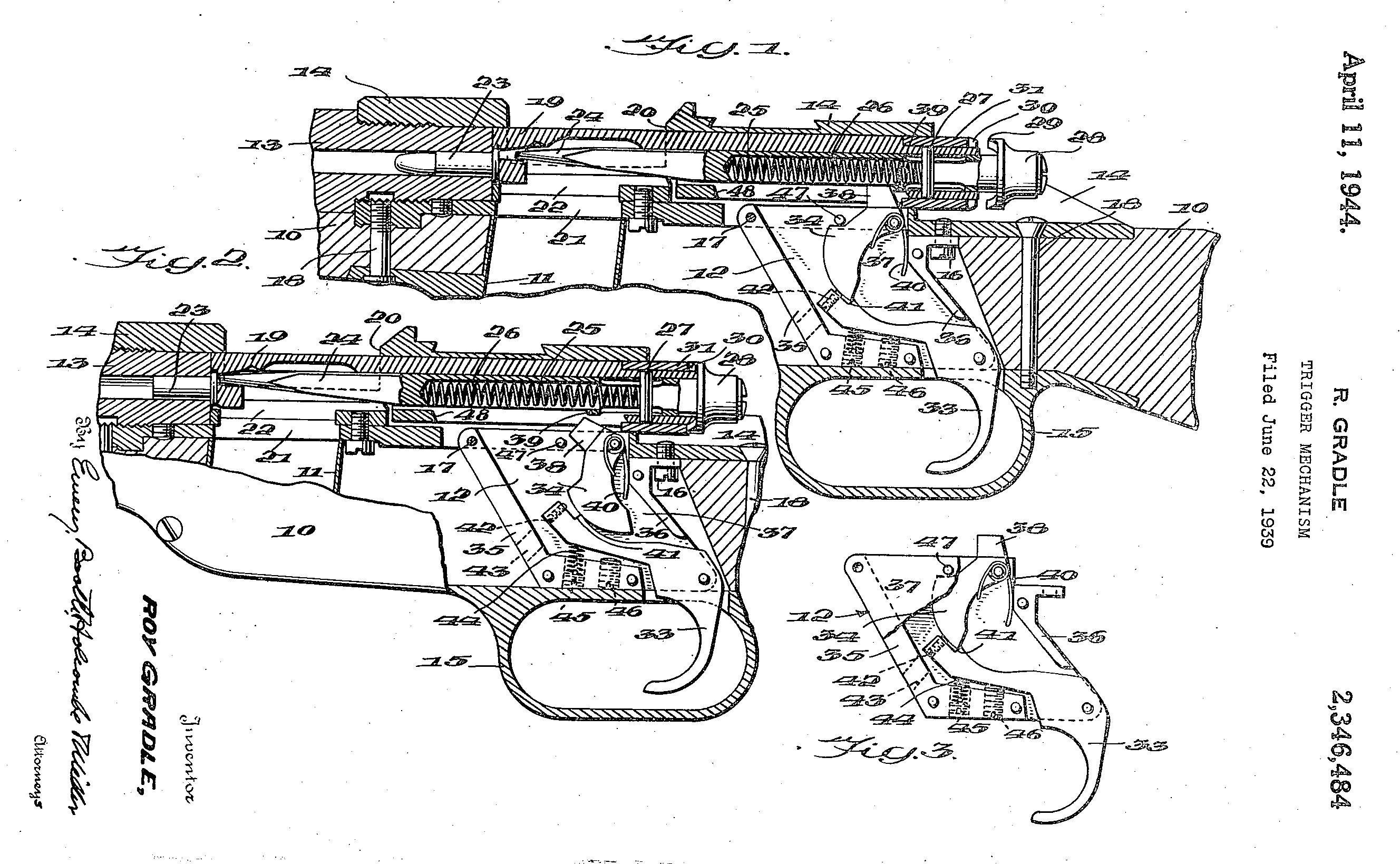
Doing a USPTO search, the patent is dated 1944-04-11 and was filed June 22, 1939.
The patent claims that the trigger pull weight can be safely lowered to as low as 1lb, and the trigger movement can be restricted to 0.002″.
The patent never specifies which rifles the triggers were for, but apparently he made triggers for at least the Win 52B and the Rem 37:
1. There is a Sept. 1944 AR advertisement of a Rem 37 for sale with a Gradle trigger.
2. There is a July 1946 AR Dope Bag article discussing how Gradle is “making IDEAL triggers for the Model-52 Winchester and Model-37 Remington rifles”, where IDEAL is apparently his trade name for the triggers. For the next few months there is an AR advertisement where Gradle is offering “Custom Riflesmithing …..IDEAL triggers – the perfect trigger mechanism for the Winchester 52 & Remington 37.”
Other than putting it on a rifle, is there a way to confirm that it is indeed for a Win 52B?
~~~~~~~~~~~~~~~~~~~~
Observations:
Adjustment options:
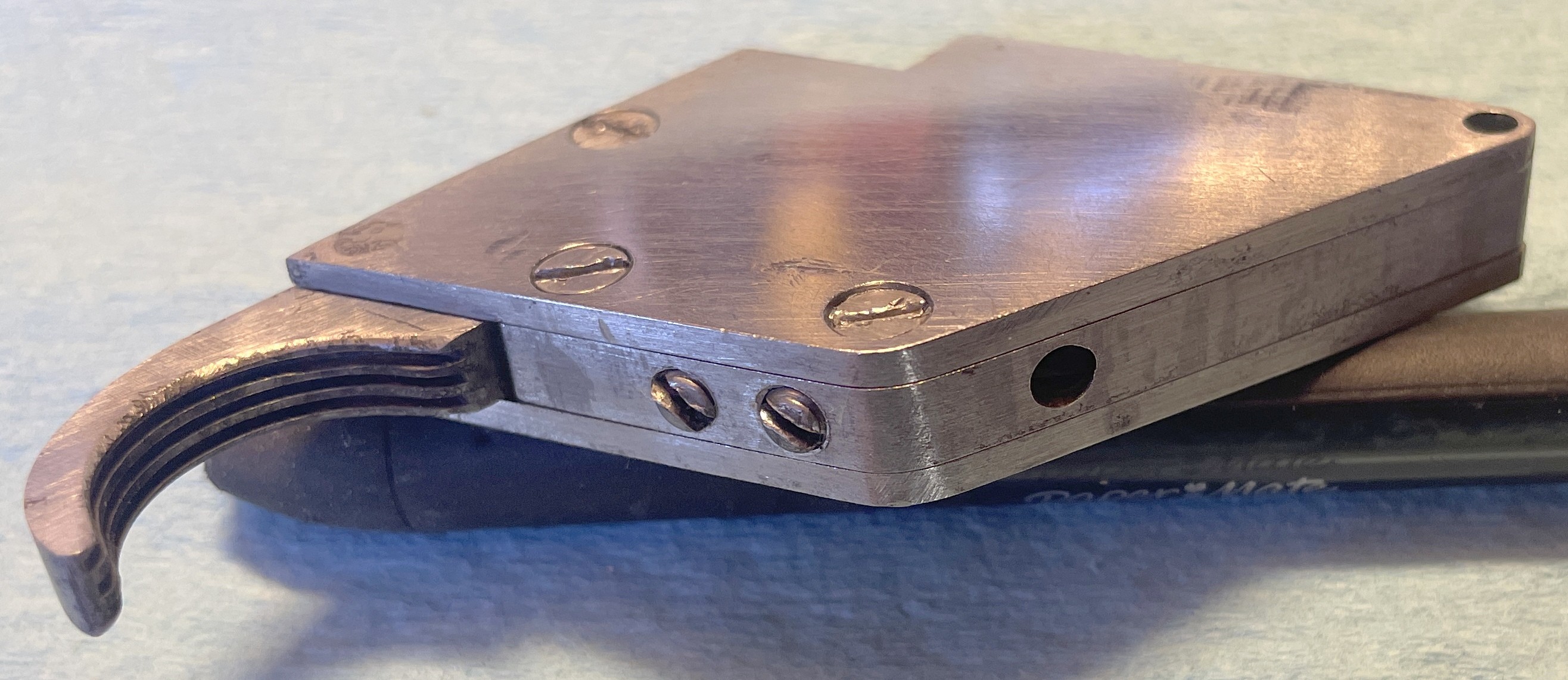
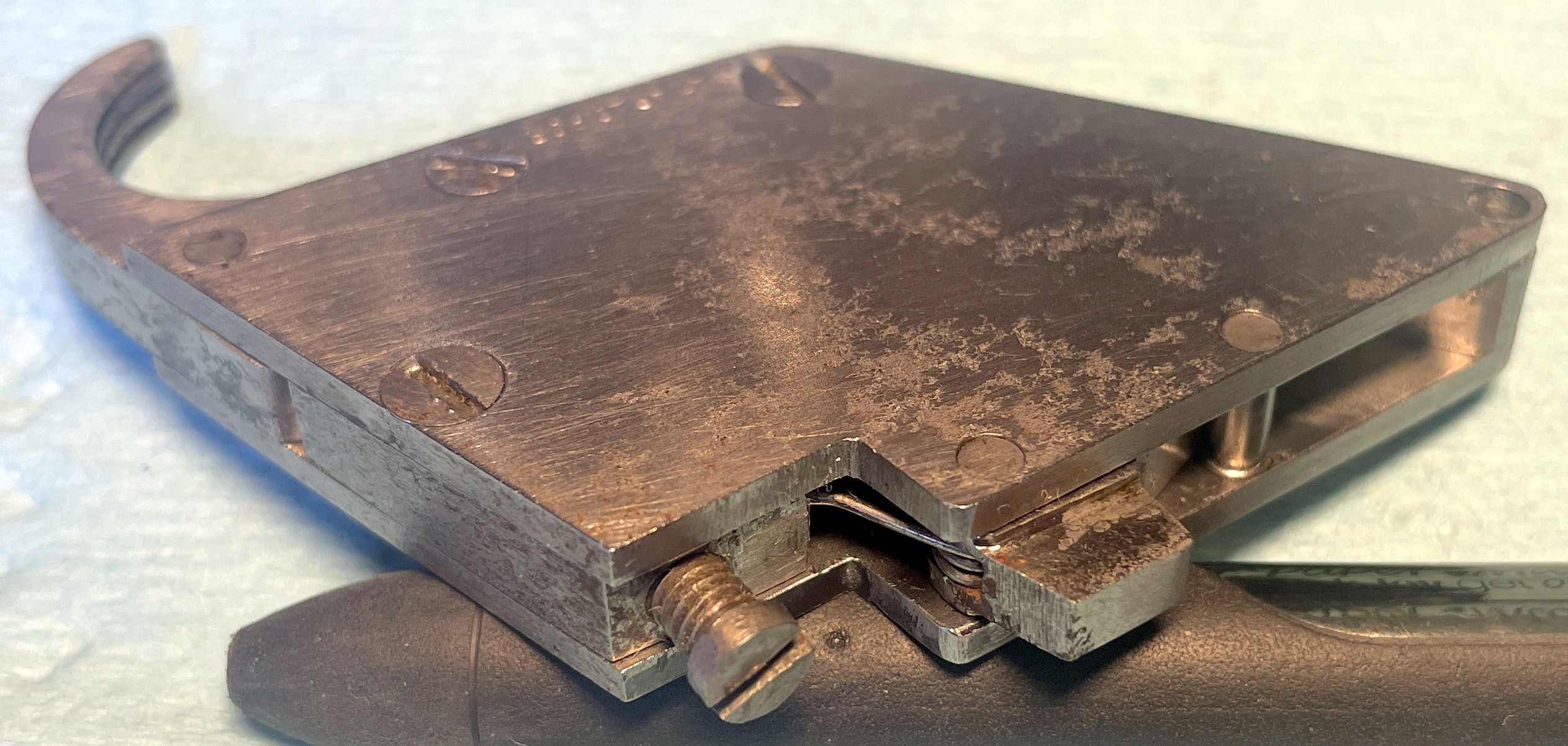
1. The hole on the lower front face is to access the small slotted screw which adjusts the amount of engagement between the bottom of the sear piece and the trigger notch. Turned in => less engagement; turned out => more engagement.
2. The trigger pull weight adjustment screw is at the bottom of the trigger, toward the front. Turned in => heavier trigger; turned out => lighter trigger. The initial unoptimized trigger pull weight was ~3lb 10oz, both before and after cleaning. I noticed that the tiny spring positioned on top of the trigger pull adjustment screw was very stiff (likely due to the 3lb pull weight limit at the time), so swapped it with a slightly longer, but much more elastic spring, and the unoptimized pull weight dropped to ~1lb 6oz. It still needs to be tested in a rifle for slam fire, but seems pretty secure.
3. The overtravel adjustment screw is at the bottom of the trigger, toward the back. Turned in => less overtravel; turned out => more overtravel. This trigger, as set, seems (IMO) very crisp, with very little overtravel.
All 3 of the small adjustment screws were initially quite difficult to turn, and benefited greatly from a good cleaning!
With the sear released, pushing the trigger forward will bring the sear nose down into the trigger, allowing bolt removal as is standard for a 52B. However, this does seem to require a fair amount of force!


 Log In


 Offline