

 Log In


December 30, 2023
 Offline

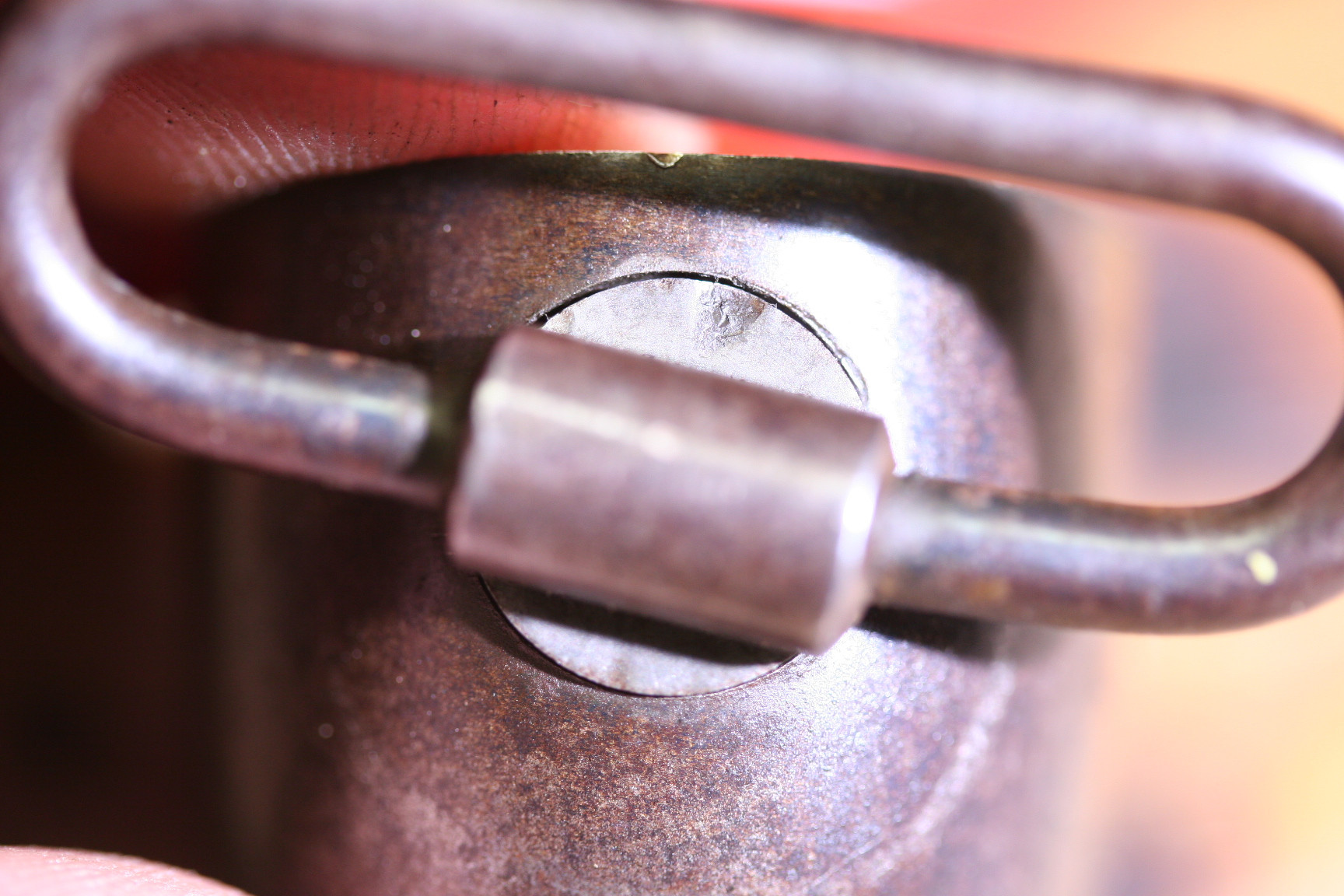
I wondered if anyone could please show a photograph of how the sling eye is attached inside the fore end cap of a 1894 Winchester rifle? I want to install sling eyes on my rifle and want to make sure I do it correctly, Thanks Bob.

January 20, 2023
Offline
Bob, I don’t have a direct answer but several books and vintage parts catalogs I’ve seen illustrate the swivel stud with a barrel-shaped attachment nut threaded onto the shank. Until somebody with direct knowledge chimes in, if the nose cap is pre-drilled, insert the shank, thread and tighten the nut down and making sure the shank doesn’t need shortening so it doesn’t bear on the barrel. A drop of blue Loctite wouldn’t be amiss.
Here’s a link to another post that llustrates what may be a factory hole. https://winchestercollector.org/wp-content/sp-resources/forum-image-uploads/robertdeantxgmail-com/2022/06/6552A18D-53EC-420E-9CED-4235852F58AE.jpeg
Also, I pulled this off the Web ti show what I think you are talking about.
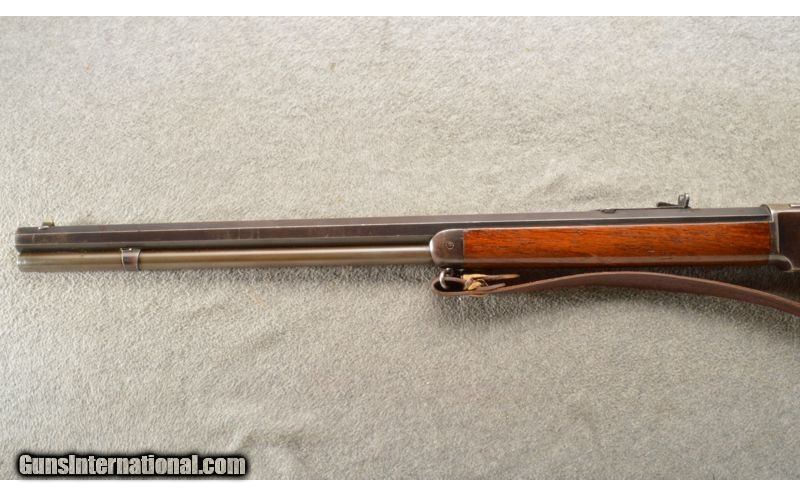
- Bill
WACA # 65205; life member, NRA; member, TGCA; member, TSRA; amateur preservationist
"I have seen wicked men and fools, a great many of both, and I believe they both get paid in the end, but the fools first." -- David Balfour, narrator and protagonist of the novel, Kidnapped, by Robert Louis Stevenson.

May 2, 2009
Offline
Bob,
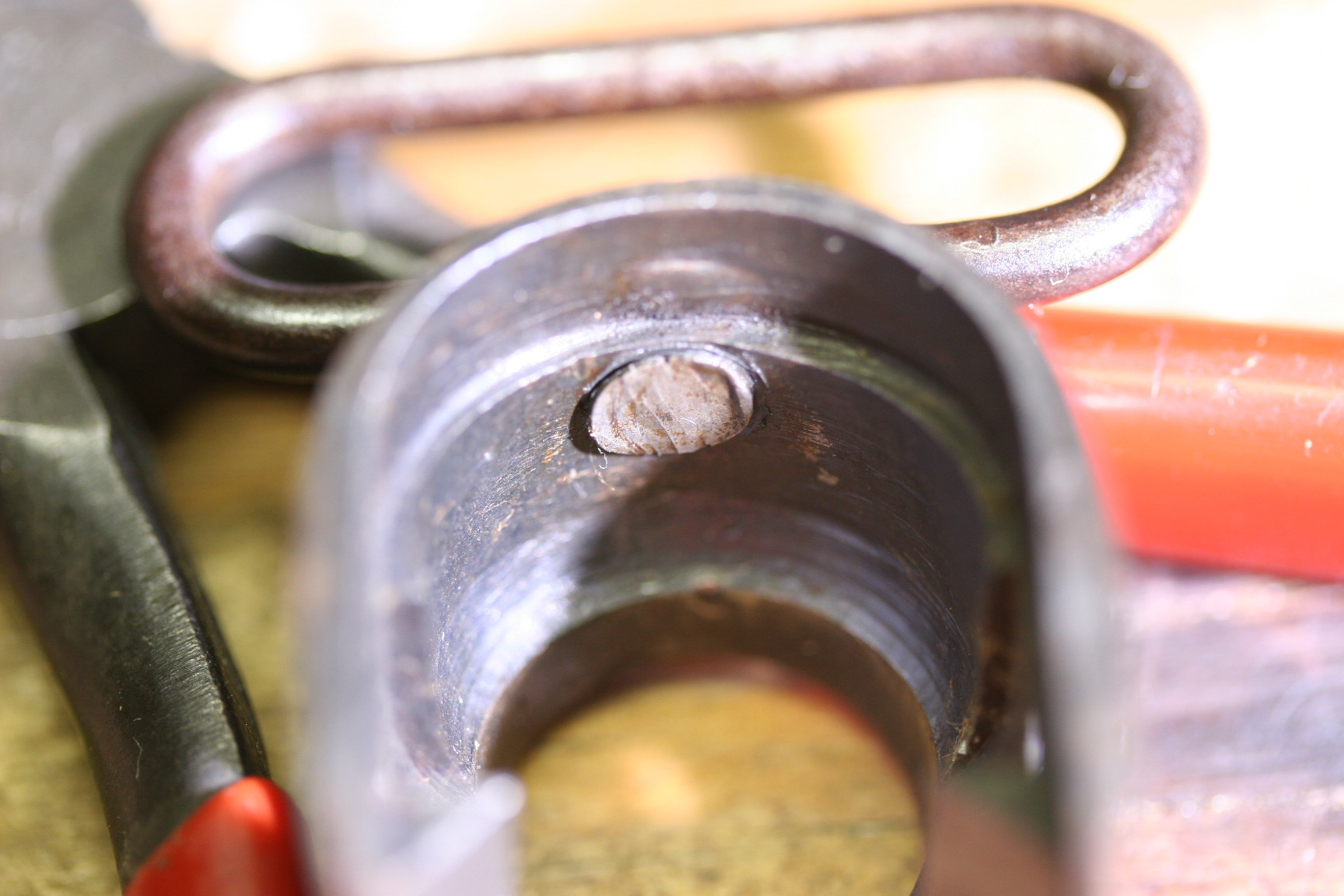
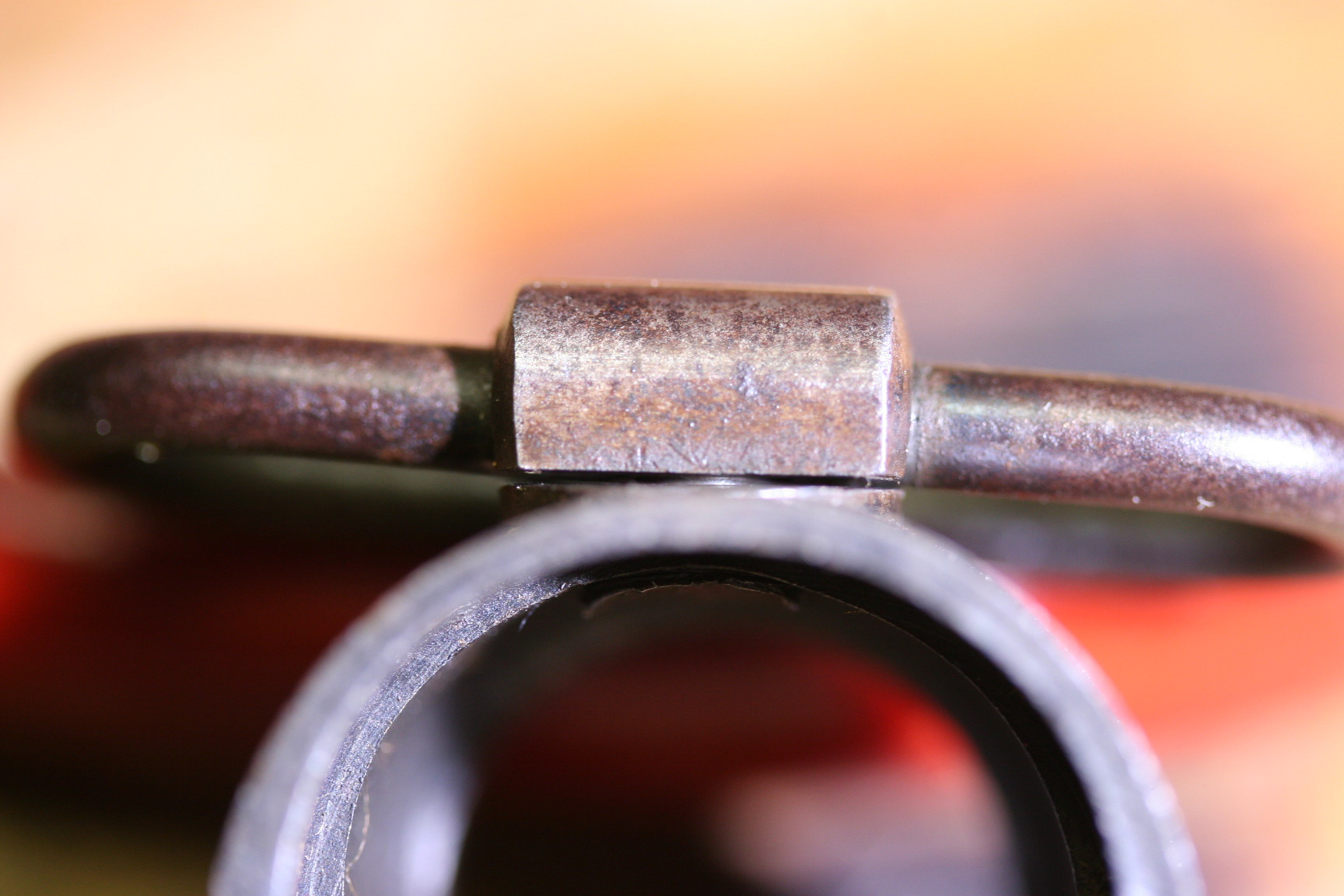
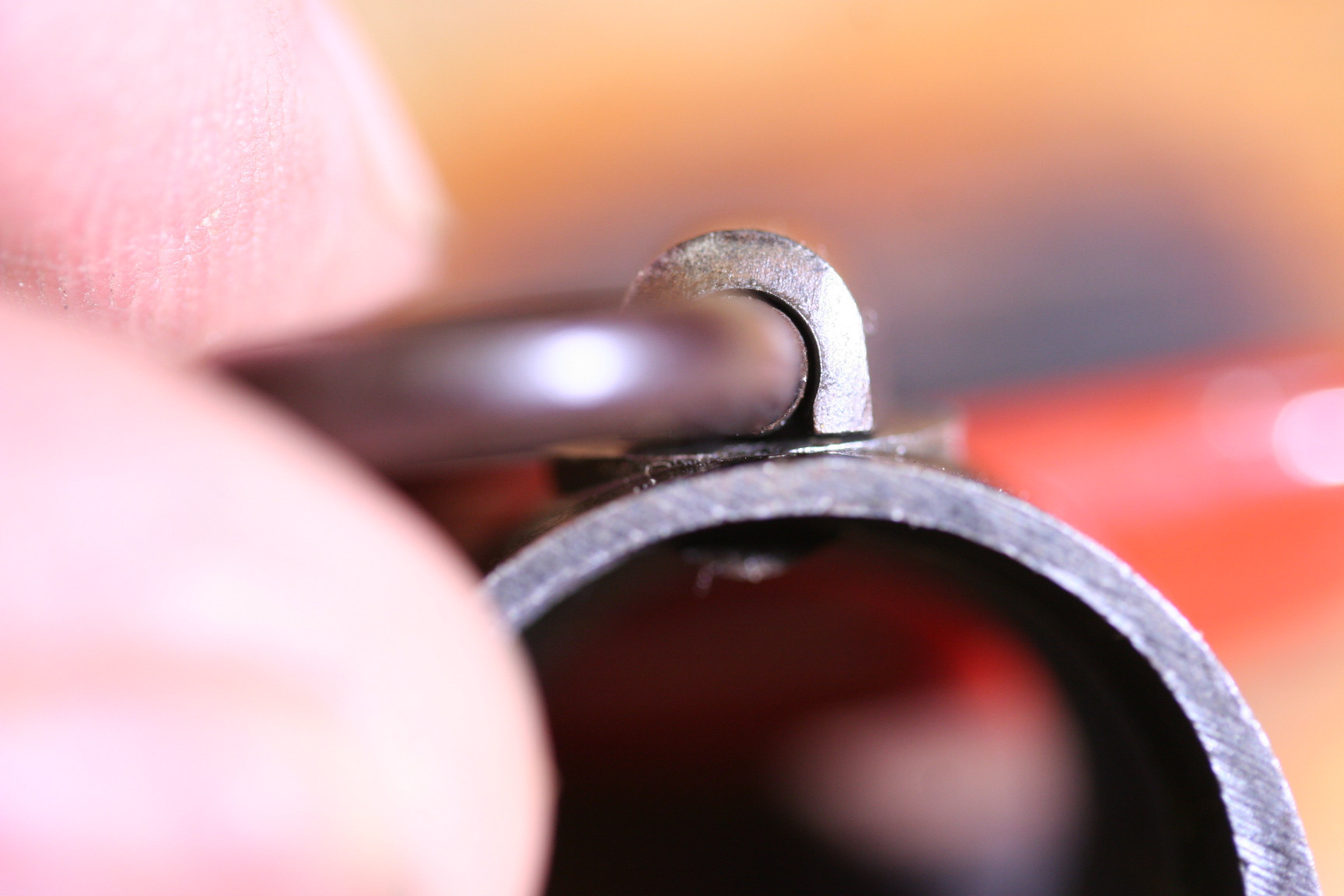
Here are some pictures from one of mine.
Bob
WACA Life Member---
NRA Life Member----
Cody Firearms member since 1991
Researching the Winchester 1873's
Email: [email protected]
March 15, 2020
Offline
Bob, if you want period correct WINCHESTER sling eye you will probably have to haunt gun shows. That was where I found mine and not cheap. My 1894 came with an original sling eye in butt-stock and a hole in the fore-cap. I found the eye and peened it in place. Somewhere (i don’tknow where) I read they were peened in fore-cap.
Good luck, Don
May 2, 2009
Offline
If you look at the first picture you can see they are peened in. I had another guy wanting to make one so I made a drawing for him.
Bob
WACA Life Member---
NRA Life Member----
Cody Firearms member since 1991
Researching the Winchester 1873's
Email: [email protected]
December 30, 2023
Offline
Thanks to all for the replies, I have been trying to set this 1913 vintage 1894 up as my period correct deer rifle. I have been able to purchase a new old stock Lyman 21 DA sight ( less front screw washer ) , a Lyman. 12 sight slot blank, and a Lyman number 4 ivory front sight. Once I finish locating the remaining sling parts she will be ready to hunt! Thanks again Bob.

April 15, 2005
 Online
1873man said
If you look at the first picture you can see they are peened in. I had another guy wanting to make one so I made a drawing for him.
Bob
I think it might be more correct to say that they are swaged into place.
Bert
WACA Historian & Board of Director Member #6571L
January 20, 2023
Offline

Overview of Swaging and Peening
Swaging and peening are both metalworking processes used to reshape metal, but they differ in technique and application.
Swaging
Definition
- Swaging is a forging process that alters the dimensions of a metal item by forcing it into a die.
Characteristics
- Typically a cold working process, but can also be hot worked.
- Involves moving metal throughout its thickness without removing material.
- Commonly used for creating precise shapes, such as tubes and pins.
Applications
- Used in manufacturing components like pipes, cables, and automotive parts.
- Ideal for high-volume production due to its efficiency and minimal material waste.
Peening
Definition
- Peening is a process that involves stretching the surface of metal, usually with a hammer or a specialized tool.
Characteristics
- Primarily focuses on surface treatment rather than altering the overall shape.
- Involves impacting the metal to improve its strength and fatigue resistance.
Applications
- Commonly used in processes like shot peening to enhance the durability of components.
- Often applied in aerospace and automotive industries to strengthen parts.
Key Differences
| Feature | Swaging | Peening |
|---|---|---|
| Process Type | Forging | Surface Treatment |
| Material Movement | Moves metal throughout thickness | Stretches surface metal |
| Primary Use | Shaping and forming | Strengthening and finishing |
| Common Tools | Dies and swaging machines | Hammers and peening tools |
- Bill
WACA # 65205; life member, NRA; member, TGCA; member, TSRA; amateur preservationist
"I have seen wicked men and fools, a great many of both, and I believe they both get paid in the end, but the fools first." -- David Balfour, narrator and protagonist of the novel, Kidnapped, by Robert Louis Stevenson.
May 2, 2009
Offline
The more I think about it, I would say the its riveted over since your swelling the end so it can’t pull out but not enough to make it too tight that it does not turn.
Bob
WACA Life Member---
NRA Life Member----
Cody Firearms member since 1991
Researching the Winchester 1873's
Email: [email protected]
January 20, 2023
Offline
Yeah, “riveting” nails it but it doesn’t look like the sturdiest method. I’ve seen a lot of nose caps with holes. I would think steel soft enough to deform would also wear from abrasive contact with the nose cap.
- Bill
WACA # 65205; life member, NRA; member, TGCA; member, TSRA; amateur preservationist
"I have seen wicked men and fools, a great many of both, and I believe they both get paid in the end, but the fools first." -- David Balfour, narrator and protagonist of the novel, Kidnapped, by Robert Louis Stevenson.
April 15, 2005
Online
Zebulon said
Yeah, “riveting” nails it but it doesn’t look like the sturdiest method. I’ve seen a lot of nose caps with holes. I would think steel soft enough to deform would also wear from abrasive contact with the nose cap.
Another method that could have been used is “staking” the sling-eye stud in place. I am not of the opinion that Winchester intended the forward sling eye to rotate. Just like the rear sling eye that was screwed into the butt stock and was “fixed” in its location and orientation, I believe the front sling eye was intended to be “fixed” in its original north-south orientation.
Bert
WACA Historian & Board of Director Member #6571L
December 30, 2023
Offline
I think I am going to attach the eye into the nose cap in line with the barrel and peen/swage it in place as solid as possible, I believe the hook type eye will have plenty enough movement. Thanks to everyone for your advice and opinions, this forum has been very helpful and informative, I am glad to be able to be a member! Thanks again to everyone.
January 20, 2023
Offline
Bert H. said
Zebulon said
Yeah, “riveting” nails it but it doesn’t look like the sturdiest method. I’ve seen a lot of nose caps with holes. I would think steel soft enough to deform would also wear from abrasive contact with the nose cap.
Another method that could have been used is “staking” the sling-eye stud in place. I am not of the opinion that Winchester intended the forward sling eye to rotate. Just like the rear sling eye that was screwed into the butt stock and was “fixed” in its location and orientation, I believe the front sling eye was intended to be “fixed” in its original north-south orientation.
Bert
If the rear swivel is fixed, it makes more sense the front wasn’t intended to move.
What I thought staking to be: usinga hammer and a tool to spread a piece into a cavity – e.g. staking a loose dovetail blank into a dovetail by placing the staking tool in the middle of the blank and striking the tool with a hard hammer blow. Or staking the front sight to the slide of a 1911.
- Bill
WACA # 65205; life member, NRA; member, TGCA; member, TSRA; amateur preservationist
"I have seen wicked men and fools, a great many of both, and I believe they both get paid in the end, but the fools first." -- David Balfour, narrator and protagonist of the novel, Kidnapped, by Robert Louis Stevenson.

March 20, 2010
Offline
Depends on the sling assembly your talking about possibly. The sling eye for an 1892 or 1894 is not intended to move or rotate and is peened in place, it doesnt have to move, it is attached by hooks that articulate. On the 1873 or 1876 with the sling ring to accommodate a sling strap do appear to swivel at the front sling ring/forearm cap (as in the example Bob posted), at least the ones that Ive messed with. with a fixed sling that makes sense, at least to me. In Bob’s example, if you were to stake, wouldnt that possibly likely crush the swivel assembly, on the sling eye, would it crush or distort the eye opening?
I think Buckingham in the day used to make them up for the 1892 and 1894 but the sling eye was threaded and not peened, at least it was on one I received many years ago.
CH
1892takedown @sbcglobal.net ......NRA Endowment Life Member.....WACA Member
"God is great.....beer is good.....and people are crazy"... Billy Currington
December 9, 2002
Offline
1892takedown said
Depends on the sling assembly your talking about possibly. The sling eye for an 1892 or 1894 is not intended to move or rotate and is peened in place, it doesnt have to move, it is attached by hooks that articulate. On the 1873 or 1876 with the sling ring to accommodate a sling strap do appear to swivel at the front sling ring/forearm cap (as in the example Bob posted), at least the ones that Ive messed with. with a fixed sling that makes sense, at least to me. In Bob’s example, if you were to stake, wouldnt that possibly likely crush the swivel assembly, on the sling eye, would it crush or distort the eye opening?
I think Buckingham in the day used to make them up for the 1892 and 1894 but the sling eye was threaded and not peened, at least it was on one I received many years ago.
CH
Chris,
You’re absolutely correct, as Albert Buckingham, would thread them into the cap, and on the C.C. hardened forearm caps, and then drill and tap, and sometimes install a flat type of nut on the backside if it allowed for it, and re harden the cap. Depending on the finish on the for end cap, he would C.C. harden it if so desired, so he said.
I never had any done from him, but I talked to him a lot at the OGCA shows years ago, about it. With his knowledge and the work that he would do, it always made me hesitant to buy anything from him, especially when he pulled a trapper out from under his table, offering it up for sale!
Bob,
You’re method will work, as you just have to take care and secure the front swivel loop, so as not to damage the sling eye or it, in any way. A lot of great replies on this thread post. IMO!
Good luck!
Anthony
January 20, 2023
Offline
“There are twelve and twenty ways, to indict tribal lays, and each and every one of them is right!”
— Kipling
- Bill
WACA # 65205; life member, NRA; member, TGCA; member, TSRA; amateur preservationist
"I have seen wicked men and fools, a great many of both, and I believe they both get paid in the end, but the fools first." -- David Balfour, narrator and protagonist of the novel, Kidnapped, by Robert Louis Stevenson.
December 9, 2002
Offline
Good point, once again, Zeb!
Anthony
December 21, 2006
Offline
I have 9 1894’s with sling buttons , 3 of them are solid and 6 of them turn.
W.A.C.A. life member, Marlin Collectors Assn. charter and life member, C,S.S.A. member and general gun nut.
April 15, 2005
Online
Henry Mero said
I have 9 1894’s with sling buttons , 3 of them are solid and 6 of them turn.
Do all (9) of them letter with sling eyes? Have you pulled the nose caps to see how the sling eyes are attached?
WACA Historian & Board of Director Member #6571L
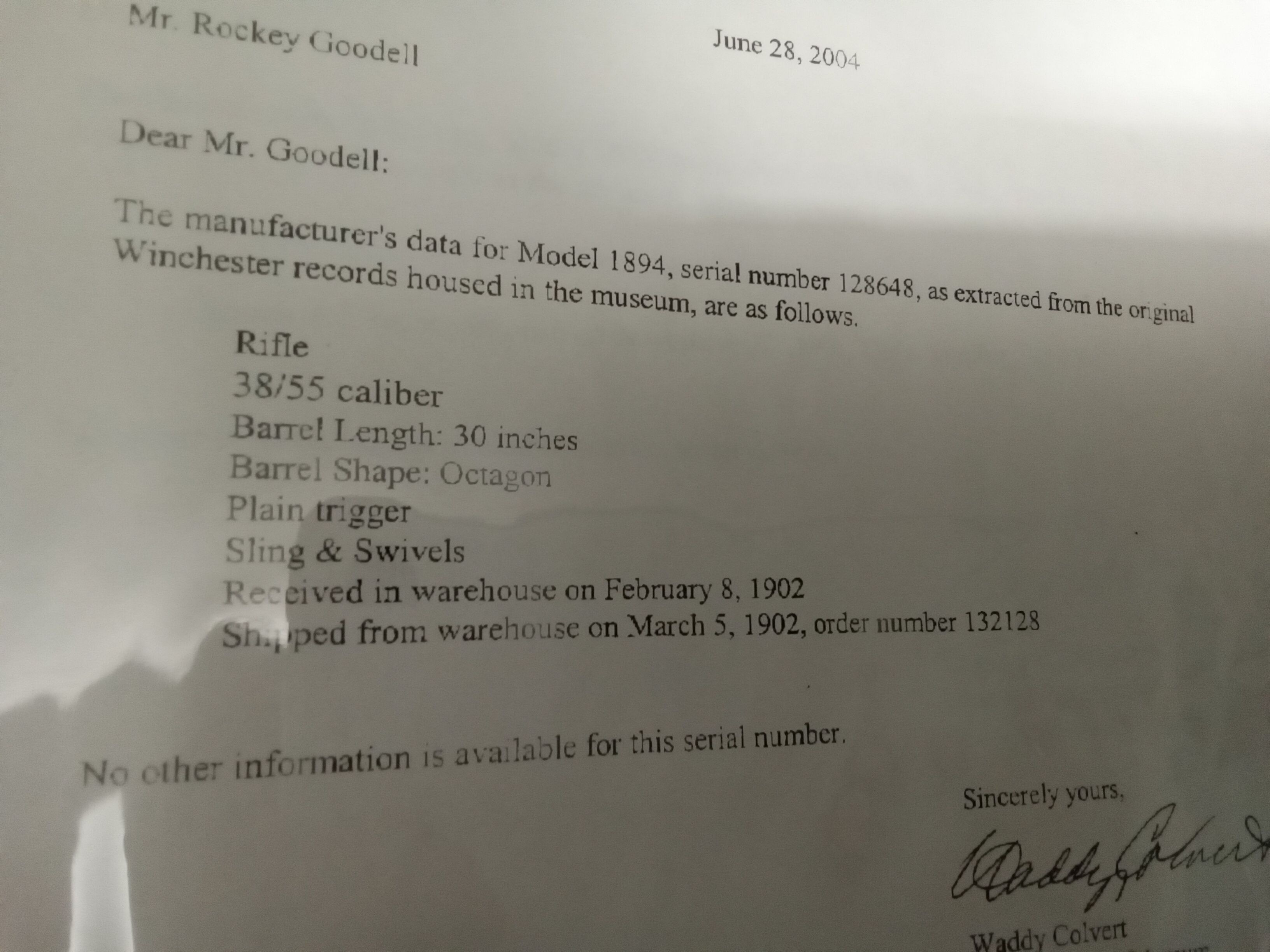
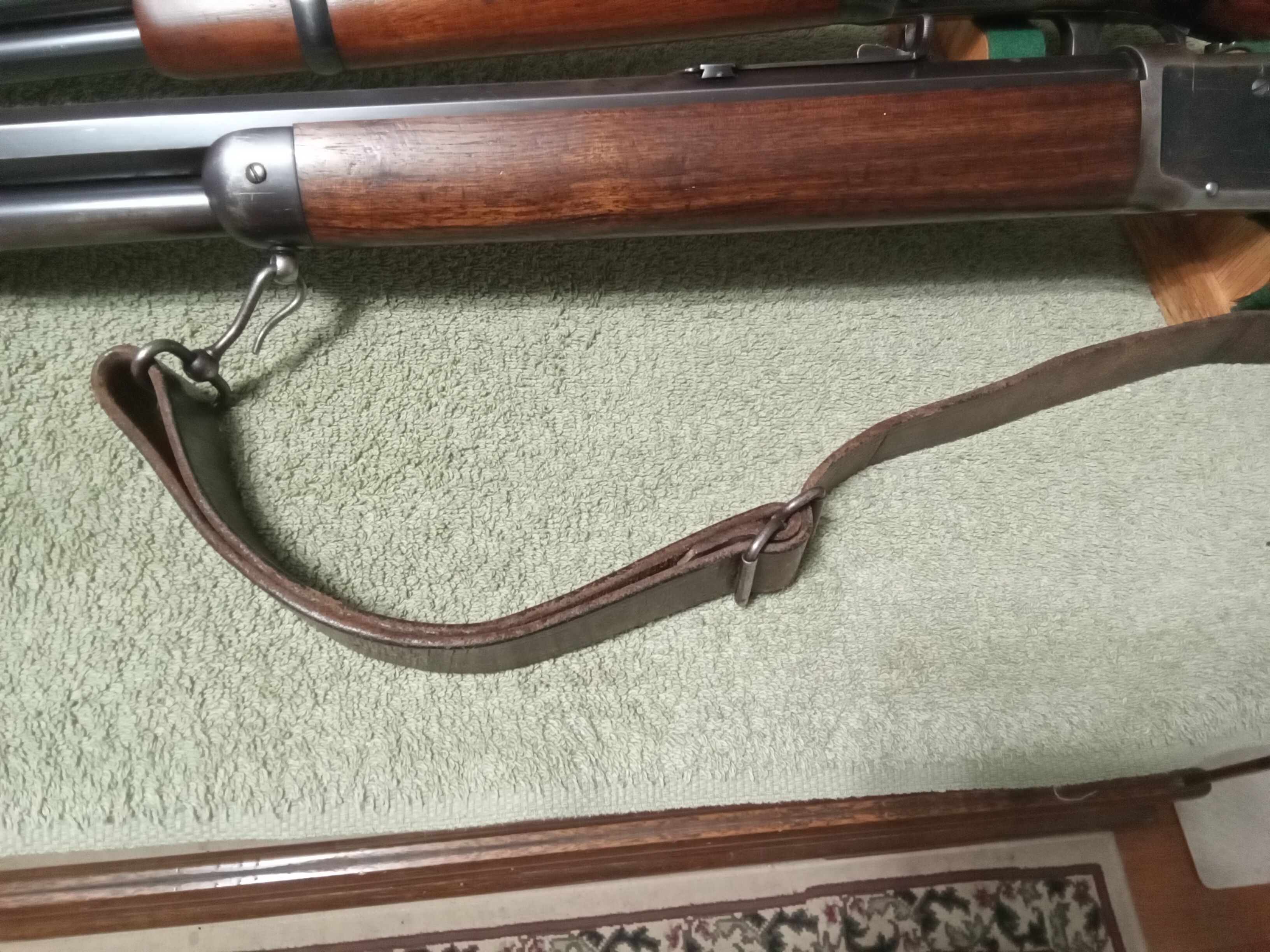
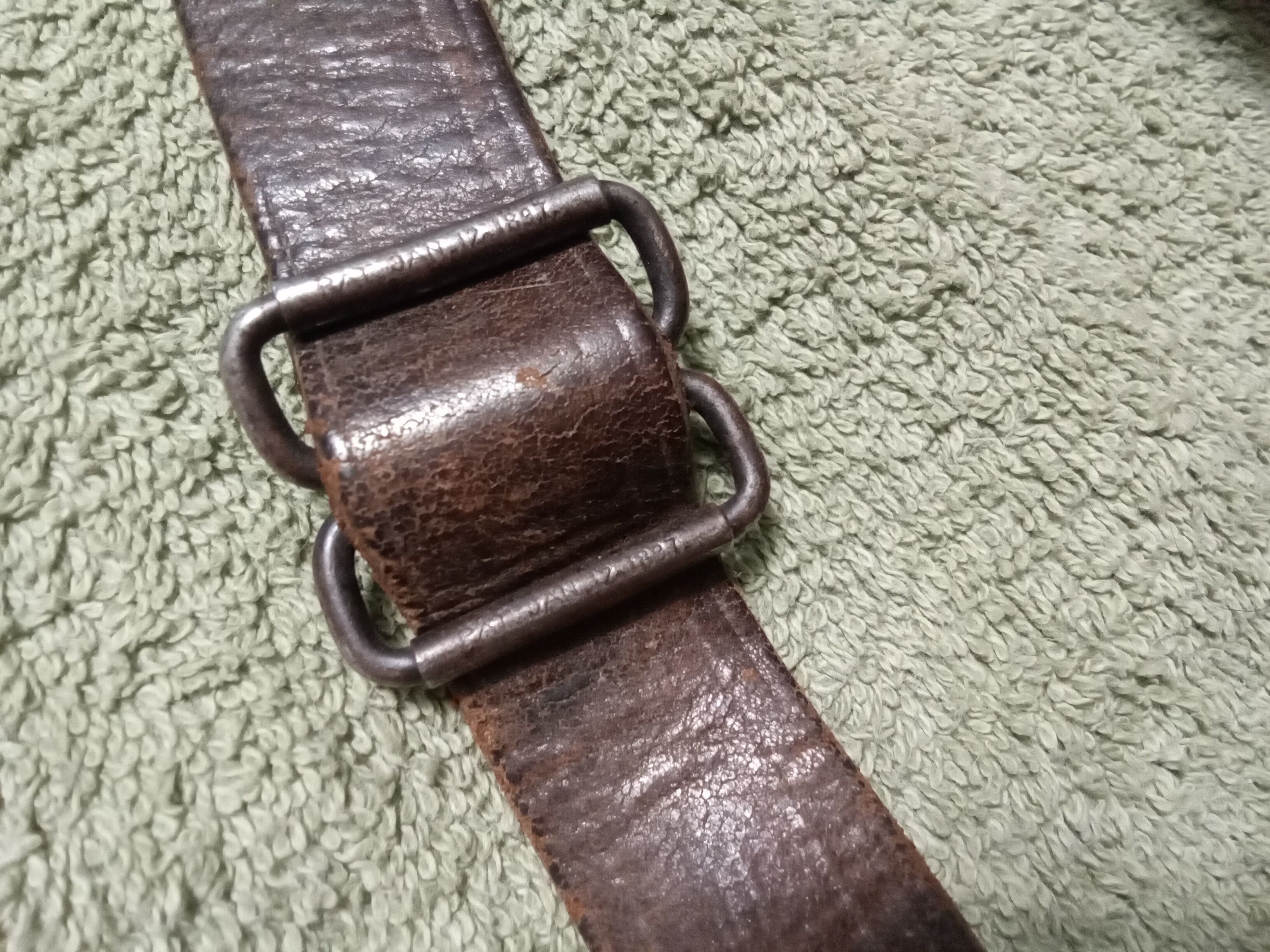
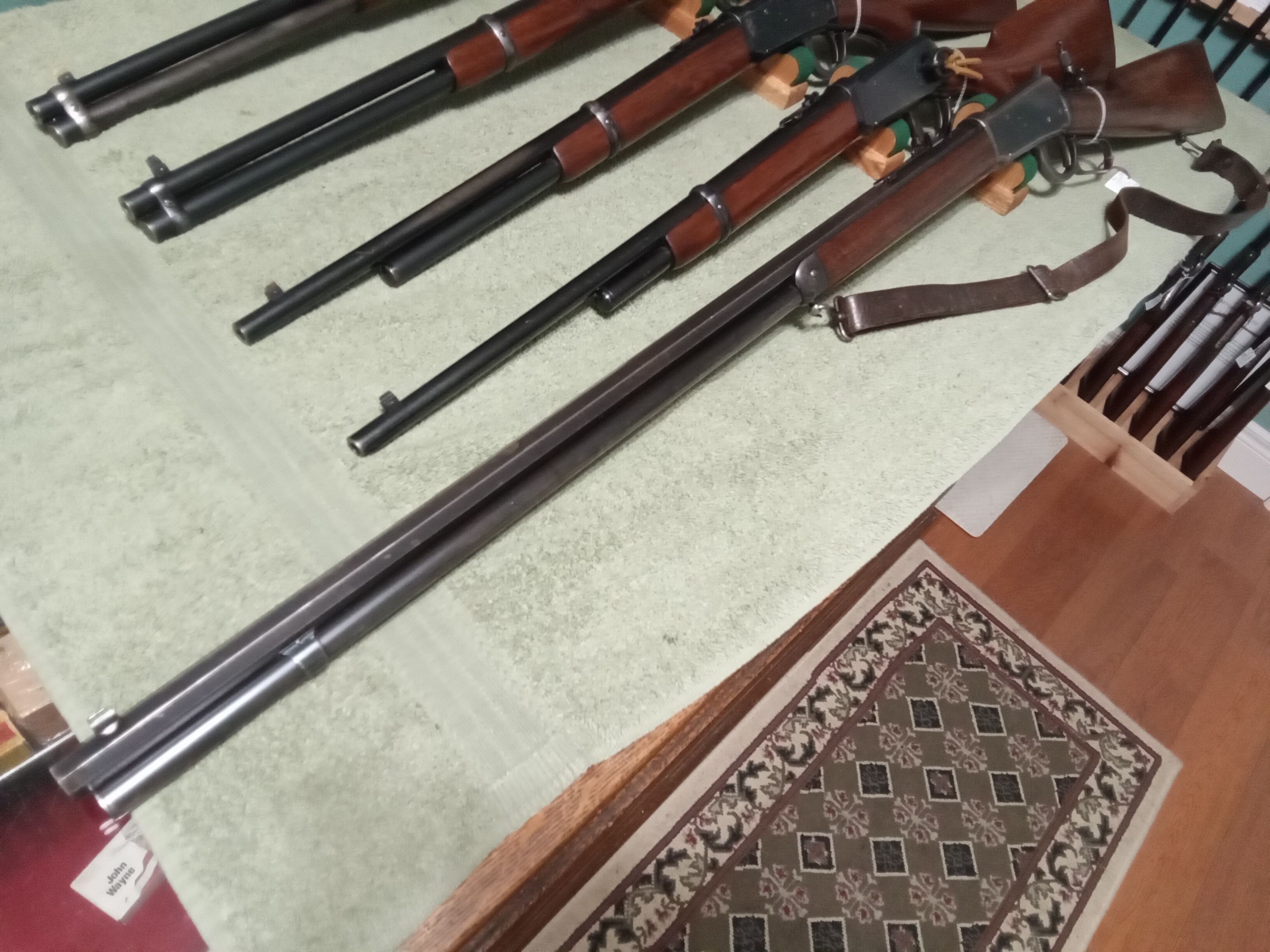 of them letter , the 30″ rifle in 38-55 and a deluxe t.d. 30-30


