

 Log In


July 2, 2023
 Offline


**Any Winchester 73 members please feel free to comment and give your thoughts, opinions and feedback as they are greatly welcomed **
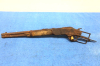

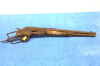

Indigenous Usage & Geographic Plausibility — Winchester Model 1873 “Trapper” Carbine (15″)
One additional specimen worth mentioning is a 15-inch Winchester Model 1873 Trapper, reportedly found in south-western Saskatchewan, Canada.
Pictures courtesy of a non-WACA collector here in Canada
The rifle itself is heavily weathered and rusted over.
While factory records rarely document individual shipping order, the geographic context raises an interesting and historically plausible possibility regarding Indigenous usage on the Northern Plains.
Following the events of the Battle of the Little Bighorn in June of 1876, several Lakota and Northern Cheyenne groups moved northward into what is now Saskatchewan, seeking refuge beyond U.S. Army jurisdiction.
Contemporary North-West Mounted Police reports and later historical accounts confirm the presence of Sioux camps in the Cypress Hills and Wood Mountain regions during the late 1870s and early 1880s. During this period, repeating rifles — particularly Winchesters — were already widely present on the Plains through trade, capture, and private barter/trade
As noted by George Madis in The Winchester Book, it was commonly said It was often said that a Plains Indigenous man would part with even his finest horse only in exchange for a Winchester — and if trading wasn’t an option, he might try to take one by other means (stealing etc.) To him, a dependable horse and a good rifle were essential; with both, a man could endure and survive almost anywhere
For mobile hunting parties dependent on buffalo, deer, and smaller game, a compact and handy “Trapper” would have offered practical advantages over longer sporting rifles.
Short-barreled carbines — whether factory produced or later shortened “Chopped off” — were particularly suited to mounted travel and day-to-day carry.
It should be emphasized that no direct documentation currently ties this specific rifle to Indigenous ownership, and such associations should remain speculative unless supported by provenance, markings, or archival evidence. However, given:
- the find location in south-western Saskatchewan,
- the known movement of Sioux groups into the region after 1876, and
- the documented prevalence of Winchester repeating rifles among Plains Indigenous peoples,
As with many hard-used Trapper carbines, the greatest value of examples like this lies not only in rarity, but in what they represent — utilitarian firearms “Tools… nothing more nothing less”

May 2, 2009
Offline
Alexander,
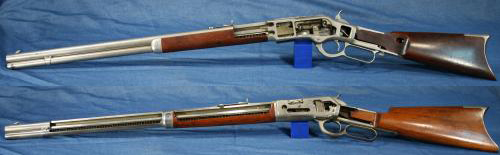
As a wall hanger its a great display being a trapper with the hammer cocked. I would think there is more of a chance that it was lost by a trapper than a Indian since that is what it was best suited for. With its short barrel it wasn’t ideal for long range shooting but an Indian wouldn’t pass up a chance to pick up a repeater. I don’t know how many trappers that were killed by Indians or were killed by Bears but with the cocked hammer the story of the trapper losing to a bear makes for a good story when its over the fireplace.
Bob
WACA Life Member---
NRA Life Member----
Cody Firearms member since 1991
Researching the Winchester 1873's
Email: [email protected]

January 20, 2023
 Online
Bob, Should we put it on the survey? I suspect others in the same shape have miraculously returned to life on GI or GB as LNIB presentations from Buffalo Bill.
- Bill
WACA # 65205; life member, NRA; member, TGCA; member, TSRA; amateur preservationist
"I have seen wicked men and fools, a great many of both, and I believe they both get paid in the end, but the fools first." -- David Balfour, narrator and protagonist of the novel, Kidnapped, by Robert Louis Stevenson.
May 2, 2009
Offline
If the serial number can be read then I can enter it. Then you can get the ATF clearance letter and hang that with it.
Bob
WACA Life Member---
NRA Life Member----
Cody Firearms member since 1991
Researching the Winchester 1873's
Email: [email protected]
July 2, 2023
Offline
Zebulon said
Bob, Should we put it on the survey? I suspect others in the same shape have miraculously returned to life on GI or GB as LNIB presentations from Buffalo Bill.
 “Buried in the soil for a hundred ought years but she’s still got the factory grease on her!”
July 2, 2023
Offline
1873man said
If the serial number can be read then I can enter it. Then you can get the ATF clearance letter and hang that with it.
Bob
No serial number # on her
May 2, 2009
Offline
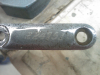
The tang is still on it so you might be able to lift the number. Like this one.
Bob
WACA Life Member---
NRA Life Member----
Cody Firearms member since 1991
Researching the Winchester 1873's
Email: [email protected]
December 9, 2002
Offline


I’m in agreement with Bob, as this would really make a nice wall hanging topic of conversation, in a gun room, office, or Den as an owners choosing. Being a “Trapper”, and the hammer cocked, I think the displaying of this would be an outstanding conversation piece!
In our Midwest climate here where we get some humidity, I think I would try to preserve the condition it is in, without over cleaning it, as the rust on it will continue with humidity and moisture, as I think I would soak it in a mild bath to stop the erosion of history, and seal it with a clear sealer. Choosing the right less evasive products would be optimal. IMHO!
Anthony
November 19, 2006
Offline
cj57 said
Marlin marketed their model 1894 carbine with half mag as the Baby carbine a little lighter and the 15” as just an option, not really a special order in the 1905 catalog
By boldly introducing the, “M” word into this topic, CJ has helped me drudge up a memory. I’ve always liked carbines, short rifles and the like. This of course not only included Winchesters but Marlins as well.
Similar to my favorite Winchester being the Model 1886, my favorite Marlin has been the Model 1895. And just as the Winchester M1886 SRC has had great appeal to me, the Marlin M1895 SRC has great appeal.
In his Marlin book, Bill Brophy states, “When introduced, the Model 1895 carbine was furnished with a 22-in. round barrel. In 1897, a 15-in. barrel was added at the same price as the 22-in. model.”
I bought Brophy’s book in the early 90’s and when I read the above about a 15-inch barreled carbine I was enthralled. I’ve been looking for one every since and never found one.
But, in a way I did. On page 232 of Brophy’s book, he shows a photo of a M1895 .45-90 SRC with a 15-in. barrel. Wow – not only what I pined for but in my favorite chambering! I couldn’t begin to estimate how long I spent over the years staring at the photo of that carbine.
So… what to do? I tracked the rifle down! Under the photo of the carbine, Brophy states, “This carbine is owned by an advanced Marlin collector in New Zealand (K.A.). I don’t recall how I accomplished it but I tracked down this advanced Marlin collector and it turned out, “K.A.” is a woman. I ended up corresponding with her and she was still in New Zealand. She was indeed a passionate Marlin collector. I recall she said her husband collected something else, but I can’t recall what she said.
Of course, I asked her if the carbine was for sale. She said it wasn’t but also added, “never say never.”
That’s how it was left. I can’t imagine the complications involved with importing a firearm from New Zealand and on top of that, it’s an NFA piece.
The lesson I learned from this is a lesson I have learned every day since I started collecting: you can’t own them all.
September 22, 2011
Offline
steve004 said
cj57 said
Marlin marketed their model 1894 carbine with half mag as the Baby carbine a little lighter and the 15” as just an option, not really a special order in the 1905 catalog
By boldly introducing the, “M” word into this topic, CJ has helped me drudge up a memory. I’ve always liked carbines, short rifles and the like. This of course not only included Winchesters but Marlins as well.
Similar to my favorite Winchester being the Model 1886, my favorite Marlin has been the Model 1895. And just as the Winchester M1886 SRC has had great appeal to me, the Marlin M1895 SRC has great appeal.
In his Marlin book, Bill Brophy states, “When introduced, the Model 1895 carbine was furnished with a 22-in. round barrel. In 1897, a 15-in. barrel was added at the same price as the 22-in. model.”
I bought Brophy’s book in the early 90’s and when I read the above about a 15-inch barreled carbine I was enthralled. I’ve been looking for one every since and never found one.
But, in a way I did. On page 232 of Brophy’s book, he shows a photo of a M1895 .45-90 SRC with a 15-in. barrel. Wow – not only what I pined for but in my favorite chambering! I couldn’t begin to estimate how long I spent over the years staring at the photo of that carbine.
So… what to do? I tracked the rifle down! Under the photo of the carbine, Brophy states, “This carbine is owned by an advanced Marlin collector in New Zealand (K.A.). I don’t recall how I accomplished it but I tracked down this advanced Marlin collector and it turned out, “K.A.” is a woman. I ended up corresponding with her and she was still in New Zealand. She was indeed a passionate Marlin collector. I recall she said her husband collected something else, but I can’t recall what she said.
Of course, I asked her if the carbine was for sale. She said it wasn’t but also added, “never say never.”
That’s how it was left. I can’t imagine the complications involved with importing a firearm from New Zealand and on top of that, it’s an NFA piece.
The lesson I learned from this is a lesson I have learned every day since I started collecting: you can’t own them all.
I am on the prowl for a nice, original Marlin 1895. They are hard to find…

November 9, 2008
Offline
steve004 said
cj57 said
Marlin marketed their model 1894 carbine with half mag as the Baby carbine a little lighter and the 15” as just an option, not really a special order in the 1905 catalog
By boldly introducing the, “M” word into this topic, CJ has helped me drudge up a memory. I’ve always liked carbines, short rifles and the like. This of course not only included Winchesters but Marlins as well.
Similar to my favorite Winchester being the Model 1886, my favorite Marlin has been the Model 1895. And just as the Winchester M1886 SRC has had great appeal to me, the Marlin M1895 SRC has great appeal.
In his Marlin book, Bill Brophy states, “When introduced, the Model 1895 carbine was furnished with a 22-in. round barrel. In 1897, a 15-in. barrel was added at the same price as the 22-in. model.”
I bought Brophy’s book in the early 90’s and when I read the above about a 15-inch barreled carbine I was enthralled. I’ve been looking for one every since and never found one.
But, in a way I did. On page 232 of Brophy’s book, he shows a photo of a M1895 .45-90 SRC with a 15-in. barrel. Wow – not only what I pined for but in my favorite chambering! I couldn’t begin to estimate how long I spent over the years staring at the photo of that carbine.
So… what to do? I tracked the rifle down! Under the photo of the carbine, Brophy states, “This carbine is owned by an advanced Marlin collector in New Zealand (K.A.). I don’t recall how I accomplished it but I tracked down this advanced Marlin collector and it turned out, “K.A.” is a woman. I ended up corresponding with her and she was still in New Zealand. She was indeed a passionate Marlin collector. I recall she said her husband collected something else, but I can’t recall what she said.
Of course, I asked her if the carbine was for sale. She said it wasn’t but also added, “never say never.”
That’s how it was left. I can’t imagine the complications involved with importing a firearm from New Zealand and on top of that, it’s an NFA piece.
The lesson I learned from this is a lesson I have learned every day since I started collecting: you can’t own them all.
Steve,
there are 9 15″ Marlin 95 carbines listed in the ATF C&R list, back in the 70s when Bill was doing his book he asked ATF to clear them and gave them all the Serial numbers of the trappers that were listed in the shipping records up to 359000 in 1906. The 95 was still being produced up until the war, so there may be a few out there that haven’t surfaced yet
November 9, 2008
Offline
Ian, There are around 5000 in the records and were made another 10yrs, but were slow movers, they didn’t chamber the 33 until 1912, the total is less then 10000
November 19, 2006
Offline
cj57 said
steve004 said
cj57 said
Marlin marketed their model 1894 carbine with half mag as the Baby carbine a little lighter and the 15” as just an option, not really a special order in the 1905 catalog
By boldly introducing the, “M” word into this topic, CJ has helped me drudge up a memory. I’ve always liked carbines, short rifles and the like. This of course not only included Winchesters but Marlins as well.
Similar to my favorite Winchester being the Model 1886, my favorite Marlin has been the Model 1895. And just as the Winchester M1886 SRC has had great appeal to me, the Marlin M1895 SRC has great appeal.
In his Marlin book, Bill Brophy states, “When introduced, the Model 1895 carbine was furnished with a 22-in. round barrel. In 1897, a 15-in. barrel was added at the same price as the 22-in. model.”
I bought Brophy’s book in the early 90’s and when I read the above about a 15-inch barreled carbine I was enthralled. I’ve been looking for one every since and never found one.
But, in a way I did. On page 232 of Brophy’s book, he shows a photo of a M1895 .45-90 SRC with a 15-in. barrel. Wow – not only what I pined for but in my favorite chambering! I couldn’t begin to estimate how long I spent over the years staring at the photo of that carbine.
So… what to do? I tracked the rifle down! Under the photo of the carbine, Brophy states, “This carbine is owned by an advanced Marlin collector in New Zealand (K.A.). I don’t recall how I accomplished it but I tracked down this advanced Marlin collector and it turned out, “K.A.” is a woman. I ended up corresponding with her and she was still in New Zealand. She was indeed a passionate Marlin collector. I recall she said her husband collected something else, but I can’t recall what she said.
Of course, I asked her if the carbine was for sale. She said it wasn’t but also added, “never say never.”
That’s how it was left. I can’t imagine the complications involved with importing a firearm from New Zealand and on top of that, it’s an NFA piece.
The lesson I learned from this is a lesson I have learned every day since I started collecting: you can’t own them all.
Steve,
there are 9 15″ Marlin 95 carbines listed in the ATF C&R list, back in the 70s when Bill was doing his book he asked ATF to clear them and gave them all the Serial numbers of the trappers that were listed in the shipping records up to 359000 in 1906. The 95 was still being produced up until the war, so there may be a few out there that haven’t surfaced yet
CJ – Have you ever seen one – or heard of one for sale?
November 9, 2008
Offline
I seen one here in PA at the Allentown show 25-30 yrs ago, it was 45-70 in well used condition, mostly grey, but the blacksmith hadn’t got his hands on. I don’t recall the price tag, I didn’t have the funds to get it
November 19, 2006
Offline
cj57 said
I seen one here in PA at the Allentown show 25-30 yrs ago, it was 45-70 in well used condition, mostly grey, but the blacksmith hadn’t got his hands on. I don’t recall the price tag, I didn’t have the funds to get it
I assume it was one that Brophy probably had cleared?
November 9, 2008
Offline
steve004 said
cj57 said
I seen one here in PA at the Allentown show 25-30 yrs ago, it was 45-70 in well used condition, mostly grey, but the blacksmith hadn’t got his hands on. I don’t recall the price tag, I didn’t have the funds to get it
I assume it was one that Brophy probably had cleared?
Yes, it did have the clearance letter with it
September 22, 2011
Offline
Alexander Sanguigni said
Were Winchester Trappers really used by trappers… or is the name a collector invention?
Few Winchester configurations generate as much fascination—or mythology—as the short-barreled “Trapper” or “Baby Carbine.” These compact rifles carry with them a powerful mental image: lonely traplines, snow-covered timber, adventure, danger, and a distinctly Indiana Jones and John Wayne–esque frontier romance.
But when the romance is stripped away and period evidence examined, the reality is more nuanced.Period Sources Supporting Actual Trapper Use
There is genuine historical evidence that short-barreled Model 1892s saw use by trappers, guides, and woodsmen—particularly in remote northern regions.
Harold F. Williamson (1952)
Winchester: The Gun That Won the West
Williamson specifically notes the utility of short-barreled Model 1892s among trappers in the northern U.S. and Canada:“In running a line of traps for smaller animals these men would not infrequently catch a wolf or bear and a Model 92 with a 14-inch barrel was effective in dealing with these animals.”
He further observes:
“The short-barrelled Model 92 also proved to be popular in the jungles of Brazil for use on the rubber plantations.”
This establishes documented use well beyond collector folklore.
George Madis – Winchester Firearms
Madis includes a first-hand statement from an original owner—both trapper and guide—who describes the realities of life on the trapline:“You never knew what you’d run across on the trapline… There was always a pack of bait and traps to carry as well as the catch on the return trip. This little Winchester was perfect for such work… There isn’t an animal it won’t take.”
This account reinforces the compactness, reliability, and versatility argument—not romance, but function.
The Counter-Argument: Romanticization & Collector Naming
That said, respected WACA researcher Michael Puzio raises a crucial and often overlooked point:“For almost all of the production from Winchester there are no surviving records of where individual rifles were shipped.”
He further argues that the very term “trapper” is largely a collector-created label, retroactively applied:
“The “trapper” name was made up by collectors with the idea that people working a trap line wanted/need a light weight firearm to dispatch leg hold trapped animals. Here is what does not make sense to me for that idea. Why 44 WCF?”
“It just makes a bigger hole which detracts from potential value. A 25-20 WCF shot through the head will easily kill any small or large animal that you are going to trap. 50 rounds of 25-20 or even 32-20 weigh less than 50 round of 44 WCF ammo. And a revolver chambered in an effective calibre at ten feet is just as effective and weighs less than a rifle, not to mention easier to carry in a holster keeping your hands free!”
Puzio’s logic is compelling:
Smaller calibres preserve pelts
Ammunition weight matters
A revolver at close range is often more practical
Hands-free carry is critical on a working trapline
Real-World Experience Reinforces This
Experienced woodsman, hunter, and former trapper G. Wilson adds modern-practical perspective:“You don’t need anything fancy when doing the business… A plain Jane- Ruger 10/22 .22 LR is sufficient enough to dispatch animals in leg-hold traps by head shots—I’ve done it on wolves and coyotes.”
This aligns closely with period first-hand trapping accounts, which show that:
Handguns
.22 calibre firearms
were far more commonly used for dispatching trapped animals than rifles.Walter Arnold (1894–1980)
One of the last independent trappers of the mountain-man lineage:“He put an end to the old bruin (Bear) with his .38 Special revolver…”
Again—handgun over rifle.
So What Were Short Carbines Actually Used For?
James M. Huntley, Sr. summarizes it best:“These short guns were popular because of their light weight and compactness… more accurate than a pistol, but lighter than longer rifles… popular with fur trappers, prison guards, and on the plantations of South America.”
This is key.
The real strength of the Trapper/Baby Carbine was versatility, not trapline dispatching alone.Real World Example: The Winchester 1892 “Stinger” (.32-20)
Perry Brothers Export – Australia
Winchester Model 1892 – 15″ Trapper “Stinger”
Serial No. 351439 — .32-20 WCF
Between the 1890s and ~1920, Winchester shipped Model 1892 carbines to Perry Brothers Ltd. of Brisbane, factory-marked as “THE STINGER” with a wasp emblem.
These were not aftermarket markings—they were factory applied.
Why .32-20 Made SenseAdequate lethality for small game
Minimal pelt damage
Reduced recoil and noise
Lighter ammunition for long carries
Australian advertising emphasized:
Opossum and kangaroo shooting
Pest control
Night hunting
Dense scrub and horseback carry
This reflects practical economic use, not romance.
Conclusion: Myth, Reality, and the Truth in Between
So—were Winchester Trappers used by trappers?
Yes—but not primarily in the way the name suggests.They were not specialized dispatch tools
They were not universally carried on traplines
They were versatile, compact utility carbines… “They are a essentially a tool…nothing more… nothing less…”
The “Trapper” name survives because it sounds right—and because these guns genuinely belonged to an era of hard times, uncertainty, and frontier pragmatism.
The romance came later.
The utility came first.
See attached photos of two trappers Winchester 1892 “The Stinger” 15 inch. Trapper 32-20 WCF & Winchester 1892 15 inch. 44 WCF trapper as well as old Perry Bros Brisbane advertising for traps, Opposum and Kangaroo Hunting
I had followed this thread but failed to address the initial post. Good points.
The Trapper name is applied retroactively by collectors, no doubt to increase the romance and price tag. They were likely used by trappers sometimes but more likely were used in other capacities. As discussed already, a trapper would be more likely to use a handgun in his line of work rather than a short barreled carbine.
I have to admit I’m not exactly a huge fan of fake names applied to objects after the fact to increase value.
July 2, 2023
Offline
mrcvs said
Alexander Sanguigni said
Were Winchester Trappers really used by trappers… or is the name a collector invention?
Few Winchester configurations generate as much fascination—or mythology—as the short-barreled “Trapper” or “Baby Carbine.” These compact rifles carry with them a powerful mental image: lonely traplines, snow-covered timber, adventure, danger, and a distinctly Indiana Jones and John Wayne–esque frontier romance.
But when the romance is stripped away and period evidence examined, the reality is more nuanced.
Period Sources Supporting Actual Trapper Use
There is genuine historical evidence that short-barreled Model 1892s saw use by trappers, guides, and woodsmen—particularly in remote northern regions.
Harold F. Williamson (1952)
Winchester: The Gun That Won the West
Williamson specifically notes the utility of short-barreled Model 1892s among trappers in the northern U.S. and Canada:“In running a line of traps for smaller animals these men would not infrequently catch a wolf or bear and a Model 92 with a 14-inch barrel was effective in dealing with these animals.”
He further observes:
“The short-barrelled Model 92 also proved to be popular in the jungles of Brazil for use on the rubber plantations.”
This establishes documented use well beyond collector folklore.
George Madis – Winchester Firearms
Madis includes a first-hand statement from an original owner—both trapper and guide—who describes the realities of life on the trapline:“You never knew what you’d run across on the trapline… There was always a pack of bait and traps to carry as well as the catch on the return trip. This little Winchester was perfect for such work… There isn’t an animal it won’t take.”
This account reinforces the compactness, reliability, and versatility argument—not romance, but function.
The Counter-Argument: Romanticization & Collector Naming
That said, respected WACA researcher Michael Puzio raises a crucial and often overlooked point:“For almost all of the production from Winchester there are no surviving records of where individual rifles were shipped.”
He further argues that the very term “trapper” is largely a collector-created label, retroactively applied:
“The “trapper” name was made up by collectors with the idea that people working a trap line wanted/need a light weight firearm to dispatch leg hold trapped animals. Here is what does not make sense to me for that idea. Why 44 WCF?”
“It just makes a bigger hole which detracts from potential value. A 25-20 WCF shot through the head will easily kill any small or large animal that you are going to trap. 50 rounds of 25-20 or even 32-20 weigh less than 50 round of 44 WCF ammo. And a revolver chambered in an effective calibre at ten feet is just as effective and weighs less than a rifle, not to mention easier to carry in a holster keeping your hands free!”Puzio’s logic is compelling:
Smaller calibres preserve pelts
Ammunition weight matters
A revolver at close range is often more practical
Hands-free carry is critical on a working trapline
Real-World Experience Reinforces This
Experienced woodsman, hunter, and former trapper G. Wilson adds modern-practical perspective:“You don’t need anything fancy when doing the business… A plain Jane- Ruger 10/22 .22 LR is sufficient enough to dispatch animals in leg-hold traps by head shots—I’ve done it on wolves and coyotes.”
This aligns closely with period first-hand trapping accounts, which show that:
Handguns
.22 calibre firearms
were far more commonly used for dispatching trapped animals than rifles.
Walter Arnold (1894–1980)
One of the last independent trappers of the mountain-man lineage:“He put an end to the old bruin (Bear) with his .38 Special revolver…”
Again—handgun over rifle.
So What Were Short Carbines Actually Used For?
James M. Huntley, Sr. summarizes it best:“These short guns were popular because of their light weight and compactness… more accurate than a pistol, but lighter than longer rifles… popular with fur trappers, prison guards, and on the plantations of South America.”
This is key.
The real strength of the Trapper/Baby Carbine was versatility, not trapline dispatching alone.
Real World Example: The Winchester 1892 “Stinger” (.32-20)
Perry Brothers Export – Australia
Winchester Model 1892 – 15″ Trapper “Stinger”
Serial No. 351439 — .32-20 WCF
Between the 1890s and ~1920, Winchester shipped Model 1892 carbines to Perry Brothers Ltd. of Brisbane, factory-marked as “THE STINGER” with a wasp emblem.
These were not aftermarket markings—they were factory applied.
Why .32-20 Made Sense
Adequate lethality for small game
Minimal pelt damage
Reduced recoil and noise
Lighter ammunition for long carries
Australian advertising emphasized:
Opossum and kangaroo shooting
Pest control
Night hunting
Dense scrub and horseback carry
This reflects practical economic use, not romance.
Conclusion: Myth, Reality, and the Truth in Between
So—were Winchester Trappers used by trappers?
Yes—but not primarily in the way the name suggests.
They were not specialized dispatch tools
They were not universally carried on traplines
They were versatile, compact utility carbines… “They are a essentially a tool…nothing more… nothing less…”
The “Trapper” name survives because it sounds right—and because these guns genuinely belonged to an era of hard times, uncertainty, and frontier pragmatism.
The romance came later.
The utility came first.
See attached photos of two trappers Winchester 1892 “The Stinger” 15 inch. Trapper 32-20 WCF & Winchester 1892 15 inch. 44 WCF trapper as well as old Perry Bros Brisbane advertising for traps, Opposum and Kangaroo Hunting
I had followed this thread but failed to address the initial post. Good points.
The Trapper name is applied retroactively by collectors, no doubt to increase the romance and price tag. They were likely used by trappers sometimes but more likely were used in other capacities. As discussed already, a trapper would be more likely to use a handgun in his line of work rather than a short barreled carbine.
I have to admit I’m not exactly a huge fan of fake names applied to objects after the fact to increase value.
Thank you


