

 Log In


July 2, 2023
 Offline


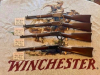
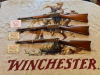
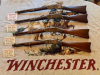
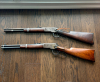
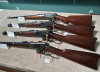
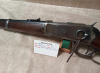
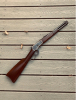
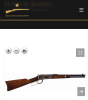
* Pictures courtesy of Rick Hill, myself, Harry Mero, and James Fenderson
Were Winchester Trappers really used by trappers… or is the name a collector invention?
Were Winchester Trappers really used by trappers… or is the name a collector invention?
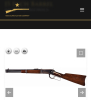
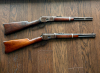
There’s just something about the short-barreled Winchester “Trapper” — or “Baby Carbine” — that grabs hold of your imagination. The name alone paints a picture. You can almost see a lone figure working a frozen trapline in Northern Alberta, Canada, at first light — snowshoes crunching in deep snow, breath fogging in the cold air, a compact rifle riding easy in his hand.
Then the scene shifts… the same little Winchester tucked under a man’s arm in the thick humidity of a South American jungle — sweat, insects, and distant animal calls all around. Or the Southwest United States, in remote and desolate places like Arizona or Nevada, silhouetted against desert canyons at sundown.
These guns feel like they were meant to be carried hard and far — more tool than trophy. They carry a distinctly Indiana Jones– and John Wayne–esque frontier romance. There’s an element of danger and adventure in these handy little carbines, something different from your standard SRC or sporting rifle.
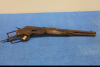
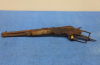
Even I own a 15-inch .32-20 “Stinger” Trapper, exported to “the Land Down Under,” Australia, in the early 1900s. Holding it and examining it in person, it has that unmistakable “been there, done that” look.
But when the romance is stripped away and the evidence examined, the reality is more nuanced.
Period Sources Supporting Actual Trapper Use
There is genuine historical evidence that short-barreled Model 1892s saw use by trappers, guides, and woodsmen—particularly in remote northern regions.
Harold F. Williamson (1952)
Winchester: The Gun That Won the West
Williamson specifically notes the utility of short-barreled Model 1892s among trappers in the northern U.S. and Canada:
“In running a line of traps for smaller animals these men would not infrequently catch a wolf or bear and a Model 92 with a 14-inch barrel was effective in dealing with these animals.”
He further observes:
“The short-barrelled Model 92 also proved to be popular in the jungles of Brazil for use on the rubber plantations.”
This establishes documented use well beyond collector folklore.
George Madis – Winchester Firearms
Madis includes a first-hand statement from an original owner—both trapper and guide—who describes the realities of life on the trapline:
“You never knew what you’d run across on the trapline… There was always a pack of bait and traps to carry as well as the catch on the return trip. This little Winchester was perfect for such work… There isn’t an animal it won’t take.”
This account reinforces the compactness, reliability, and versatility argument—not romance, but function.
The Counter-Argument: Romanticization & Collector Naming
That said, respected WACA researcher Michael Puzio raises a crucial and often overlooked point:
“For almost all of the production from Winchester there are no surviving records of where individual rifles were shipped.”
He further argues that the very term “trapper” is largely a collector-created label, retroactively applied:
“The “trapper” name was made up by collectors with the idea that people working a trap line wanted/need a light weight firearm to dispatch leg hold trapped animals. Here is what does not make sense to me for that idea. Why 44 WCF?”
“It just makes a bigger hole which detracts from potential value. A 25-20 WCF shot through the head will easily kill any small or large animal that you are going to trap. 50 rounds of 25-20 or even 32-20 weigh less than 50 round of 44 WCF ammo. And a revolver chambered in an effective calibre at ten feet is just as effective and weighs less than a rifle, not to mention easier to carry in a holster keeping your hands free!”
Puzio’s logic is compelling:
- Smaller calibres preserve pelts
- Ammunition weight matters
- A revolver at close range is often more practical
- Hands-free carry is critical on a working trapline
Real-World Experience Reinforces This
Experienced woodsman, hunter, and former trapper G. Wilson adds modern-practical perspective:
“You don’t need anything fancy when doing the business… A plain Jane- Ruger 10/22 .22 LR is sufficient enough to dispatch animals in leg-hold traps by head shots—I’ve done it on wolves and coyotes.”
This aligns closely with period first-hand trapping accounts, which show that:
- Handguns
- .22 calibre firearms
were far more commonly used for dispatching trapped animals than rifles.
Walter Arnold (1894–1980)
One of the last independent trappers of the mountain-man lineage:
“He put an end to the old bruin (Bear) with his .38 Special revolver…”
Again—handgun over rifle.
Fifty Years a Hunter and Trapper- E.N. WoodCock
Here is the exact paragraph from Fifty Years a Hunter and Trapper where E. N. Woodcock describes the kind of gun he wishes existed for carrying on a trap line.
So What Were Short Carbines Actually Used For?
James M. Huntley, Sr. summarizes it best:
“These short guns were popular because of their light weight and compactness… more accurate than a pistol, but lighter than longer rifles… popular with fur trappers, prison guards, and on the plantations of South America.”
This is key.
The real strength of the Trapper/Baby Carbine was versatility, not trapline dispatching alone.
Real World Example: The Winchester 1892 “Stinger” (.32-20)
Perry Brothers Export – Australia
Winchester Model 1892 – 15″ Trapper “Stinger”
Serial No. 351439 — .32-20 WCF
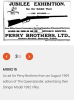
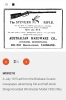
Between the 1890s and ~1920, Winchester shipped Model 1892 carbines to Perry Brothers Ltd. of Brisbane, factory-marked as “THE STINGER” with a wasp emblem.
These were not aftermarket markings—they were factory applied.
Why .32-20 Made Sense
- Adequate lethality for small game
- Minimal pelt damage
- Reduced recoil and noise
- Lighter ammunition for long carries
Australian advertising emphasized:
- Opossum and kangaroo shooting
- Pest control
- Night hunting
- Dense scrub and horseback carry
This reflects practical economic use, not romance.
Conclusion: Myth, Reality, and the Truth in Between
So—were Winchester Trappers used by trappers?
Yes—but not primarily in the way the name suggests.
- They were not specialized dispatch tools
- They were not universally carried on traplines
- They were versatile, compact utility carbines… “They are a essentially a tool…nothing more… nothing less…”
The “Trapper” name survives because it sounds right—and because these guns genuinely belonged to an era of hard times, uncertainty, and frontier pragmatism.
The romance came later.
The utility came first.
So What Were Short Carbines Actually Used For?”
*** utility—not romance—***
Law-Enforcement Adoption of “Trapper” & Baby Carbines
One of the strongest pieces of evidence against the idea that short-barreled Winchesters were narrowly “trapper tools” comes not from the fur trade at all—but from law enforcement.
Sheriff’s departments, prison guards, and rural deputies repeatedly selected short Winchester carbines for the very same reasons trappers supposedly did: compactness, speed of handling, and practical effectiveness in confined or mobile environments armoured vehicles etc
First-Hand Law-Enforcement Testimony
Denny Hansen – WACA
Denny Hansen provides a rare first-person account of departmental issue Winchesters during his early career with the Yavapai County Sheriff’s Office, Arizona:
“Years ago, when I joined the Yavapai County Sheriff’s Office in Arizona, the department had very few shotguns for issue to the deputies.
They did, however, have a small quantity of Winchester Model 94 Trapper carbines in .30 WCF (.30-30 Winchester).
As the department grew in size, shotguns were issued and the Winchesters, with the reluctance of the experienced deputies, began to come out of service.
I remember more than one argument over who had more seniority, and, therefore, who had more of a right to one of the handy little guns.”
Documented Sheriff-Issued Example: Michigan
A surviving, fully documented example reinforces Hansen’s account.
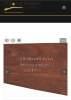
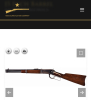
A Winchester Model 1894 Trapper SRC, manufactured in 1925, surfaced at Rock Island Auction bearing clear law-enforcement markings:
Stock marking:
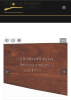
“-SHERIFF’S DEPT- / -BERRIEN-COUNTY- / -MICH-”
Supporting documentation confirms:
- Listed by serial number on the BATFE Curios or Relics List
- Exempt from the National Firearms Act
- Verified by a Buffalo Bill Historical Center (Cody) letter
- Confirmed unaltered, with original barrel length and configuration
This is critical:
The gun exists exactly as issued, not modified, cut down, or “collector assembled.”
Why Law Enforcement Chose Shorter than Usual Carbines
The reasons sheriff’s departments favored these guns mirror the same functional arguments discussed earlier:
- Compact length for vehicle carry
- Fast handling in confined spaces
- Greater accuracy and authority than a revolver
- Lighter and handier than full-length rifles
- Reliable, simple manual of arms
Reframing the “Trapper” Name
This law-enforcement evidence reframes the entire discussion.
Short-barreled Winchesters were not designed fortrappers—
They were adopted by anyone who needed a compact, reliable, hard-use long gun.
That included:
- Trappers and guides
- Prison guards
- Sheriff’s deputies
- Rural peace officers
What This Tells Us
When viewed through the lens of documented law-enforcement use, the truth becomes clearer:
- The guns were tools first, labels second
- Their value lay in handling and portability, not romance
- The “Trapper” name stuck because it fit the narrative—not because it defined the primary role
******Utility came first.
Romance followed.********
December 9, 2002
Offline
Alexander,
Nicely done, and a very interesting read! 
Anthony

March 20, 2009
Offline
Alexander,
I agree. Very well done. And to this point: “In running a line of traps for smaller animals these men would not infrequently catch a wolf or bear and a Model 92 with a 14-inch barrel was effective in dealing with these animals.”
I have done a bit of small game trapping with leg hold traps. There is no way in hell that a small game leg hold trap is going to hold a wolf or bear!!! That sounds like more romanticized writing.

Michael
Model 1892 / Model 61 Collector, Research, Valuation
December 21, 2006
Offline
Well , to the best of My knowledge the term “trapper” , or “baby” was invented by some one in the gun community. If You got a factory letter for one , it would say, “carbine, barrel length 15”, not “trapper” and “half magazine”, not “baby”. But again in all practicallity the term “trapper” is easier to speak and does present a certain picture. If I were to be stuck in the wilderness with the choice of 1 firearm, it would be a 14″ or 15″ short s.r.c.. I am not a hunter, but if You ever carried one of these short guns, You would understand why so desireable , not only by trappers, but seal hunters , south American mounted police etc. These little guns were so light and versatile, especially being a repeater and a s.r.c. . Being a repeater one had multiple shots at an animal, or. , and being a s.r.c. one could hang it on a belt or sash, like a pistol and could be accessed and used with “one hand”, plus had the reasonable range of a short rifle for 2 handed use. Much the same can be said for the mounted horseman. I don’t know how many Winchesters seal hunters carried, I do know of 2 , both 1892’s in 32 cal.,that I seen, but a short, usually sawed off smaller caliber gun was used, and any I’ve seen were “very well” used and beat to snot, I call them canoe paddles. They are the perfect firearm for carting around through the bush and swing around so quickly to get that quick shot off. I just never understood why they never got more popular than they did, back in the day, however that’s a good thing for We collectors Who love these little guns, and finding an example in fine original condition is quite an undertaking.
W.A.C.A. life member, Marlin Collectors Assn. charter and life member, C,S.S.A. member and general gun nut.
December 28, 2020
Offline
I recently re-read the book 50 years a hunter and trapper by E.N. Woodcock. The chapters are arranged as a series of stories from the trapline in North Central PA. Woodcock trapped everything from mink to bear. There is a section where he describes his ideal gun. He mentions a .32 caliber and a lever gun with a barrel no longer than 16″. He describes the length as being handy for carrying, but in reading the book he is also hunting deer while walking the trapline. Makes sense to me looking for a gun to carry on walks through the woods of 10 miles or more and to hunt deer along the way.
Bryan

April 15, 2005
 Online
Henry Mero said
Well , to the best of My knowledge the term “trapper” , or “baby” was invented by some one in the gun community. If You got a factory letter for one , it would say, “carbine, barrel length 15”, not “trapper” and “half magazine”, not “baby”. But again in all practicallity the term “trapper” is easier to speak and does present a certain picture. If I were to be stuck in the wilderness with the choice of 1 firearm, it would be a 14″ or 15″ short s.r.c.. I am not a hunter, but if You ever carried one of these short guns, You would understand why so desireable , not only by trappers, but seal hunters , south American mounted police etc. These little guns were so light and versatile, especially being a repeater and a s.r.c. . Being a repeater one had multiple shots at an animal, or. , and being a s.r.c. one could hang it on a belt or sash, like a pistol and could be accessed and used with “one hand”, plus had the reasonable range of a short rifle for 2 handed use. Much the same can be said for the mounted horseman. I don’t know how many Winchesters seal hunters carried, I do know of 2 , both 1892’s in 32 cal.,that I seen, but a short, usually sawed off smaller caliber gun was used, and any I’ve seen were “very well” used and beat to snot, I call them canoe paddles. They are the perfect firearm for carting around through the bush and swing around so quickly to get that quick shot off. I just never understood why they never got more popular than they did, back in the day, however that’s a good thing for We collectors Who love these little guns, and finding an example in fine original condition is quite an undertaking.
Henry,
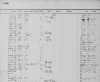
The term “Baby” actually was used by Winchester and recorded in the factory ledgers. Specifically, for the Single Shot Lightweight Carbines. While I do not (yet) have definitive proof, I suspect that there was a good sized batch of the 15″ Carbines that were indeed marked “THE BABY” on the barrel before being shipped to the F. Lassetter & Co. in Australia. If you were to letter one of these, it would include the notation “(The Baby)” or “Baby” on the CFM letter.
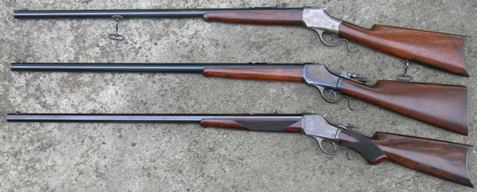
The picture below is a scanned copy of the warehouse ledger page for serial numbers 75800 – 75829, and it shows a substantial number of the 15-inch 44 WCF Carbines. As can be seen, “Baby” or “(The Baby)” is written in the ledger, and that implies (to me) that Winchester physically marked the guns “THE BABY“.
Bert
WACA Historian & Board of Director Member #6571L
July 2, 2023
Offline
Bryan W said
I recently re-read the book 50 years a hunter and trapper by E.N. Woodcock. The chapters are arranged as a series of stories from the trapline in North Central PA. Woodcock trapped everything from mink to bear. There is a section where he describes his ideal gun. He mentions a .32 caliber and a lever gun with a barrel no longer than 16″. He describes the length as being handy for carrying, but in reading the book he is also hunting deer while walking the trapline. Makes sense to me looking for a gun to carry on walks through the woods of 10 miles or more and to hunt deer along the way.
Bryan
Thank you Bryan for you contribution. This book is now on my list to read!

August 27, 2014
Offline
Always had a thing for the ‘Carbines’
“If you can’t convince them, confuse them”
President Harry S. Truman
July 2, 2023
Offline
Bert H. said
Henry Mero said
Well , to the best of My knowledge the term “trapper” , or “baby” was invented by some one in the gun community. If You got a factory letter for one , it would say, “carbine, barrel length 15”, not “trapper” and “half magazine”, not “baby”. But again in all practicallity the term “trapper” is easier to speak and does present a certain picture. If I were to be stuck in the wilderness with the choice of 1 firearm, it would be a 14″ or 15″ short s.r.c.. I am not a hunter, but if You ever carried one of these short guns, You would understand why so desireable , not only by trappers, but seal hunters , south American mounted police etc. These little guns were so light and versatile, especially being a repeater and a s.r.c. . Being a repeater one had multiple shots at an animal, or. , and being a s.r.c. one could hang it on a belt or sash, like a pistol and could be accessed and used with “one hand”, plus had the reasonable range of a short rifle for 2 handed use. Much the same can be said for the mounted horseman. I don’t know how many Winchesters seal hunters carried, I do know of 2 , both 1892’s in 32 cal.,that I seen, but a short, usually sawed off smaller caliber gun was used, and any I’ve seen were “very well” used and beat to snot, I call them canoe paddles. They are the perfect firearm for carting around through the bush and swing around so quickly to get that quick shot off. I just never understood why they never got more popular than they did, back in the day, however that’s a good thing for We collectors Who love these little guns, and finding an example in fine original condition is quite an undertaking.
Henry,
The term “Baby” actually was used by Winchester and recorded in the factory ledgers. Specifically, for the Single Shot Lightweight Carbines. While I do not (yet) have definitive proof, I suspect that there was a good sized batch of the 15″ Carbines that were indeed marked “THE BABY” on the barrel before being shipped to the F. Lassetter & Co. in Australia. If you were to letter one of these, it would include the notation “(The Baby)” or “Baby” on the CFM letter.
The picture below is a scanned copy of the warehouse ledger page for serial numbers 75800 – 75829, and it shows a substantial number of the 15-inch 44 WCF Carbines. As can be seen, “Baby” or “(The Baby)” is written in the ledger, and that implies (to me) that Winchester physically marked the guns “THE BABY”.
Bert
Thank you Bert for this clarification I appreciate it!
Does WACA or CODY have any old photos back in the day on here that you know about of someone actually holding and carrying a “Trapper” gun?
There are many photographs of men whilst hunting or in the woods with visually identifiable Winchester standard SRC’s or sporting rifles but I have yet to come across a photograph of someone carrying a Winchester firearm that is consistent with that of “Trapper” characteristics
July 2, 2023
Offline
Alexander,
I agree. Very well done. And to this point: “In running a line of traps for smaller animals these men would not infrequently catch a wolf or bear and a Model 92 with a 14-inch barrel was effective in dealing with these animals.”
I have done a bit of small game trapping with leg hold traps. There is no way in hell that a small game leg hold trap is going to hold a wolf or bear!!! That sounds like more romanticized writing.Michael
twobit said
Alexander,
I agree. Very well done. And to this point: “In running a line of traps for smaller animals these men would not infrequently catch a wolf or bear and a Model 92 with a 14-inch barrel was effective in dealing with these animals.”
I have done a bit of small game trapping with leg hold traps. There is no way in hell that a small game leg hold trap is going to hold a wolf or bear!!! That sounds like more romanticized writing.Michael
I cannot state that I am a trapper or a hunter but yes Micheal I have to agree with you from a rationale perspective that small game leg hold traps will not contain the power and force generated from wolves or bears
Evidence ***
Early 20th-century trapping manuals confirm the use of large leg-hold traps for both wolves and bears.
Practical trapping guides of the period recommended No. 6 and No. 7 foothold traps for wolves, typically set in well-defined travel ways or “runs” where tracks were visible.
The same sources note that extra-large foothold traps, or combinations of traps, were sometimes employed for bears, depending on the species and the size of the animal.
See attached period photographs showing wolves and bears held in large leg-hold traps.
July 2, 2023
Offline
Henry Mero said
Well , to the best of My knowledge the term “trapper” , or “baby” was invented by some one in the gun community. If You got a factory letter for one , it would say, “carbine, barrel length 15”, not “trapper” and “half magazine”, not “baby”. But again in all practicallity the term “trapper” is easier to speak and does present a certain picture. If I were to be stuck in the wilderness with the choice of 1 firearm, it would be a 14″ or 15″ short s.r.c.. I am not a hunter, but if You ever carried one of these short guns, You would understand why so desireable , not only by trappers, but seal hunters , south American mounted police etc. These little guns were so light and versatile, especially being a repeater and a s.r.c. . Being a repeater one had multiple shots at an animal, or. , and being a s.r.c. one could hang it on a belt or sash, like a pistol and could be accessed and used with “one hand”, plus had the reasonable range of a short rifle for 2 handed use. Much the same can be said for the mounted horseman. I don’t know how many Winchesters seal hunters carried, I do know of 2 , both 1892’s in 32 cal.,that I seen, but a short, usually sawed off smaller caliber gun was used, and any I’ve seen were “very well” used and beat to snot, I call them canoe paddles. They are the perfect firearm for carting around through the bush and swing around so quickly to get that quick shot off. I just never understood why they never got more popular than they did, back in the day, however that’s a good thing for We collectors Who love these little guns, and finding an example in fine original condition is quite an undertaking.
Thank you for sharing your insights, Harry.
I agree with you—they really are handy little bush guns, and I can easily see why someone would want to carry one.
I am grateful to you for bringing many of these neat little guns across the border!!!
My theory—offered humbly and sincerely —is that these “Trapper” guns never became especially popular or sold “like hotcakes” (Never was a surplus of trappers to begin with made in limited numbers some people back in the day probably never even know they existed !) because they likely retailed for more than the average, standard SRC. People of that era were generally frugal, carefully squirrelling away their nickels and dimes due to economic hardship brought on by World War I, World War II, and the Great Depression.
Additionally, they didn’t give a damn about NRA regulations, gun laws, or modern notions of originality.
These were practical, self-reliant people. If they wanted a shorter, handier rifle, they could simply take a standard SRC and cut off as many inches as they saw fit—effectively creating their own custom version of a “Trapper.”
I’m always reminded that these guns were hard-used tools, meant to put food on the table—nothing more, nothing less. Ironically, here we are in 2026 discussing them from a historical and collector standpoint, where they’re often treated and babied like safe queens, completely defeating the original purpose for which they were made.
Like an expensive race car or speed boat, they were never meant to be sitting in a garage or docked in a harbour they were meant to be used to the full tilt!
July 2, 2023
Offline
Tedk said
Always had a thing for the ‘Carbines’
 👍
👍
July 2, 2023
Offline
So What Were Short Carbines Actually Used For?”
*** utility—not romance—***
Law-Enforcement Adoption of “Trapper” & Baby Carbines
One of the strongest pieces of evidence against the idea that short-barreled Winchesters were narrowly “trapper tools” comes not from the fur trade at all—but from law enforcement.
Sheriff’s departments, prison guards, and rural deputies repeatedly selected short Winchester carbines for the very same reasons trappers supposedly did: compactness, speed of handling, and practical effectiveness in confined or mobile environments armoured vehicles etc
First-Hand Law-Enforcement Testimony
Denny Hansen – WACA
Denny Hansen provides a rare first-person account of departmental issue Winchesters during his early career with the Yavapai County Sheriff’s Office, Arizona:
“Years ago, when I joined the Yavapai County Sheriff’s Office in Arizona, the department had very few shotguns for issue to the deputies.
They did, however, have a small quantity of Winchester Model 94 Trapper carbines in .30 WCF (.30-30 Winchester).
As the department grew in size, shotguns were issued and the Winchesters, with the reluctance of the experienced deputies, began to come out of service.
I remember more than one argument over who had more seniority, and, therefore, who had more of a right to one of the handy little guns.”
Documented Sheriff-Issued Example: Michigan
A surviving, fully documented example reinforces Hansen’s account.
A Winchester Model 1894 Trapper SRC, manufactured in 1925, surfaced at Rock Island Auction bearing clear law-enforcement markings:
Stock marking:
“-SHERIFF’S DEPT- / -BERRIEN-COUNTY- / -MICH-”
Supporting documentation confirms:
- Listed by serial number on the BATFE Curios or Relics List
- Exempt from the National Firearms Act
- Verified by a Buffalo Bill Historical Center (Cody) letter
- Confirmed unaltered, with original barrel length and configuration
This is critical:
The gun exists exactly as issued, not modified, cut down, or “collector assembled.”
Why Law Enforcement Chose Shorter than Usual Carbines
The reasons sheriff’s departments favored these guns mirror the same functional arguments discussed earlier:
- Compact length for vehicle carry
- Fast handling in confined spaces
- Greater accuracy and authority than a revolver
- Lighter and handier than full-length rifles
- Reliable, simple manual of arms
Reframing the “Trapper” Name
This law-enforcement evidence reframes the entire discussion.
Short-barreled Winchesters were not designed for trappers—
They were adopted by anyone who needed a compact, reliable, hard-use long gun.
That included:
- Trappers and guides
- Prison guards
- Sheriff’s deputies
- Rural peace officers
What This Tells Us
When viewed through the lens of documented law-enforcement use, the truth becomes clearer:
- The guns were tools first, labels second
- Their value lay in handling and portability, not romance
- The “Trapper” name stuck because it fit the narrative—not because it defined the primary role
******Utility came first.
Romance followed.********
July 16, 2013
Offline
Im trying to post pictures of my Australian shipp short carbines and factory letters, but its not allowing me to just add a photo, the tool is requesting URL.
Has the posting of photo’s changed
July 2, 2023
Offline
Im trying to post pictures of my Australian shipp short carbines and factory letters, but its not allowing me to just add a photo, the tool is requesting URL.
Has the posting of photo’s changed
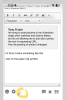


Hi Tony it looks something like this
click on the paper clip symbol
Then select add files from photos, library etc
Then select start upload to add the files to the message
Then click send
See photos ^^
April 15, 2005
Online
Tony. R said
Im trying to post pictures of my Australian shipp short carbines and factory letters, but its not allowing me to just add a photo, the tool is requesting URL.
Has the posting of photo’s changed
Tony,
No it has not changed… but I see that you are currently listed as a WACA “Guest”. Did you renew your membership?
Bert
WACA Historian & Board of Director Member #6571L
July 16, 2013
Offline
Bert H. said
Tony. R said
Im trying to post pictures of my Australian shipp short carbines and factory letters, but its not allowing me to just add a photo, the tool is requesting URL.
Has the posting of photo’s changed
Tony,
No it has not changed… but I see that you are currently listed as a WACA “Guest”. Did you renew your membership?
Bert
Ah that could be so, ill check

November 9, 2008
Offline
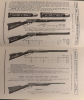
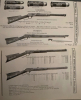
Marlin marketed their model 1894 carbine with half mag as the Baby carbine a little lighter and the 15” as just an option, not really a special order in the 1905 catalog
July 2, 2023
Offline
cj57 said
Marlin marketed their model 1894 carbine with half mag as the Baby carbine a little lighter and the 15” as just an option, not really a special order in the 1905 catalog
Interesting post thank you ! 😊
 thank you


1 Guest(s)
