

 Log In


March 31, 2009
 Offline

I’ve been using the Bear Creek bullets for awhile. Nothing negative when shooting smokeless powder. The Bear Creek bullets are what I’m using to form the 38 EX brass. I am using black powder to form but after that I’ll use smokeless so need for bullet lube.

November 7, 2015
Offline
That comment was interesting, indicates more than a passing interest in that bullet and cartridge. 300grs almost sounds like an express load for that caliber, quite honestly I see the logic behind a 400 grain bullet in that cartridge but I think I would probably enjoy something closer to 300 grains. Had to check, closest thing I have is a 40-72 Winchester mould.
Mike

April 15, 2005
Offline
TXGunNut said
That comment was interesting, indicates more than a passing interest in that bullet and cartridge. 300grs almost sounds like an express load for that caliber, quite honestly I see the logic behind a 400 grain bullet in that cartridge but I think I would probably enjoy something closer to 300 grains. Had to check, closest thing I have is a 40-72 Winchester mould.
Mike
The original factory load for the 405 WCF was a 300-grain JSP with a listed velocity of 2,150 fps (from a 24-inch Model 1895 barrel).
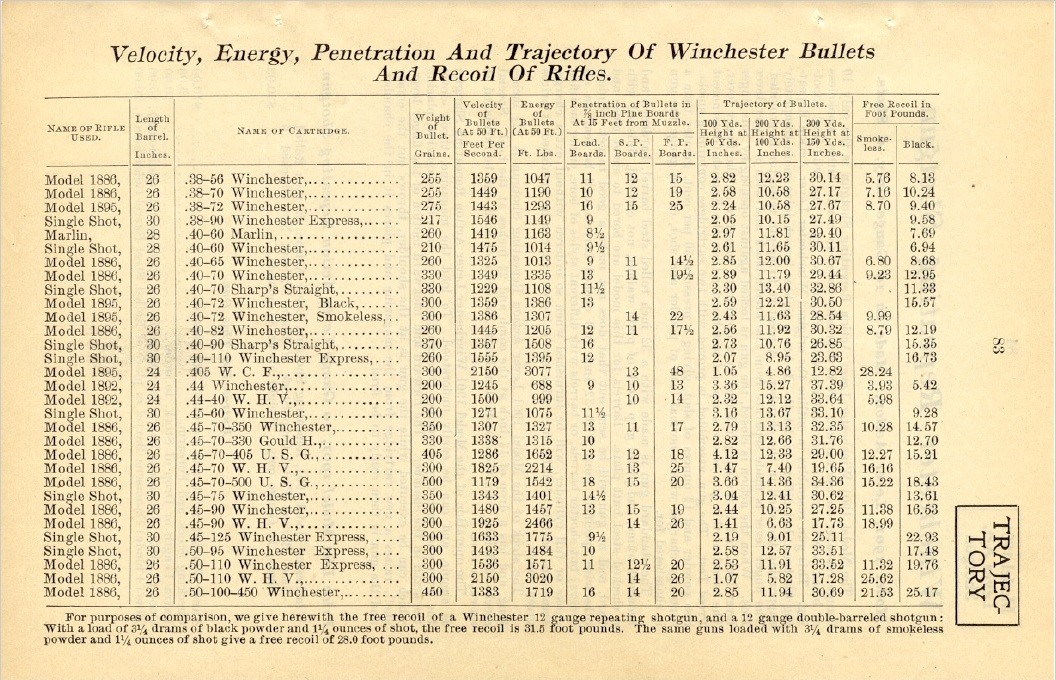
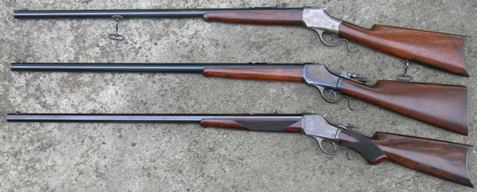
The Hornady factory ammo nearly duplicates the original 1904 factory load (a bit faster @ 2,200 fps), but when I shoot it in my high-wall with its 30-inch barrel, it chrono graphs @ 2,450 fps. The recoil it generates it quite noticeable!
Bert
WACA Historian & Board of Director Member #6571L
September 19, 2014
Offline
Bert, Mike, etc. First, YES, Lyman made a mould for the Winchester .405 back in the day. I have one. Moulds in the 300 grain range are not uncommon. But the .413 die to size them was and as far as I know still is. I have one of those, too. Now, I too like the bullet shown as weighing 325 grains. I’ve always wondered why the lead bullet, moving at slower velocity, was actually only NOMINALLY 300 grains. I do not know how far up in weight you can go and still be stable at longer ranges. I have 300 grain solid copper bullets (significantly LONGER) that destabilize after 200 yards. I am talking wildly unstable at 300 yards. The traditional cup and core bullet by Hornady and before they came out, from Buck Reardon (long since dead, unfortunately) remain reasonably accurate for metallic silhouettes at 300 yards. So do cast bullets. I propose Bert buy and try some of the 325 grain bullets and report on the results! Tim
April 15, 2005
Offline
tim tomlinson said
Bert, Mike, etc. First, YES, Lyman made a mould for the Winchester .405 back in the day. I have one. Moulds in the 300 grain range are not uncommon. But the .413 die to size them was and as far as I know still is. I have one of those, too. Now, I too like the bullet shown as weighing 325 grains. I’ve always wondered why the lead bullet, moving at slower velocity, was actually only NOMINALLY 300 grains. I do not know how far up in weight you can go and still be stable at longer ranges. I have 300 grain solid copper bullets (significantly LONGER) that destabilize after 200 yards. I am talking wildly unstable at 300 yards. The traditional cup and core bullet by Hornady and before they came out, from Buck Reardon (long since dead, unfortunately) remain reasonably accurate for metallic silhouettes at 300 yards. So do cast bullets. I propose Bert buy and try some of the 325 grain bullets and report on the results! Tim
I plan to buy (100) of those 325 grain bullets.
WACA Historian & Board of Director Member #6571L
November 19, 2006
Offline
One of the original factory loads for the .40-72 WCF was 330 grains. I recall there was also a 300 grain load.
April 15, 2005
Offline
steve004 said
One of the original factory loads for the .40-72 WCF was 330 grains. I recall there was also a 300 grain load.
Steve,
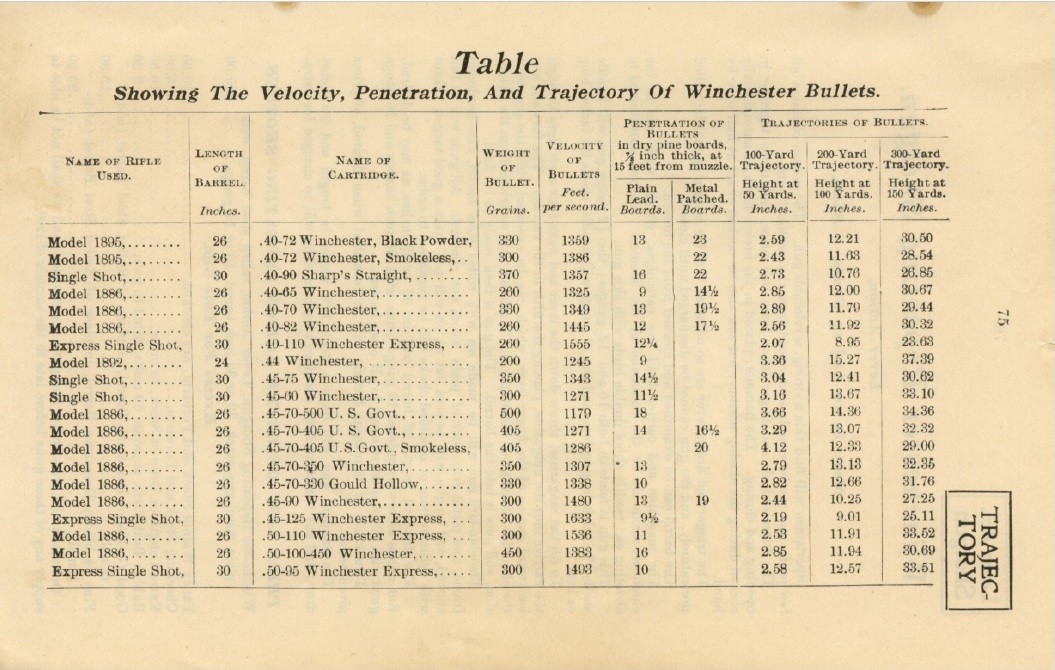
By the year 1905, the 300-grain load was the standard factory load for the 40-72 WCF in both black powder and smokeless. A 330-grain bullet was standard for the original black powder 40-72 WCF cartridge up through at least April 1900.
Bert
WACA Historian & Board of Director Member #6571L

January 20, 2023
Offline
Bert H. said
TXGunNut said
That comment was interesting, indicates more than a passing interest in that bullet and cartridge. 300grs almost sounds like an express load for that caliber, quite honestly I see the logic behind a 400 grain bullet in that cartridge but I think I would probably enjoy something closer to 300 grains. Had to check, closest thing I have is a 40-72 Winchester mould.
Mike
The original factory load for the 405 WCF was a 300-grain JSP with a listed velocity of 2,150 fps (from a 24-inch Model 1895 barrel).
The Hornady factory ammo nearly duplicates the original 1904 factory load (a bit faster @ 2,200 fps), but when I shoot it in my high-wall with its 30-inch barrel, it chrono graphs @ 2,450 fps. The recoil it generates it quite noticeable!
Bert
If you are getting mv of 2450 fs with a 300 grain bullet, you are within 50 fs of the mv of the typical 375 Holland 300 grain load. Don’t know what your 30″ 1885 weighs but a 9 pound 375 delivers recoil in the mid to high Thirties. A tough neighborhood.
- Bill
WACA # 65205; life member, NRA; member, TGCA; member, TSRA; amateur preservationist
"I have seen wicked men and fools, a great many of both, and I believe they both get paid in the end, but the fools first." -- David Balfour, narrator and protagonist of the novel, Kidnapped, by Robert Louis Stevenson.
April 15, 2005
Offline
Bill,
It is a 9 lb. 13 oz. rifle with a smooth steel shotgun butt plate… it gets your attention when the trigger is pulled!
Bert
WACA Historian & Board of Director Member #6571L
January 20, 2023
Offline
Bert H. said
Bill,
It is a 9 lb. 13 oz. rifle with a smooth steel shotgun butt plate… it gets your attention when the trigger is pulled!
Bert
Bert, I’ve been meaning to ask you about the crescent steel “rifle” buttplate. I’ve seen these on British “Brown Bess” flintlocks and have presumed they may go back in time as early as gunpowder’s invention. Like a golf club, it doesn’t seem well suited to the task.
I’ve read and been lectured to that I’m holding them wrong — should put them against bicep instead shoulder pocket, etc. Still hurts and soon degrades my ability to focus on the next shot.
There must have been a reason originally and then tradition carried it forward, I guess.
Have you ever found anything that would explain the design?
Bill
- Bill
WACA # 65205; life member, NRA; member, TGCA; member, TSRA; amateur preservationist
"I have seen wicked men and fools, a great many of both, and I believe they both get paid in the end, but the fools first." -- David Balfour, narrator and protagonist of the novel, Kidnapped, by Robert Louis Stevenson.
April 15, 2005
Offline
Zebulon said
Bert H. said
Bill,
It is a 9 lb. 13 oz. rifle with a smooth steel shotgun butt plate… it gets your attention when the trigger is pulled!
Bert
Bert, I’ve been meaning to ask you about the crescent steel “rifle” buttplate. I’ve seen these on British “Brown Bess” flintlocks and have presumed they may go back in time as early as gunpowder’s invention. Like a golf club, it doesn’t seem well suited to the task.
I’ve read and been lectured to that I’m holding them wrong — should put them against bicep instead shoulder pocket, etc. Still hurts and soon degrades my ability to focus on the next shot.
There must have been a reason originally and then tradition carried it forward, I guess.
Have you ever found anything that would explain the design?
Bill
Bill,
No, I have not… but to be perfectly honest, I have not never attempted to find any information about that subject.
Bert
WACA Historian & Board of Director Member #6571L


1 Guest(s)
