

 Log In


July 2, 2023
 Offline

Re-examining “City of Toronto” Marked Winchester Model 1894 Carbines
Oral History, Markings, and What Can (and Cannot) Be Verified
Over the years, a considerable amount of unverified and often repeated information has circulated regarding so-called “City of Toronto” marked Winchester Model 1894 carbines—much of it attributed loosely to collector romanticism and speculation, Don Jail anecdotes, or generalized assumptions about early Toronto policing.
This post is intended to start from the ground up, relying on firsthand oral history from a former Toronto police officer, while clearly identifying where the evidence ends and interpretation begins.
What follows should be read not as definitive proof, but as credible oral testimony that helps frame future archival and physical research.
Source of Information
The information below was provided directly by D. W. former Metro Toronto Police Constable 41 Division who served from the early 80s to the late 80s.
During his service, he was a member of the revolver team and had extensive contact with older officers—many of whom pre-dated the formation of Metro Toronto Police in 1957, having originally served on earlier municipal forces.
Core Oral History: “City of Toronto” vs. “T.P.F.” Markings
According to Constable W. among older Toronto officers it was widely believed that Winchester Model 1894 carbines marked “City of Toronto” were not issued to frontline police, but instead were intended for municipal animal control purposes.
This belief was passed down orally rather than supported by known written orders or procurement records.
Context is important. In the early 1900s, Toronto still had extensive horse traffic, large stock yards, and frequent incidents involving escaped livestock. The assumption among senior officers was that these carbines were used to dispatch animals rather than for patrol or police duties.
Crucially, W. notes that all Toronto Police Force guns he personally inspected were stamped “T.P.F.” and not “City of Toronto.”
Observed Police Firearms Markings (Firsthand)
Based on W.’s direct inspection of firearms during his service, confirmed police-issued firearms were stamped “T.P.F.” (Toronto Police Force).
These markings were most often found on the lower left side of the receiver, though not always consistently placed.
He did not personally encounter any Winchester Model 1894 carbines marked “City of Toronto” during his service.
This suggests that “City of Toronto” markings may represent a different ownership or department stream than standard T.P.F police issue.
Disposal of Toronto Police Firearms (Early 1980s)
W. provides firsthand detail regarding the large-scale disposal of surplus firearms by the City of Toronto in approximately 1982–1983.
Firearms observed included Winchester Model 1894 carbines, Winchester Model 97 shotguns, Winchester Model 12 shotguns, and a small number of Thompson submachine guns.
(**Note the OPP had the exactly the same issue of long guns and shotguns, and machine guns)
Model 97 shotguns were usually marked “T.P.F.” The Model 12 shotguns and Model 1894 carbines were mostly unmarked, though marked examples did exist.
The firearms were long out of service and stored in large cardboard drums, often filled with mixed long guns. He observed these drums in a City of Toronto facility in East York, though he cannot recall the exact building. Disposal was handled by the city department responsible for surplus municipal assets.
Approximate sale prices at the time were around $100 for shotguns, slightly more for Model 1894 carbines, and approximately $1,000 for a Thompson submachine gun in a canvas case with two stick magazines and one drum magazine.
Calibre Observations: .32 Winchester Special
One particularly interesting but unverified recollection is that W. recalls being told the carbines were ordered in .32 Winchester Special rather than .30-30.
The reasoning passed down orally was to reduce ammunition “loss” during deer season, as most officers privately owned .30-30 rifles. This explanation remains anecdotal and cannot currently be confirmed, though it aligns with known practices elsewhere where agencies selected non-standard calibres for control purposes.
What This Information Does Not Prove
This oral history does not prove that “City of Toronto” marked carbines were never used by police, nor that all such carbines were strictly animal-control property.
It does not establish procurement dates, quantities, or issuing authority, and no surviving written orders, armoury ledgers, or council minutes have yet been produced to corroborate these claims.
However, it strongly suggests that “T.P.F.” markings are the clearest indicator of police issue, and that “City of Toronto” markings likely indicate municipal ownership outside standard police armoury channels.
Why This Oral History Matters
Many of the officers who held this institutional knowledge are now deceased. What remains are surviving firearms, inconsistent markings, and oral history such as this.
While imperfect, oral history often provides the only remaining context. Preserving it clearly and transparently allows future researchers to test, confirm, or refute it as new evidence emerges.
Call for Further Evidence
To move this topic forward, the following would be valuable: photographs of confirmed “T.PF” marked NOT “City of Toronto” Winchester Model 1894 carbines; any municipal animal control procurement records; City Council or Works Department minutes referencing firearms; surviving armoury disposal lists from the early 1980s; and serial-numbered examples with traceable provenance.
Until such documentation surfaces, this post should be treated as a carefully recorded oral account rather than a definitive conclusion.
I plan on utilizing my connections and resources in the new year 2026 to further research and document this guns.

April 15, 2005
Offline

Alex,
In the past 21-years I have actively surveyed all of the Winchester Model 1894 (94) firearms that are in the 354000 to 2600011 serial number range (May 13th, 1907 through April 29th, 1963). As of this post today, I have documented 32,877 (1.46%) of the 2,246,012 total production in the survey range
In that 32,877 sample, I have thus far documented (26) Model 1894 Carbines that are marked “City of Toronto”. All (26) of them are in the 688459 – 701182 serial number range, corresponding to production beginning in early October 1914 and ending in early November 1914. All of them are marked on the butt stock in identical or similar fashion to the picture shown below.
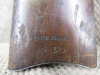

As of today, I have found them with what appears to be an inventory or rack numbers as low as “26” to has high as “813” which leads me to believe that to total number purchased by the City of Toronto could have been as high as 850 – 900.
Conversely, as of today I have yet to discover or verify even a single Winchester marked “T.P.F.“. That certainly does not mean that they do not exist, but it does strongly point to that conclusion. Like you, I really would like to see clear pictures of said “T.P.F.” marking on a Winchester Model 1894 (94) Carbine or on a Model 97 Shotgun.
Bert
WACA Historian & Board of Director Member #6571L
July 2, 2023
Offline
Bert H. said
Alex,
In the past 21-years I have actively surveyed all of the Winchester Model 1894 (94) firearms that are in the 354000 to 2600011 serial number range (May 13th, 1907 through April 29th, 1963). As of this post today, I have documented 32,877 (1.46%) of the 2,246,012 total production in the survey range
In that 32,877 sample, I have thus far documented (26) Model 1894 Carbines that are marked “City of Toronto”. All (26) of them are in the 688459 – 701182 serial number range, corresponding to production beginning in early October 1914 and ending in early November 1914. All of them are marked on the butt stock in identical or similar fashion to the picture shown below.As of today, I have found them with what appears to be an inventory or rack numbers as low as “26” to has high as “813” which leads me to believe that to total number purchased by the City of Toronto could have been as high as 850 – 900.
Conversely, as of today I have yet to discover or verify even a single Winchester marked “T.P.F.”. That certainly does not mean that they do not exist, but it does strongly point to that conclusion. Like you, I really would like to see clear pictures of said “T.P.F.” marking on a Winchester Model 1894 (94) Carbine or on a Model 97 Shotgun.
Bert
Thank you Bert for all your support and information!
Yes I agree with your belief… but I hope we are both wrong.
The hunt is still on for these said “T.P.F” guns.
If I manage to find one, I’ll be dammed!
July 2, 2023
Offline
A purchase of 850–900 Winchester carbines for the Toronto Police Force around 1915 is extremely unlikely given what we know about force strength, procurement practices, and comparable agencies.…
Force strength vs. firearm quantities
Toronto had ~626 sworn members in 1915 (which aligns with Chief Constable annual returns and WWI-era reductions), then:
- 850–900 carbines or even 813 highest known/recorded rack number would exceed total sworn strength by almost half
- That would imply more than one long gun per officer, which was not standard practice for municipal police forces of the era
April 15, 2005
Offline
Alexander Sanguigni said
A purchase of 850–900 Winchester carbines for the Toronto Police Force around 1915 is extremely unlikely given what we know about force strength, procurement practices, and comparable agencies.…
Force strength vs. firearm quantities
Toronto had ~626 sworn members in 1915 (which aligns with Chief Constable annual returns and WWI-era reductions), then:850–900 carbines or even 813 highest known/recorded rack number would exceed total sworn strength by almost half
That would imply more than one long gun per officer, which was not standard practice for municipal police forces of the era
OK, that would then indicate that the numbers stamped on the butt stock were some form of an inventory or rack number for their arsenal. As I mentioned, I have verified numbers as low as “26” and as high as “813”.
Bert
WACA Historian & Board of Director Member #6571L
July 2, 2023
Offline
Cost
- A Winchester 1894 carbine in the 1910s cost roughly $___CAD wholesale
- 900 carbines = $xxx lots of money (1915 dollars)
-
That would have been a major line item, highly visible in:
- City budgets
- Police Commission minutes
- Annual reports
- The chief high constable at the time would not have the funds or backing from his higher ups for this purchase
July 2, 2023
Offline
Bert H. said
Alexander Sanguigni said
A purchase of 850–900 Winchester carbines for the Toronto Police Force around 1915 is extremely unlikely given what we know about force strength, procurement practices, and comparable agencies.…
Force strength vs. firearm quantities
Toronto had ~626 sworn members in 1915 (which aligns with Chief Constable annual returns and WWI-era reductions), then:
850–900 carbines or even 813 highest known/recorded rack number would exceed total sworn strength by almost half
That would imply more than one long gun per officer, which was not standard practice for municipal police forces of the era
OK, that would then indicate that the numbers stamped on the butt stock were some form of an inventory or rack number for their arsenal. As I mentioned, the I have verified numbers as low as “26” and as high as “813”.
Bert
Yes Bert.. armed with this information and knowledge the numbers stamped appear to form a larger inventory or rack number serial list possibly a combination of long guns, revolvers, shotguns altogether and not specifically 1894 carbines etc
July 2, 2023
Offline
Source:
H. Grasett – Annual Report of the Chief Constable of the City of Toronto for the year 1915
This contains the Nominal and Descriptive Roll of the Toronto Police Force — listing all serving members that year.
October 30, 2025
Offline
Alex, very interesting oral history and important to document. However. Any oral histories (from my experience) can only be used when they compliment the facts. Facts in our case are: period customer or vendor documents of procurement / sale, inventory, disposal – we have none; our own observations – we have Bert’s invaluable study. So what we have at the end – we have only “City of Toronto” marked Winchesters, all in 30-30 and that’s it. We can count “City of Toronto are TPS issued guns” as kind of generalized oral history, it can’t be taken for a fact, but can be considered as viable theory. OK, I suppose the only “fact” we can take from oral histories is “yes, TPS has used Wincherster 94s”.
July 2, 2023
Offline
Horilka said
Alex, very interesting oral history and important to document. However. Any oral histories (from my experience) can only be used when they compliment the facts. Facts in our case are: period customer or vendor documents of procurement / sale, inventory, disposal – we have none; our own observations – we have Bert’s invaluable study. So what we have at the end – we have only “City of Toronto” marked Winchesters, all in 30-30 and that’s it. We can count “City of Toronto are TPS issued guns” as kind of generalized oral history, it can’t be taken for a fact, but can be considered as viable theory. OK, I suppose the only “fact” we can take from oral histories is “yes, TPS has used Wincherster 94s”.
👍
July 2, 2023
Offline
Why Don Jail Guards Are an Unlikely User of “City of Toronto” Winchester 1894 Carbines
1. Jurisdiction and arming authority
- Don Jail guards were not municipal police.
- They fell under provincial ministry correctional authority
- Historically in Ontario, provincial jail guards were not armed with firearms, and were not armed at all in day-to-day duties.
I have direct first-hand modern knowledge as well:
Provincial correctional officers in Ontario do not carry firearms; armed guards are only a federal Correctional Service of Canada function. All medium and maximum security jails in Ontario, and Canada for that matter are in fact staffed/ have armed posts throughout the jail. For example, at the notorious Kingston Penitentiary in Kingston, Ontario, guards were armed in the watch towers or at important static control posts.


1 Guest(s)
