

 Log In


July 2, 2023
 Offline

Historical Use, Documentation, and BCP-Inherited Examples
One of the most authoritative published sources documenting the use of the Winchester Model 1894 by the Royal Canadian Mounted Police remains Arms & Accoutrements of the Mounted Police 1873–1973 by R. C. F. Philips and Don Klancher. This work reflects decades of dedicated research, field examination, and archival effort—particularly by Don Klancher, whose lifelong commitment to preserving RCMP material history has been invaluable.
Documented RCMP Use
Philips & Klancher make it clear that the Model 1894 was not a niche or short-lived arm within the Mounted Police. On page 63, they note:
“Use of the Model ’94’s by the Mounted Police has not been restricted solely to the Air Division. Until recently, these light, handy weapons were popular throughout the far-North for patrol work, and a few were still being used at the time of writing.”
This passage firmly establishes the Model 1894 as a practical patrol carbine, particularly suited to northern and remote detachments where weight, reliability, and portability were critical.
Page 64 provides a formal specification entry:
136 — WINCHESTER MODEL 94 CARBINE
Calibre: .30/30
Magazine capacity: 6 rounds
Barrel length: 20 inches
Overall length: 37¾ inches
Weight: 6 lbs. 4 oz.
Rear sight: open sporting
Fore sight: bead on ramp
Issued to the Air Division as a survival rifle for aircraft, and to some northern detachments.
BCP Carbines Inherited by the RCMP (1950–1951)
Since the publication of Arms & Accoutrements, additional documentation has surfaced regarding Winchester Model 1894 carbines inherited by the RCMP from the British Columbia Provincial Police (BCP) when that force was absorbed on 15 August 1950.
A February 8, 1951 inventory prepared at RCMP Headquarters in Victoria, British Columbia, recorded the transfer of 332 “.30-30 Winchester Rifles” from the BCP to the RCMP. According to Don Klancher’s research:
- 285 were classified as “New Models”
- 47 were classified as “Old Models”
The 47 “Old Model” carbines all carried six-digit serial numbers, ranging from 1XXXXX to 6XXXXX, corresponding approximately to 1900–1913 production.
No definitive explanation has yet been located that clearly defines the RCMP’s criteria for “New Model” versus “Old Model.” Available online sources have not yielded additional clarity.
The remaining carbines fell into the 121XXXX to 124XXXX serial range, dating to 1939–1940, with the majority clustered in the 124XXX range (1940 production).
Markings, Issue, and Configuration
These carbines were issued to RCMP detachments throughout British Columbia. Importantly:
- The carbines were stamped “BCP” followed by an issue number on the lower tang
- Examined examples were not stamped “MP”
- Several examined carbines—including one formerly owned by Don Klancher—were fitted with leather slings without BCP markings
Based on first-hand examination, Don Klancher concluded that:
“In my opinion, the sling swivels and sling were original equipment and had nothing to do with the RCMP.”
This distinction is critical as it suggests the sling hardware and leather slings are BCP-era features, not RCMP modifications.
July 2, 2023
Offline


Source Citation: Phillips, R. C., and D. J. Klancher. Arms & Accoutrements of the Mounted Police, 1873–1973. Ottawa: Royal Canadian Mounted Police, 1973.
July 2, 2023
Offline
RCMP issued “Winchester Carbine” Drill and Parade Manual
& Detailed picture showing issued long guns and shotguns- Included Winchester 94 Carbine
July 2, 2023
Offline
Supplemental Information provided by Don Klancher:
“In the RCMP, as noted in our book, such carbines were “Issued to the Air Division as a survival rifle for aircraft, and to some northern detachments.” Such carbines were primarily carried in piston-driven ‘Beaver’ and ‘Otter’ aircraft.”
“They were still issued in 1970, as I had a fire-damaged one recovered from the 1970 crash-site of an RCMP aircraft.”

March 31, 2009
Offline

Do you ever come across any of the Military Win Model 1917’s? I know there was a shipment of 80,000 in the early 1940’s. These were left over from WW I and sold to the Brits after Dunkirk when arms were at a shortage.
July 2, 2023
Offline
Chuck said
Do you ever come across any of the Military Win Model 1917’s? I know there was a shipment of 80,000 in the early 1940’s. These were left over from WW I and sold to the Brits after Dunkirk when arms were at a shortage.
Hi Chuck,
Sorry I have no knowledge of this.
Perhaps other members in this forum are more aware of these guns that you are referring to
May 14, 2025
Offline
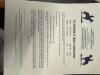
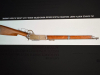
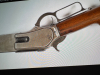
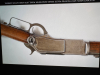
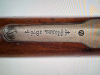
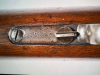
Don’t know if it helps but I have an 1873 from the RCMP. I bought it to add to my RCMP commemorative collection. It came with a letter from Klancher and I’ve attached it and the Cody Museum letter.
July 2, 2023
Offline
Hi ,
yes the famous Winchester 1876 “Mountie Gun”
It is a beautiful piece indeed and quite expensive they are going for roughly $ 8-10k CAD plus depending on condition etc. these days
Don Klancher has already well documented these guns in his books.
This post is focusing more on Winchester 1894 30-30 carbines.
May 14, 2025
Offline
Alexander Sanguigni said
Hi ,
yes the famous Winchester 1876 “Mountie Gun”
It is a beautiful piece indeed and quite expensive they are going for roughly $ 8-10k CAD plus depending on condition etc. these days
Don Klancher has already well documented these guns in his books.
This post is focusing more on Winchester 1894 30-30 carbines.
Thanks, I wasn’t aware of the 94 RCMP other than the Commemorative edition. Everything online seems to lead to the 94 RCMP Commemorative but I will keep an eye out for anything I can find and report back. Appreciate the education on these! Very interesting! Thanks


