

 Log In


October 29, 2011
 Offline


Have any of you used Vollmer 200 grain for your 33WCF? Bill

September 23, 2025
Offline
Well,
There are about 10 different posts on 33 wcf going on right now, and I wasn’t sure which one to post on, but I did want to make a post as I chrony’d my first batch of 33 wcf loads yesterday with the 200 grain hornady FTX.
The overall length of the cartridge did not present an issue with clearance to lift the round up on my particular 1906 half mag takedown 1886, even with the mag tube turned all the way in, however the magazine follower itself did present an issue in conjunction with the pointy bullets. More on that in a second.
I used:
New Factory Winchester 45-70 Brass
Redding Form Die
Redding sizing and Seating Die
Lee Factory Crimp Die
Rcbs shell holder. #8 I believe.
Imr 3031
200 grain Hornady FTX
Federal Large Rifle Match Primers (overkill, but it’s what I had on hand).
I loaded up some dummy loads with no powder, but a seated primer to test feeding at various seating depths. It was evident very quickly that length clearance on my particular rifle was not a problem in regards to lifting clearance, but I did have a loading and feeding issue.
Knowing length was a hot topic after reading various forum posts, I trimmed the brass down to the hornady specified min brass length and seated the bullet to the point where you can just barely see the cannelure.
The feeding problem I experienced was that the rounds would enter the reciever cockeyed and get hung up on the loading gate side of the reciever. I got to thinking about why this was happening, and determined that the flat face of the factory follower allowed the tipped bullets to slide on it. Combine that with the geometry of the 33 wcf case necking down to a smaller diameter than the body of the cartridge, it was leaving room for the bullet tip to slip and the cartridge to enter the reciever crooked. It is also not very easy to feed a round into the magazine tube straight coming in from the loading gate. The extra cartridge length, again combined with a pointed bullet just gives bad angles.
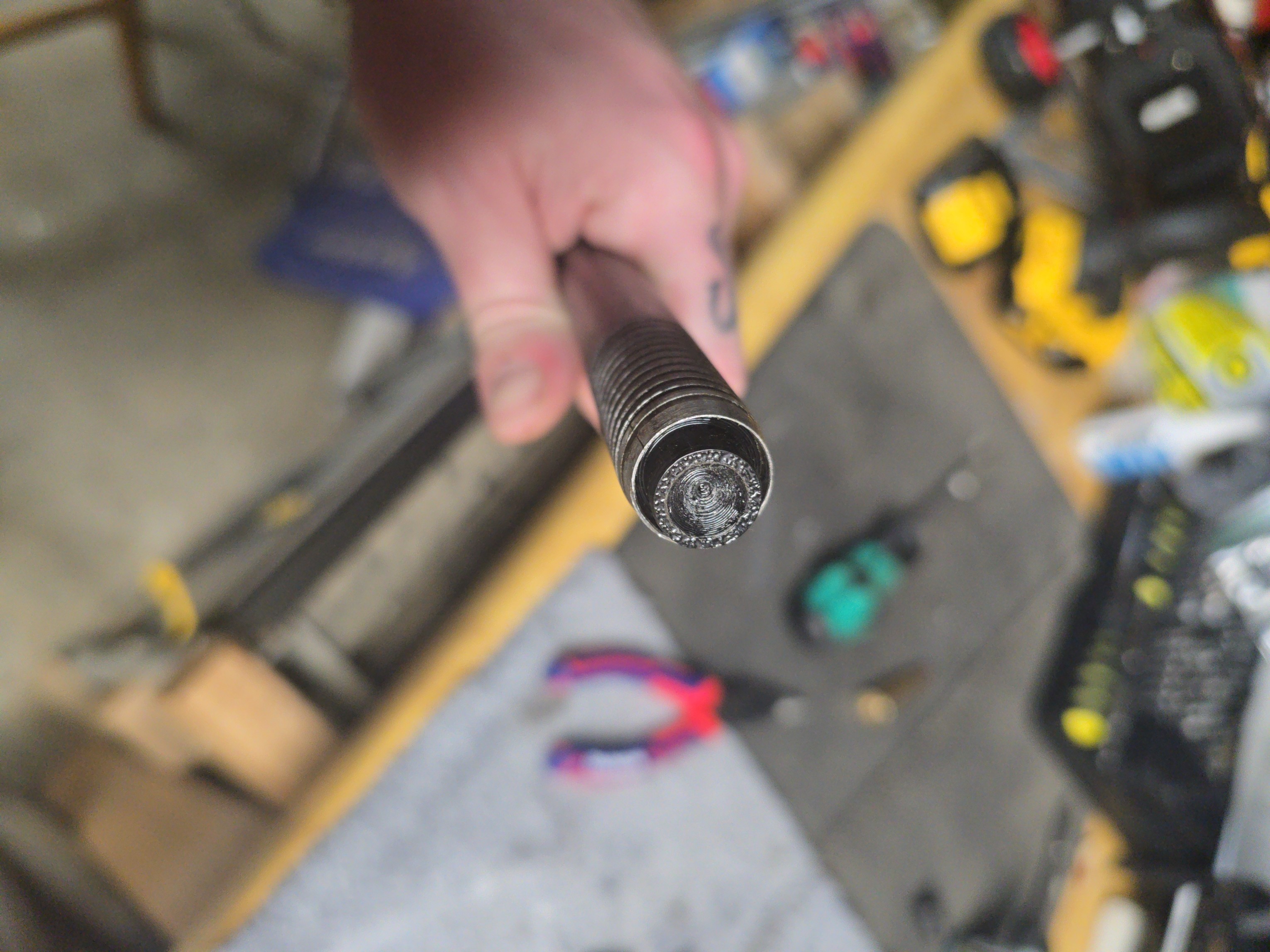
I did some googling, and it turns out that this situation may not be unique to this rifle and cartridge. It appears that marlin and a possibly others utilize a dimpled magazine follower these days, with a small dimple centered in the follower to give that tipped bullet a spot to rest and less chance to divert off course. Well, I am pretty blessed to have a brother than runs a 3d printing business full time, and lives 1 mi away from me. I took him the factory follower, and asked him to replicate the follower with a dimpled face. 2 grams of plastic and about 30 minutes later, we had a printed prototype follower with a dimple that looked similar to the modern dimpled followers I found on Google. I took it home and slapped it in my mag tube and gave my dummy rounds a go. It appeared to work in terms of keeping the cartridge straight once properly loaded, but it did not help get the rounds in through the loading gate, and the small diameter dimple was too small to hit at the angle they go into the loading gate on. Again, I am lucky to have the resource as after 10 minute phone call and 2 more grams of plastic, we had prototype number 2, which basically craters out the entire face of the follower, and allows the bullet to “slip” into being centered upon loading the rifle.
There is probably some tweaking to the follower that could be done, but prototype follower #2 works. I can feed rounds through the loading gate, and the gun feeds them into the reciever straight. I now have an 1886 in 33 wcf that consistently loads, and cycles my home brew 200 grain ftx loads with factory length BRASS and the bullet crimped on the cannelure.
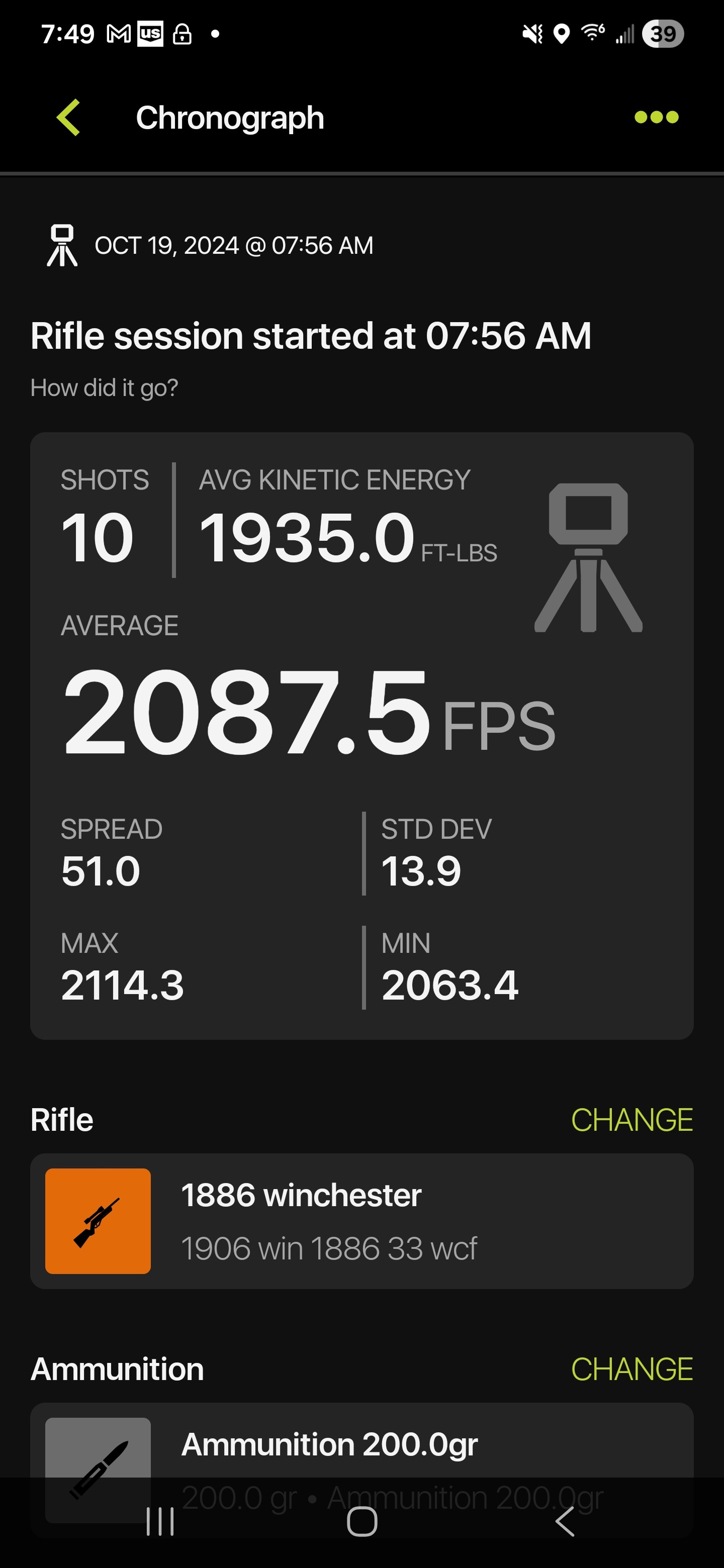
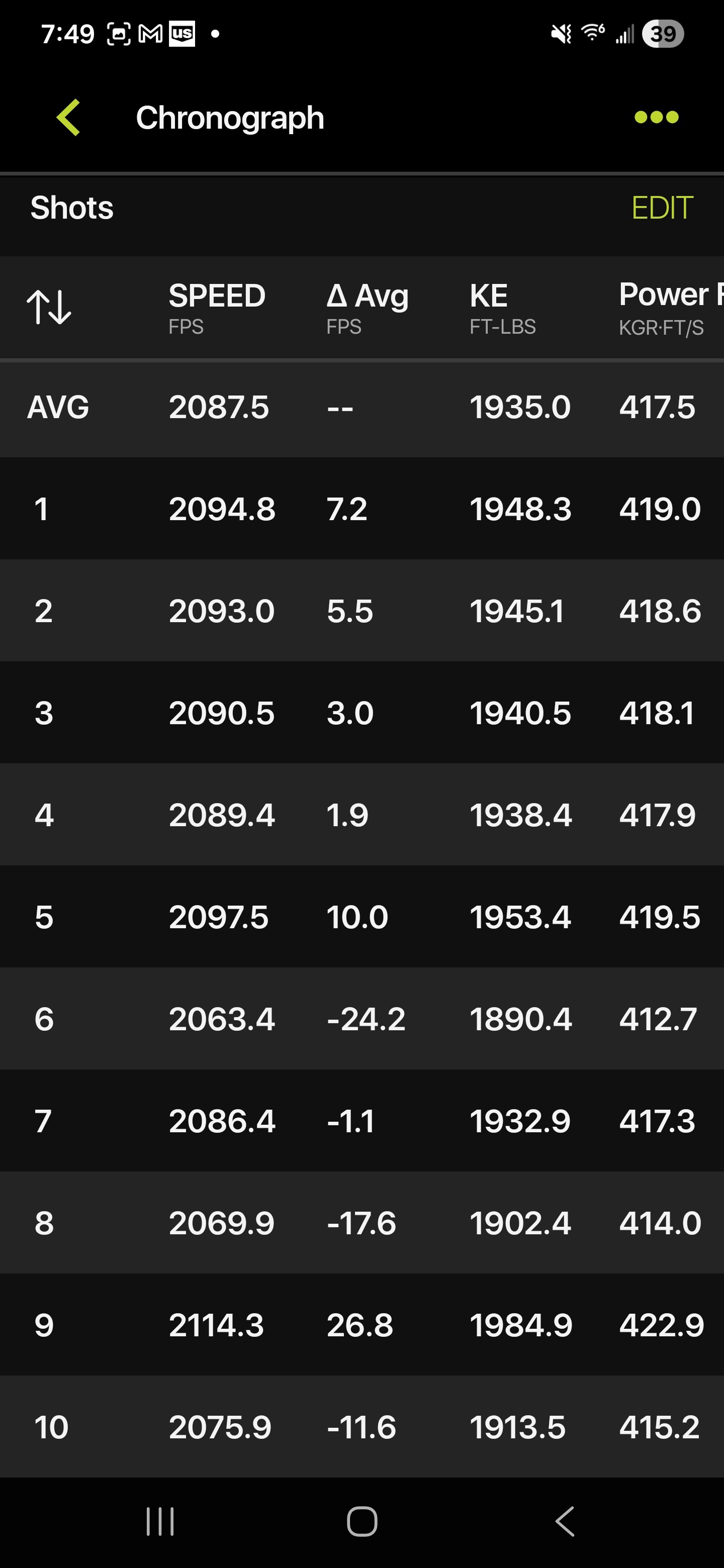
Attached is an image of the magazine follower we came up with, as well as yesterday’s chronograph results off my garmin xero w/38 grains of 3031. Note that I am almost 100 fps faster then what the book velocity shows for this load. This is close to the maximum velocity listed in the hornady manual for 3031, at a lesser powder charge than they report. I shouldn’t need to say it, but please work up your own loads responsibly from a lesser and safe starting value.
I about croaked when I saw next to no SD on my first five shots. I weighed the charges by hand, but I can’t say I was trying to make match rounds. Rounds were fired in reasonably fast succession (probably 10-20 seconds between shots) and I’ll blame the SD opening up on my barrel getting warm. Either way, I am very pleased with the results, and im very pleased to be able to buy off the shelf bullets from a major manufacturer for this rifle. A hornady interlock is one of my favorite deer bullets, and I suspect this would be a smackin’ load on a white tail.
Cheers,
Garrett
September 19, 2014
Offline
Glad to see your results! Think you’ve got a winner on your hands. Tim
November 19, 2006
Offline
Garrett –
Great information and report!

January 20, 2023
Offline
Garrett,
Outstanding engineering work and a well-deserved, impressive result. There’s surely nothing that walks in America that load can’t reduce to venison, given good placement and a range that allows it to retain, say, 1k to 1.5k foot pounds of kinetic energy at the target, for adequate penetration on the largest beasts. That’s where the spitzer shape will shiny.
If you have access to extended (200,300 yard) ranges, I would be interested to see how the long spitzer bullet “carries up” at distances beyond what is considered practical range for the 33 WCF.
Congratulations and good on your brother-in-law!
Bill
PS i see you used the Redding forming and sizing dies to make .33 brass from 45-70 stock. I’ve got those dies but haven’t tried to use them yet. Any advice?
- Bill
WACA # 65205; life member, NRA; member, TGCA; member, TSRA; amateur preservationist
"I have seen wicked men and fools, a great many of both, and I believe they both get paid in the end, but the fools first." -- David Balfour, narrator and protagonist of the novel, Kidnapped, by Robert Louis Stevenson.
September 23, 2025
Offline

Bill,
The only issue I had during forming/sizing was lube. The imperial case lube I was using dented the cases If I put enough of it on that I could actually function my press. I switched to using hornady unique case lube, and everything went very well with an thin and even coat of that.
In regards to long range performance, I do have access to steel up to 700 yards on 100 yard intervals. I would be happy to do a range report but you the on paper data may provide better guidance. At any sort of range with open sights, I would anticipate the shooter skill and consistency would turn into an issue. 🙂
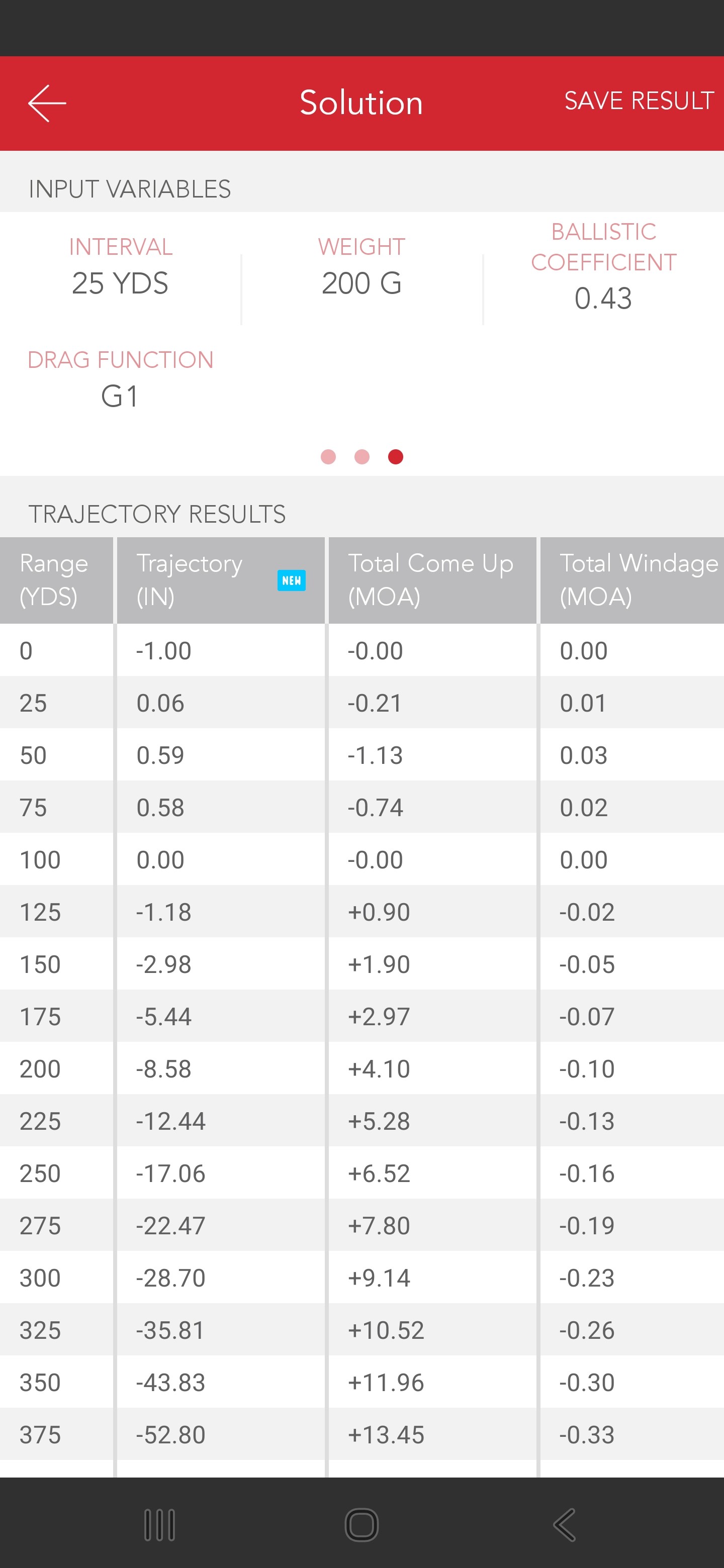
Attached are two ballistic calculator runs out of Hornady’s app. Both of them were run under the same neutral conditions, at an assumed 2087 fps from the muzzle. Since hornady no longer makes an .338 FP, I looked for the closest comparison flat point bullet with readily available data. For this test, a 170 gr .32 caliber flat point was as close as I could get.
There is no doubt that the .430 BC far is a huge jump up from the kind of BC’s that any sort of flat point would offer. Now, is there a noticable difference at the kind of shots that a guy would take with an open sight lever action rifle? I’ll let you guys decide.
I ran off quite a bit of data when I was exploring the cartridge and its potential. One thing I looked at closely was the performance of 33 wcf vs 30-30 winchester. Hornady has a box offering leverrevolution load of 160 grains at a stated velocity of 2400 fps. The maximum velocities listed in hornady’s reloading manual for 33 wcf is 2200 fps. When looking at drop and energy, the 30-30 box load at 2400 fps, is equal or better than an assumed 2200 fps 33 load with the 200 gr FTX. This puzzled me at first. Is the 33 wcf no better than the 30-30? Well, if you put all of your eggs in the energy basket, it would appear so.
After a conversation with my uncle regarding the results, he urged me to look at metrics that were centric on terminal performance, not just energy. When you start looking at an equation based on terminal performance, such as taylor KO, the 33 wcf is in an entirely different tier, capable of elk etc, compared to the 30-30 results being in the “whitetail range”. If there is interest, i’d be happy to post some of those results and calculations.
Regards,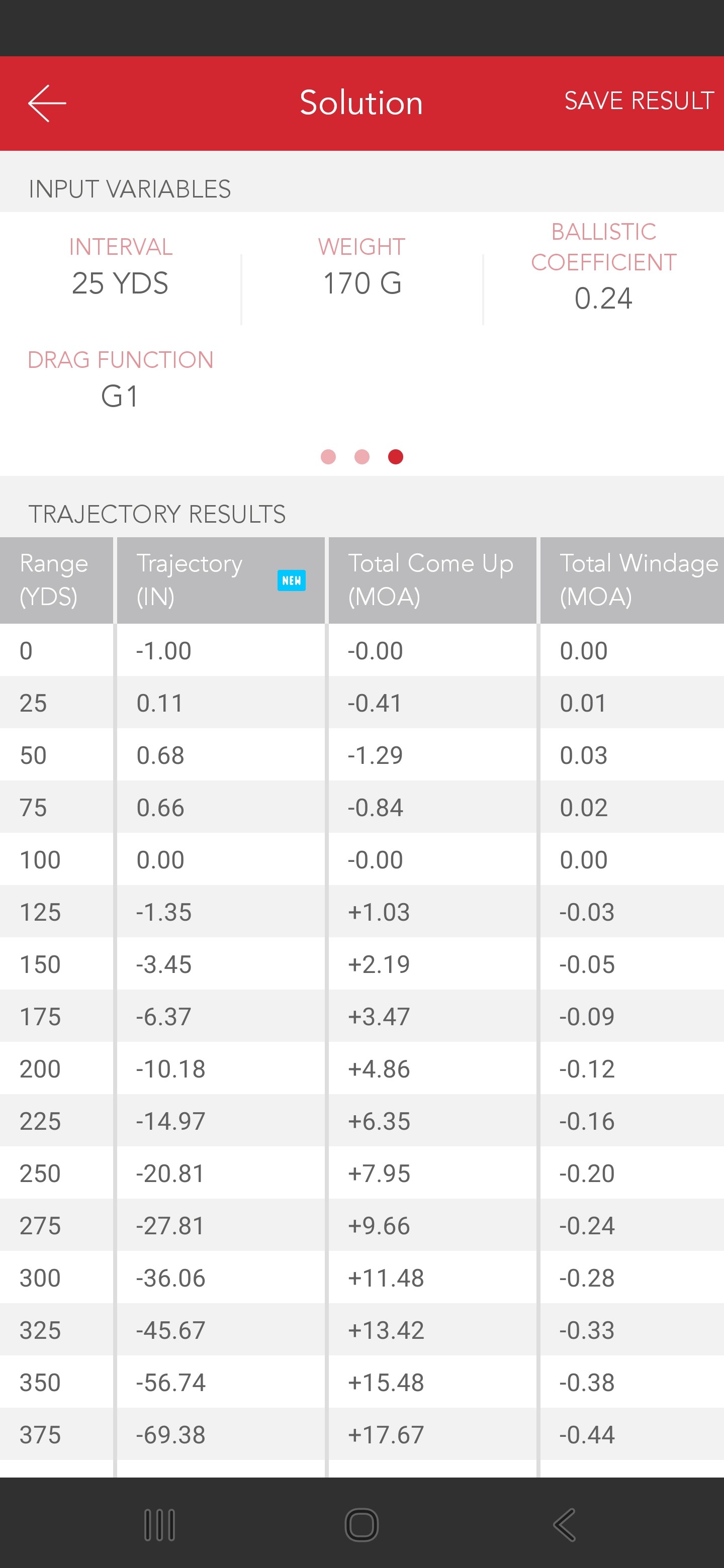
Garrett
September 19, 2014
Offline
Garrett and Bill, with our silhouette shoots, I have needs at times to stretch my .33 Win to the 300 yard targets. I use a receiver sight as the rifle was already drilled and tapped for one. With the flat nosed Hornady bullets, I had them zero’ed for 200 yards center of aperture. With the flex tip also weighing 200 grains and loaded with the same amount of IMR 3031, I have to put the silhouette in the top quarter of the field of view to hit at 200 yards, and in the bottom of the field of view for 300 yards. Without doubt they flatten the trajectory. Its always been easier to use “Kentucky windage” rather than mess with the sight settings. Retained energy is also up by some unknown amount allowing it to take down the ram silhouette to at least 300 yards. Flat tips sometimes only rang the target with poor hits. For all this fluff, IMR 3031 is temperature sensitive and I find impact at 200 and 300 to change enough with temperature to knock all I think I know into a cocked hat. We shoot from temperatures of 15 to 20 degrees in late winter up into the upper 80s and low 90s in summer. Impact points vary and I benefit from shooting a bit to find just where in the aperture to hold the silhouette targets. My experiences over a number of years. Tim
January 20, 2023
Offline
Thank you both. That is enough to convince me it would be worth the effort, although my old steel BLR 358 wcf and its detachable box magazine dampen the urgency to experiment..
What I really need to do is find a .407 jacketed spitzer for my 1895, likely a long search.
- Bill
WACA # 65205; life member, NRA; member, TGCA; member, TSRA; amateur preservationist
"I have seen wicked men and fools, a great many of both, and I believe they both get paid in the end, but the fools first." -- David Balfour, narrator and protagonist of the novel, Kidnapped, by Robert Louis Stevenson.

April 3, 2018
Offline
Bill:
Hope your TD 1886 in 33 WCF is shooting well and to the mark.
These 33 WCF rifles are a pleasure to reload and shoot, with bullets that surpass the bullets made by Remington and W-W when the cartridge and rifles were first available in 1903. This thread topic explores some interesting new experiences, indicating that though Hornady has discontinued their excellent 200 gr FP bullet, there are others now to choose from. Necessity is still the mother of invention. Rather than use the flex-tip style, I prefer the Nosler modified .338 Partition bullet with flattened tip-reducing weight to 205 grs +-/They are both accurate and deadly for hunting. With Hawk and Nosler bullets, the 1886 33 combination becomes quite a hunting rifle. The 210 Nosler Partition bullet carries very well for me out to 125-150 yards, and the bullet construction is strong enough for elk, moose or bear. Nosler offers these also as seconds, which reduces the cost of shooting them. They can be single loaded, or modified with flat tips to fill the magazine. One of my 1886 rifles is a FMCB with a Lyman 21 receiver sight. It is a joy to shoot due to the accurate Lyman 21. The Hawk bullets are easiest on 100-yr+ rifles bores, due to their construction of dead soft copper jackets. I use a set of older CH dies in reloading/re-sizing.
Loading tips for the 33 WCF:
Starline 40-65 WCF brass reforms very easily into 33 WCF brass. A bit easier than 45-70, the parent case. Watch OAL, but the Lee Factory Crimp die is forgiving. The 33 WCF case is a bottleneck case. As such, be very careful with gas checks in lead cast bullets. If the gas check should dislodge and fall on the powder column, you will have a very serious pressure excursion. Lever action rifles have no sense of humor concerning high pressures. I use no gas checks on reduced lead cast bullets in the 33 1886. Powders are a personal choice. I favor 3031, 4064 even 4831. H or IMR 4198 is a faster powder and will work on lead bullets or reduced velocity in jacketed bullets. Since my 1886 rifles are not target guns, my supply of .338 bullets should last a lifetime of hunting. Unless I get cornered by a covey of mad moose or grizzlies.
{Hawk Bullets in NJ can and will make you a .407 semi-spitzer for your 1895 in .405 WCF. I used them in my TD 1895 years back. Work on elk.}

April 15, 2005
Offline
450 Fuller said
Bill:
{Hawk Bullets in NJ can and will make you a .407 semi-spitzer for your 1895 in .405 WCF. I used them in my TD 1895 years back. Work on elk.}
.407 bullets in a 405 WCF ? How does that work ? While I have not (yet) reloaded for my 405 high-wall, I did buy a batch of .411 Hornady 300-gr bullets for my future reloading project.
Bert
WACA Historian & Board of Director Member #6571L

March 31, 2009
Offline
I’d go with what Bert says. My reference info says .412″. Slug the barrel.
April 3, 2018
Offline
My original 1895s preferred .411-412 Hawk 300 gr bullets. I did try some 315 gr Hawk .412 bullets and they were accurate at all practical ranges. Andy Hill at Hawk will custom make bullets to your order. Slug the bore or be very sure of your bullet diameter required.
Bill may have a custom barrel. I am not sure of the bore diameter of newer reproduction rifles, as I have never owned one.
November 7, 2015
Offline
407 bullets in a 405 WCF ? How does that work ? While I have not (yet) reloaded for my 405 high-wall, I did buy a batch of .411 Hornady 300-gr bullets for my future reloading project.
Bert
Maybe. My perennial 38-55 project is currently exploring Hornady .374″ bullets (intended for the 375 Winchester) in a .380″ bore with promising results. I’m finding a soft lead core in a suitable jacket over an appropriate powder charge will certainly bump up to fill the bore. I haven’t tried Hawk bullets but I wouldn’t rule it out. But yes, slug the bore!
Mike
January 20, 2023
Offline
Bill does not need to slug his .411 barrel. He needs not to write posts when he hasn’t had enough sleep and his aged brain is fogged.
Tomorrow, he will un-fog his brain with some range work with a rice-powered 1886 ELW 45-70-400.
- Bill
WACA # 65205; life member, NRA; member, TGCA; member, TSRA; amateur preservationist
"I have seen wicked men and fools, a great many of both, and I believe they both get paid in the end, but the fools first." -- David Balfour, narrator and protagonist of the novel, Kidnapped, by Robert Louis Stevenson.
November 7, 2015
Offline
Zebulon said
Bill does not need to slug his .411 barrel. He needs not to write posts when he hasn’t had enough sleep and his aged brain is fogged.
Tomorrow, he will un-fog his brain with some range work with a rice-powered 1886 ELW 45-70-400.
Agreed on some points, ELW shot nicely today and looked damn good doing it!
Mike


2 Guest(s)
