

 Log In


November 19, 2006
 Offline


Austin has it, so I would trust that the rifle and box are right. I wouldn’t say we never see high condition in-the-box specimens like this – we do – but those that I would have confidence in their legitimacy, have been almost none. It’s refreshing to see one I would have confidence in. Speculation as to how high it will go?
https://www.gunbroker.com/item/1148470535
And while on the topic of nice looking .22’s, here’s a very exceptional M63″

August 8, 2024
Offline
The 61 Magnums box looks off color to me. That may just be the picture. The hang tag is a replica. So, with that I would be concerned with the package.
December 9, 2002
Offline
Steve,
A couple nice examples, of some hard to find in nice condition .22 cal. rifles. Like you said with the box issues, and Austins outstanding reputation, it sure looks nice to me.
Bo,
I agree on the hang tag, but not sure on the box, that shows wear and tear, but could be suspect also!
He and I recently had a nice transaction, and I was glad we came to an agreement, an another rifle he sold on his very reputable site!
On the model 63 rifle,(1933-1958), this one, mfg. in 1951, (WACA #103223). As Bert stated in his Red Book, 4 th edition, the 23 inch barrel, that is listed here, is a standard length barrel rifle, authorized on 12/13/1934, and very desirable as a very reliable .22 L.R. Caliber, in the automatic self loading rifle, as he states, by the public, was the finest, semi automatic rifle ever produced! Unless I am missing something in his listing, I feel a better description of the rifle, including some of this information listed, should be included. The later rifles had the grooved receivers, for a scope mount and are more often seen, but harder to find in this condition!
The only thing that would be a little more desirable than this fine rifle, would be the 20 inch carbine, (1933-1936), that’s a hard to find specimen, or a fancy finished, (Deluxe), version.(also hard to find) IMO!
Anthony
November 19, 2006
Offline
Anthony said
Steve,
A couple nice examples, of some hard to find in nice condition .22 cal. rifles. Like you said with the box issues, and Austins outstanding reputation, it sure looks nice to me.
Bo,
I agree on the hang tag, but not sure on the box, that shows wear and tear, but could be suspect also!
He and I recently had a nice transaction, and I was glad we came to an agreement, an another rifle he sold on his very reputable site!
On the model 63 rifle,(1933-1958), this one, mfg. in 1951, (WACA #103223). As Bert stated in his Red Book, 4 th edition, the 23 inch barrel, that is listed here, is a standard length barrel rifle, authorized on 12/13/1934, and very desirable as a very reliable .22 L.R. Caliber, in the automatic self loading rifle, as he states, by the public, was the finest, semi automatic rifle ever produced! Unless I am missing something in his listing, I feel a better description of the rifle, including some of this information listed, should be included. The later rifles had the grooved receivers, for a scope mount and are more often seen, but harder to find in this condition!
The only thing that would be a little more desirable than this fine rifle, would be the 20 inch carbine, (1933-1936), that’s a hard to find specimen, or a fancy finished, (Deluxe), version.(also hard to find) IMO!
Anthony
The box looked right as rain to me – but I’m not much of a box guy. As far as judging the color of a box, the last factory box I had was a boxed Ross rifle (circa 1908) with the original shipping tag. However, as it was a wooden crate box with 1/2 inch boards, I judged the color to be correct – plain wood  By the way, the Ross rifle was in as nice a condition as this 22 magnum is.

March 14, 2022
Offline
Steve, I picked this one up recently. 1961, no box but worthy of one. $1750 U.S
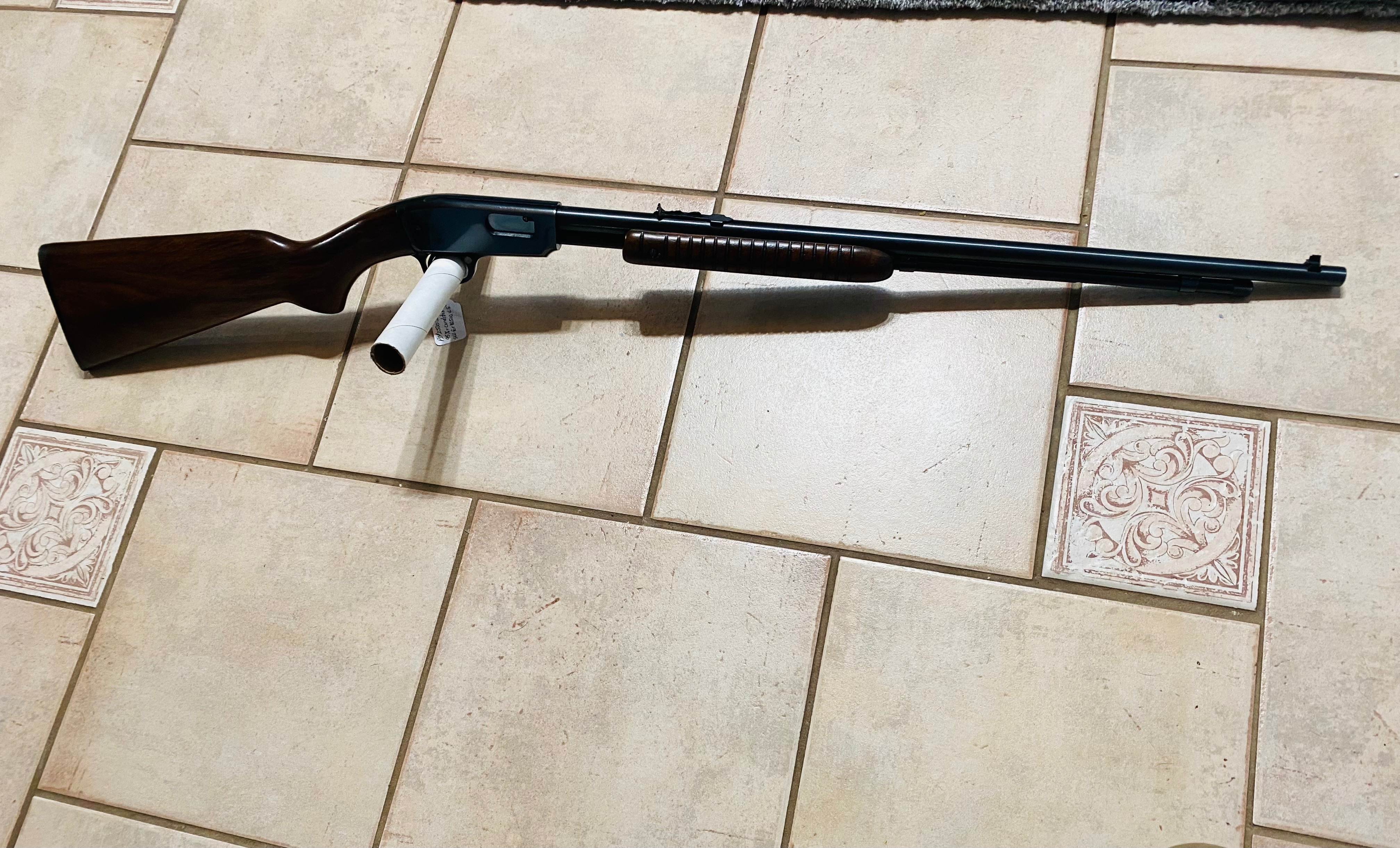
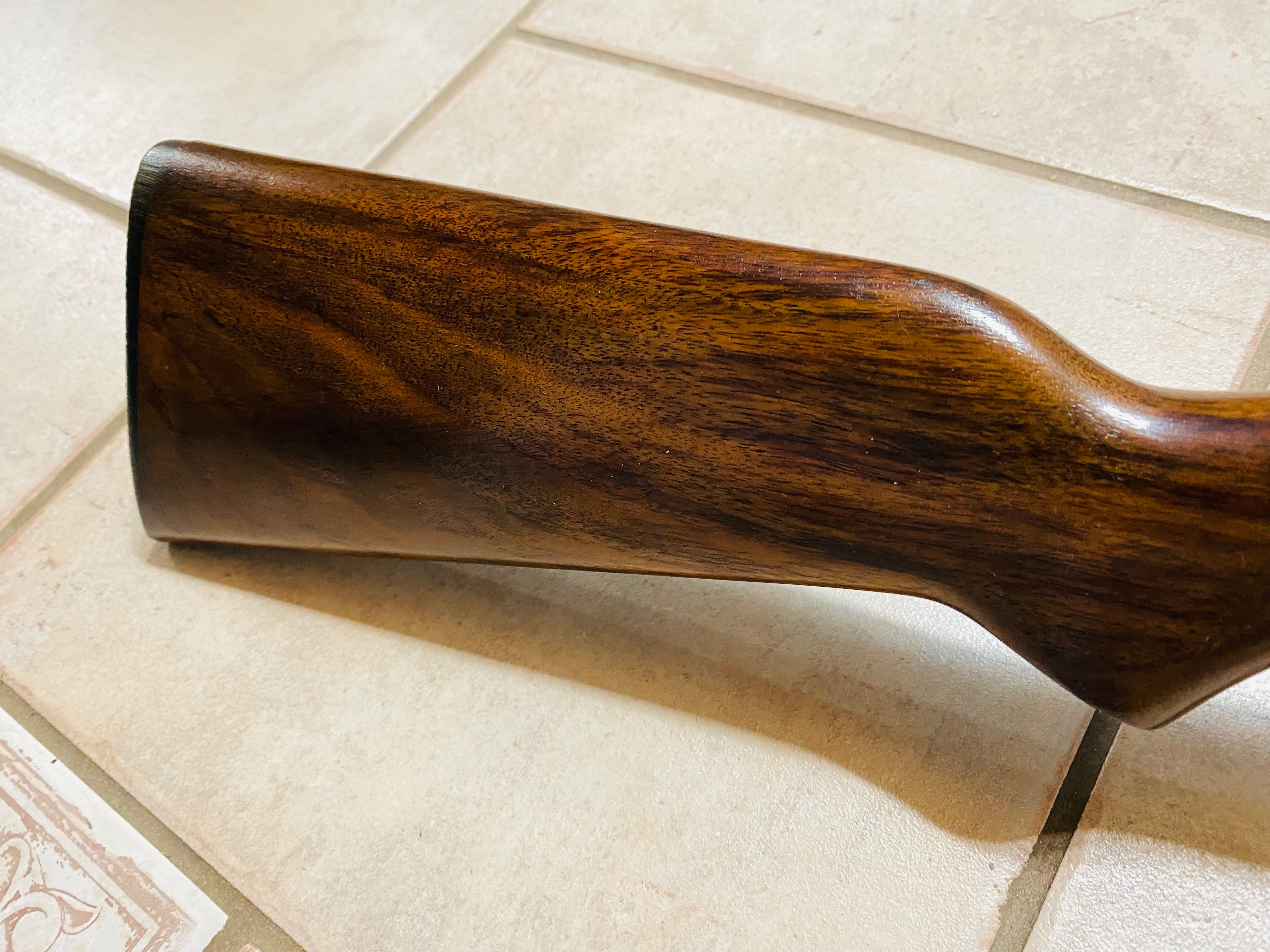
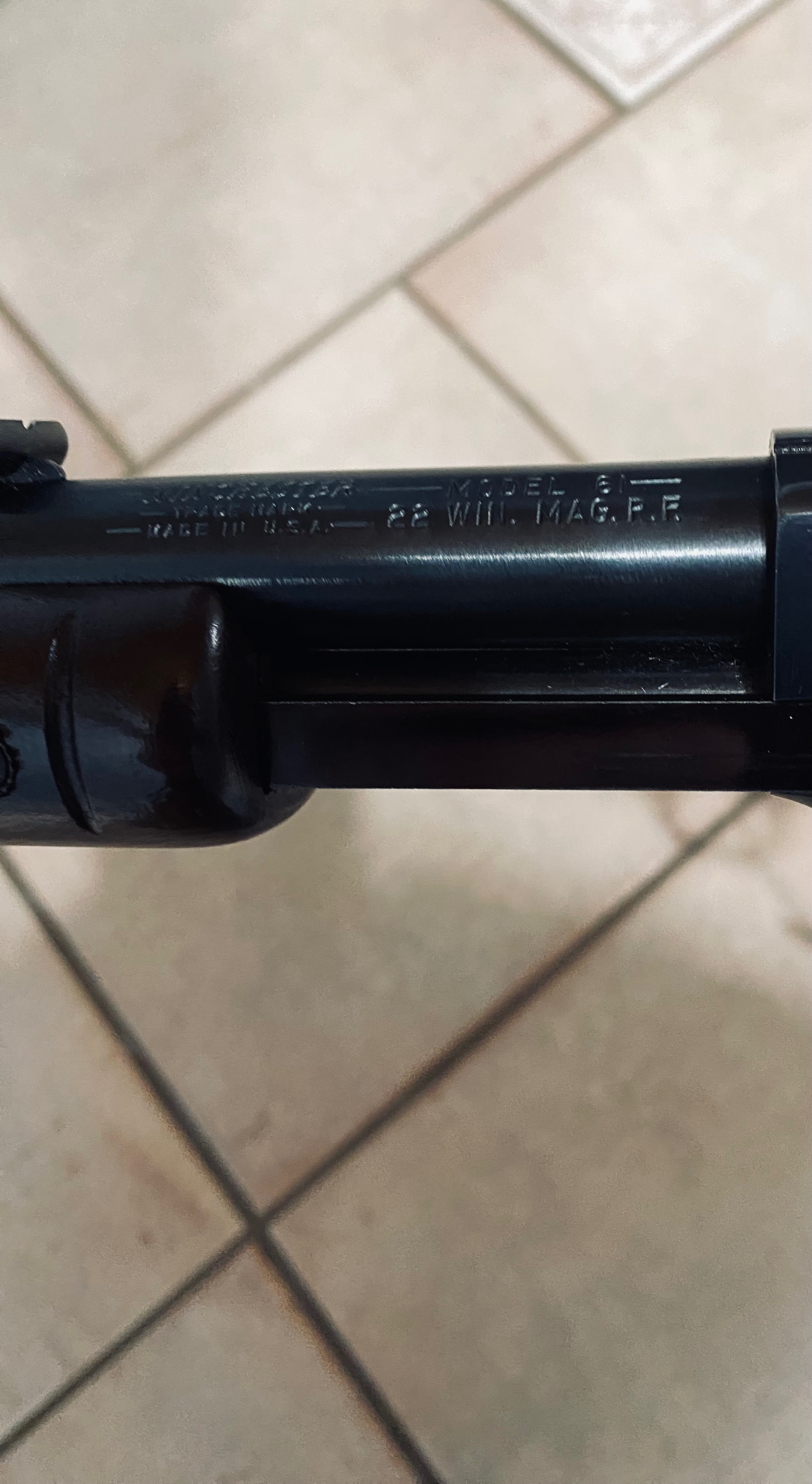
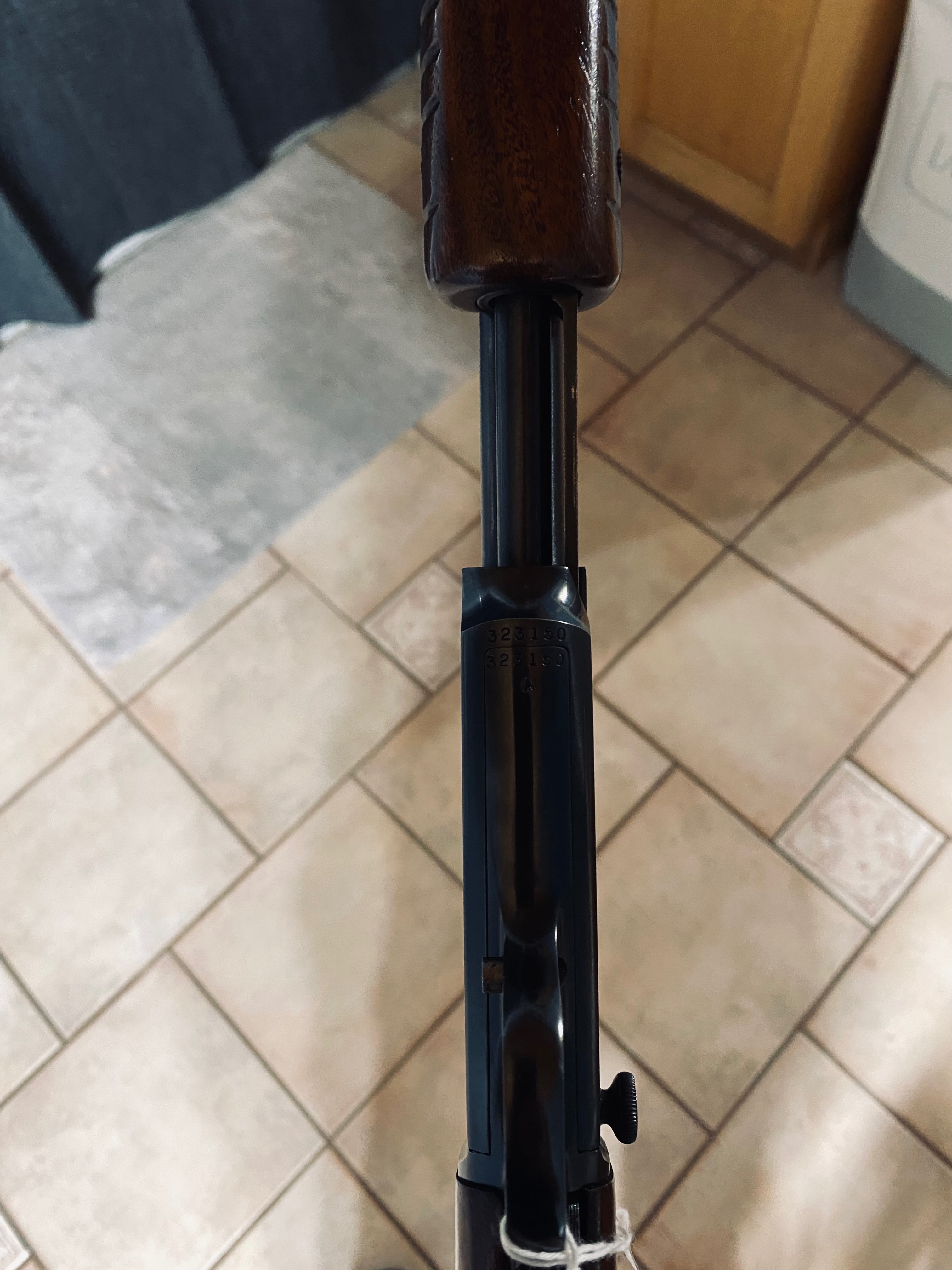
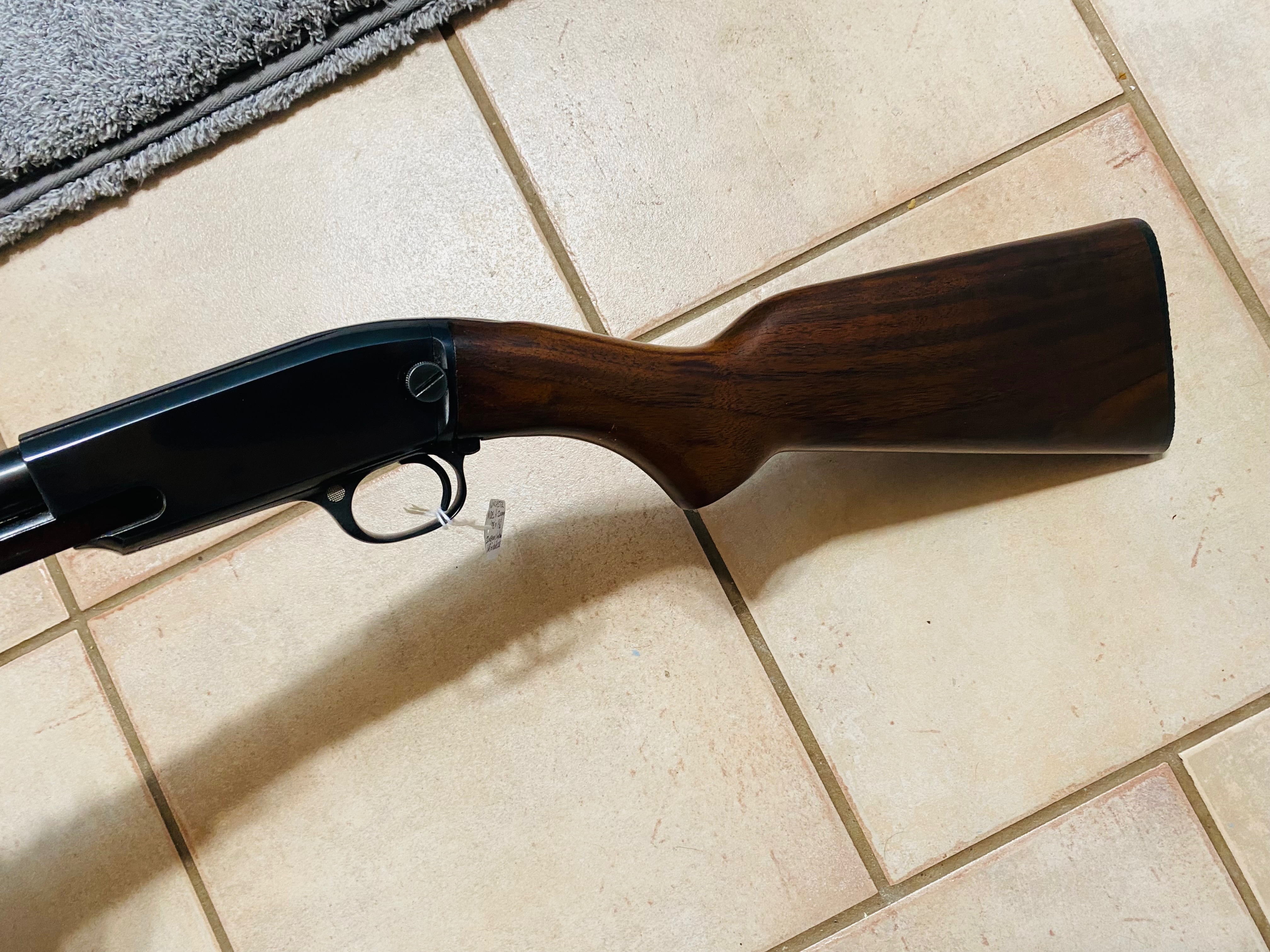
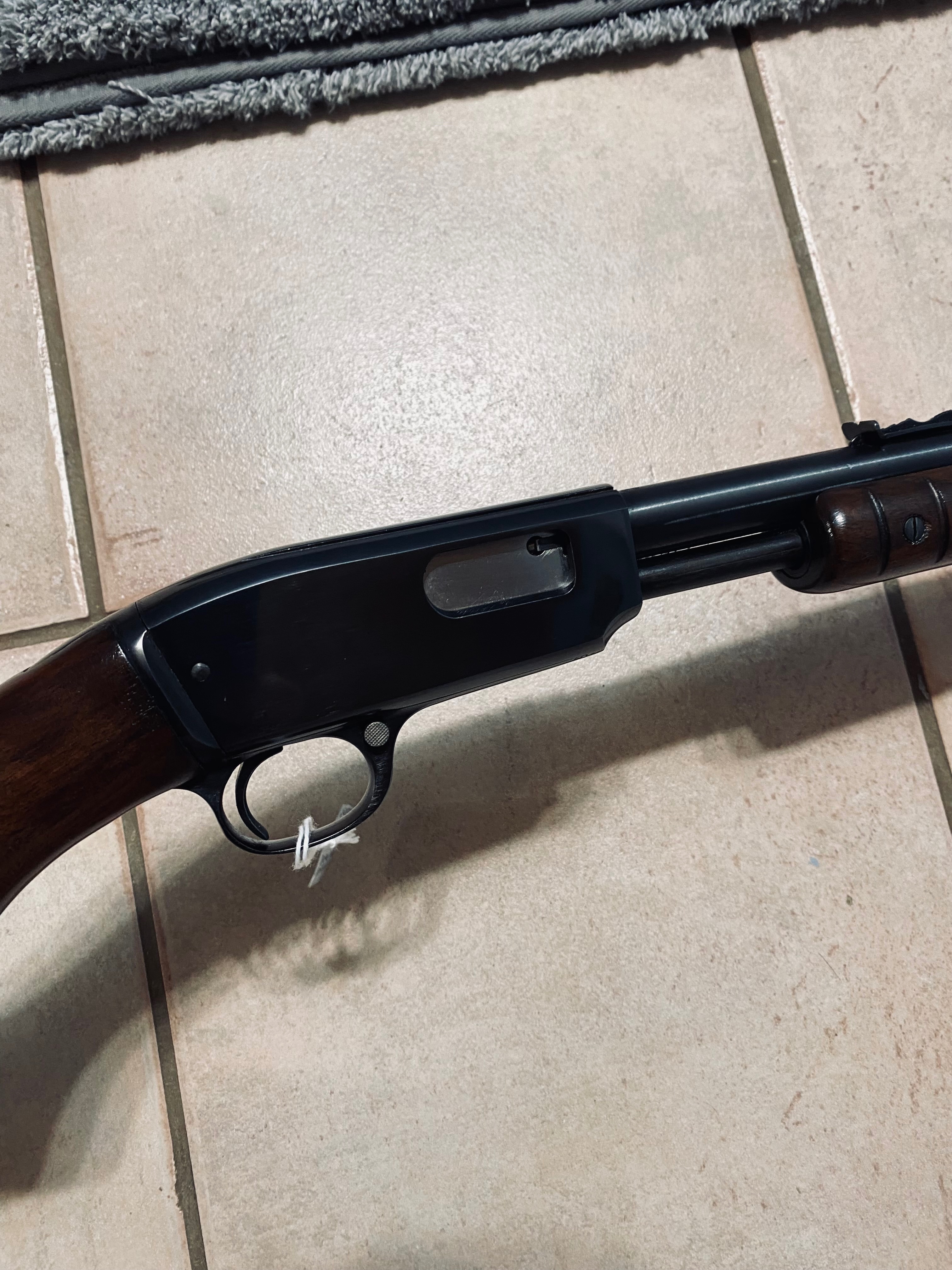
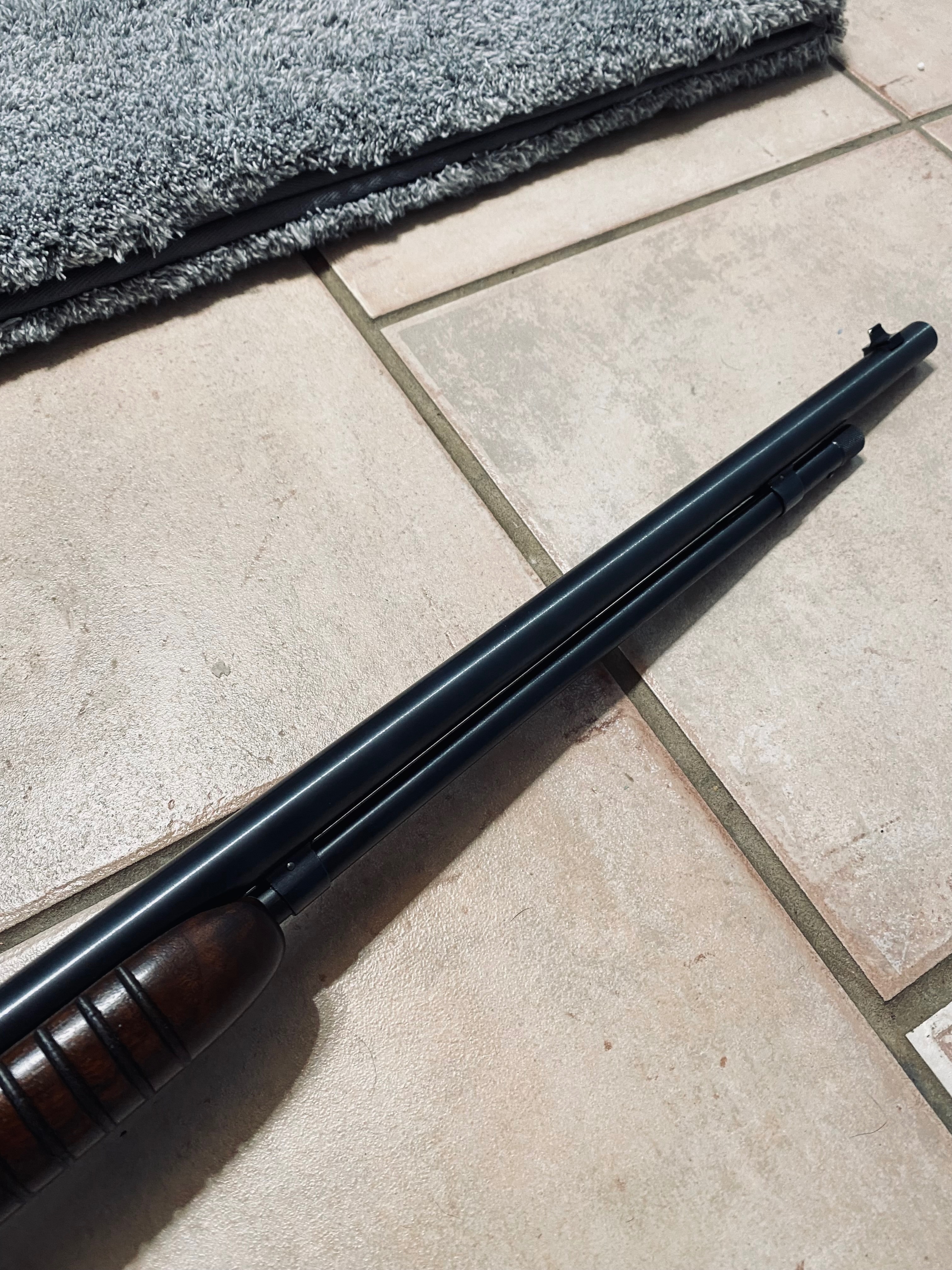
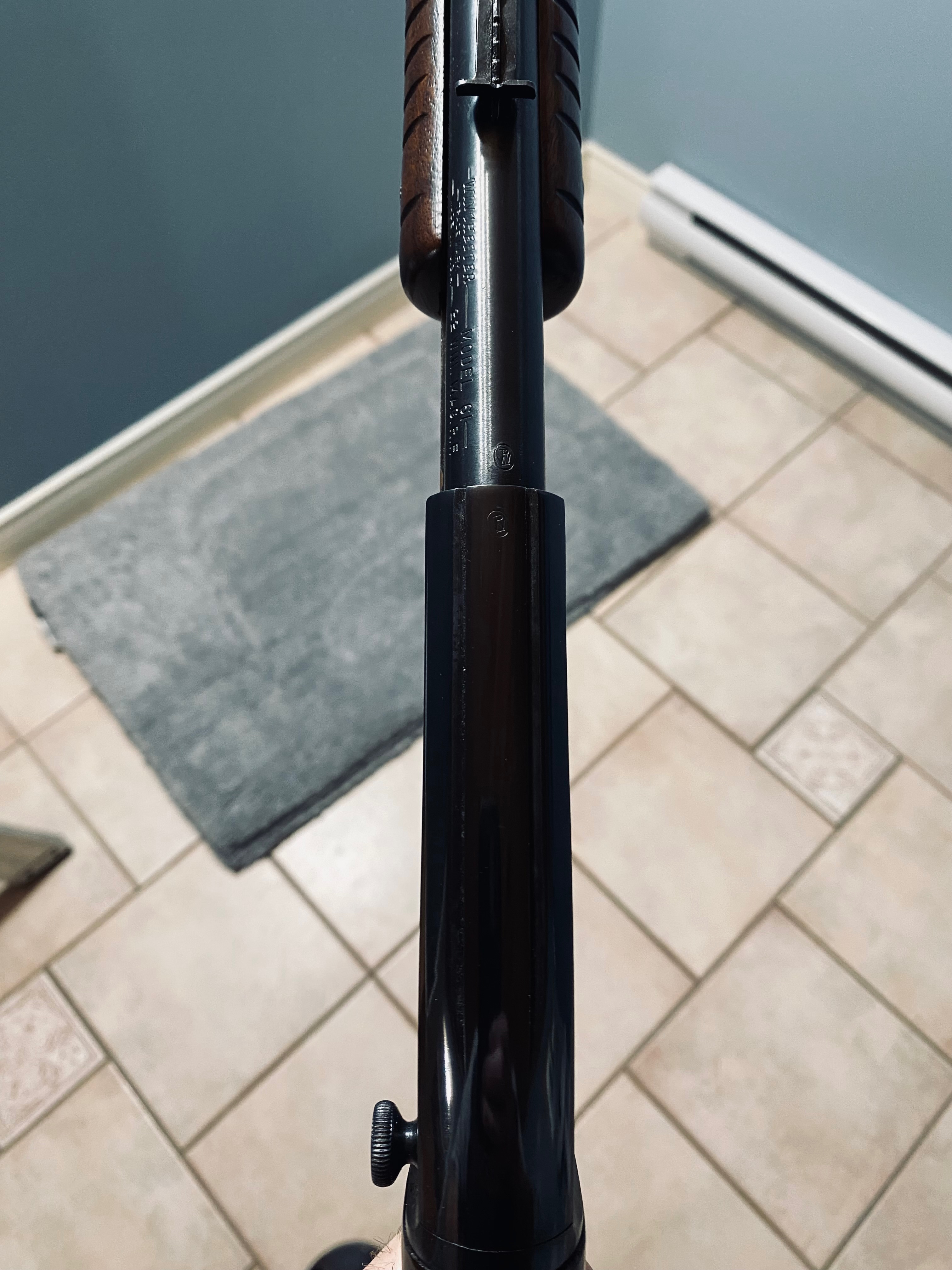
Rick C
November 19, 2006
Offline
Rick C said
Steve, I picked this one up recently. 1961, but no box! $1750 U.S
Rick –
That one looks extremely nice. If it were mine, it might not be happy as it would be a safe queen.
March 14, 2022
Offline
Steve that’s exactly what it is and the closest to 98–100% red book collector condition I’ve ever had in a pre-64 Winchester. Luckily, I have another to take to the range.
Rick C

January 20, 2023
Offline
Rick, I’m no expert but that is the best looking Model 61 I’ve seen in a very long while. It deserves an air-free glass vitrine filled with a clear inert gas – I can’t pronounce the names.
Outstanding buy.
Bill
- Bill
WACA # 65205; life member, NRA; member, TGCA; member, TSRA; amateur preservationist
"I have seen wicked men and fools, a great many of both, and I believe they both get paid in the end, but the fools first." -- David Balfour, narrator and protagonist of the novel, Kidnapped, by Robert Louis Stevenson.
March 14, 2022
Offline
Thanks Bill. Knew it was going to be a safe queen but couldn’t pass up the condition and price.
Rick C
March 14, 2022
Offline
This is a photo of an EBay replica tag on the top and the one in this Gun Broker ad underneath. Both different. I don’t have an original model 61 hang tag to compare either but the GB gun tag might be original? 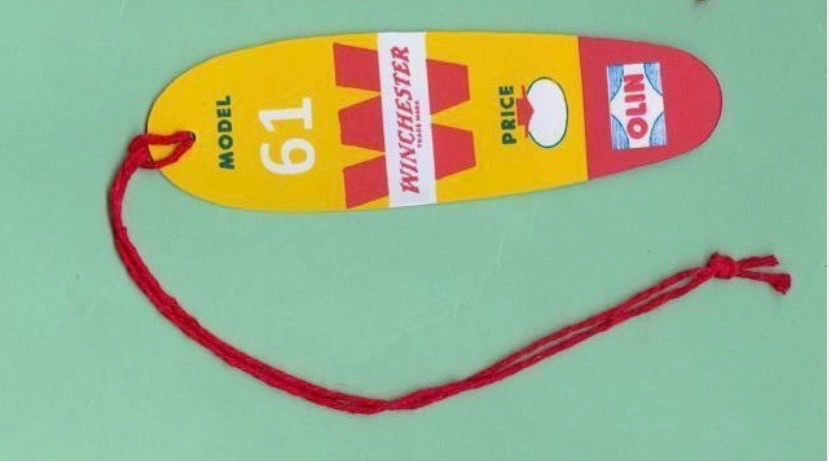
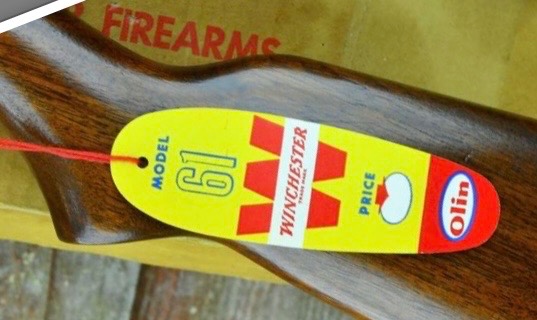
Rick C
July 8, 2012
Offline
Rick,
That’s a beautiful 61 mag. It looks new, and at a great price.
Al
January 20, 2023
Offline
I ASKED GEMINI HOW TO DISTINGUISH A MODERN FAKE FROM 4-COLOR PROCESS USED IN 1961
HERE’S ITS RESPONSE:
.Distinguishing a genuine 1961 sale tag from a modern “vintage-style” reproduction requires a close look at the printing mechanics and the physical properties of the ink and paper. In 1961, 4-color process (CMYK) was typically achieved via offset lithography or letterpress, both of which leave distinct “signatures” under magnification that modern digital printers cannot replicate.
1. The Dot Pattern (The “Smoking Gun”)
Use a 10x or 30x jeweler’s loupe to examine the colored areas (flesh tones, sky, or color gradients).
* Authentic 1961 (Halftone Rosettes): You will see a very organized, geometric pattern of dots. Because traditional plates were set at specific angles (usually 15°, 45°, 75°, and 90°) to avoid moiré patterns, the dots form a “rosette” pattern (circular or flower-like clusters). The dots will be crisp and uniform in shape.
* Modern Fake (Stochastic/Inkjet): Most modern inkjet printers use “stochastic” screening, which looks like a random spray of sand or fine mist. There is no geometric rosette pattern. If it was made on a laser printer, the “dots” often look like melted plastic blobs fused together, lacking the sharp mechanical precision of 1960s plates.
2. Ink Behavior and Texture
* The “Squish” (Letterpress): If the tag was printed via letterpress (common for smaller tags in 1961), you might see a slight debossing (indentation) in the paper. Under a loupe, the ink will often have a “halo” or “ridge”—a slightly darker rim around the edge of letters where the pressure of the plate squeezed the ink outward.
* Absorption vs. Sitting: 1960s oil-based inks soaked into the paper fibers. Modern digital toner (laser) sits on top of the paper as a plastic film; if you scratch it gently with a fingernail, it may flake or show a “sheen” that the surrounding paper doesn’t have.
* Reflectivity: Modern toners often have a uniform, waxy semi-gloss finish. 1961 inks will appear matte and “one” with the paper, unless a specific varnish was applied (which would now likely be yellowed or cracked).
3. Paper and Chemical Clues
* Optical Brighteners (The Blacklight Test): Shine a UV/Blacklight on the tag. Modern paper almost always contains Optical Brightening Agents (OBAs) that will glow a bright, neon blue/white. Paper from 1961 generally lacked these chemicals and will appear dull or “dead” under UV light.
* Aging and Oxidation: Authentic 60-year-old paper ages from the edges inward. Look for foxing (tiny brown age spots) or a gradual “browning” of the paper. Fakes often use “tea-staining” or uniform tinting to look old, but this lacks the microscopic fiber degradation seen in true vintage stock.
4. Typographic and Contextual Details
Check for “anachronisms” that fakes often miss:
* Zip Codes: ZIP codes were introduced in 1963. If a “1961” tag has a 5-digit zip code in the address, it is a fake or a later reprint.
* Typography: Look for “cold type” or metal type characteristics. In 1961, letters were often slightly imperfect. Modern “retro” fonts are often too “perfectly” aligned and spaced.
* Area Codes: Telephone area codes were not yet universal in 1961 advertising; many businesses still used “Exchange Names” (e.g., PEnnsylvania 6-5000).
Would you like me to help you identify specific 1960s font styles or help you decode a specific address or code found on the tag?
- Bill
WACA # 65205; life member, NRA; member, TGCA; member, TSRA; amateur preservationist
"I have seen wicked men and fools, a great many of both, and I believe they both get paid in the end, but the fools first." -- David Balfour, narrator and protagonist of the novel, Kidnapped, by Robert Louis Stevenson.
January 20, 2023
Offline
I think it would be difficult for one of us to assess a tag in question without having a unquestioned exemplar side by side.
However, the modern printing processes don’t look too hard to sort out once you know what to look for and have the necessary magnification tool.
The differences don’t seem subtle..
.
- Bill
WACA # 65205; life member, NRA; member, TGCA; member, TSRA; amateur preservationist
"I have seen wicked men and fools, a great many of both, and I believe they both get paid in the end, but the fools first." -- David Balfour, narrator and protagonist of the novel, Kidnapped, by Robert Louis Stevenson.
March 14, 2022
Offline
tionesta1 said
Rick,
That’s a beautiful 61 mag. It looks new, and at a great price.
Al
Zebulon said
I think it would be difficult for one of us to assess a tag in question without having a unquestioned exemplar side by side.
However, the modern printing processes don’t look too hard to sort out once you know what to look for and have the necessary magnification tool.
The differences don’t seem subtle..
.
Thanks Al.
Bill it would be nice to find an original tag. I often see commemorative model 94 tags and papers for sale so maybe an early 60’s tag for the model 61 can be found.
Rick C
March 14, 2022
Offline
Zebulon said
I think it would be difficult for one of us to assess a tag in question without having a unquestioned exemplar side by side.
However, the modern printing processes don’t look too hard to sort out once you know what to look for and have the necessary magnification tool.
The differences don’t seem subtle..
.
Take your pick. Bottom tag is from RIA boxed 61 magnum.
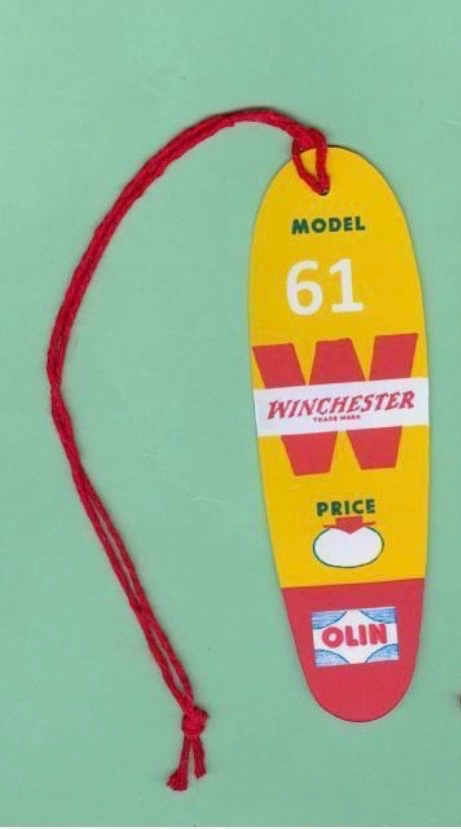
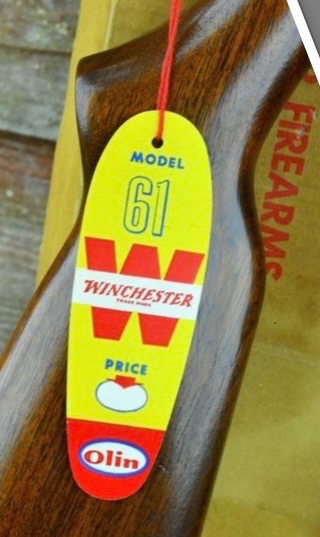
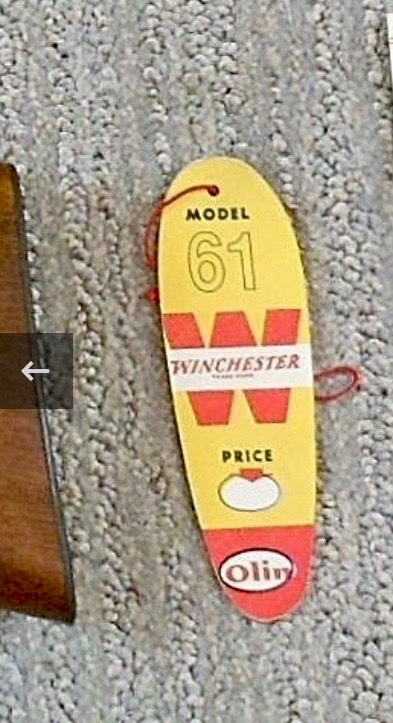
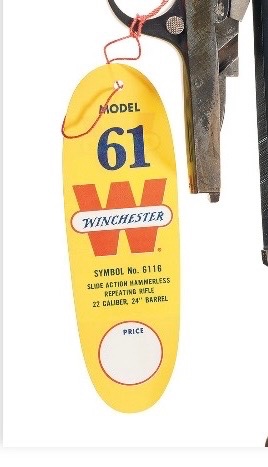
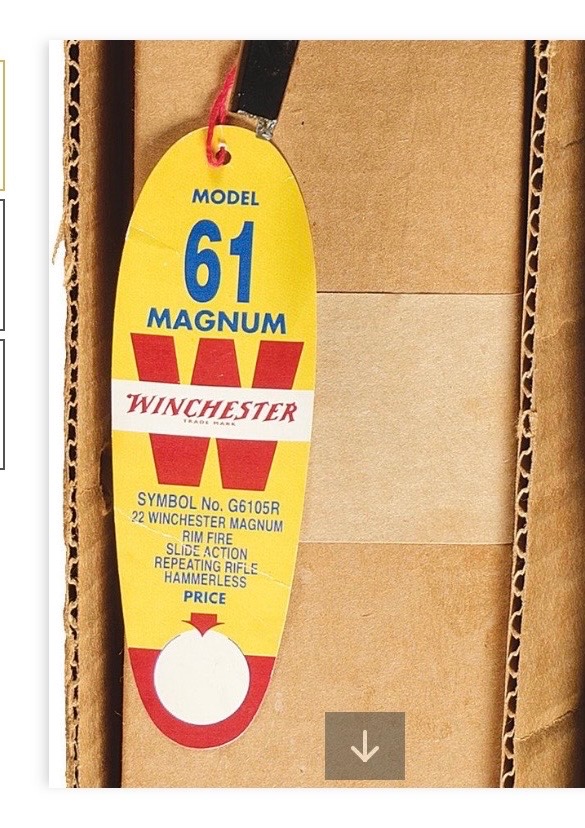
Rick C
July 8, 2012
Offline
A quick look at Schwings Winchester Slide-Action Rifles, Volume II, pages 113-114 illustrates correct hang tags, with page 114 illustrating tags for the 22 magnum.
Al
March 14, 2022
Offline
Al are you able to post a photo here. I don’t have Schwings book but, after my last reply I remembered I had a model 62 that had an original hang tag. I went into my photos from 6 years ago when I sold it. It is the same as the one from RIA at the bottom of my previous post. I’m still not sure if the RIA one is original and just a close copy. The twine on my original tag model 62 was yellow-ish and the circle at the bottom appears to be yellow as well but that could be faded white.
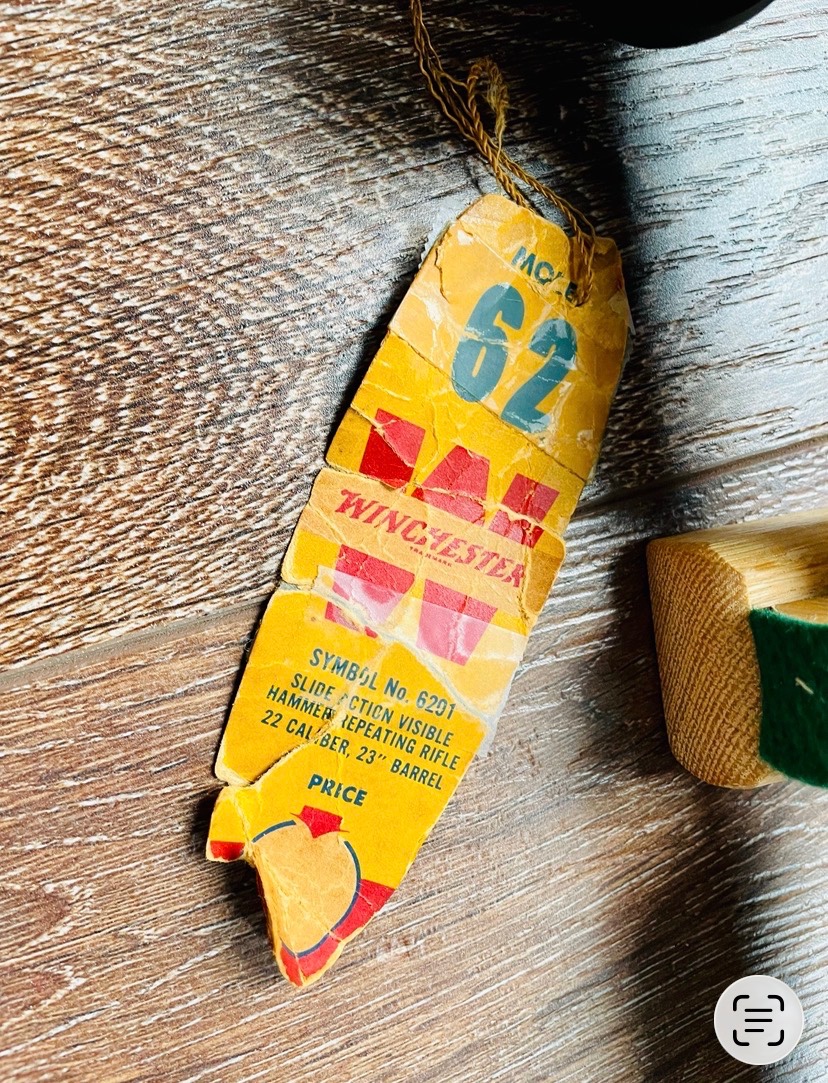
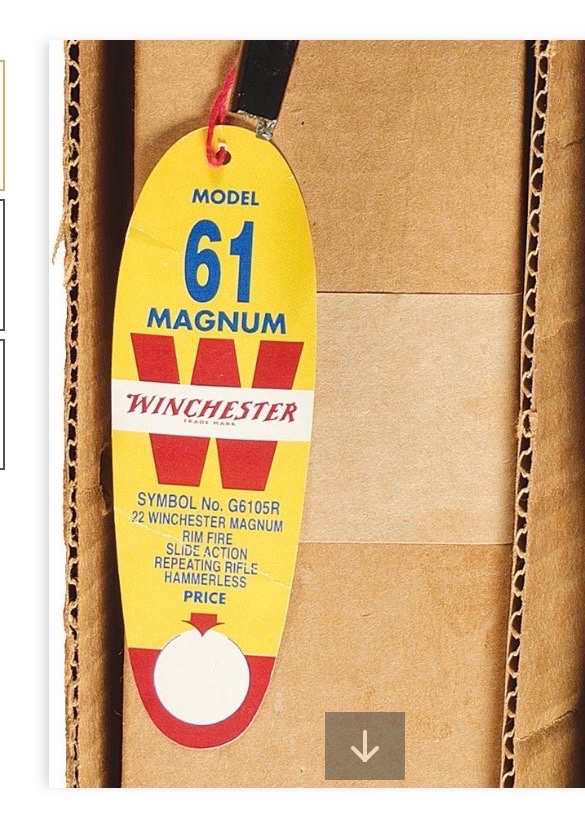
Rick C
July 8, 2012
Offline
Rick C said
Al are you able to post a photo here. I don’t have Schwings book but, after my last reply I remembered I had a model 62 that had an original hang tag. I went into my photos from 6 years ago when I sold it. It is the same as the one from RIA at the bottom of my previous post. I’m still not sure if the RIA one is original and just a close copy. The twine on my original tag model 62 was yellow-ish and the circle at the bottom appears to be yellow as well.
Rick,
The photos in his book are black and white, but show the correct information that should be on the tag for the 22 magnum. I’ll take some pictures once I’m back home.
Al
March 14, 2022
Offline
Here’s an original 94 hang tag. 1950’s-1964. Similar to my m62 tag. Twine appears yellow-ish.
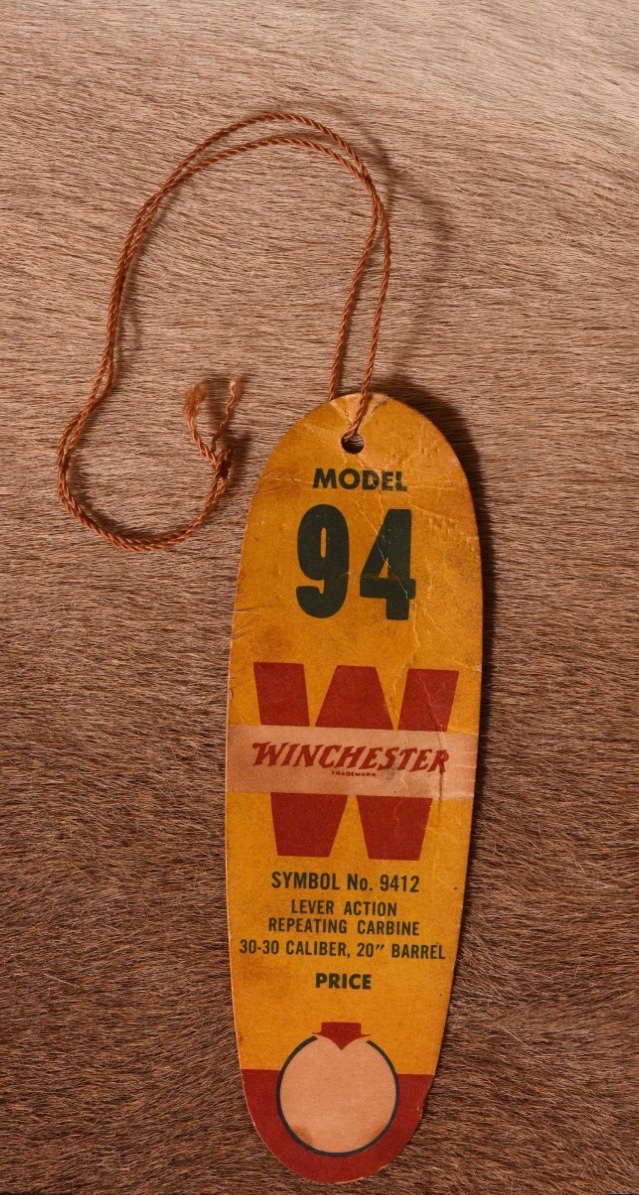
Rick C
August 8, 2024
Offline
Also, be advised that the instruction manual is missing. The box is pretty beat up. The color is a yellowish tint, which is what I see. If I had it in my hands it may look different. The hang tag looks new, and of course I would like to see the other side of the hang tag. Most of the time you will find that if a item is beat up, and stained. Well, then the rest of the items included will be found in the same condition.


1 Guest(s)
